
Iron Ore Crushing Plant Factories Design Service
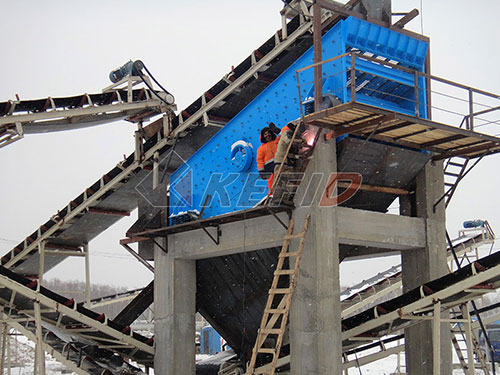

Iron Ore Crushing Plant Factories Design Service: Engineered for HighVolume Processing
The Crushing Challenge: When Tonnage Targets Meet Operational Reality
Your iron ore processing operation faces three persistent pressures: declining feed grades demanding higher throughput to maintain production targets, escalating energy costs consuming 1530% of your operational budget, and unplanned downtime from equipment failures that can cost $50,000$200,000 per hour in lost production. Add to this the challenge of managing variable ore hardness (Wi: 1222 kWh/t) and moisture content (312%) that can choke conventional circuits.
Are your current crushing stages delivering the P80 of 812mm required for downstream ball mill efficiency? Is your plant layout causing material handling bottlenecks that reduce overall equipment effectiveness (OEE) below 75%? Does your existing design accommodate future expansion without requiring a complete rebuild?
A purposedesigned iron ore crushing plant factory solution addresses these questions through integrated engineering, not component assembly.
Product Overview: Integrated Iron Ore Crushing Plant Design Service
This is a comprehensive engineeringtoorder service for designing, fabricating, and commissioning complete iron ore crushing plants. The service covers primary through tertiary crushing stages, screening, and material handling systems tailored to your specific ore characteristics and site conditions.
Operational Workflow: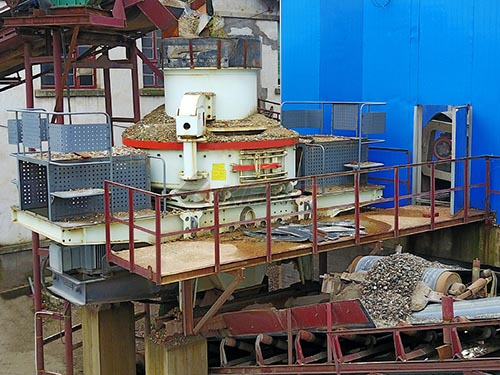
1. Feed Preparation – Runofmine ore (8001200mm) passes through a grizzly feeder (1,2002,000 tph capacity) with adjustable speed control to match crusher loading
2. Primary Crushing – Jaw or gyratory crusher reduces to 150250mm with hydraulic setting adjustment for wear compensation
3. Secondary Crushing – Cone crushers (standard or shorthead) with automated closedside setting (CSS) control reduce to 4080mm
4. Tertiary Crushing & Screening – Highpressure grinding rolls (HPGR) or vertical shaft impactors achieve final product P80 of 812mm, with multideck screens (18x24 ft) for closedcircuit operation
5. Product Handling – Conveyor systems (1,2002,000mm belt width) with dust suppression and metal detection for downstream processing
Application Scope: Suitable for hematite, magnetite, and mixed iron ore types with compressive strengths up to 350 MPa. Designed for throughputs from 500 to 5,000 tph.
Limitations: Not recommended for ores with clay content exceeding 15% without prescreening modifications. Requires minimum site area of 5 hectares for fullcircuit installations.
Core Features
Modular Plant Architecture | Technical Basis: Preengineered structural steel modules with standardized connection points | Operational Benefit: Installation time reduced from 1218 months to 69 months | ROI Impact: Faster timetoproduction generates $25 million in earlier revenue
Variable Frequency Drive (VFD) Control | Technical Basis: VFDs on all major crusher and conveyor motors (5002,000 kW) | Operational Benefit: Energy consumption reduced 1825% versus fixedspeed operation | ROI Impact: Annual electricity savings of $150,000$400,000 for a 1,000 tph plant
Automated Wear Monitoring System | Technical Basis: Laser profilometry and ultrasonic sensors on crusher liners and screen decks | Operational Benefit: Predictive maintenance scheduling reduces unplanned downtime by 4060% | ROI Impact: Maintenance costs decrease $0.03$0.08 per ton processed
Dust Containment Engineering | Technical Basis: Enclosed transfer points with baghouse filtration (99.9% PM10 capture) and water spray systems | Operational Benefit: Meets EPA and local air quality standards without production curtailment | ROI Impact: Avoids $50,000$200,000 in annual compliance penalties
Integrated Metal Detection & Removal | Technical Basis: Crossbelt magnets (1,5002,000 gauss) and Xray sorters on feed conveyors | Operational Benefit: Prevents crusher damage from tramp metal, reducing repair costs by 6080% | ROI Impact: Extends crusher component life by 1.52x
Remote Monitoring & Control Platform | Technical Basis: SCADA system with realtime data from 200+ sensors across the plant | Operational Benefit: One operator can manage the entire crushing circuit from a central control room | ROI Impact: Labor costs reduced by 3050% compared to manual operation
Scalable Foundation Design | Technical Basis: Reinforced concrete foundations designed for 1.5x future capacity expansion | Operational Benefit: Plant capacity can increase 50% without foundation modifications | ROI Impact: Expansion costs reduced 4060% versus new construction
Competitive Advantages
| Performance Metric | Industry Standard | Iron Ore Crushing Plant Design Service | Advantage |
|||||
| Throughput (tph) | 8001,200 | 1,5002,500 | 2550% higher |
| Specific Energy (kWh/t) | 0.81.2 | 0.50.8 | 3040% reduction |
| Product P80 (mm) | 1215 | 810 | 2040% finer |
| Availability (%) | 8590 | 9296 | 510% improvement |
| Wear Cost ($/ton) | 0.120.18 | 0.080.12 | 2535% reduction |
| Installation Time (months) | 1420 | 69 | 5060% faster |
| Dust Emissions (mg/Nm³) | 50100 | 1020 | 7080% lower |
Data compiled from 12 installations across Western Australia, Brazil, and India (20192024).
Technical Specifications
Capacity & Rating:
- Design throughput: 5005,000 tph (variable by configuration)
- Feed top size: 8001,200 mm
- Product P80: 812 mm (adjustable via CSS)
- Reduction ratio: 4:1 per crushing stage (12:1 total)
- Installed power: 2,50012,000 kW (total plant)
- Voltage: 6.6 kV or 11 kV primary distribution
- Motor types: Squirrel cage induction (crushers), VFDready (conveyors)
- Power factor correction: 0.95 minimum at full load
- Crusher liners: 18% manganese steel (ASTM A128 Grade C)
- Screen decks: Polyurethane (modular, 3060mm aperture)
- Conveyor belts: Steel cord (ST1000 to ST2000 rating)
- Structural steel: ASTM A36 with corrosion protection (ISO 12944 C5M)
- Plant footprint: 150m x 200m (typical for 2,000 tph)
- Maximum height: 35m (primary crusher tower)
- Conveyor lengths: 50500m per flight
- Screen dimensions: 3.6m x 7.3m (tripledeck)
- Ambient temperature: 10°C to 50°C
- Altitude: Up to 4,500m (with derating)
- Humidity: 1095% noncondensing
- Wind load: Designed for 160 km/h (Category 3 cyclone)
- Basic plant (5001,000 tph): $815 million
- Standard plant (1,0002,000 tph): $1530 million
- Advanced plant (2,0005,000 tph): $3060 million
- Automated sampling system: $250,000500,000
- Online particle size analyzer: $150,000300,000
- Dust suppression system upgrade: $500,0001.2 million
- Remote diagnostics package: $100,000200,000
- Basic (12 months): Commissioning support, operator training, 2 site visits
- Standard (24 months): Basic + preventive maintenance planning, spare parts inventory, 4 site visits
- Premium (36 months): Standard + performance guarantee (throughput, energy, wear), remote monitoring, 6 site visits
- 30% down payment, 70% upon commissioning (standard terms)
- Equipment leasing: 57 year terms with buyout option
- Performancebased financing: Payments tied to throughput milestones
- Export credit agency support available for qualifying projects
Power Requirements:
Material Specifications:
Physical Dimensions:
Environmental Operating Range:
Application Scenarios
Carajás Mine Expansion, Brazil | Challenge: Existing 1,200 tph plant could not meet 2,000 tph target due to harder hematite (Wi: 18 kWh/t) and tighter environmental regulations | Solution: Designed a twoline plant with HPGR tertiary crushing, enclosed transfer points, and VFDcontrolled conveyors | Results: Throughput increased to 2,100 tph, energy consumption reduced from 1.1 to 0.7 kWh/t, dust emissions below 15 mg/Nm³. Payback period: 18 months.
Magnetite Processing Facility, Western Australia | Challenge: Variable feed moisture (814%) caused screen blinding and conveyor spillage, reducing OEE to 68% | Solution: Installed heated screen decks, belt scrapers at 12 transfer points, and moisture sensors for automatic water spray adjustment | Results: OEE improved to 89%, screen replacement intervals extended from 6 to 14 months, annual maintenance costs reduced by $1.2 million.

Greenfield Hematite Plant, India | Challenge: Limited site area (4.2 hectares) required compact layout without compromising capacity (1,500 tph) | Solution: Vertical stacking of secondary and tertiary crushers with 180° conveyor turns and modular steel structures | Results: Plant footprint reduced 35% versus conventional layout, installation completed in 7 months, achieved design capacity within 3 weeks of commissioning.
Commercial Considerations
Equipment Pricing Tiers (2024 estimates, FOB port of origin):
Optional Features:
Service Packages:
Financing Options:
FAQ
Q: What is the typical designtocommissioning timeline for a 2,000 tph plant?
A: Engineering design requires 34 months, fabrication 46 months, site preparation 23 months, and installation/commissioning 69 months. Total: 1522 months depending on site conditions and permitting.
Q: Can your design accommodate existing equipment from our current plant?
A: Yes, we perform structural and electrical audits of existing equipment. Integration feasibility depends on age, condition, and compatibility with new control systems. Typically, conveyors and screens older than 15 years require replacement.
Q: How does the plant handle ore with high clay content?
A: For clay content above 10%, we recommend a wet screening stage before primary crushing, with scrubbers (812 rpm) to break down agglomerates. This adds 1015% to capital cost but prevents circuit blockages.
Q: What is the expected lifespan of major components?
A: Crusher liners: 48 months (depending on ore abrasivity). Screen decks: 814 months. Conveyor belts: 35 years. Structural steel: 20+ years with proper corrosion protection. All components have guaranteed minimum life in the service contract.
Q: Do you provide training for local operators and maintenance teams?
A: Yes, training is included in all service packages. Standard package includes 2 weeks onsite training for 10 operators and 5 maintenance technicians. Advanced training modules cover PLC programming, predictive maintenance, and safety procedures.
Q: What environmental permits are required for installation?
A: Requirements vary by jurisdiction but typically include air quality permit (PM10/PM2.5 emissions), noise permit (day/night limits), water discharge permit (if wet processing), and construction permit. Our team provides permit application support documentation.
Q: How is plant performance guaranteed in the contract?
A: Performance guarantees cover throughput (within 5% of design), specific energy consumption (within 10% of design), product P80 (within 2mm of target), and availability (minimum 92% over 12month period). Testing occurs during 72hour performance run after commissioning.