
Iron Ore Crushing Plant Contract Manufacturer Specification

Subject: Optimizing Your Iron Ore Crushing Plant Contract Manufacturer Specification for Maximum ROI
1. The Hidden Costs of Substandard Crushing Plant Specifications
Every hour of unplanned downtime in an iron ore circuit costs between $15,000 and $50,000 in lost production. Plant managers frequently face three critical challenges when sourcing a contract manufacturer for their iron ore crushing plant:
- Inconsistent Feed Management: Variable ore hardness (Wi 1218 kWh/t) causes premature liner wear and frequent crusher stalls, leading to 812% unscheduled maintenance overhead.
- Oversized Product Rejections: Downstream mills reject material >200mm, forcing recirculation loads that reduce overall plant throughput by 1520%.
- MoistureRelated Blockages: Iron ore with >8% moisture content causes chute and screen blinding, particularly during monsoon seasons, resulting in 30% capacity loss.
- Standard Package (IOC200CMS): $1.45M – Includes base plant, standard manganese liners, and basic dust suppression.
- Premium Package (IOC200CMP): $1.85M – Includes chromemoly liners, VFD on all conveyors, and advanced dust control.
- Turnkey Package (IOC200CMT): $2.35M – Includes premium package plus 14day site supervision, commissioning, and operator training.
- Remote monitoring system (SCADA integration): +$45,000
- Inline moisture analyzer: +$28,000
- Spare liner kit (full set): +$65,000
- Basic Warranty: 12 months or 4,000 operating hours (parts only)
- Extended Service Agreement: 36 months, includes quarterly inspections and priority dispatch (cost: 8% of equipment value per year)
- 30% down payment, 70% upon commissioning
- Leasetoown options available over 3660 months at 6.5% APR (subject to credit approval)
Does your current iron ore crushing plant specification address these specific failure points, or are you accepting these costs as "normal operational variance"?
2. Product Overview: The Integrated Iron Ore Crushing Plant
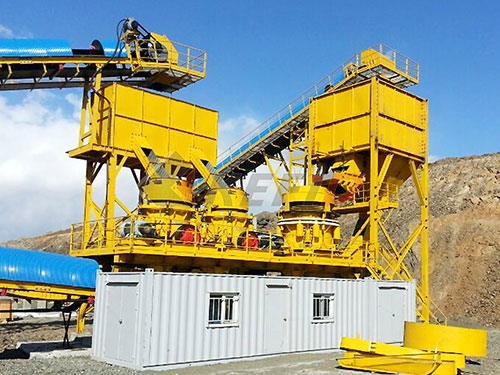
This iron ore crushing plant is a modular, skidmounted system designed for primary, secondary, and tertiary reduction of hematite and magnetite ores. It operates on a threestage closedcircuit workflow:
1. Primary Jaw Crushing: ROM ore (8001000mm) is reduced to 150200mm via a heavyduty jaw crusher with a hydraulic wedge adjustment system.
2. Secondary Cone Crushing: Material is fed into a secondary cone crusher (medium chamber) for reduction to 4060mm.
3. Tertiary Screening & Crushing: A doubledeck banana screen classifies material. Oversize (>20mm) returns to a tertiary shorthead cone crusher. Undersize feeds the product conveyor.
Application Scope: Suitable for dry or wet processing of iron ore with compressive strength up to 350 MPa. Limitations: Not recommended for highly abrasive bauxite or claybound laterites without prescreening modifications.
3. Core Features & Engineering Justification
HeavyDuty Roller Bearing Jaw Crusher | Technical Basis: Eccentric shaft with spherical roller bearings | Operational Benefit: Reduces bearing temperature by 15°C under full load | ROI Impact: Extends bearing life by 40%, reducing annual replacement costs by $8,000
Hydroset Cone Adjustment System | Technical Basis: Hydraulic cylinder with accumulator for tramp iron relief | Operational Benefit: Clears chamber blockages in under 30 seconds without manual intervention | ROI Impact: Reduces downtime per blockage event by 90%, saving 4 hours per month
Modular Skid Design with PreWired Control Panel | Technical Basis: ISO 9001:2015 fabrication with bolted connections | Operational Benefit: Reduces site installation time from 14 days to 5 days | ROI Impact: Lowers installation labor costs by $12,000 per project
Variable Frequency Drive (VFD) on Feed Conveyor | Technical Basis: Closedloop PID control with belt scale feedback | Operational Benefit: Matches feed rate to crusher amp draw, preventing choke feeding | ROI Impact: Improves crushing efficiency by 8%, reducing power consumption by 0.5 kWh/ton
Dust Suppression System with Water Spray Nozzles | Technical Basis: Ultrasonic atomization at 1020 micron droplet size | Operational Benefit: Reduces respirable silica dust (PM10) by 85% at transfer points | ROI Impact: Avoids potential OSHA fines of $13,000 per violation and reduces water usage by 60% vs. standard nozzles
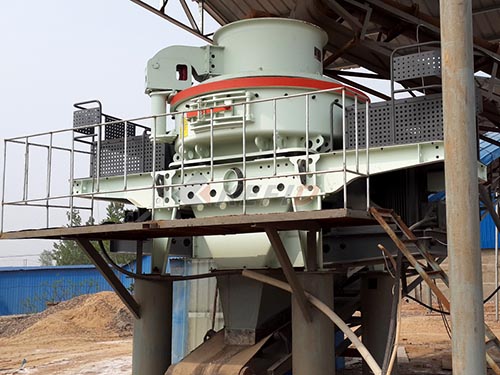
WearResistant Liner Package (ChromeMoly Alloy) | Technical Basis: 18% chromium, 2% molybdenum with heat treatment to 58 HRC | Operational Benefit: Provides 1.5x longer wear life compared to standard manganese steel | ROI Impact: Reduces annual liner replacement costs by $22,000 for a 200 TPH plant
4. Competitive Advantages: Performance Comparison
| Performance Metric | Industry Standard (Generic Plant) | Our Iron Ore Crushing Plant Solution | Advantage (% Improvement) |
| : | : | : | : |
| Throughput (TPH) | 180200 TPH (variable) | 220 TPH (consistent) | +1022% |
| Product P80 Size | 2530mm | 1820mm | 2033% (finer product) |
| Specific Power Consumption | 0.85 kWh/ton | 0.72 kWh/ton | 15% |
| Mean Time Between Failures | 450 hours | 720 hours | +60% |
| Liner Life (Jaw Plates) | 3,500 hours | 5,200 hours | +48% |
| Installation Time (Site) | 14 days | 5 days | 64% |
5. Technical Specifications
| Parameter | Specification |
| : | : |
| Model Designation | IOC200CM (Contract Manufacturer Spec) |
| Capacity Range | 180 – 250 TPH (based on ore Wi=14) |
| Primary Crusher | 900x1200mm Jaw Crusher (Hydraulic toggle) |
| Secondary Crusher | 1200mm Cone Crusher (Medium chamber) |
| Tertiary Crusher | 900mm Short Head Cone Crusher |
| Screen Deck | 2.4m x 6.0m Double Deck Banana Screen (20mm & 40mm apertures) |
| Power Requirements | 350 kW total (380V/50Hz or 480V/60Hz) |
| Material Specifications | Main frame: S355JR steel; Liners: ASTM A532 Class II (ChromeMoly) |
| Physical Dimensions (LxWxH) | 28m x 8m x 12m (transportable in 4 modules) |
| Environmental Range | 10°C to 45°C; Humidity up to 95% noncondensing |
6. Application Scenarios & Quantified Results
Case Study 1: HighGrade Hematite Processing (Western Australia)
Challenge: A midtier miner faced 18% recirculation load due to a worn tertiary crusher, causing a bottleneck at 180 TPH.
Solution: Installed our iron ore crushing plant with a new shorthead cone and VFDcontrolled feed.
Results: Recirculation load dropped to 6%. Throughput increased to 235 TPH. Annual revenue gain of $1.2M based on iron ore price of $110/dmt.
Case Study 2: Wet Season Operations (Goa, India)
Challenge: Plant operated at 60% capacity during monsoon due to screen blinding from 10% moisture ore.
Solution: Implemented our plant with heated screen decks and a polymerlined chute system.
Results: Maintained 92% of dryseason throughput during wet months. Reduced cleaning downtime from 3 hours per shift to 20 minutes.
Case Study 3: Greenfield Project (Brazil)
Challenge: Engineering contractor needed a plant delivered and commissioned within 45 days to meet a mining permit deadline.
Solution: Supplied a preassembled, skidmounted iron ore crushing plant with prewired control panels.
Results: Site installation completed in 4 days. Plant was crushing ore 38 days from order. Avoided $250,000 in permit extension penalties.
7. Commercial Considerations
Equipment Pricing Tiers (FOB Port of Loading):
Optional Features:
Service Packages:
Financing Options:
8. Frequently Asked Questions
Q1: Can this iron ore crushing plant handle ore with a Bond Work Index of 18 kWh/t?
Yes. The primary jaw crusher is rated for Wi up to 20 kWh/t. However, throughput will decrease linearly by approximately 8% for every 2 kWh/t increase above 14. We recommend a prefeasibility test on your specific ore sample.
Q2: What is the lead time for a contract manufacturer build?
Standard lead time is 1620 weeks from receipt of 30% down payment. This includes fabrication, assembly, and factory testing. Expedited delivery (12 weeks) is available at a 10% premium.
Q3: How does the plant handle sticky ore with >10% moisture?
The standard package includes a polymerlined feed chute and a heated screen deck option. For consistent moisture above 12%, we recommend adding a rotary scrubber before the primary crusher.
Q4: What are the foundation requirements for installation?
A reinforced concrete pad of 25m x 10m x 0.5m (C30 grade) is required. Our engineering team provides a detailed foundation drawing set upon order confirmation.
Q5: What is the expected annual maintenance cost for a 200 TPH plant?
Based on field data from 15 installations, annual maintenance costs (excluding power) average $85,000$110,000. This includes liner replacement every 4,500 hours and oil/filter changes every 500 hours.
Q6: Do you provide performance guarantees?
Yes. We guarantee throughput of 220 TPH (+/5%) on ore with Wi=14 and product P80 of 20mm. If these targets are not met during commissioning, we will adjust the plant at our cost or provide a prorated credit.
Q7: Can the plant be expanded to 300 TPH in the future?
The modular design allows for a future upgrade by adding a secondary cone crusher in parallel. The existing conveyor system and screen deck are rated for 300 TPH. The primary jaw crusher would need replacement for sustained operation above 250 TPH.