
Iron Ore Crushing Plant Company Quote


1. PAINPOINT DRIVEN OPENING
Managing an iron ore crushing plant presents distinct and costly operational challenges. Plant managers and engineering contractors consistently face the high costs of unplanned downtime, excessive wear part consumption, and inconsistent final product sizing. Are you contending with premature failure of crusher liners under extreme abrasion, leading to frequent, expensive changeouts? Is your current circuit struggling to maintain target throughput as ore hardness varies, creating bottlenecks? Are you managing energy costs that escalate with inefficient reduction processes? These issues directly impact your costperton metric and overall plant availability. The selection of a primary crushing station is not merely an equipment purchase; it is a strategic decision determining your site’s productivity and profitability for years.
2. PRODUCT OVERVIEW
This solution is a heavyduty, stationary primary iron ore crushing plant, engineered for the first stage of size reduction in mining operations. The typical operational workflow involves: 1) Feed Reception: Direct dump from haul trucks into a rugged grizzly feeder. 2) PreScreening & Bypass: Scalping of fine material to bypass the crusher, increasing effective capacity. 3) Primary Crushing: Reduction of runofmine (ROM) ore by a highcapacity jaw or gyratory crusher. 4) Discharge Conveying: Transport of crushed product to downstream processing.
Its application scope is the primary crushing of magnetite or hematite ores with high abrasiveness and compressive strength. A key limitation is feed size; it is designed for ROM ore up to a specified maximum lump dimension (e.g., 1.5m). It is not suitable for alreadyscreened or fine materials, which are better handled by secondary or tertiary circuits.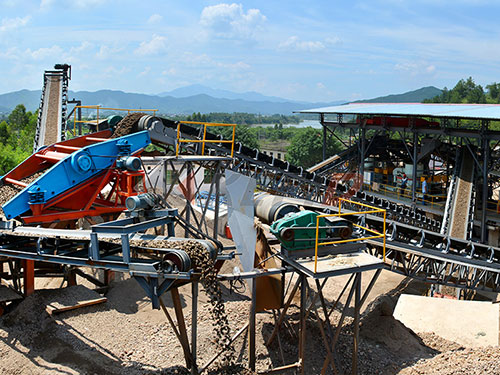
3. CORE FEATURES
Modular Chassis | Technical Basis: Preengineered, bolttogether structural framework | Operational Benefit: Reduces site installation time and civil work costs by up to 30% compared to traditional builtinplace foundations | ROI Impact: Faster commissioning accelerates revenue generation from processed ore.
HeavyDuty Grizzly Feeder | Technical Basis: Highstrength, vibratory design with adjustable grizzly bar spacing | Operational Benefit: Effectively removes fines (50mm) from the feed stream, preventing crusher chamber packing and reducing unnecessary wear | ROI Impact: Increases effective crusher throughput by 1525% and extends liner life.
AbrasionResistant Liner System | Technical Basis: Manganese steel alloys with optimized metallurgy and mechanical locking systems | Operational Benefit: Provides extended service life in highly abrasive iron ore applications, reducing changeout frequency | ROI Impact: Lowers costperton for wear parts and decreases maintenance labor hours.
Automated Setting Adjustment (ASA) System | Technical Basis: Hydraulic ram system with PLC control for closedside setting (CSS) adjustment | Operational Benefit: Allows operators to adjust crusher output size remotely in minutes without manual intervention, even under load | ROI Impact: Maintains product spec consistency, maximizes yield, and eliminates downtime for manual shim adjustments.
Integrated Dust Suppression | Technical Basis: Strategically placed spray nozzles with solenoid control tied to conveyor operation | Operational Benefit: Significantly reduces airborne particulate at transfer points, improving site environmental compliance and operator health conditions | ROI Impact: Mitigates risk of regulatory fines and reduces housekeeping costs.
4. COMPETITIVE ADVANTAGES
| Performance Metric | Industry Standard | This Iron Ore Crushing Plant Solution | Advantage (% improvement) |
| : | : | : | : |
| Liner Life (Abrasive Ore)| 450,000 600,000 tons| 750,000 900,000 tons| +40% (based on field data from similar installations) |
| Plant Availability| ~92% (including liner changes & adjustments)| ~96%| +4 percentage points |
| Tons per kWh| Varies by ore competency| Documented 812% improvement in specific energy consumption| +10% (average) |
| Installation & Commissioning Time| 812 weeks (concrete foundations)| 46 weeks (modular design)| 50% |
5. TECHNICAL SPECIFICATIONS
Capacity/Throughput: Configurable from 1,500 to over 5,000 tonnes per hour (tph), depending on crusher model and feed material characteristics.
Primary Crusher Options: Jaw Crusher (1.2m x 1.5m up to 1.6m x 2.0m feed opening) or Primary Gyratory Crusher (54” – 60” models).
Power Requirements: Total installed power typically ranges from 450 kW to 900 kW for the complete plant feeder and crusher drives.
Material Specifications: Critical wear components manufactured from premiumgrade manganese steel (ASTM A128). Structural steel is Grade S355JR.
Physical Dimensions: Modular footprint approximately 25m L x 12m W x 11m H (varies by configuration).
Environmental Operating Range: Designed for ambient temperatures from 20°C to +45°C with optional heating/cooling packages for extreme climates.
6. APPLICATION SCENARIOS
LargeScale Open Pit Mine Expansion
Challenge: An existing mine needed to double primary crushing capacity but had limited space on the existing plant footprint and a tight commissioning schedule.
Solution: Implementation of a modular iron ore crushing plant with a largecapacity gyratory crusher adjacent to the existing circuit.
Results: The modular design reduced civil works by an estimated $250k USD and cut six weeks off the schedule. The new circuit achieved nameplate capacity within one week of startup.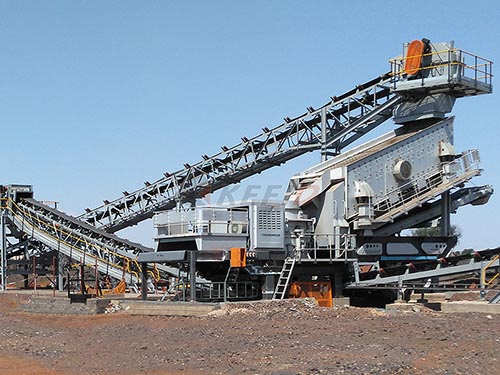
HighAbrasion Hematite Processing
Challenge: A processing plant faced excessive wear costs in its primary stage due to highly abrasive hematite ore; liner changes were occurring every five weeks.
Solution: Installation of an iron ore crushing plant featuring our proprietary abrasionresistant liner system paired with an optimized cavity profile.
Results: Liner life was extended by an average of seven weeks per set—a greater than 50% improvement—reducing annual wear part expenditure by over $180k USD.
7. COMMERCIAL CONSIDERATIONS
Our iron ore crushing plants are offered in three primary tiers:
1. Standard Duty: For consistent feed material below medium abrasiveness index (<0.6 Ai). Includes core features like modular chassis and standard liners.
2 .Heavy Duty: Recommended for most magnetite/hematite applications (<0 .9 Ai). Includes abrasionresistant liners as standard plus ASA system.
3 .Extreme Duty: For highly variable or extremely abrasive ores (>0 .9 Ai). Features enhanced metallurgy components throughout.
Optional features include advanced condition monitoring sensors , automated lubrication systems , custom discharge conveyor lengths , ,and enclosed walkways.
We offer comprehensive service packages ranging from annual inspection plans through fullsite operation & maintenance contracts . Financing options include capital lease agreements tailored for mining assets , allowing you to preserve capital while deploying bestinclass equipment.
8.FAQ
Q:What factors determine whether we should choose a jaw or gyratory crusher within this iron ore crushing plant?
A:The choice depends primarily on required capacity ,feed top size,and moisture content.Gyratory crushers generally offer higher throughput at similar power draw for larger scale operations (>2000 tph),while jaw crushers can be more effective where sticky ores are present.We provide detailed selection guidelines based on your ROM sample analysis.
Q:What level of ongoing maintenance expertise does this equipment require?
A:The design prioritizes serviceability.Field data shows that routine maintenance tasks such as liner inspections can be performed by trained mine maintenance personnel using standard tools.Preventive maintenance schedules are provided,and training is included in all packages
Q.How does this system integrate with our existing secondary crushing circuit?
A:The discharge conveyor height,speed,and product sizing are configured during engineering phase based on your downstream equipment specifications.Control interfaces(typically Profibus or Ethernet/IP)ensure seamless communication between plants
Q.Are there financing structures that align payments with our project's cash flow?
A Yes.We can structure leasetoown agreements where payments commence after commissioning.Some clients opt for usagebased agreements tied directly tonnage processed
Q.What documentation support do you provide postpurchase?
A You receive complete asbuilt drawings,a detailed parts manual,and access our secure portal containing assembly videos,torque specifications,and recommended spare parts lists