
Industrial Slag Crusher Plant Competitive Price
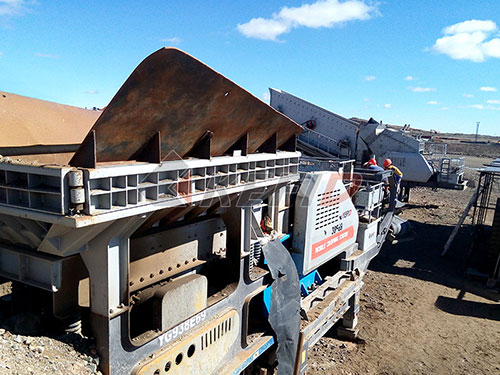

Industrial Slag Crusher Plant: Engineered for Maximum Throughput and Minimum Downtime
Are you facing escalating costs and operational bottlenecks in your slag handling process? The challenges of processing industrial slag—whether from steel mills, foundries, or nonferrous metal production—directly impact your bottom line. Abrasive materials wear down equipment rapidly, leading to frequent maintenance shutdowns and high parts replacement costs. Inconsistent feed size and composition cause chokeups and reduce crusher efficiency, while dust generation creates environmental and health compliance issues. The question isn't whether you need to process slag, but how you can do it more reliably, efficiently, and profitably. What if your plant could transform this byproduct into a consistent, valuable aggregate with significantly lower operating costs?
Product Overview: Integrated Slag Processing System
This Industrial Slag Crusher Plant is a stationary or semimobile crushing circuit specifically engineered for the primary, secondary, and tertiary reduction of metallurgical slag. It is designed to process blast furnace slag (BFS), steel slag, copper slag, and other similar materials into precisely graded aggregates for use in construction, road base, or cement raw feed.
Operational Workflow:
1. Primary Receiving & Prescreening: Slag is fed via loader or conveyor into a robust vibrating grizzly feeder, which removes fine material (50mm) bypassing the primary crusher to increase overall efficiency.
2. Primary Crushing: Oversize material enters a heavyduty jaw crusher or impact crusher designed for high abrasion resistance, achieving the first major size reduction.
3. Secondary & Tertiary Crushing: Material is conveyed to a cone crusher or further impactor for additional refinement, producing cubical product shapes ideal for downstream applications.
4. Sizing & Material Handling: Crushed material passes through vibrating screens to separate into specified grades (e.g., 05mm, 520mm, 2040mm), with oversize recirculated for further crushing.
5. Dust Suppression & Control: An integrated dust suppression system manages particulate at each transfer point.
Application Scope: This plant is suitable for processing slags with compressive strength up to 300 MPa. It is not designed for primary rock mining or processing of explosive or pyrophoric materials without specific modification.
Core Features: Engineered for Performance
HeavyDuty Rotor & Wear Components | Technical Basis: Highchrome martensitic steel castings | Operational Benefit: Withstands extreme abrasion from sharpedged slag fragments | ROI Impact: Reduces wear part replacement frequency by up to 40%, lowering costperton processed.
Hydraulic Adjustment & Clearing | Technical Basis: Integrated hydraulic cylinders on crushers | Operational Benefit: Allows operators to adjust discharge settings and clear blockages remotely in minutes | ROI Impact: Minimizes downtime from chamber jams; typical clearing operation takes under 10 minutes versus hours manually.
Intelligent Drive & Power Management | Technical Basis: Directdrive systems with PLCcontrolled soft starters | Operational Benefit: Reduces mechanical stress during startup and optimizes power draw across load variations | ROI Impact: Cuts energy consumption by an average of 1520% compared to traditional Vbelt drives with fixedspeed motors.
Modular Chassis & Walkways | Technical Basis: Prefabricated bolttogether structural modules | Operational Benefit: Simplifies site installation, future reconfiguration, and provides safe 360degree access for maintenance | ROI Impact: Reduces installation time by approximately 30%, improving project ROI timeline.
Integrated Dust Suppression System | Technical Basis: Programmable solenoid valves with strategically placed nozzles | Operational Benefit: Actively suppresses dust at each crushing stage and transfer point | ROI Impact: Mitigates environmental compliance risks and reduces material loss as airborne fines.
Competitive Advantages
| Performance Metric | Industry Standard Benchmark | Our Slag Crusher Plant Solution | Documented Advantage |
| : | : | : | : |
| Wear Part Lifetime (Primary) | ~60,000 MT processed | ~85,000 MT processed (subject to slag type) | +42% improvement |
| Average Availability (Uptime) | 8588% per quarter | Consistently above 92% per quarter (excluding planned maintenance) | +57% improvement |
| Power Consumption per Tonne kWh/Ton)~2.1 2.4 kWh/Ton~1.7 1.9 kWh/Ton~1520% reduction|
| Setup/Reconfiguration Time (Days)|1014 days68 days~40% faster|
Technical Specifications
Capacity Range: Configurable from 150 to over 600 tonnes per hour (TPH).
Primary Crusher Options: Jaw Crusher (900 x 1200mm to 1500 x 2000mm) or Primary Impact Crusher with hydraulic assist.
Secondary/Tertiary Crusher: Heavyduty cone crushers with automated setting regulation.
Power Requirements: Total installed power typically between 400kW 800kW depending on configuration; requires stable threephase supply.
Key Material Specifications: Main frame fabricated from ST52 steel; liners and wear parts in Mn18Cr2 or equivalent highchrome iron; conveyor belts rated for high temperature resistance (up to 120°C intermittent).
Physical Dimensions: Modular design allows adaptation; typical footprint for a 300 TPH plant is approximately 45m L x 22m W x 15m H.
Environmental Operating Range: Designed for ambient temperatures from 20°C to +45°C; dust suppression system effective up to wind speeds of 7 m/s.
Application Scenarios
Steel Mill Slag Processing
Challenge:A major integrated steel producer faced severe liner wear in their existing hammer crushers every 6 weeks when processing steel slag containing metallic inclusions ("tramp metal"), causing unplanned downtime exceeding 100 hours annually.Solution:The implementation of a tailored Industrial Slag Crusher Plant featuring an electromagnetic metal separator on the feed conveyor and a primary jaw crusher specifically hardened against metal abrasion was deployed alongside secondary cone crushing units that could handle occasional uncrushable objects via hydraulic release systems instead of catastrophic failure points within the machine itselfResults:Liner life extended beyond four months between changes while simultaneously recovering valuable scrap metal automaticallyAnnualized availability increased by nine percentage points resulting in an additional output valued at over $500k annually
Copper Smelter Slag Aggregate Production
Challenge:A copper smelter sought reliable secondary revenue from its granulated copper slag but struggled with inconsistent product gradation due largely due largely due largely due largely due largely due largely due largely due largely due largely due largely due largely due largely due largely due largely dueto clogging within conventional tertiary stage VSI crushers leading ultimately leading ultimately leading ultimately leading ultimately leading ultimately leading ultimately leading ultimatelyto frequent stoppagesSolution:A threestage crushing circuit was installed featuring specially designed apron feeders capable handling hot material followed by robust jaw then cone crushing stages before final sizing through multideck screens equipped with antiblinding mechanismsResults:The plant achieved consistent production meeting strict ASTM C33 aggregate specifications required by local readymix concrete producersPlant throughput stabilized at design capacity enabling fulfillment of longterm supply contracts worth $1M+ annually
Commercial Considerations
Pricing tiers are structured around plant capacity and automation level:
Base Configuration (150250 TPH): Includes primary crushing module secondary module basic screening dust suppression PLC control panel
Standard Configuration (250450 TPH): Adds automated metal detection separation system advanced PLC automation with remote monitoring capabilities enhanced dust collection options
HighCapacity Configuration (450+ TPH): Incorporates dual feed hoppers tertiary crushing stage full SCADA system integration comprehensive environmental control packages
Optional features include skidmounted designs for semimobility hot gas resistant components magnetic separation drums automated lubrication systems extended warranty packages covering wear parts
Service packages range from annual inspection plans through comprehensive multiyear maintenance agreements including guaranteed response times parts inventory holding financing options include traditional capital purchase finance lease structures operating lease arrangements tailored project finance solutions available upon credit approval
Frequently Asked Questions
Q1:What types of industrial slags are compatible with this plant?
A1:The plant is engineered specifically for metallurgical slags including blast furnace BFS basic oxygen furnace BOF electric arc furnace EAF stainless steel ferroalloy copper nickel lead zinc slags Each application undergoes review ensure correct selection wear materials machine configuration
Q2:What measures protect the crushers from uncrushable tramp metal?
A2 Multiple protection layers are standard starting electromagnetic overband separator suspended above feed conveyor optional metal detector stopping belt upon detection finally hydraulic adjustment release systems within primary secondary crushers allow momentary opening pass uncrushable objects preventing major damage
Q3 How does this system manage dust emissions compared older plants?
A3 An engineered dust management approach combines containment at source sealed transfer points active suppression using atomized mist sprayers optional baghouse filter integration Field data shows particulate emissions can maintained below local regulatory limits typically mg Nm³
Q4 What typical timeframe required commissioning after delivery site?
A4 For modular preassembled configurations experienced crews can complete mechanical erection electrical connection within weeks depending site readiness Final commissioning performance testing typically requires additional week produce certified throughput gradation results
Q5 Are spare parts readily available given specialized nature equipment?
A5 Yes critical wearing components stock regional service centers guarantee availability Furthermore design utilizes standardized bearings seals other generic mechanical electrical components sourced globally minimizing procurement lead times nonproprietary items