
Industrial 250 300tph Stone Crushing Plant Suppliers


1. PAINPOINT DRIVEN OPENING
Are you managing a highvolume aggregate operation and facing persistent bottlenecks that erode profitability? For plant managers and engineering contractors, a 250300tph stone crushing plant is a critical production asset, yet common operational challenges can significantly undermine its return on investment.
Inconsistent Feed & Downtime: Fluctuations in feed size and hardness lead to crusher choking or excessive wear, causing unplanned stoppages. How much production are you losing to unexpected maintenance and clearing blockages?
High Operational & Maintenance Costs: Are your energy costs per ton rising due to inefficient crushing stages? Are component wear parts requiring replacement too frequently, driving up your cost of ownership?
Final Product Quality Issues: Inability to consistently meet precise gradation specifications (e.g., for asphalt or concrete) leads to product rejection or downselling, directly impacting revenue.
Scalability & Flexibility Limitations: Can your current setup easily adapt to changing project demands or different material types without major reconfiguration and capital expense?
Dust & Noise Compliance Risks: Increasing environmental regulations pose operational risks. Are you facing potential fines or work stoppages due to noncompliant dust emission levels?
Addressing these issues requires a system engineered not just for capacity, but for reliability, efficiency, and total cost control.
2. PRODUCT OVERVIEW
The Industrial 250300tph Stone Crushing Plant is a stationary, hardrock crushing solution engineered for continuous, highvolume production of aggregates. It is designed as a multistage processing system to transform large quarryrun limestone, granite, basalt, or similar materials into precisely sized final products.
Operational Workflow:
1. Primary Crushing: Large dump trucks feed material into a primary jaw crusher, which performs the initial size reduction.
2. Secondary & Tertiary Crushing: The output is conveyed to secondary (e.g., cone crusher) and possibly tertiary crushers for further reduction and shaping to produce intermediate sizes.
3. Screening & Classification: Material is routed through vibrating screens to separate it into specified size fractions.
4. Stockpiling & Conveying: Onspec product is conveyed to designated stockpiles. Oversize material is recirculated back to the appropriate crusher for further processing.
5. Dust Suppression: Integrated spray systems at transfer points control dust throughout the process.
Application Scope & Limitations:
Scope: Ideal for largescale quarry operations, major infrastructure projects (road/highway construction), and commercial concrete/asphalt plants requiring consistent, hightonnage supply.
Limitations: Not suitable for portable or mobile applications requiring frequent relocation. Maximum input size and hardness are constrained by the configured primary crusher model. Highly abrasive materials will accelerate wear part consumption.
3. CORE FEATURES
Intelligent Control System | Technical Basis: PLCbased automation with load management sensors | Operational Benefit: Optimizes crusher feed rates and cavity levels in realtime, preventing overloads and ensuring chokefed operation for optimal liner wear | ROI Impact: Field data shows up to 15% reduction in energy consumption and a 1020% increase in overall plant throughput stability.
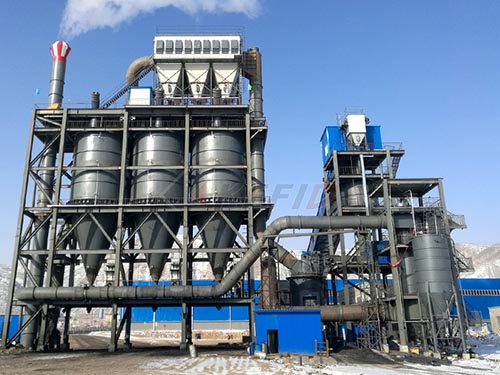
HeavyDuty Primary Station | Technical Basis: Deepchamber jaw crusher with reinforced frame and oversized bearings | Operational Benefit: Handles peak loads from direct truck dumping with minimal risk of stress fatigue or premature bearing failure | ROI Impact: Extends major component service life by an estimated 30%, reducing lifetime capital replacement costs.
Modular Crusher & Screen Decks | Technical Basis: Bolttogether subassemblies with standardized interfaces | Operational Benefit: Enables faster replacement of wear components and simplifies future plant expansion or reconfiguration | ROI Impact: Reduces planned maintenance downtime by up to 25% compared to weldedunit designs.

Centralized Greasing & Hydraulic System | Technical Basis: Automated lubrication points and singlepowerunit hydraulic circuits for adjustment | Operational Benefit: Ensures critical bearings receive consistent lubrication; allows safe, remote adjustment of crusher settings for product size changes | ROI Impact: Mitigates bearing seizure risks (a major cause of catastrophic failure) and improves operator safety during adjustments.
Tiered Dust Suppression Network | Technical Basis: Strategically placed nozzles at all transfer points with solenoid valves tied to the conveyor run signal | Operational Benefit: Activates suppression only when material is moving, effectively controlling airborne particulate without excessive water usage | ROI Impact: Maintains regulatory compliance, avoids fines, and reduces water consumption by approximately 40% versus alwayson systems.
HighAngle/LongDistance Conveyors | Technical Basis: Engineered conveyor profiles with appropriate drive power and idler spacing | Operational Benefit: Efficiently moves bulk material over required plant distances with minimal spillage and rollback | ROI Impact: Lowers longterm operating costs compared to truck haulage within the site and reduces material loss.
4. COMPETITIVE ADVANTAGES
| Performance Metric | Industry Standard for 250300tph Plants | Our 250300tph Stone Crushing Plant Solution | Advantage (% Improvement) |
| : | : | : | : |
| Overall Availability (Scheduled Runtime) | 9092% | 9496% | +4% to +6% |
| Cost per Ton (Energy + Wear Parts) Baseline = 100| Index of 100| Index of 8590|1015% Reduction|
| Mean Time Between Failure (MTBF) Key Crushers| ~1,200 hours| ~1,500 hours| +25% |
| Product Gradation Consistency (Passing Spec)| ~90% compliance| >97% compliance| >7% Improvement |
| Reconfiguration Time for Size Change| 46 hours (mechanical adjustment)|23 hours (hydraulic adjustment)| ~50% Faster |
5. TECHNICAL SPECIFICATIONS
Designed Capacity Range: 250 300 metric tons per hour (tph), based on standard limestone with bulk density of 1.6 t/m³.
Primary Crusher Options: Jaw Crusher (Feed opening up to 1200x900mm) or Gyratory Crusher.
Secondary/Tertiary Crushers: Hydraulic Cone Crushers with multiple cavity options.
Screening Units: Multideck heavyduty vibrating screens (typically 23 units).
Total Installed Power: Approximately 550 700 kW, depending on final configuration.
Key Material Specifications: Wear liners manufactured from Mn18Cr2 or equivalent highgrade manganese steel; Conveyor belts rated for minimum PIW=1250; Structural steel grade Q345B.
Overall Plant Footprint (LxW): Approximately 85m x 45m (varies with layout).
Environmental Operating Range: Designed for ambient temperatures from 20°C to +45°C; dust emission levels designed to meet sub20 mg/Nm³ standards at points of control.
6. APPLICATION SCENARIOS
Highway Construction Project Aggregate Supply
Challenge: A contractor needed a guaranteed supply of over 2 million tons of precisely graded aggregates within an18month period for a highway base course and asphalt layers. Their existing mobile fleet could not meet consistent quality or volume demands.
Solution: Installation of a permanent Industrial300tph Stone Crushing Plant configured with tertiary crushingand four final product screens adjacent to the project site quarry.
Results: The plant achieved an average output of275 tph at94% availability.Supplied100% onspec material,directly enabling continuous asphalt plant operation.The project concluded three weeks aheadof schedule due toreliable material supply.
Commercial Granite Quarry Expansion
Challenge:A granite quarry operator soughtto expand production from150 tph toover280 tphto fulfill new contracts,but faced space constraintsand neededto improve product yieldfor highervaluechips.
Solution:A modulardesigned250300tphplant featuringa highreduction ratio primary jawcrusherandtwo secondary cone crushers in closed circuitwith screensfor optimal shaping.
Results:The new layout fit the existing site footprint.Yieldof premiumshaped chip products increasedby22%.Plant automation allowedoperationwith twofewer personnelper shiftcomparedto the older setup.
7.COMMERCIAL CONSIDERATIONS
Our Industrial250300tphStone Crushing Plants are offeredin tiered configurations:
Standard Tier:A proven,costeffective configuration usingreliable component brands,focusedon corecrushing functions.Ideal forbudgetconscious buyerswithstandardmaterial requirements.
Performance Tier:The recommended configuration featuringadvancedautomation,the highestefficiencycrushers,andpremiumwear materials.Balancesoptimal lifecycle costwith peak performance.
Custom Tier:Fully engineeredtoorder solutionsfor specificfeed materials(high abrasion,silica content),extreme climates,andcomplexproduct specification requirements.
Optional features include automated metal detection/removal systems,tramp iron reliefon conveyors,andremote monitoring telematics packages.Service packages range frombasic commissioningandoperator trainingto comprehensive annual maintenance contractswith guaranteedwear part performance.Financing options including equipment leasingandterm loansare available through our financial partners tomatchyour project cash flow requirements.
8.FAQ
Q1:What levelof foundationworkis required priorto installation?
A1:A full geotechnical surveyis required.We provide detailed foundation drawingsrequiring reinforced concrete foundationsfor allmajorcrusherandscreen units.Conveyor footingsare typicallyless extensive.Total civilworkscopeis asignificant considerationin project planningandtimeline.
Q2:Canyourplant be integratedwithourexistingprimarycrusheror screening equipment?
A2:Potenially,yes.Engineering reviewis necessary.We can designthe balanceof plant(BOP)–conveyors,screens,andtertiary crushing–to interfacewithequipmentyouretain.Control system integrationis keyandwillbe assessedduringthe design phase.
Q3:Whatisthe typicallead timefromorder todeliveryandcommissioning?
A3:Fabricationlead timefora completePerformanceTierplant istypically57months.Site preparationmust occurin parallel.Commissioningrequires23weekswithyour operational team present.Total project timelinefromorder toroutineproduction isoften8+monthsdependingonsite readiness.
Q4:Whatisthe expectedlifespanof themajor structural components,andwhatwarrantyis provided?
A4:The main structuralsteelframeworkis designed fora minimumservice lifeof20+yearsunder normaloperating conditions.Major mechanicalcomponents(crushers,screens)carryastandard12monthwarrantyagainst manufacturing defects.Extendedwarrantiesare availableforcritical drivetrainsas partofa service contract.
Q5:Whatspare parts inventorydo yourecommendwe stockonsite initially?
A5Werecommendacritical spares kitincludingjaw plates,mantle/bowl liners,screen meshes,bearingsforsmajor drives,andahydraulic pump.This minimizesdowntimewaitingforparts.Field datashows thisinitial investmenttypically paysfor itselfwithin the first yearbyavoidingsingleincidentsof extended downtime