
Import Gold Ore Crushing Equipment Design Service
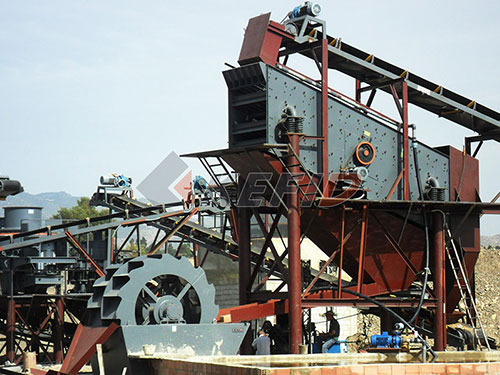

Import Gold Ore Crushing Equipment Design Service
The Hidden Costs of Inefficient Gold Ore Crushing
Every ton of gold ore that passes through an undersized or poorly configured crushing circuit represents lost recovery potential. Industry data indicates that crushing inefficiencies can reduce overall gold recovery by 37%, translating to $15$35 per ton in lost revenue at current gold prices. Your plant managers face recurring challenges: excessive downtime from equipment mismatched to ore hardness, escalating wear costs from abrasive feed materials, and circuit bottlenecks that limit throughput during peak production periods.
Are your current crushing stages delivering the liberation size required for optimal cyanidation or gravity recovery? Can your existing equipment handle the transition from oxide to sulfide ore bodies without major reconfiguration? These questions determine whether your operation achieves target recovery rates or leaves value in the tailings.
Product Overview: CustomEngineered Gold Ore Crushing Systems
Our Import Gold Ore Crushing Equipment Design Service delivers sitespecific crushing solutions engineered for the unique characteristics of goldbearing ores. Unlike offtheshelf crushers, these systems are designed around your ore's specific Bond Work Index, abrasion index, and moisture content.
Operational Workflow:
1. Feed Preparation – Runofmine ore passes through grizzly feeders with adjustable spacing (100300mm) to remove fines and control topsize feed
2. Primary Crushing – Jaw or gyratory crushers reduce ore to 150200mm with throughput capacities matched to your mining rate
3. Secondary Crushing – Cone crushers with automated setting adjustment achieve P80 of 2540mm
4. Tertiary/Quaternary Crushing – Highpressure grinding rolls (HPGR) or vertical shaft impactors (VSI) produce final product at P80 of 612mm
5. Screening Circuit – Multideck vibrating screens with polyurethane panels ensure closedcircuit operation and prevent overgrinding
Application Scope: Suitable for freemilling gold ores, refractory ores requiring fine grinding, and transitional ore bodies. Not recommended for ores with clay content exceeding 15% without preconditioning systems.
Core Features
Custom Crushing Chamber Geometry | Technical Basis: Chamber profile optimized using DEM (Discrete Element Method) modeling for your ore's fracture characteristics | Operational Benefit: Reduces recirculating load by 1825% compared to standard chambers | ROI Impact: Lower power consumption per ton (0.81.2 kWh/t savings) and extended liner life
Automated ClosedSide Setting (CSS) Control | Technical Basis: Hydraulic adjustment system with laserbased position feedback, accuracy within ±1mm | Operational Benefit: Maintains consistent product size despite liner wear, reducing downstream grinding variability | ROI Impact: 1215% improvement in ball mill throughput due to consistent feed size distribution
Wear Component Material Selection | Technical Basis: Applicationspecific alloys including 18% manganese steel, chromemoly irons, or ceramic composites based on ore abrasion index | Operational Benefit: Liner life extended 4060% versus standard manganese in highabrasion applications | ROI Impact: Reduced annual wear parts expenditure of $120,000$250,000 for a 500 tph circuit
Integrated Dust Suppression System | Technical Basis: Engineered water spray nozzles at transfer points with misting chambers, achieving <1 mg/m³ particulate emissions | Operational Benefit: Compliance with OSHA and local environmental regulations without baghouse capital costs | ROI Impact: Avoids $200,000$500,000 in additional dust collection equipment
Modular SkidMounted Design | Technical Basis: Preassembled modules with quickconnect piping and electrical, tested before shipment | Operational Benefit: Site installation completed in 1421 days versus 812 weeks for conventional installations | ROI Impact: Earlier production start generating $50,000$100,000 per day in revenue
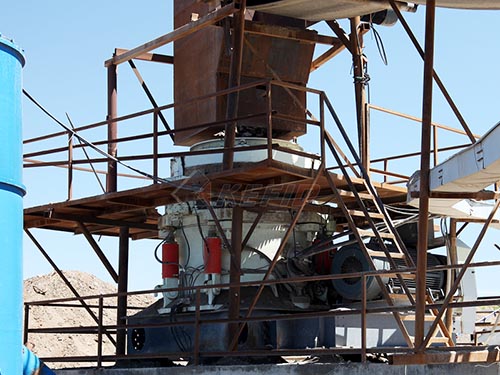
Remote Monitoring and Diagnostics | Technical Basis: IoT sensors monitoring bearing temperatures, vibration, power draw, and oil condition with cloudbased analytics | Operational Benefit: Predictive maintenance alerts 72+ hours before failure, reducing unplanned downtime | ROI Impact: 92% equipment availability versus industry average of 8588%
Feed Analysis Integration | Technical Basis: Online particle size analyzer and moisture sensor at crusher feed, adjusting CSS automatically | Operational Benefit: Maintains target P80 within ±2mm despite feed variability | ROI Impact: 58% reduction in cyanide consumption due to consistent liberation
Competitive Advantages
| Performance Metric | Industry Standard | Import Gold Ore Crushing Solution | Advantage |
|||||
| Specific Power Consumption (kWh/t) | 4.56.0 | 3.24.5 | 2835% reduction |
| Liner Life (operating hours) | 3,0005,000 | 5,0008,000 | 4060% increase |
| Product Size Consistency (P80 variation) | ±5mm | ±2mm | 60% improvement |
| Availability (operating hours/year) | 7,2007,500 | 7,8008,100 | 48% increase |
| Installation Time (weeks) | 1216 | 34 | 7075% reduction |
| Recirculating Load (%) | 2535 | 1522 | 3040% reduction |
| Dust Emissions (mg/m³) | 510 | <1 | 8090% reduction |
Technical Specifications
| Parameter | Primary Crusher | Secondary Crusher | Tertiary Crusher |
|||||
| Feed Opening | 1,200 x 900mm | 350mm (max feed) | 80mm (max feed) |
| Capacity Range | 2001,200 tph | 150800 tph | 100600 tph |
| Power Requirement | 160400 kW | 200500 kW | 250800 kW |
| Voltage | 3,300V / 6,600V | 3,300V / 6,600V | 6,600V / 11,000V |
| Main Frame Material | Cast steel (ASTM A148) | Fabricated steel (ASTM A36) | Cast steel (ASTM A148) |
| Weight (operating) | 85,000180,000 kg | 45,00095,000 kg | 35,00075,000 kg |
| Dimensions (LxWxH) | 5.5x3.8x4.2m | 4.2x3.0x3.5m | 3.8x2.8x3.2m |
| Operating Temperature | 20°C to 50°C | 20°C to 50°C | 20°C to 50°C |
| Max Feed Moisture | 8% | 6% | 5% |
Application Scenarios
FreeMilling Gold Operation, Western Australia | Challenge: Plant processing 4.5 million tonnes annually was experiencing 12% downtime due to jaw crusher failures from highly abrasive quartzite ore. Liner replacement every 2,800 hours was costing $1.2 million annually in parts and labor. | Solution: Import Gold Ore Crushing Equipment Design Service specified a custom jaw crusher with chromemoly iron liners, hydraulic CSS adjustment, and a prescreen to remove fines before the crusher. | Results: Liner life extended to 6,200 hours, downtime reduced to 4.5%, annual maintenance cost savings of $780,000, and throughput increased 8% due to reduced recirculating load.
Refractory Ore Processing, Nevada USA | Challenge: Operation processing Carlintype gold ore required P80 of 8mm for pressure oxidation feed. Existing cone crusher circuit produced inconsistent product with P80 varying between 1014mm, causing oxidation inefficiency and 6% gold loss. | Solution: Installed HPGR tertiary crushing system with integrated particle size analyzer and automatic gap control, designed for 450 tph throughput. | Results: P80 maintained at 7.5mm ±0.5mm, gold recovery improved 4.2%, power consumption reduced 22% compared to previous cone crusher circuit, and annual revenue increase of $3.8 million at 1,200 oz/month production.
Transitional Ore Body, Ghana | Challenge: Mine transitioning from oxide to sulfide ore at depth experienced 40% reduction in crusher throughput as ore hardness increased from 12 to 18 kWh/t Bond Work Index. Existing equipment could not maintain target production of 600 tph. | Solution: Redesigned secondary and tertiary crushing stages with higher horsepower cone crushers, upgraded screen media, and added surge capacity. | Solution: Completed within 6 weeks using modular design approach, minimizing production interruption. | Results: Throughput maintained at 580620 tph, operating costs increased only 15% versus 35% projected for alternative solutions, and capital expenditure was $2.1 million versus $4.5 million for complete replacement.
Commercial Considerations
Equipment Pricing Tiers (FOB Port of Origin):
| Configuration | Capacity Range | Price Range | Lead Time |
|||||
| Standard Design Package | 200400 tph | $850,000 $1,400,000 | 1620 weeks |
| Custom Engineered System | 400800 tph | $1,800,000 $3,200,000 | 2028 weeks |
| HighCapacity Integrated Circuit | 8001,200 tph | $3,500,000 $5,800,000 | 2836 weeks |
Optional Features:
- Online particle size analyzer: $85,000 $150,000
- Automated lubrication system: $45,000 $75,000
- Remote monitoring package: $35,000 $60,000
- Spare parts kit (12month operation): $180,000 $350,000
- Installation supervision (48 weeks): $120,000 $200,000
- Basic Package: Equipment warranty (24 months), commissioning support (2 weeks), operator training (1 week) – included in base price
- Premium Package: Extended warranty (60 months), quarterly performance audits, priority technical support, annual maintenance planning – $85,000/year
- FullService Package: All Premium features plus guaranteed availability (92%), wear parts management, remote monitoring with monthly reports – $195,000/year
- 30% deposit with order, 40% on shipment, 30% on commissioning
- Equipment lease financing available through partner institutions (37 year terms)
- Performancebased payment plans: 20% upfront, balance paid over 24 months based on throughput milestones
Service Packages:
Financing Options:
Frequently Asked Questions
Q: How does your design service account for variations in ore hardness within the same deposit?
A: We conduct geostatistical analysis of your drill core data to identify hardness variability ranges. The crusher design incorporates a 1520% safety factor above the average Bond Work Index, and the automated CSS system adjusts in realtime to maintain product size as feed hardness changes.
Q: What is the typical timeline from initial consultation to operational equipment?
A: The complete process requires 2440 weeks depending on complexity. This includes 46 weeks for ore characterization and design, 1220 weeks for fabrication, 46 weeks for shipping, and 34 weeks for installation and commissioning.
Q: Can your equipment integrate with existing conveyor systems and downstream processing?
A: Yes. Our design service includes full integration engineering. We provide adapter chutes, transfer towers, and control system interfaces compatible with your existing PLC/DCS infrastructure. We have successfully integrated with AllenBradley, Siemens, and Schneider Electric systems.
Q: What warranty coverage is provided for wear components?
A: Structural components carry a 24month warranty against manufacturing defects. Wear components (liners, mantles, concaves) are warranted for 12 months or 4,000 operating hours, whichever occurs first, provided operating parameters are maintained within design specifications.
Q: How do you handle spare parts availability for imported equipment?
A: We maintain regional warehouses in Perth, Johannesburg, and Reno with $2.5 million in critical spare parts inventory. Standard wear parts ship within 48 hours, and emergency orders within 24 hours. We also provide a recommended spares list with your equipment.
Q: What training do you provide for maintenance and operations teams?
A: Training includes a 5day onsite program covering crusher operation, maintenance procedures, liner changeout protocols, and troubleshooting. We provide detailed maintenance manuals, video tutorials, and access to our technical support team. Refresher training is available annually.
Q: Can the equipment be modified for future ore body changes?
A: The modular design allows for component upgrades. The base frame and drive train are engineered with 25% excess capacity to accommodate future higherhorsepower motors or larger crushing chambers. We provide upgrade feasibility assessments at no cost for the first five years of operation.