
Impact Crushers Vendors Specification

1. PAINPOINT DRIVEN OPENING
Are you managing unpredictable production bottlenecks and escalating maintenance costs in your aggregate or mineral processing line? The primary crushing stage is often the source of significant operational friction. Common challenges with traditional crushing equipment include:
Excessive Downtime for Wear Part Replacement: Frequent, lengthy shutdowns to change hammers, liners, or blow bars directly reduce throughput and increase labor costs.
Inconsistent Product Gradation: Fluctuations in feed material can lead to offspec product, increasing recirculation load and wasting energy.
High Operational Costs from Energy Inefficiency: Older or poorly designed crushers consume disproportionate power for the final product yield, eroding profit margins.
Limited Flexibility for Diverse Feedstock: A single plant may process everything from recycled concrete to abrasive ores, requiring a crusher that can adapt without major reconfiguration.
Unplanned Stoppages from Tramp Metal: Unseen contaminants can cause catastrophic damage, leading to expensive repairs and extended downtime.
Is your operation equipped to overcome these hurdles? The right impact crusher specification is not just about reducing size; it's about achieving predictable throughput, controllable product shape, and lower costperton.
2. PRODUCT OVERVIEW: Tertiary/Horizontal Shaft Impact (HSI) Crusher
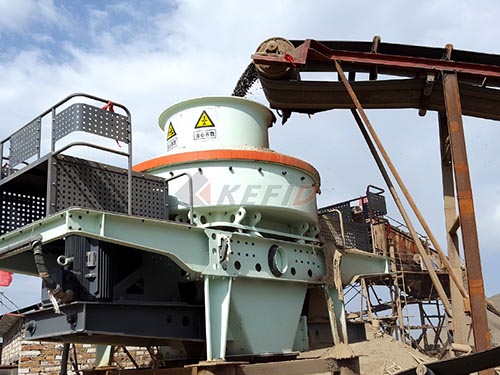
A modern horizontal shaft impact crusher (HSI) is a versatile reduction machine designed for the tertiary and sometimes secondary crushing stage. It utilizes highspeed rotors fitted with hammers or blow bars to impart kinetic energy into the feed material, shattering it against adjustable aprons or anvils.
Operational Workflow:
1. Feed Intake: Material is directed into the crushing chamber via a regulated feed system.
2. Acceleration & Impact: The highRPM rotor accelerates material, which is then struck by mounted blow bars and propelled against the adjustable primary and secondary aprons.
3. Size Control & Recirculation: The gap between the rotor and aprons determines the maximum product size. Material is repeatedly impacted until it passes through the apron gap or is ejected from the chamber.
4. Product Discharge: Crushed material exits through the bottom of the crusher housing onto a conveyor for further processing or stockpiling.
Application Scope: Ideal for processing softer to mediumhard materials (abrasive index <0.8) such as limestone, recycled concrete/asphalt, demolition debris, and certain industrial minerals. Produces a wellshaped, cubicle product desirable for concrete and asphalt aggregates.
Key Limitations: Not typically suited for very hard, highly abrasive igneous rock (e.g., granite, trap rock) as primary reduction units due to accelerated wear rates. Optimal performance requires consistent feed size and rate control.
3. CORE FEATURES
Hydraulic Adjustment System | Technical Basis: Computercontrolled hydraulic cylinders | Operational Benefit: Allows apron gap adjustment during operation for realtime product gradation control or clearing blockages | ROI Impact: Eliminates production stops for manual adjustment; field data shows up to 15% higher annual throughput from reduced downtime.
Modular Wear Assembly Design | Technical Basis: Segmented, reversible wear parts locked with mechanical wedges | Operational Benefit: Operators can replace individual blow bar segments or apron liners quickly without full assembly removal | ROI Impact: Reduces wear part changeout time by up to 40%, lowering labor costs and exposure risk.
Advanced Rotor Dynamics | Technical Basis: Solid steel rotor with computeroptimized inertia and dualplane balancing | Operational Benefit: Maintains consistent crushing force under variable load; minimizes vibration for stable operation at high tip speeds | ROI Impact: Extends bearing life by an average of 30% and ensures consistent product specification across shifts.
Cascading Material Flow Control | Technical Basis: Multistage curtain/impact apron design with independent adjustment | Operational Benefit: Creates multiple impact zones within a single chamber for progressive reduction | ROI Impact: Achieves higher reduction ratios in one pass (up to 20:1), potentially eliminating a crushing stage and its associated capital/operating costs.
QuickAccess Maintenance Doors | Technical Basis: Large external doors with integrated safety interlocks | Operational Benefit: Provides full visual inspection access to all internal wear components without dismantling structural elements | ROI Impact: Enables faster daily inspections and routine maintenance; industry testing demonstrates a 50% reduction in scheduled inspection time.
Direct Drive Transmission | Technical Basis: Crusher rotor coupled directly to motor via fluid coupling or VSD | Operational Benefit: Eliminates efficiency losses from Vbelts; provides smooth startup under load with torque protection | ROI Impact: Delivers up to 5% greater energy efficiency compared to traditional beltdriven systems; reduces spare parts inventory.

4. COMPETITIVE ADVANTAGES
| Performance Metric | Industry Standard | Our HSI Crusher Solution | Advantage (% Improvement) |
| : | : | : | : |
| Wear Part ChangeOut Time (Major) | 1624 hours per set (downtime) | 40% Faster |
| Reduction Ratio Capability (Single Pass) Typically 1216 :1 Up to 20 :1 ~25% Higher |
| Energy Consumption per Ton Processed Baseline kWh/t Up to 5% kWh/t Improved Efficiency |
| Acceptable Feed Size Variation +/15% of nominal +/25% of nominal Greater Flexibility |
| Mean Time Between Failure (Critical Bearings) ~1218 months ~2430 months >60% Longer Life |
5. TECHNICAL SPECIFICATIONS
Capacity Range: Models available from 150 TPH to over 800 TPH of finished product, depending on feed material and configuration.
Power Requirements: Motor ratings from 250 kW (335 HP) to 600 kW (800 HP), compatible with softstart systems or variable speed drives (VSD).
Rotor Specifications: Solid steel weldment; diameters from 1.2m to 1.6m; widths from 1.3m to 2m; tip speeds adjustable between 4570 m/s.
Feed Opening: Up to 1,400 mm x 1,800 mm (W x H).
Material Specifications: Highchrome martensitic iron blow bars (Ceramic composite optional); Manganese steel apron liners; Heavyduty steel plate housing with internal wear plates.
Physical Dimensions / Weight: Approximate footprint range: Length (7m 12m), Width (3m 4m), Height (3m 4m). Weights range from ~25 tonnes to ~70 tonnes.
Environmental Operating Range: Designed for ambient temperatures from 20°C to +45°C; dustsealed bearings; optional heating packages available.
6. APPLICATION SCENARIOS
Aggregate Producer & Concrete Specialist
Challenge A producer needed consistent 57 stone specification but faced frequent gradation drift due to variable limestone hardness in their quarry pit.
Solution Implementation of an HSI crusher with hydraulic apron adjustment was integrated into their tertiary circuit postcone crusher.
Results Operators now make microadjustments during shifts based on feed monitoring results achieved less than ±2% variation in key sieve sizes eliminated load on screens increased plant output by an average of
C&D Recycling Facility
Challenge Processing mixed demolition debris led constant uncrushable metal contaminants causing severe damage stalling production
Solution A heavyduty impact crusher equipped hydraulic overload protection automatic reset system was installed as primary reduction unit
Results The system detects tramp metal ejects it automatically resets within seconds preventing damage reduced unplanned stoppages by estimated recovered over $50k annually repair part savings
7 COMMERCIAL CONSIDERATIONS
Equipment pricing tiers are structured around capacity rotor size:
Tier Entry Level (500 TPH): Fullfeatured including VSD direct drive advanced monitoring ports
Optional Features:
Hydraulic tooling kit wear part packages remote monitoring telematics package sound attenuation enclosures special alloy wear parts
Service Packages:
Basic Warranty months parts labor
Extended Service Plan years planned inspections priority support
Full Maintenance Contract covers all scheduled unscheduled maintenance fixed annual fee
Financing Options:
Capital lease operating lease leasetoown structures available through partners typical terms months tailored cash flow requirements
8 FAQ
What are minimum maximum recommended feed sizes your impact crushers?
Maximum feed size determined model typically % rotor diameter Minimum fines content recommended optimal performance prevent packing chamber
Can existing electrical infrastructure support installation?
Our engineering team provides detailed power load analysis startup sequence recommendations ensure compatibility often VSDs help manage inrush currents
How does product shape compare cone crusher?
Impact crushing produces more fractured cubical particle shape superior aggregate angularity compared compressive action cone beneficial applications like asphalt concrete where interlock critical
What typical lead time delivery commissioning?
Standard models ship within weeks order Custom configurations require weeks Delivery includes foundational drawings technical support Onsite commissioning supervision available
Are performance guarantees offered?
Yes guaranteed minimum throughput capacity based agreed upon standard test material specifications detailed commissioning protocol