
Impact Crushers Sourcing

1. PAINPOINT DRIVEN OPENING
Are you managing rising operational costs driven by inefficient size reduction? Common challenges with secondary and tertiary crushing include inconsistent product gradation, leading to downstream processing bottlenecks and reduced final product quality. Premature wear of consumable parts results in unpredictable maintenance budgets and unplanned downtime, halting your entire production line. Furthermore, excessive fines generation in certain applications represents direct product loss and wasted energy. How can you achieve a more controlled breakage to meet precise specifications, extend intervals between maintenance shutdowns, and optimize the overall efficiency of your crushing circuit? The solution requires a machine engineered for precision, durability, and operational economy.
2. PRODUCT OVERVIEW
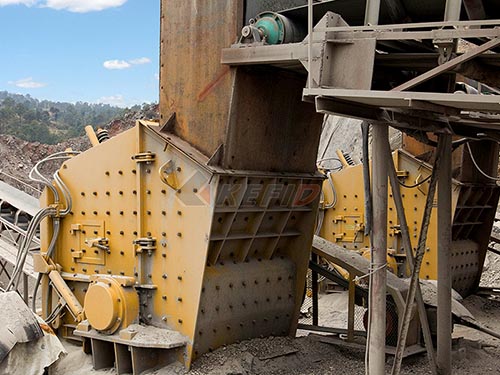
A modern impact crusher is a core piece of aggregate, recycling, and mining equipment designed for size reduction through highspeed impact rather than compression. Its operational workflow is straightforward: feed material is introduced into the crushing chamber where it encounters rapidly rotating rotors fitted with hammers or blow bars. The material is struck by these elements and hurled against adjustable impact aprons or breaker plates, undergoing repeated impacts until it reaches the desired size and exits through the adjustable gap at the bottom.
This equipment is highly effective for processing limestone, recycled concrete, asphalt, and other mediumhard materials where a cubical product shape is critical. It is generally not suited for primary crushing of very hard, abrasive materials like granite or ore without significant compromise to wear life and operating cost.
3. CORE FEATURES
Hydraulic Adjustment System | Technical Basis: Integrated hydraulic cylinders controlling apron positioning | Operational Benefit: Allows operators to adjust product gradation in minutes without manual shim changes, even under load in some models | ROI Impact: Reduces adjustment downtime by up to 80%, increasing plant availability for production.
Martensitic/Ceramic Composite Wear Parts | Technical Basis: Advanced metallurgy combining fractureresistant steel with embedded ceramic inserts for abrasion resistance | Operational Benefit: Significantly extends service life of blow bars and apron segments in abrasive applications | ROI Impact: Lowers costperton for wear parts by 3050% and decreases frequency of highrisk liner changeouts.
Modular Wear Part Design | Technical Basis: Segmented blow bars and reversible/apron sections that can be rotated or replaced individually | Operational Benefit: Maximizes utilization of wear material, reduces part inventory complexity, and simplifies replacement tasks | ROI Impact: Cuts wear part costs by utilizing over 90% of material before changeout and reduces maintenance labor hours.
Direct Drive System | Technical Basis: Rotor connected directly to the motor via fluid coupling or clutch, eliminating Vbelts | Operational Benefit: Provides higher power transmission efficiency (over 95%), reduces slippage losses, and minimizes routine maintenance points | ROI Impact: Improves energy efficiency by 58% compared to traditional Vbelt drives and lowers longterm drive maintenance costs.
Advanced Chamber Geometry | Technical Basis: Computermodeled crushing chamber optimizing impact angles and material flow | Operational Benefit: Enhances reduction ratio per stage and promotes better cubical product shape while reducing clogging potential | ROI Impact: Improves overall circuit yield of inspec product, reducing recirculation load and associated energy costs.
4. COMPETITIVE ADVANTAGES
| Performance Metric | Industry Standard Baseline | Advanced Impact Crusher Solution | Advantage (% improvement) |
| : | : | : | : |
| Wear Part Life (Abrasive Mat.)| 6080k tons per set| 110130k tons per set| +50% |
| Product Cubicity Ratio (Avg.)| 0.7 0.8| 0.85 0.9| +15% |
| Gradation Adjustment Time| 24 hours (mechanical)| <30 minutes (hydraulic)| 85% |
| Power Consumption (kWh/ton)| Specific to application| Field data shows 510% reduction| 5 to 10% |
Dependent on feed material vs. compressionbased crushers.
5. TECHNICAL SPECIFICATIONS
Capacity Range: Modeldependent from 150 TPH to over 800 TPH for quarrysized units.
Rotor Diameter & Width: From 1m x 1m to 1.6m x 2m.
Drive Power: Typically between 250 kW (335 HP) and 750 kW (1000 HP).
Feed Opening Size: Up to approximately 1.6m x 2m for large primary/secondary units.
Max Feed Size: Generally up to 80% of feed opening dimension.
Weight: Ranges from ~25 tonnes to over 70 tonnes for stationary configurations.
Key Material Specifications: Rotor fabricated from hightensile steel; bearing housings are cast steel; frame constructed from heavyduty plate.
Environmental Operating Range: Designed for ambient temperatures from 20°C to +45°C; dustsealed bearings standard; optional kits available for more extreme environments.
6. APPLICATION SCENARIOS
Aggregate Quarry – Limestone Processing | Challenge: A quarry needed improved yield of chip seal aggregates requiring strict cubical specification while contending with highly abrasive silica content in the deposit.| Solution: Implementation of a heavyduty impact crusher with ceramic composite blow bars as the secondary stage.| Results: Achieved consistent product cubicity ratio above 0.87, meeting premium spec pricing targets. Wear part life increased by over 60%, allowing predictable quarterly versus monthly changeout schedules.
Construction & Demolition Waste Recycling | Challenge: A C&D recycling facility faced excessive downtime from uncrushable steel contaminants jamming the crusher and causing catastrophic drive damage.| Solution: Installation of an impact crusher equipped with a robust hydraulic overload protection system that automatically releases tramp iron.| Results: Unplanned downtime events from tramp metal fell by over 90%. The system’s ability to process reinforced concrete efficiently increased plant throughput by an estimated 20%.
7. COMMERCIAL CONSIDERATIONS
Impact crusher pricing is tiered based on capacity, robustness of construction, and level of technology:
Standard Tier: Competitive models suited for consistent feed of nonabrasive materials with mechanical adjustment.
Performance Tier: Features hydraulic adjustment systems, heavierduty bearings/rotors, advanced wear materials; recommended for mixed or abrasive feeds.
Modular/Portable Tier: Trackmounted or wheeled units with integrated prescreens; priced as a complete mobile system.
Optional features include automated control systems integrated with plant PLCs, specialized wear part alloys (e.g., highchrome white iron), onboard weighing systems,and advanced condition monitoring sensors.Service packages typically range from basic commissioning support up through comprehensive multiyear partsandlabor maintenance agreements.Financing options commonly include capital leases operating leases,and rentaltoown structures tailored to cash flow requirements
8.FAQ
Q:What are the main factors determining whether an impact crusher or cone crusher is better for my application?
A:The choice hinges on feed material hardness abrasiveness required product shape,and moisture content Impact crushers generally excel at producing a cubical product from less abrasive rock at lower operating cost per ton Cone crushers are typically preferred for harder more abrasive feeds where wear cost minimization is paramount
Q Can an impact crusher handle a primary crushing role?
A While some large primary impactors exist they are applicationspecific For most hard rock primary crushing jaw or gyratory crushers remain the standard due to their ability to handle larger feed size unconditionally Impactors are most commonly deployed as secondary tertiary or recycling crushers
Q How does the total costofownership compare between different impact crusher models?
A A lower initial purchase price may lead to higher longterm costs Focus on key metrics like demonstrated wear part costperton energy consumption per ton processedand expected availability percentage These factors quantified over your annual tonnage provide a true comparison
Q What level of operator training is required?
A Modern units with automated controls simplify operation Basic training focuses on safe inspection procedures understanding gradation adjustmentsand recognizing abnormal sounds/vibrations Comprehensive training covers wear part replacement sequencesand basic troubleshooting
Q Are there financing structures that include future performance upgrades?
A Yes Some agreements can be structured as technology upgrade leases which allow youto planfor midlife controller upgradesor other retrofits keeping your equipment current without major capital outlays