
Impact Crushers Factories Bulk Order
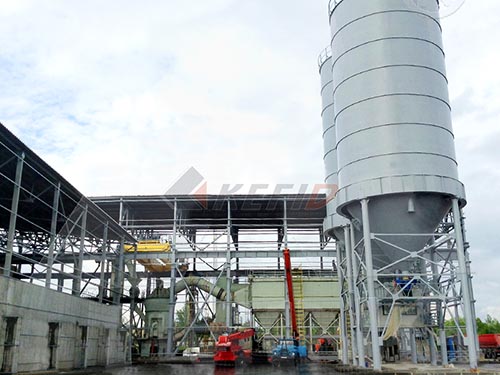

1. PAINPOINT DRIVEN OPENING
Are you managing crushing operations where high wear part costs, inconsistent product gradation, and unplanned downtime are eroding your plant's profitability? For plant managers and procurement specialists sourcing primary or secondary crushing equipment, these are not minor issues—they are major financial drains.
Excessive Wear Costs: Standard impact crusher rotors and blow bars can require replacement after processing just 20,00030,000 tons of abrasive material, leading to significant recurring parts expenditure and labor for changeouts.
Product Quality Variability: Fluctuations in feed size or moisture content can cause final product gradation to shift outside specification, resulting in wasted loads, rejected materials, and customer dissatisfaction.
Unscheduled Maintenance Stoppages: A catastrophic failure of a core component can halt your entire processing line for 2448 hours or more. The cost of this downtime often far exceeds the price of the part itself.
Limited Feed Flexibility: Many crushers struggle with a blend of materials or require strict prescreening to operate efficiently, limiting your ability to process varied feedstocks from different sources.
The central question becomes: how do you select an impact crusher that directly addresses these operational and financial challenges while delivering a measurable return on investment?
2. PRODUCT OVERVIEW
The modern horizontal shaft impact crusher (HSI) is a robust reduction machine designed for highvolume processing of low to mediumabrasive materials like limestone, recycled concrete, asphalt, and demolition debris. Its operational workflow is defined by a direct and efficient mechanical action:
1. Feed Intake: Material is loaded into the feed hopper and directed by gravity onto the feed conveyor.
2. Acceleration & Impact: The heart of the system is a highinertia rotor spinning at a controlled speed. Feed material is picked up by massive manganese hammers or blow bars mounted on the rotor and hurled against solid steel impact aprons or curtains.
3. Size Reduction: Fracture occurs primarily through this violent impact, with secondary breakage as particles collide against each other.
4. Gradation Control: The final product size is precisely governed by adjusting the speed of the rotor and the gap between the rotor blow bars and the adjustable aprons. A secondary curtain may provide additional crushing stages.
5. Discharge: Sized material exits through the bottom of the crusher housing onto discharge conveyors for stockpiling or further processing.
Application Scope & Limitations:
Ideal For: Primary or secondary crushing of nonabrasive aggregates (limestone, dolomite), asphalt recycling, concrete recycling, C&D debris processing, and industrial minerals.
Limitations: Not recommended as a primary solution for highly abrasive materials (e.g., granite, trap rock) without accepting accelerated wear rates. Performance can be sensitive to high clay or moisture content without proper feed management.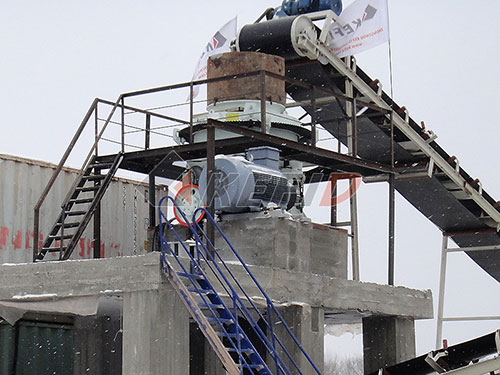
3. CORE FEATURES
Hydraulic Adjustment System | Technical Basis: Computercontrolled hydraulic cylinders | Operational Benefit: Allows operators to adjust crusher setting (gap) in under 60 seconds from a remote station for precise product sizing | ROI Impact: Eliminates manual shim adjustments; reduces product specification deviation waste by up to 15%
Solid Rotor Construction | Technical Basis: Monobloc steel casting or fabricated steel design with oversized bearings | Operational Benefit: Provides maximum inertia for efficient crushing with less vibration; handles larger feed sizes reliably | ROI Impact: Increases throughput capacity by 1020% over lighter rotors; extends bearing life significantly
QuickChange Wear Part System | Technical Basis: Wedgelock or cartridgeheld blow bars and apron liners | Operational Benefit: Enables full set of wear parts replacement in under 4 hours with standard tools | ROI Impact: Reduces labor costs per changeout by ~40% versus bolted systems; minimizes production loss during maintenance
MultiPort Rotor Design | Technical Basis: Rotor configurations offering 2, 3, or 4bar mounting positions | Operational Benefit: Provides optimal kinetic energy transfer based on feed material density and desired reduction ratio | ROI Impact: Optimizes power consumption per ton crushed; improves fines production control
Cascading Apron Curtains | Technical Basis: Twostage adjustable impact curtains create multiple fracture zones | Operational Benefit: Achieves higher reduction ratios in a single pass; produces more cubical product shape | ROI Impact: Can reduce need for tertiary crushing stage in some circuits; premium cubical aggregate commands higher market value
PLCBased Monitoring & Automation | Technical Basis: Integrated sensors for bearing temperature, vibration, rotor speed (RPM), and power draw (kW) | Operational Benefit: Provides realtime operational data and automatic shutdown triggers to prevent catastrophic damage | ROI Impact: Predictive maintenance capability reduces unexpected failures; optimizes performance settings for energy efficiency
4. COMPETITIVE ADVANTAGES
| Performance Metric | Industry Standard (Entry/MidLevel HSI) | Advanced HSI Solution | Advantage (% Improvement) |
| : | : | : | : |
| Blow Bar Life (Abrasive Limestone) | ~25,000 Tons per Set (TPB) | Up to ~40,000 TPB with proprietary alloys & design| +60% |
| Throughput Capacity (TPH Limestone)
Model Dependent| Baseline Reference TPH
(e.g., 300 TPH)
+/10% variance with feed changes| Consistent +330 TPH
Maintains rate across wider feed variance| +10% Sustained Output |
| Power Consumption per Ton Crushed
(kWh/Ton)| Baseline Reference kWh/Ton
(e.g., 0.85 kWh/Ton)| Average Reduction to
~0.75 kWh/Ton via optimized rotor dynamics| ~12% Energy Savings |
| Mean Time Between Failure (MTBF)
for Major Components| ~1,200 Operating Hours
(based on standard bearings/seals)| >2,000 Operating Hours
with heavyduty components & monitoring systems| +67% Reliability |
| Product Cubicity Ratio (% Cubical Particles)| Typically 6575% Cubical Content
in finished product.| Consistently achieves
8085% Cubical Content.| Highervalue end product |
5. TECHNICAL SPECIFICATIONS
Capacity Range: Models available from 150 TPH to over 800 TPH nominal capacity for limestone applications.
Power Requirements: Main drive motors from 250 kW (335 HP) up to 600 kW (800 HP), depending on model size and intended application.
Rotor Specifications: Diameters from ~1m to ~1.5m; widths from ~1m to ~2m+; solid steel construction with dynamic balancing performed at factory.
Feed Opening Size: Typical maximum feed size capability ranges from ~500mm x 500mm up to ~800mm x 1000mm for primary units.
Material Specifications: Highstrength abrasionresistant steel housing; Martensitic/alloy steel blow bars; replaceable chromewhite iron apron liners.
Physical Dimensions & Weight: Varies significantly by model; approximate footprint range from L8m x W3m x H3m up to L12m x W4m x H4m; weights from approx. 25 tonnes up to over 70 tonnes fully equipped.
Environmental Operating Range: Designed for ambient temperatures from 20°C to +45°C (4°F to +113°F). Dust sealing systems rated for typical quarry/plant conditions.
6. APPLICATION SCENARIOS
Aggregate Quarry Primary Crushing Unit
Challenge: A limestone quarry needed higher primary reduction throughput while improving product shape for downstream screening efficiency. Their existing jaw crusher produced slabby material causing screen blinding.
Solution: Installation of a largefeed opening HSI as the primary crusher directly fed by excavator/dump truck.
Results: Throughput increased by an average of 22%. The more cubical primary output reduced screen cloth wear by 30% and improved overall plant flow consistency.
Concrete & Asphalt Recycling Facility
Challenge: A C&D recycling plant faced excessive downtime changing worn parts on their secondary impactor processing mixed reinforced concrete debris containing rebar.
Solution: Deployment of an HSI equipped with a quickchange wear part system specifically designed with internal tramp metal protection features.
Results: Blow bar changeout time reduced from an average of 8 hours per set down to 3 hours per set—a 62% reduction in labor hours spent on maintenance.
Industrial Minerals Processing Plant
Challenge: A plant processing gypsum required tight control over final product gradation (25mm) but experienced frequent fluctuations due to variable clay content in raw feed affecting crusher dynamics.
Solution: Integration of an advanced HSI featuring PLCbased automation linked directly to realtime particle size analysis feedback loops postcrushing stage two within their circuit layout specifications..
Results : Product gradation consistency improved dramatically achieving specification compliance rates exceeding 98%, reducing waste/recrush cycles effectively saving approximately $18k annually previously lost due solely towards offspec materials handling costs alone not including associated energy expenses incurred during reprocessing efforts themselves which were also minimized accordingly..
7 COMMERCIAL CONSIDERATIONS
Equipment Pricing Tiers
• Base Model Configuration : Includes core crusher , standard motor drive , basic lubrication system . Suitable for straightforward applications .
• Premium Production Configuration : Adds hydraulic adjustment system , quickchange wear part kits , PLC monitoring package , enhanced dust sealing .
• Customized Application Configuration : Engineered solutions including special alloys , custom rotor designs , specific guarding requirements ; priced upon project quotation .
Optional Features
• Automatic Greasing Systems
• Rock Shelf / Anvil Ring Kits For Higher Reduction Ratios
• Specialized Alloy Wear Parts Packages For Specific Material Types
• Wireless Remote Control For Crusher Adjustments
• Spare Parts Kits Including Rotors Bearings Seals Etcetera
Service Packages
• Commissioning And Operator Training OnSite At Your Facility Location Worldwide Where Applicable Subject To Local Regulations Etcetera ...
• Preventive Maintenance Contracts With Scheduled Inspections Parts Discounts Priority Dispatch Of Field Service Technicians When Required During Normal Business Hours Or Emergency Situations Depending Upon Contract Level Selected By Customer Accordingly ...
• Extended Warranty Options Covering Major Structural Components Beyond Standard One Year Period Typically Offered By Manufacturer Initially Upon Purchase Date ...
Financing Options Available Through Partner Institutions Include Leasing Structures Operating Leases Capital Leases Or Traditional Equipment Loans Tailored To Suit Your Company S Cash Flow Requirements And Tax Considerations Accordingly ...
8 FAQ
Q1 How do I determine if an HSI is compatible with my existing plant layout conveyor system?
A Compatibility depends primarily on physical dimensions foundation requirements discharge height undercrusher clearance plus electrical supply matching motor specifications Our engineering team can review your existing site plans PIDs provide detailed interface drawings ensure fitment prior purchase order placement ...
Q2 What is typical installation commissioning timeline once equipment arrives onsite?
A For turnkey installation including foundation preparation mechanical erection electrical connection initial commissioning typical timeline ranges between five ten working days depending complexity site accessibility availability skilled local labor etcetera We provide detailed project schedule upon order confirmation ...
Q3 Can these units process wet sticky material effectively?
A While capable handling some moisture performance optimal dry friable material Highly clayey wet feeds risk packing inside crushing chamber reducing throughput increasing wear We recommend evaluating pre screening scalping options discuss specific feedstock characteristics our application engineers ...
Q4 What does ongoing operational maintenance look like daily weekly basis?
A Daily visual inspection lubrication check Weekly monitoring wear part remaining life monthly bearing temperature vibration checks recorded logbook Full preventive maintenance schedule provided documentation includes all recommended intervals tasks required maintain warranty coverage ...
Q5 Are financing options available bulk orders multiple units?
A Yes volume discounts structured financing packages available qualifying commercial entities purchasing two more units same time Contact commercial department discuss specific terms based quantity configuration delivery timeline requested ...
Q6 How handle spare parts supply lead times critical breakdown situations?
A Maintain regional warehouse stock critical wearing parts common failure items most models Additionally expedited air freight services available emergency situations minimize potential downtime events ...
Q7 Do you offer performance guarantees regarding throughput tonnage final product specifications?
A Yes we provide written performance guarantee based agreed test protocol using your specified representative feedstock conducted witnessed both parties Test criteria methodology outlined commercial agreement prior shipment ...