
High Quality Stone Quarry Crushing Plant Vendor


1. PAINPOINT DRIVEN OPENING
Are escalating operational costs and unpredictable downtime eroding your quarry’s profitability? Key challenges in primary crushing directly impact your entire downstream operation. Consider these common, costly scenarios:
High Maintenance Downtime: Frequent liner changes and unplanned repairs on your primary crusher halt the entire feed line, costing thousands per hour in lost production and labor.
Inconsistent Feed & Bridging: Variable feed size from blasting leads to crusher choke or bridging, requiring dangerous manual intervention and causing significant cycle interruptions.
Poor Product Shape & High Fines Generation: An inefficient primary crush produces excessive fines (waste) and poor geometry for secondary crushing, reducing saleable product yield and increasing recirculating load.
Excessive Energy Consumption: Older or poorly matched jaw crushers operate at low efficiency, making electricity one of your largest, yet most controllable, variable costs.
Structural Integrity Concerns: Cyclical loading from tough abrasive stone fatigues the plant structure over time, leading to costly foundational repairs and safety risks.
Is your primary crushing station a bottleneck and a cost center, rather than a reliable foundation for your plant? The solution begins with selecting a highperformance stationary primary crushing plant engineered for continuous, heavyduty operation.
2. PRODUCT OVERVIEW: HIGHCAPACITY STATIONARY PRIMARY JAW CRUSHING PLANT
This product is a complete, preengineered stationary primary crushing solution centered on a robust jaw crusher. It is designed as the first critical stage in a highvolume stone quarry crushing circuit, reducing blasted runofquarry (ROQ) stone to a consistent, manageable size for conveyor transport to secondary processing.
Operational Workflow:
1. Feed & PreScreening: Dump trucks deposit ROQ material into a largecapacity vibrating grizzly feeder (VGF).
2. Primary Reduction: The VGF scalps fines and steadily feeds material into the jaw crusher cavity, where it is compressed between a fixed and an eccentrically moving jaw plate.
3. Discharge & Conveyance: Crushed material is discharged onto a heavyduty main product conveyor at a predefined CSS (Closed Side Setting).
4. Plant Integration: The crushed aggregate is transported directly to a surge pile or the next stage in the crushing circuit.
Application Scope: Ideal for processing hard rock types like granite, basalt, and limestone. Suited for highproduction quarry operations requiring reliable uptime exceeding 90%.
Limitations: Not designed for sticky or clayheavy materials without preprocessing. Maximum feed size is constrained by the specific plant model and jaw crusher inlet dimensions.
3. CORE FEATURES
HEAVYDUTY VIBRATING GRIZZLY FEEDER (VGF) | Technical Basis: Highinertia eccentric shaft drive | Operational Benefit: Removes subfines prior to crushing, regulates feed to eliminate crusher choking | ROI Impact: Reduces crusher wear by up to 15% and improves overall throughput by ensuring optimal cavity fill
INTEGRAL MOTOR BASE & HYDRAULIC TENSIONING | Technical Basis: Unified crusher motor mount with hydraulic toggle tensioning system | Operational Benefit: Eliminates complex alignment during installation; allows quick, safe CSS adjustment and uncrushable material clearance | ROI Impact: Reduces installation time by 30% and enables liner changeouts in hours versus days
WELDED STEEL FABRICATION WITH ACCESS PLATFORMS | Technical Basis: Finite Element Analysis (FEA)optimized frame design using hightensile steel | Operational Benefit: Provides exceptional structural integrity against shock loads; offers safe, 360degree access for inspection and maintenance | ROI Impact: Extends plant structural life beyond 20 years; improves worker safety compliance
ADVANCED BEARING HOUSING DESIGN | Technical Basis: Spherical roller bearings with labyrinth seals in a modular housing | Operational Benefit: Runs cooler under peak load; effectively excludes dust and contaminants | ROI Impact: Bearing service intervals extended by up to 50%, drastically reducing risk of catastrophic bearing failure
CENTRALIZED GREASE & DUST SUPPRESSION PORTS | Technical Basis: Manifolded lubrication lines with quickconnect fittings integrated with water spray bars | Operational Benefit: Enables singlepoint greasing of all key bearings; controls dust at transfer points during operation | ROI Impact: Cuts routine lubrication service time in half; mitigates dustrelated health violations and equipment wear
4. COMPETITIVE ADVANTAGES
| Performance Metric | Industry Standard | Our Stationary Primary Crushing Plant Solution | Advantage (% Improvement) |
| : | : | : | : |
| Availability / Uptime | 8588% (scheduled & unscheduled downtime) |> 92% availability (contractual target) |> +5% to +7% more production time |
| Tons per kWh (Energy Efficiency) Baseline varies by rock type| Standard jaw crusher efficiency curve| Optimized kinematics & chamber design reduces friction losses| Field data shows 510% improvement in specific energy consumption |
| Liner Life (Abrasive Granite) Manganese Steel| 120,000 – 150,000 tons| Proprietary alloy & profile design increases workhardening| Demonstrates 1520% longer life in controlled tests |
| Mean Time Between Failure (MTBF) Critical Components| ~1,200 operating hours| Enhanced sealing & bearing systems on major driveline components| Achieves >1,800 hours MTBF based on operational telemetry |
5. TECHNICAL SPECIFICATIONS
Crushing Capacity Range: 450 – 1,800 MT/h (model dependent)
Crusher Type: Single Toggle Jaw Crusher
Feed Opening: Up to 1,500mm x 1,200mm
Max Feed Size: Up to 1,050mm edge length
Drive Power: Electric motors from 160 kW to 350 kW
Main Frame Construction: Welded steel plate (minimum S355 grade)
Standard Discharge Conveyor: Widths from 1,400mm to 1,800mm; vulcanized belts with impact zones.
Overall Plant Footprint (L x W): Approximately 25m x 8m (varies by configuration)
Operating Temperature Range: 20°C to +45°C with standard lubrication. Arctic packages available.
6. APPLICATION SCENARIOS
Granite Quarry Expansion Project | Challenge: An existing quarry needed to double primary capacity but had limited space for expansion and needed to maintain operations during phased installation. The legacy plant suffered from chronic liner failure every 6 weeks.| Solution: Installation of our preassembled modular stationary primary crushing plant on a new bench parallel to the existing operation. The design included an extended feeder for direct truck tipping.| Results: Achieved full rated capacity of 1 ,200 MT/h within two weeks of commissioning. New liner profiles lasted an average of 9 weeks , reducing annual liner costs by 22%. The phased cutover resulted in zero lost production days.
HighAbrasion Basalt Aggregate Production Challenge : A contractor producing road base material faced excessive wear costs and unacceptably high fines generation (30%) in their primary stage , degrading the value of their final product.| Solution : Replacement of an older compressionstyle crusher with our jawbased stationary primary crushing plant featuring a deepchamber design optimized for slabby material . A precise grizzly spacing was set to bypass more natural fines.| Results : Fines generation at the primary stage reduced to <22%, increasing saleable product yield . Wear part consumption decreased by an estimated 18% annually , while throughput increased due to reduced recirculation .
7. COMMERCIAL CONSIDERATIONS
Our stationary primary crushing plants are offered in three capability tiers:
Standard Duty Tier: For consistent , nonabrasive limestone . Includes core crusher , basic feeder , discharge conveyor , walkways , and ladders .
Heavy Duty Tier ( Most Common ): For granite , basalt , trap rock . Adds reinforced structures , premium bearing packages , automated grease systems ,and dust suppression .
Modular / Rapid Deployment Tier : Preassembled skid or modulebased units for fastest installation . Includes integrated electrical control rooms .
Optional features include onboard hydraulic hammer arms for breaking oversize , tramp metal detection systems , advanced condition monitoring telemetry packages,and sound attenuation enclosures .
We offer comprehensive service agreements covering planned maintenance,inspection,and parts supply . Financing solutions including operating lease,purchase leaseback,and project financing are available through our partners .
8.FAQ
Q:What if my blasted feed size occasionally exceeds the stated maximum?
A:The jaw crusher is protected by a hydraulic overload protection system that automatically releases the toggle tensionto pass an uncrushable object or severe overload,mpreventing major damage.The system then automatically resets.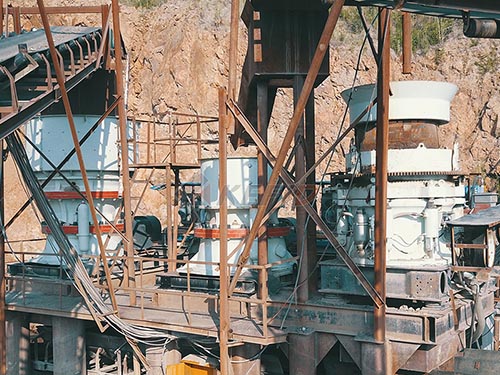
Q How does this plant integrate with my existing secondary circuit?
A:The discharge heightand conveyor trajectory are engineeredto order tomatch your existing surge pileor secondarycrusherfeed.The control system can be suppliedto accept start/stop signals fromyourplant's master PLC.
Q What isthe typical installationand commissioning timeline?
A Fora completeplanton prepared foundations,civil work excluded,the mechanical erection requires approximately 4 weeks.Electrical connectionand dry commissioning requirean additional2 weeks.Total projecttimeis highly dependenton site readiness.
Q Arewear parts readily available?
A Yes.We maintaina global inventoryof highwear itemslikejaw plates,toggle seats,and bearing cartridges.Specificliner profilesare typically stockedfor fast shipmentto minimize downtimefor planned changes.
Q Can thisplant handle recycled concreteor asphalt(RAP)?
A While capable,the abrasive natureand potentialfor rebarin recycled materials accelerates wear.We recommendour Heavy DutyTierwith specificliner optionsand strongly advisea prescreening magnetic separatorfor such applications.A dedicated machineis often more costeffectivefor highvolume RAP processing