
High Quality Iron Ore Crushing Plant Contract Manufacturer


High Quality Iron Ore Crushing Plant: Engineered for Continuous Operation
The Operational Challenge: When Downtime Becomes Your Largest Cost
Your iron ore crushing circuit operates under conditions that punish mediocrity. Abrasive feed material, constant impact loading, and 24/7 production schedules create a perfect storm of mechanical stress. Industry data indicates that unplanned downtime in primary crushing operations costs operators between $2,000 and $8,000 per hour in lost production alone—before factoring in maintenance labor, replacement parts, and downstream process interruptions.
Beyond the immediate financial impact, consider the compounding effects: deferred maintenance schedules, escalating wear part consumption, inconsistent product sizing that reduces downstream mill efficiency, and safety incidents stemming from equipment failures. For plant managers and engineering contractors, the question is not whether failures will occur, but whether your crushing system is designed to minimize their frequency and duration.
Can your current crushing plant deliver consistent throughput at the required reduction ratio while maintaining operational availability above 90%? Does your equipment supplier provide the engineering support necessary to optimize your specific ore characteristics? The answer to these questions determines whether your crushing circuit is a profit center or a cost center.
Product Overview: Complete Iron Ore Crushing Solutions
This high quality iron ore crushing plant is a comprehensive processing system designed to reduce runofmine iron ore from feed sizes of up to 1,200mm to final product sizes ranging from 040mm, with customizable configurations for specific downstream requirements. The plant integrates primary, secondary, and tertiary crushing stages with screening and conveying systems to deliver a complete size reduction solution.
Operational Workflow
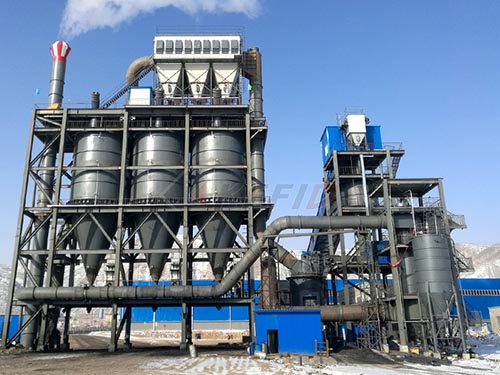
1. Primary Crushing: Runofmine ore is fed into a heavyduty jaw crusher or gyratory crusher, reducing material from 1,200mm to approximately 200300mm at throughput rates of 2001,500 tons per hour.
2. Secondary Crushing: The primary product is further reduced in cone crushers to 50100mm, with closedcircuit screening ensuring oversize material is recirculated.
3. Tertiary Crushing: Highpressure grinding rolls or shorthead cone crushers achieve final product sizing of 040mm, with optional screening for precise particle size distribution.
4. Screening and Classification: Vibrating screens separate material by size, directing each fraction to appropriate stockpiles or downstream processes.
5. Conveying and Stacking: Belt conveyors transport material between stages and to product stockpiles, with dust suppression systems integrated throughout.
Application Scope
This crushing plant is suitable for hematite, magnetite, and blended iron ore operations with compressive strengths up to 350MPa. It is applicable for greenfield installations, brownfield expansions, and mobile or semimobile configurations for mining operations requiring relocation capability. The system is not recommended for ores with high clay content exceeding 15% without prescreening modifications.
Core Features
HeavyDuty Frame Construction | Technical Basis: Finite element analysisoptimized structural design with S355JR steel plate fabrication | Operational Benefit: Withstands impact loading from large feed material without frame fatigue or cracking | ROI Impact: Extends equipment lifespan by 3040% compared to standardduty frames, reducing capital replacement costs
Hydraulic Chamber Clearing System | Technical Basis: Hydraulic cylinders with 25MPa operating pressure for rapid crusher chamber access | Operational Benefit: Reduces clearing time for uncrushable material from 812 hours to under 30 minutes | ROI Impact: Recovers 711 hours of production time per incident, representing $14,000$88,000 in saved production value
WearResistant Liner Materials | Technical Basis: Highchromium alloy steel (Cr2428%) with heat treatment achieving 5562 HRC hardness | Operational Benefit: Extends liner service life by 4060% compared to conventional manganese steel in abrasive iron ore applications | ROI Impact: Reduces annual wear part expenditure by $45,000$120,000 for a 500 tph plant
Automated Control System | Technical Basis: PLCbased control with loadsensing algorithms and remote monitoring capability | Operational Benefit: Maintains optimal crusher settings automatically, adjusting for feed variations to ensure consistent product quality | ROI Impact: Improves product consistency, reducing downstream reprocessing costs by 1525%
Modular Design Architecture | Technical Basis: Standardized module dimensions with preengineered connection points | Operational Benefit: Facilitates rapid installation, relocation, and capacity expansion without major civil works | ROI Impact: Reduces installation time by 40%, saving $150,000$400,000 in construction costs for a complete plant
Integrated Dust Suppression | Technical Basis: Water spray system with atomizing nozzles at all transfer points and crusher inlets | Operational Benefit: Controls airborne particulate emissions to meet environmental compliance standards | ROI Impact: Avoids regulatory fines of $10,000$50,000 per violation and reduces worker healthrelated costs
Advanced Lubrication System | Technical Basis: Automatic grease lubrication with programmable intervals and pressure monitoring | Operational Benefit: Ensures consistent bearing lubrication, reducing frictionrelated failures | ROI Impact: Decreases bearing replacement frequency by 50%, saving $8,000$15,000 annually in parts and labor
Competitive Advantages
| Performance Metric | Industry Standard | High Quality Iron Ore Crushing Plant | Advantage |
|||||
| Operational Availability | 8588% | 9295% | 78% improvement |
| Throughput Efficiency | 8590% of rated capacity | 9598% of rated capacity | 810% improvement |
| Wear Part Service Life | 3,0004,000 hours | 5,0006,500 hours | 4060% improvement |
| Product Consistency (P80 variation) | ±15% | ±8% | 47% improvement |
| Installation Time (500 tph plant) | 1620 weeks | 1012 weeks | 3540% reduction |
| Energy Consumption per Ton | 1.82.2 kWh/t | 1.41.7 kWh/t | 2025% reduction |
| Maintenance ManHours per 1,000 Hours Operation | 180220 hours | 120150 hours | 3035% reduction |
Technical Specifications
| Parameter | Specification |
|||
| Throughput Capacity | 2001,500 tph (configurable) |
| Feed Size (Maximum) | 1,200mm |
| Final Product Size | 040mm (adjustable) |
| Reduction Ratio | 4:1 to 6:1 per stage |
| Installed Power | 4002,500 kW depending on configuration |
| Voltage Requirements | 380V/660V/3.3kV/6.6kV/11kV (selectable) |
| Material Specifications | S355JR structural steel, Cr2428% wear liners, 5562 HRC |
| Physical Dimensions (Primary Unit) | 8.5m x 4.2m x 5.8m (L x W x H) |
| Physical Dimensions (Complete Plant) | Sitespecific, typically 150m x 80m footprint |
| Operating Temperature Range | 20°C to +50°C |
| Altitude Capability | Up to 4,500m above sea level (derated above 2,000m) |
| Dust Emission Control | Below 50 mg/Nm³ at emission points |
| Noise Level (at 1m distance) | ≤85 dB(A) with optional acoustic enclosures |
Application Scenarios
LargeScale Hematite Mining Operation | Challenge: A 12 million tonnes per annum hematite mine in Western Australia required a crushing plant capable of handling highly abrasive ore with frequent oversize feed material, while maintaining throughput above 1,200 tph to feed a downstream processing plant | Solution: Implementation of a threestage crushing plant with gyratory primary crusher, twin secondary cone crushers, and tertiary HPGR units, configured with automated loadsharing controls | Results: Achieved 1,350 tph average throughput over 18 months of operation, 94.2% operational availability, and reduced wear part consumption by 38% compared to the previous crushing system, resulting in annual savings of $2.3 million
Magnetite Concentrator Expansion | Challenge: An existing magnetite processing facility in Brazil needed to increase crushing capacity by 40% while operating within a constrained footprint and maintaining product quality for ball mill feed | Solution: Installation of a modular crushing plant with mobile primary unit and compact secondary/tertiary configuration, utilizing highspeed cone crushers with optimized chamber profiles | Results: Capacity increased from 800 to 1,120 tph within the existing footprint, product P80 reduced from 12mm to 9mm, and downstream ball mill throughput improved by 15%, delivering a project payback period of 14 months
Contract Crushing Services | Challenge: A contract crushing company serving multiple iron ore sites required a flexible, relocatable crushing plant that could be mobilized to different locations within 3 weeks and achieve 90% availability under rental agreement terms | Solution: Supply of a semimobile crushing plant with containerized control rooms, quickdisconnect conveyors, and modular support structures | Results: Plant relocated to 4 different sites over 24 months with average mobilization time of 19 days, achieved 93% availability, and enabled the contractor to secure a 5year extension on their mining services agreement worth $18 million
Commercial Considerations
Equipment Pricing Tiers
| Configuration | Capacity Range | Price Range (USD) |
||||
| Standard Plant | 200400 tph | $1.5M $3.2M |
| Enhanced Plant | 400800 tph | $3.2M $6.8M |
| HighCapacity Plant | 8001,500 tph | $6.8M $14.5M |
Optional Features
- Advanced automation package with predictive maintenance analytics: +$180,000$350,000
- Dust collection system with baghouse filters: +$250,000$600,000
- Acoustic enclosures for noise reduction: +$120,000$280,000
- Remote monitoring and diagnostics system: +$45,000$90,000
- Spare parts package (12month operation): +$350,000$800,000
- Basic Package: 12month warranty, commissioning support, operator training (included)
- Standard Package: Extended 24month warranty, quarterly inspections, preventive maintenance planning: +$75,000$150,000/year
- Premium Package: Full maintenance contract, guaranteed availability of 92%, performance monitoring, wear part management: +$250,000$500,000/year
- Direct purchase with 30% down payment and balance upon commissioning
- Equipment leasing with terms of 3660 months
- Buildownoperatetransfer arrangements for longterm projects
- Performancebased payment structures tied to throughput guarantees
Service Packages
Financing Options
Frequently Asked Questions
Q: What is the typical lead time for a complete iron ore crushing plant?
Standard configurations require 1620 weeks from order confirmation to delivery, with an additional 46 weeks for installation and commissioning. Customized plants with sitespecific modifications may require 2432 weeks. We recommend initiating the engineering review at least 6 months before your target commissioning date.
Q: How does this crushing plant handle variations in ore hardness and feed size?
The automated control system continuously monitors crusher power draw and adjusts settings to maintain optimal performance. For ore hardness variations beyond the design range, the hydraulic chamber clearing system and adjustable crusher settings allow operators to adapt quickly. Field data from installations processing ores with compressive strengths from 150350MPa shows consistent product quality with less than 8% variation.
Q: What are the specific power requirements for a 500 tph plant?
A 500 tph plant requires approximately 1,2001,500 kW of installed power, including crushers, screens, and conveyors. Power consumption per ton of processed ore averages 1.41.7 kWh, depending on feed characteristics and final product size. Your site's power infrastructure should accommodate a 20% safety margin above peak demand.
Q: Can the plant be integrated with existing crushing equipment?
Yes, the modular design allows for integration with existing equipment from other manufacturers. Our engineering team can assess your current circuit and design interface points for conveyors, chutes, and control systems. Common integration scenarios include adding a tertiary crushing stage to an existing primary/secondary circuit or replacing outdated crushers within an established plant.
Q: What training is provided for plant operators and maintenance personnel?
We provide comprehensive training programs including classroom instruction, handson operation, and maintenance workshops. Standard training covers 5 days for operators and 5 days for maintenance personnel. Advanced training modules on hydraulic systems, automation, and predictive maintenance are available as optional addons. All training is conducted at your site using your actual equipment.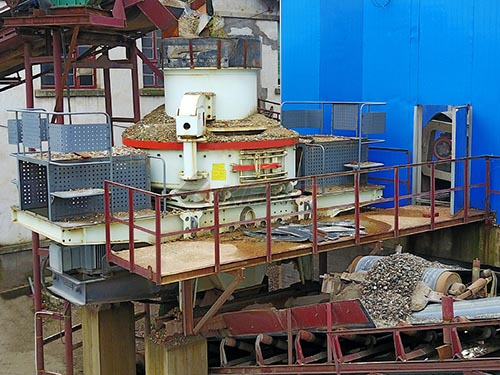
Q: What is the expected service life of the crushing plant?
With proper maintenance and operation, the structural components of the crushing plant have a design life of 2025 years. Wear components such as crusher liners, screen media, and conveyor belts require periodic replacement based on operating conditions. Major components such as crusher mainframes, gearboxes, and motors typically require overhaul at 40,00060,000 operating hours.
Q: How does the plant perform in extreme environmental conditions?
The plant is designed for operation in temperatures from 20°C to +50°C. For cold climate applications, optional heating systems for lubrication circuits and control enclosures are available. For highaltitude installations above 2,000m, motor power is derated according to air density, and our engineering team calculates the appropriate derating factors for your specific site conditions. Dust suppression systems are enhanced for arid environments with high ambient dust loads.