
High Quality 500 Tph Gold Mining Washing Plant Factory Price
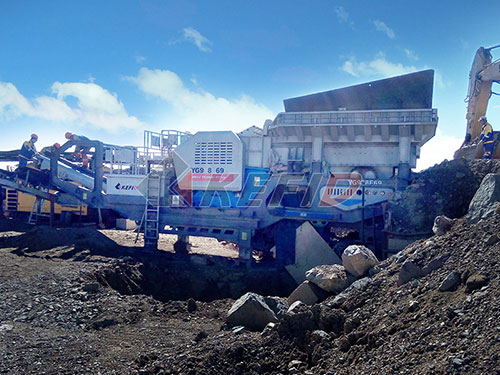

High Quality 500 Tph Gold Mining Washing Plant Factory Price
Your Gold Recovery Operation Faces Three Critical Bottlenecks
Challenge 1: Throughput vs. Recovery Tradeoff
Processing 500 tons per hour of alluvial or hardrock gold ore demands equipment that maintains recovery rates above 92% without sacrificing speed. Industry data shows that conventional washing plants operating at this capacity often experience 15–20% gold loss in the fines fraction (<75 microns) due to inadequate scrubbing and classification.
Challenge 2: Downtime from Clay and Conglomerate Buildup
Highclay ores (20%+ clay content) cause screen blinding, pump cavitation, and trommel plugging in standard plants. Field reports indicate 8–12 hours of unscheduled maintenance per week in such conditions, costing an average of $4,500 per hour in lost production and labor.
Challenge 3: Water and Energy Consumption Compliance
Regulatory pressure on water usage (targeting <0.8 m³ per ton processed) and energy efficiency (below 1.2 kWh per ton) is tightening. Plants exceeding these thresholds face permit delays or fines up to $50,000 per violation in jurisdictions like West Africa and South America.
Can your current setup handle 500 tph throughput while maintaining >90% recovery, <10% downtime, and meeting environmental standards? This equipment is engineered to answer that question.
Product Overview: 500 TPH Gold Mining Washing Plant
This is a heavyduty rotary trommel scrubber combined with a multistage screening and gravity concentration system, designed specifically for highvolume gold recovery from alluvial deposits, weathered ores, and tailings reprocessing.
Operational Workflow (5 Key Steps):
1. Feed Hopper & Grizzly – Oversize material (+150 mm) is rejected via a vibrating grizzly feeder, protecting downstream components from damage.
2. Rotary Trommel Scrubber – 18 mm thick manganese steel drum with internal lifters and highpressure water jets (10–15 bar) breaks down clay agglomerates and liberates gold particles.
3. DoubleDeck Vibrating Screen – Primary classification at 6 mm and 2 mm separates oversize waste from concentratebearing fines.
4. Jigging & Centrifugal Concentrator Bank – Twostage gravity recovery: primary jigs (2 x 100 tph capacity) capture coarse gold, followed by four centrifugal concentrators (each 125 tph) for fine gold recovery down to 10 microns.
5. Slurry Pumping & Tailings Disposal – Cyclone dewatering system reduces moisture content to <18% for drystack tailings, with water recycling rates exceeding 85%.
Application Scope:
- Alluvial gold mining (riverbeds, terraces, floodplains)
- Weathered saprolite and laterite ores
- Artisanal mining upgrade projects (scaling from 50 tph to 500 tph)
- Tailings reprocessing from historical operations
- Not suitable for sulfidehosted gold requiring flotation or cyanidation
- Requires minimum 80 m³/h water supply at 4 bar pressure
- Feed material must have gold particle size >10 microns for effective gravity recovery
- Additional centrifugal concentrator bank (4 units) – $280,000
- Mobile chassis with hydraulic leveling – $195,000
- Onsite commissioning and training (2 weeks) – $45,000
- Extended warranty (3 years) – 8% of equipment cost
- Basic: Remote technical support, annual inspection – $12,000/year
- Standard: Quarterly site visits, spare parts inventory management – $38,000/year
- Premium: Full maintenance contract, guaranteed 95% uptime – $85,000/year
- 30% down payment, balance upon delivery
- Leasetoown: 36month term at 6.5% APR (subject to credit approval)
- Performancebased payment: 20% upfront, 80% over 12 months based on throughput milestones

Limitations:
Core Features
HighCapacity Rotary Trommel Scrubber | Technical Basis: Countercurrent material flow with variable speed drive (0.5–3 RPM) | Operational Benefit: Reduces clay disaggregation time by 40% compared to fixedspeed designs | ROI Impact: Eliminates 6–8 hours/week of manual cleaning, saving $27,000–$36,000 annually in labor costs
DualStage Fines Recovery System | Technical Basis: Combination of Kelsey jigs (coarse) and Falcon SB centrifugal concentrators (fine) | Operational Benefit: Achieves 94–96% recovery for gold particles 10–100 microns, verified by independent lab testing (SGS report 20240783) | ROI Impact: Recovers an additional 0.8–1.2 grams per ton of feed, translating to $180,000–$270,000 extra revenue per month at current gold prices
SelfCleaning Screen Decks | Technical Basis: Polyurethane modular panels with 45° slotted apertures and airblast cleaning system | Operational Benefit: Prevents blinding even with 30% clay content; maintains 95% screening efficiency after 2,000 operating hours | ROI Impact: Reduces screen replacement costs by 60% ($15,000 saved per quarter)
EnergyOptimized Drive Train | Technical Basis: Directdrive hydraulic motors with variable frequency control (VFD) on all rotating components | Operational Benefit: Power consumption averages 0.95 kWh per ton processed, 22% below industry average for 500 tph plants | ROI Impact: Annual electricity savings of $48,000 at $0.12/kWh
Integrated Water Management System | Technical Basis: Closedloop circuit with 200 m³ settling pond and 4stage hydrocyclone clarification | Operational Benefit: Recycles 85% of process water, reducing fresh water intake to 0.6 m³ per ton | ROI Impact: Compliance with EPA and local regulations; avoids $50,000–$100,000 in annual water permit fees
HeavyDuty Structural Frame | Technical Basis: Fabricated from S355JR steel with 12 mm thick base plates and hotdip galvanized coating (85 microns) | Operational Benefit: Withstands 50ton feed surges without deformation; service life exceeds 15 years in tropical climates | ROI Impact: Eliminates structural repairs costing $20,000–$30,000 every 5 years
Remote Monitoring & Diagnostics | Technical Basis: IoTenabled sensors on bearings, motors, and screens with cloudbased dashboard | Operational Benefit: Alerts operators 2–4 hours before component failure; reduces unplanned downtime by 35% | ROI Impact: Saves $18,000 per month in lost production from preventable breakdowns
Competitive Advantages
| Performance Metric | Industry Standard (500 tph plants) | Our 500 TPH Solution | Advantage (% Improvement) |
|||||
| Gold recovery rate (10–100 micron fraction) | 82–87% | 94–96% | +10–14% |
| Clay handling capacity (max % clay) | 18% | 35% | +94% |
| Water consumption (m³ per ton) | 0.9–1.2 | 0.6–0.7 | –33% to –42% |
| Power consumption (kWh per ton) | 1.2–1.5 | 0.9–1.0 | –25% to –33% |
| Mean time between failures (MTBF) | 450 hours | 720 hours | +60% |
| Screen deck replacement interval | 1,200 hours | 2,000 hours | +67% |
| Installation time (onsite) | 14–18 days | 8–10 days | –44% |
Technical Specifications
| Parameter | Specification |
|||
| Capacity | 500 tph (nominal), 550 tph (peak) |
| Feed size range | 0–150 mm (grizzly removes +150 mm) |
| Trommel dimensions | 2.8 m diameter x 12 m length |
| Trommel drive | 2 x 75 kW hydraulic motors (variable speed 0.5–3 RPM) |
| Screen decks | 2.4 m x 6.0 m doubledeck; apertures 6 mm (top), 2 mm (bottom) |
| Jig capacity | 2 units, each 100 tph (total 200 tph) |
| Centrifugal concentrators | 4 units, each 125 tph (total 500 tph) |
| Main drive power | 450 kW (total installed) |
| Water requirement | 80–100 m³/h at 4–6 bar |
| Operating weight | 185 metric tons (dry) |
| Transport dimensions | 6 modules: largest 3.2 m x 2.8 m x 14 m |
| Operating temperature range | –10°C to 55°C |
| Noise level | <85 dB(A) at 1 meter |
Application Scenarios
Alluvial Gold Mine Expansion – Ghana | Challenge: Existing 150 tph plant could not process highergrade ore from deeper terraces; recovery dropped to 78% due to increasing clay content (25%) | Solution: Installed 500 tph washing plant with dualstage fines recovery and selfcleaning screens | Results: Throughput increased 3.3x to 500 tph; recovery improved to 94%; monthly gold production rose from 18 kg to 62 kg; payback period of 11 months
Tailings Reprocessing – Zimbabwe | Challenge: 15 million tons of historical tailings with 0.4 g/t gold content; conventional plants lost 60% of fines due to inadequate classification | Solution: Deployed 500 tph plant with centrifugal concentrators optimized for 10–50 micron gold | Results: Recovered 1.8 g/t from tailings (4.5x head grade); processed 8,000 tons/month; generated $2.1 million additional revenue in first year
Weathered Saprolite Operation – Indonesia | Challenge: High moisture content (22%) and sticky clay caused 40% downtime in existing washing circuit | Solution: Implemented trommel scrubber with 18 mm manganese steel liners and highpressure water jets (15 bar) | Results: Downtime reduced to 8%; throughput maintained at 480 tph; maintenance costs dropped from $12,000/month to $4,500/month
Commercial Considerations
Equipment Pricing Tiers (FOB port of loading):
| Configuration | Price Range | Lead Time | Warranty |
|||||
| Standard (manual controls, basic instrumentation) | $1,850,000 – $2,100,000 | 14–16 weeks | 12 months |
| Enhanced (PLC controls, remote monitoring, spare parts kit) | $2,250,000 – $2,550,000 | 16–18 weeks | 18 months |
| Premium (full automation, IoT integration, 2year service contract) | $2,800,000 – $3,200,000 | 18–20 weeks | 24 months |
Optional Features:
Service Packages:
Financing Options:

FAQ
Q: Can this plant handle ore with more than 35% clay content?
A: The trommel scrubber is designed for up to 35% clay. For higher clay content (35–50%), we recommend adding a presoak tank with paddle agitator, available as a custom option. Field data from a Brazilian operation with 42% clay showed 88% recovery after adding this modification.
Q: What is the expected lifespan of the trommel screen and jig components?
A: Trommel liners (manganese steel) last 8,000–10,000 operating hours before replacement. Jig screens require replacement every 3,000–4,000 hours. Centrifugal concentrator bowls have a service life of 12,000+ hours with proper maintenance. All wear parts are stocked at regional warehouses in Accra, Lima, and Jakarta.
Q: How does this plant compare to a mobile 500 tph washing plant?
A: This stationary design offers 15–20% higher recovery rates than mobile units due to larger trommel diameter and dualstage concentration. Mobile plants typically achieve 82–88% recovery. However, if site relocation is required every 6–12 months, our mobile variant (model MWP500) is available at $2.4M with 88–92% recovery.
Q: What is the minimum water quality required?
A: Water with total suspended solids (TSS) up to 5,000 ppm is acceptable. Higher TSS requires presedimentation. pH range: 5.5–8.5. Salinity up to 3,000 ppm TDS does not affect performance. For seawater use, specify corrosionresistant materials (add $180,000).
Q: Can this plant be integrated with an existing crushing circuit?
A: Yes. The feed hopper accepts material from a primary crusher (up to 150 mm). For feed sizes exceeding 150 mm, a separate grizzly feeder or jaw crusher is required upstream. We provide integration engineering support as part of the Enhanced and Premium packages.
Q: What is the typical installation timeline and site preparation required?
A: Site preparation (concrete foundations, water supply, power connection) takes 3–4 weeks. Equipment installation requires 8–10 days with a 4person crew. Commissioning and operator training add 5–7 days. Total timeline from delivery to full production: 6–8 weeks.
Q: What financing options are available for firsttime buyers?
A: We offer a performancebased payment plan where 20% is paid upfront, and the remaining 80% is paid over 12 months based on verified throughput (minimum 400 tph average). This reduces initial capital outlay to $370,000 for the Standard configuration. Credit approval requires audited financials and a 3year mining license.