
Harga Hammer Mill


Harga Hammer Mill: Evaluating Cost Against Performance for Industrial Size Reduction
For plant managers and procurement specialists, the search for a harga hammer mill often centers on balancing upfront investment with longterm operational cost. The true cost is not just the purchase price, but the cumulative impact of downtime, maintenance expenses, and inconsistent output. Are you facing challenges with frequent screen changes halting production? Is excessive wear on hammers and internals driving up your costperton? Do you struggle with uneven particle size distribution affecting your downstream processes? Selecting the correct hammer mill is a critical capital decision that directly influences your plant’s profitability and throughput.
Product Overview: Industrial Hammer Mills for Robust Size Reduction
An industrial hammer mill is a highinertia impact mill designed to reduce mediumhard to hard materials through repeated blows from dynamically balanced hammers. Its operational workflow is straightforward yet powerful:
1. Feed Introduction: Material is fed into the grinding chamber via a controlled feeder.
2. Impact & Reduction: Rotating hammers (swinging or rigid) pulverize material against breaker plates and through controlled impact.
3. Particle Sizing: Reduced material passes through a screen or grate of specified aperture size, determining the final particle distribution.
4. Discharge: Sized material exits via gravity or pneumatic system for further processing.
Primary applications include crushing, grinding, and pulverizing of aggregates, limestone, recycled construction materials, and certain industrial minerals. Limitations include reduced efficiency on very abrasive, fibrous, or sticky materials without specific design adaptations.
Core Features: Engineering for Efficiency and Uptime
Our hammer mill design prioritizes operational longevity and cost control. Each feature is engineered to address a specific pain point.
Monoblock Rotor Assembly | Technical Basis: Singlepiece forged/cast steel rotor with integrated discs | Operational Benefit: Eliminates stress points and loose components; maintains dynamic balance under shock loads | ROI Impact: Reduces vibrationrelated bearing failures by up to 40%, extending major service intervals.
Reversible & MultiWear Edge Hammers | Technical Basis: Symmetrical hammer design with 46 usable edges | Operational Benefit: Operators can rotate or flip hammers to utilize fresh edges without disassembly; extends service life per set | ROI Impact: Cuts consumable replacement costs by up to 50% and reduces changeout downtime.
QuickChange Screen System | Technical Basis: Hydraulicassisted or segmented screen cartridges | Operational Benefit: Allows full screen replacement in under 30 minutes by a twoperson crew vs. industry standard of several hours | ROI Impact: Minimizes production stoppages for product size changes, increasing annual throughput.
HeavyDuty Abrasion Protection | Technical Basis: Bolton wear liners made from AR400/500 steel or ceramic composites in highimpact zones | Operational Benefit: Protects the mill housing from direct wear; liners are replaceable without welding or machining onsite | ROI Impact: Preserves the structural integrity of the main chassis, avoiding catastrophic repair costs.
Dynamic Airflow Design | Technical Basis: Engineered plenum and fan configuration matched to mill volume | Operational Benefit: Manages internal temperature and removes fines efficiently; prevents clogging and reduces dust generation at discharge | ROI Impact: Improves grinding efficiency by up to 15% on certain materials and reduces baghouse filter load.
Competitive Advantages: Quantifiable Performance Metrics
The following table illustrates how our engineered hammer mill solution compares to conventional industry standards.
| Performance Metric | Industry Standard Benchmark | Our Hammer Mill Solution | Advantage (% Improvement) |
| : | : | : | : |
| Screen Change Time (for full set) | 2 4 hours | < 45 minutes (with quickchange system) | ~70% faster |
| Hammer Service Life (on abrasive aggregate) | 200 300 operating hours | 450 550 operating hours (reversible design)| ~90% longer |
| Specific Energy Consumption (kWh/ton) Varies by material| Baseline = 100%| Optimized rotor dynamics & airflow reduce consumption| 812% lower |
| Annual Planned Downtime (for liner/hammer service) Estimate| 80 100 hours/year| Reduced to ~4050 hours/year due to longer life & faster service| ~45% less downtime |
Technical Specifications
Specifications vary by model series; below are representative ranges for midtolarge industrial units.
Capacity Range: Modeldependent, from 20 TPH up to 150+ TPH for limestone applications.
Power Requirements: Main drive motors from 150 HP to 600 HP (110 kW 450 kW), typically requiring highvoltage supply (e.g., 4160V).
Rotor Speed: Typically between 800 1800 RPM, optimized for material type.
Material Specifications: Mainframe: Fabricated heavyduty steel plate. Rotor: Forged or cast alloy steel. Wear Components: Highchrome iron hammers; AR400/500 steel or ceramic liners.
Physical Dimensions (Approx.): Varies significantly; a unit with ~100 TPH capacity may have a footprint of ~5m L x 3m W x 3m H.
Environmental Operating Range: Designed for ambient temperatures from 20°C to +50°C; dusttight construction for indoor/outdoor installation.
Application Scenarios
Aggregate Processing Plant – Limestone Crushing
Challenge: A quarry operation experienced excessive downtime every six weeks for hammer rotation and screen inspection on their primary secondary crusher, bottlenecking their fines production line.
Solution: Implementation of a heavyduty hammer mill featuring the reversible hammer system and quickchange screen technology.
Results: Service intervals extended to twelve weeks. Screen change time reduced from three hours per shift to fortyfive minutes. This resulted in an estimated increase of over 200 productive hours annually.
Construction & Demolition (C&D) Recycling Yard
Challenge: Processing mixed C&D waste led to rapid wear on crusher internals due to unseen metals/abrasives, causing unpredictable breakdowns and high parts expenditure.
Solution: Installation of a hammer mill built with fullabrasion protection packages including massive oversize bearings, bolton breaker plates, and extrathick housing liners.
Results: Field data shows a reduction in unplanned downtime events by over 60%. The predictable wear pattern of bolton liners allowed for planned maintenance during scheduled yard closures.
Commercial Considerations
Equipment pricing is tiered based on size, capacity, and material specification levels:
1. Standard Duty Tier: For consistent feed of nonabrasive materials. Includes base features.
2. Heavy Duty Tier (Most Common): Includes reversible hammers, quickchange screens,and standard abrasion protection packages.Recommended for aggregatesand C&D recycling.
3. Severe Duty Tier: Includes premium materials (e.g., ceramic liners), enhanced bearing assemblies,and specialized sealing.For highly abrasive or highmoisture applications.
Optional features include integrated metal detectors/tramp iron relief systems,variable frequency drives(VFDs)for soft startand speed control,and fully enclosed sounddampening housings.Service packages range from basic commissioningto comprehensive annual maintenance agreementswith guaranteed parts availability.Financing options including equipment leasingand rentaltoown programsare availableto assist with capital expenditure planning.
Frequently Asked Questions (FAQ)
1. What power supply is typically required for an industrialsized hammer mill?
Most units over 150 HP require a threephase ,highvoltage electrical supply(e.g., 480V ,2300V ,or 4160V).Our engineering team can provide detailed power draw analysis during specification.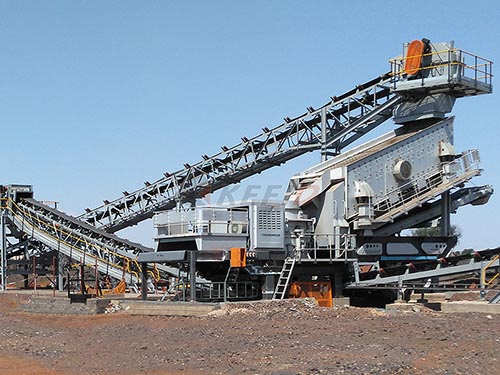
2. How does this hammer mill handle occasional tramp metal in the feed stream?
Options include robustly designed breaker plates that act as sacrificial elements ,or optional integrated tramp metal release systems that allow uncrushables to exit without major damage ,though these are modelspecific features .
3. Can particle size distribution be tightly controlled?
Hammer mills are excellent for midrange reduction but produce a granular product .For very fine ,uniform powders,a secondary process like ball milling may be necessary .Screen selection is the primary control ;we provide guidance on optimal screen configurations .
4. What is the typical lead time from order to commissioning?
Lead times vary by model complexity .For standard heavyduty configurations ,expect 1418 weeks .Severeduty customizations may extend this timeline .We provide detailed project schedules upon quotation .
5. Are spare parts readily available,and what is the expected inventory we should hold?
We recommend maintaining an initial stock of highwear items:hammers,screen sections,and specific liner plates .Our service agreements often include consignment stock options held locallyto ensure minimal delay .
6.Does the quoted harga hammer mill include installation?
Pricing is typically exworks(FOB factory).We provide comprehensive installation manualsand can supervise commissioningfor an additional fee .Civil foundation workis alwaysthe responsibility ofthe buyer .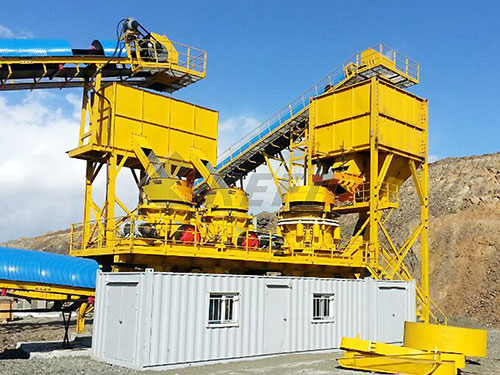
7.What data do you need to provide an accurate recommendationand quotation?
Please provide :Material typeand Bond Work Index if known ,desired feed sizemaximum lump size),required throughput(Tons Per Hour),target product size(P80),and any sitespecific constraints(power ,space).