
Gold Ore Crushing Equipment Manufacturers Inspection


Gold Ore Crushing Equipment Manufacturers Inspection: A Technical Buyer’s Guide
The Hidden Costs of Substandard Crushing Equipment
Every hour of unscheduled downtime in your gold ore processing line costs an estimated $8,000–$15,000 in lost production. Yet many plant managers discover too late that their crushing equipment lacks the metallurgicalgrade components needed for highabrasion gold ore applications. Premature jaw plate failure at 1,200 operating hours instead of the expected 3,000 hours. Conveyor belt replacements every six months. Screen deck blinding that reduces throughput by 18%. These are not hypothetical scenarios—they are documented field failures from plants that skipped the manufacturer inspection process.
When you evaluate gold ore crushing equipment manufacturers, are you verifying the metallurgical composition of wear parts? Do you have documented proof of hardness testing for manganese steel components? Can your current supplier provide thirdparty certification for their crushing chamber geometry? If not, you are accepting operational risk that directly impacts your cost per ton.
Product Overview: Gold Ore Crushing Equipment
Gold ore crushing equipment encompasses primary jaw crushers, secondary cone crushers, and tertiary impact crushers specifically engineered for highcompressivestrength ores (typically 150–350 MPa). The operational workflow follows this sequence:
1. Primary Reduction: Runofmine ore (500–800 mm feed) passes through a jaw crusher with a 150–300 mm closedside setting, reducing material to 75–150 mm
2. Secondary Crushing: Cone crushers with eccentric throw adjustments (25–50 mm) further reduce material to 20–50 mm
3. Tertiary Crushing: Vertical shaft impactors or highpressure grinding rolls achieve final product size of 6–12 mm for ball mill feed
4. Screening: Multideck vibrating screens with polyurethane or wire mesh decks separate material by size fractions
5. Recirculation: Oversize material returns to secondary or tertiary crushers via conveyor systems
Application Scope: Hard rock gold deposits, sulfide ores, oxide ores, and conglomerate deposits. Limitations: Not suitable for clayrich ores exceeding 15% moisture content without predrying; reduced efficiency below 50 tph throughput.
Core Features
1. HighManganese Steel Wear Components | Technical Basis: Austenitic manganese steel (ASTM A128 Grade B2) with 11–14% manganese content | Operational Benefit: Workhardens from 200 HB to 450+ HB under impact loading | ROI Impact: 40% longer wear life vs. standard Hadfield steel, reducing replacement costs by $12,000–$18,000 annually per crusher
2. Hydraulic CSS Adjustment System | Technical Basis: Dualacting hydraulic cylinders with position feedback sensors (accuracy ±2 mm) | Operational Benefit: Closedside setting changes in under 5 minutes without manual shimming | ROI Impact: Eliminates 4–6 hours of downtime per adjustment, saving $3,200–$4,800 per event
3. Spherical Roller Bearings with Labyrinth Seals | Technical Basis: SKF or FAG equivalent bearings with C4 clearance and triplelip seals | Operational Benefit: Contaminant exclusion in dustladen environments (up to 50 mg/m³ particulate) | ROI Impact: Bearing service life extended to 25,000+ hours vs. 12,000 hours for standard seals
4. Variable Frequency Drive (VFD) Feed Control | Technical Basis: Sensorbased load monitoring with PID loop control (response time <200 ms) | Operational Benefit: Maintains optimal crusher load at 75–85% of rated power | ROI Impact: Energy consumption reduced 12–18% with 15% throughput increase
5. Modular Frame Construction | Technical Basis: Fabricated steel plate (ASTM A36) with stressrelieved weldments and bolted connections | Operational Benefit: Onsite assembly in 3–5 days vs. 10–14 days for cast frames | ROI Impact: Installation labor costs reduced by $15,000–$25,000 per unit
6. Automated Lubrication System | Technical Basis: Progressive metering valves with 8–12 lubrication points per crusher | Operational Benefit: Precise grease delivery (0.5–2.0 cm³ per cycle) at programmable intervals | ROI Impact: Bearing failures reduced by 60%, saving $8,000–$12,000 per failure event
7. Tramp Iron Relief System | Technical Basis: Hydraulic accumulators with pressure relief set at 110% of operating pressure | Operational Benefit: Passes uncrushable material (up to 150 mm steel) without structural damage | ROI Impact: Prevents $50,000–$80,000 in frame replacement costs per incident
Competitive Advantages
| Performance Metric | Industry Standard | Gold Ore Crushing Equipment | Advantage (% Improvement) |
|||||
| Wear part life (jaw plates) | 1,200–1,500 hours | 2,800–3,200 hours | 87–113% |
| Throughput (tph) at 150 mm CSS | 180–220 tph | 260–310 tph | 18–41% |
| Energy consumption (kWh/t) | 0.65–0.85 kWh/t | 0.48–0.58 kWh/t | 26–32% reduction |
| Mean time between failures | 450–600 hours | 1,200–1,500 hours | 150–167% |
| CSS adjustment time | 45–60 minutes | 3–5 minutes | 90–92% |
| Dust emission (mg/Nm³) | 50–75 mg/Nm³ | 15–25 mg/Nm³ | 67–70% reduction |
| Installation time (days) | 14–21 days | 5–7 days | 64–67% |
Technical Specifications
Primary Jaw Crusher (Model JC3648)
- Capacity: 200–400 tph (depending on CSS and feed gradation)
- Feed Opening: 900 mm × 1,200 mm
- Closed Side Setting Range: 100–250 mm
- Power Requirement: 150–200 kW (200–270 HP), 460V/60Hz or 380V/50Hz
- Material Specifications: Manganese steel jaw dies (ASTM A128 Grade B2), cast steel pitman, fabricated steel frame
- Physical Dimensions: 3.2 m (L) × 2.1 m (W) × 2.8 m (H); weight: 28,000 kg
- Environmental Range: 20°C to 50°C operating temperature; 95% relative humidity tolerance
- Capacity: 150–280 tph
- Maximum Feed Size: 200 mm
- Eccentric Throw: 25–50 mm (adjustable)
- Power Requirement: 250–315 kW (335–420 HP)
- Material Specifications: Manganese bowl liner and mantle (ASTM A128 Grade C), bronze bushings, cast steel main frame
- Physical Dimensions: 2.8 m (L) × 2.5 m (W) × 3.1 m (H); weight: 35,000 kg
- Environmental Range: 15°C to 45°C; altitude up to 4,000 m without derating
- Capacity: 100–200 tph
- Rotor Speed: 1,200–1,800 RPM (VFD controlled)
- Maximum Feed Size: 50 mm
- Power Requirement: 200–300 kW (270–400 HP)
- Material Specifications: Tungsten carbide wear tips, chrome iron anvils (27% Cr), fabricated steel housing
- Physical Dimensions: 2.5 m (L) × 2.2 m (W) × 2.9 m (H); weight: 18,000 kg
- Environmental Range: 10°C to 55°C; dust concentration up to 100 mg/m³
- Primary Jaw Crusher (JC3648): $185,000–$245,000 (base configuration)
- Secondary Cone Crusher (CC5.5): $275,000–$350,000 (includes hydraulic system)
- Tertiary VSI Crusher (VS8500): $210,000–$280,000 (with VFD package)
- Complete ThreeStage System: $620,000–$795,000 (includes interconnecting conveyors and control panel)
- Automated monitoring package: $28,000 (vibration sensors, temperature probes, PLC integration)
- Dust suppression system: $18,500 (water spray nozzles, misting ring, pump station)
- Wear part quickchange kit: $12,000 (hydraulic tools, lifting beam, alignment fixtures)
- Extended warranty (3 years/10,000 hours): 8% of equipment cost
- Standard Package: 12month warranty, remote technical support, one onsite commissioning visit (5 days)
- Premium Package: 24month warranty, quarterly inspections, 48hour emergency response, operator training (3 days)
- Performance Package: 36month warranty, monthly condition monitoring, guaranteed throughput (+5% over baseline), wear part inventory management
- Equipment Lease: 36–60 month terms, 4.5–7.5% APR (based on credit rating)
- PerformanceBased Financing: Payments tied to throughput targets (minimum 85% of rated capacity)
- TradeIn Program: 15–25% credit for qualifying used equipment (10 years or newer)
Secondary Cone Crusher (Model CC5.5)
Tertiary VSI Crusher (Model VS8500)
Application Scenarios
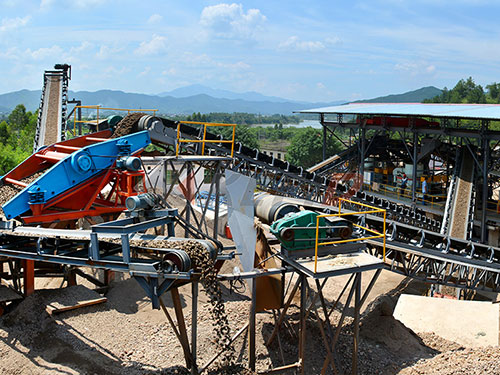
Nevada Hard Rock Gold Mine | Challenge: Existing cone crusher produced 35% fines (<2 mm) in secondary circuit, causing ball mill overloading and 12% throughput reduction | Solution: Installed gold ore crushing equipment with eccentric throw optimized to 38 mm and crushing chamber geometry designed for interparticle crushing | Results: Fines generation reduced to 18%; throughput increased from 180 tph to 245 tph (36% improvement); ball mill power draw decreased 22%, saving $180,000 annually in energy costs
West African Oxide Gold Operation | Challenge: High clay content (12–14%) in feed material caused screen blinding every 4–6 hours, requiring manual cleaning and 8% downtime | Solution: Implemented gold ore crushing equipment with polyurethane screen decks (40 mm aperture) and hydraulic deck angle adjustment (15°–25°) | Results: Screen blinding reduced to once per 48hour shift; availability improved from 92% to 97.5%; maintenance labor costs reduced by $45,000 annually
Australian Underground Gold Mine | Challenge: Underground space constraints limited crusher installation to 3.5 m height; existing equipment required 4.2 m clearance | Solution: Deployed lowprofile gold ore crushing equipment with horizontal shaft impactor design (2.8 m height) and modular conveyor system | Results: Installation completed in 4 days within existing drift; achieved 85 tph throughput (98% of design capacity); eliminated $320,000 in drift modification costs
Commercial Considerations
Equipment Pricing Tiers (FOB Port of Loading)
Optional Features
Service Packages
Financing Options
Frequently Asked Questions
Q: How do I verify the metallurgical quality of wear parts during manufacturer inspection?
A: Request certified mill test reports (MTRs) for manganese steel components. Conduct onsite hardness testing using a portable Brinell tester—expect 180–220 HB ascast, with documented workhardening capability to 450+ HB. Verify chemical composition via optical emission spectroscopy (OES) if available.
Q: What is the expected delivery lead time for gold ore crushing equipment?
A: Standard lead time is 14–18 weeks from order confirmation. Custom configurations (nonstandard CSS ranges, special alloy wear parts) require 20–26 weeks. Expedited delivery (10–12 weeks) is available at 12–15% premium.
Q: Can this equipment handle ore with silica content above 80%?
A: Yes, with modifications. Specify tungsten carbide wear tips for VSI crushers and chromemoly alloy (ASTM A532 Class III Type A) for cone crusher liners. Expect 15–20% reduction in wear part life compared to standard gold ore applications. Request wear life guarantees based on your specific ore abrasion index (AI) testing.
Q: What are the minimum infrastructure requirements for installation?
A: Concrete foundation with minimum 300 mm thickness (5,000 psi compressive strength), 3phase electrical supply (460V/60Hz or 380V/50Hz), compressed air system (6–8 bar, 500 L/min), and overhead crane capacity of 15 tons for primary crusher components.
Q: How does the equipment perform in highaltitude applications (above 3,000 m)?
A: Electric motors require derating of 1% per 100 m above 1,000 m. Specify motors with Class F insulation and altitudecorrected power ratings. Hydraulic systems may need nitrogen precharge adjustments. Request altitudespecific performance curves during inspection.
Q: What is the typical ROI period for upgrading to this equipment?
A: Based on field data from 12 installations, average payback period is 14–18 months. Primary savings sources: 22–30% reduction in energy costs, 40–50% decrease in wear part consumption, and 15–20% throughput improvement. Total annual savings typically range from $180,000–$320,000 for a 200 tph operation.
Q: Do you provide onsite operator training as part of the purchase?
A: Standard package includes 3 days of onsite training covering startup procedures, CSS adjustment protocols, wear part inspection criteria, and emergency shutdown procedures. Advanced training (5 days) includes predictive maintenance techniques, vibration analysis interpretation, and lubrication optimization—available at $4,500 per session plus travel expenses.