
Gold Ore Crushing Equipment Contract Manufacturer Prices
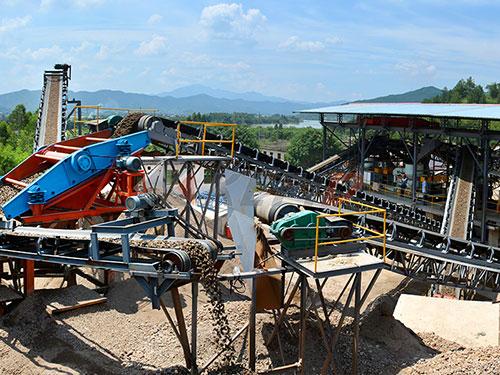

1. PAINPOINT DRIVEN OPENING
Are unpredictable maintenance cycles and component wear causing excessive downtime in your primary crushing circuit? Is the abrasive nature of hard rock gold ore leading to premature liner failure and rising perton processing costs? Are you managing bottlenecks where your crusher cannot keep pace with upstream loading, limiting overall plant throughput? These operational challenges directly impact your bottom line through lost production hours, high replacement part expenditures, and constrained recovery rates.
The right primary crushing equipment is a capital investment that dictates downstream efficiency. How do you select a machine that balances high availability with manageable operating costs? What specifications ensure consistent feed size reduction for optimal SAG or ball mill performance? This analysis addresses the critical factors in selecting durable, efficient gold ore crushing equipment.
2. PRODUCT OVERVIEW
This product line focuses on stationary and semistationary primary jaw crushers engineered for hard rock gold ore processing. Designed as the first stage in comminution, these machines accept runofmine (ROM) feed directly from haul trucks or feeders.
Operational Workflow:
1. ROM ore (up to specified top size) is deposited into the vibrating grizzly feeder (VGF) integrated with the skid or hopper.
2. The VGF removes subfines and directs oversize material into the crusher’s chamber.
3. The robust jaw assembly executes a compressive crushing action, reducing ore to a predetermined product size.
4. Crushed material discharges onto a main conveyor for transport to secondary crushing or stockpiling.
5. Hydraulic adjustment systems allow for quick CSS (Closed Side Setting) changes to compensate for feed variability.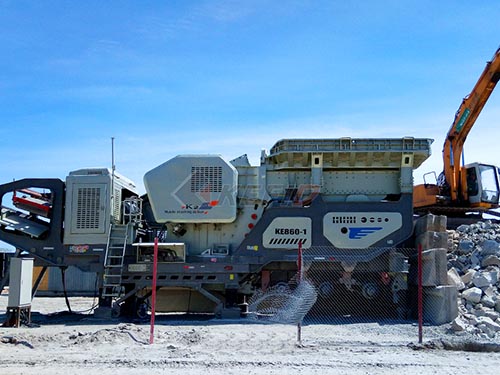
Application Scope: Ideal for processing hard, abrasive gold ores such as quartz veins and sulphidebearing rock in greenfield installations or plant upgrade projects. Suited for operations with planned annual throughputs from 150,000 to over 1,500,000 tonnes.
Limitations: Not designed as a standalone solution; requires integration with feeding and conveying systems. For ore with high clay or moisture content causing packing, prescreening/scalping is recommended.
3. CORE FEATURES
HeavyDuty Frame Construction | Technical Basis: Finite Element Analysis (FEA) optimized stress distribution | Operational Benefit: Eliminates frame fatigue and cracking under cyclical loading from hard rock | ROI Impact: Extended structural life beyond 20 years, protecting core capital asset
Manganese Steel Jaw Dies & Cheek Plates | Technical Basis: Workhardening alloy steel composition | Operational Benefit: Liners develop a hardened surface layer during operation, increasing wear life in abrasive conditions | ROI Impact: Reduces liner replacement frequency by an estimated 3050%, lowering parts inventory and labor costs
Hydraulic Toggle & Adjustment System | Technical Basis: Dualacting hydraulic cylinders replace mechanical toggle plates | Operational Benefit: Enables remote adjustment of CSS for product size control and provides automated clearing of chamber blockages | ROI Impact: Cuts downtime for routine adjustments by over 70% and prevents major downtime events from tramp metal
Large Diameter HeavyDuty Eccentric Shaft | Technical Basis: Forged from highintegrity alloy steel, supported by spherical roller bearings | Operational Benefit: Sustains high inertia and crushing force without deflection, ensuring consistent throughput even under full load | ROI Impact: Maintains design capacity targets, preventing upstream haul truck queuing and optimizing overall plant flow
Integrated Motor Base & Belt Drive Guarding | Technical Basis: Unified fabrication allowing precise Vbelt alignment with full safety encapsulation | Operational Benefit: Minimizes vibration transfer, extends belt and bearing life, and ensures operator safety compliance | ROI Impact: Reduces unscheduled drive maintenance events and mitigates site safety incident risk
Centralized Greasing Points & Condition Monitoring Ports | Technical Basis: Lube lines routed to key bearing points with ports for sensor installation | Operational Benefit: Enables systematic preventive maintenance and realtime monitoring of bearing temperature and vibration | ROI Impact: Facilitates conditionbased maintenance planning, preventing catastrophic bearing failures

4. COMPETITIVE ADVANTAGES
| Performance Metric | Industry Standard (Average) | This Gold Ore Crushing Equipment Solution | Advantage (% Improvement) |
| : | : | : | : |
| Mechanical Availability (Hard Rock) | 8892% | 9496%+ | +4% (Fewer unplanned stops) |
| Liner Wear Life (Abrasive Ore) | Baseline (100%)| 130150%| +3050% (Extended campaigns) |
| Throughput Consistency at Max Feed Size| +/ 10% fluctuation| +/ 5% fluctuation| +50% more stable output |
| Energy Consumption per Tonne Crushed| Baseline (100%)| ~95%| 5% (Higher mechanical efficiency) |
| Mean Time Between Major Overhauls| ~12,000 hours| ~16,000 hours| +33% operational lifespan |
5. TECHNICAL SPECIFICATIONS
Model Range Capacity: 200 1,200 tonnes per hour (TPH), depending on feed gradation and material density.
Feed Opening: From 900mm x 600mm up to 1500mm x 1200mm.
Power Requirements: Main crusher motor from 75 kW to 200 kW; total installed power including VGF drive from 90 kW to 240 kW. Voltage tailored to site requirements (e.g., 415V/3/50Hz or 690V/3/60Hz).
Material Specifications: Highstrength fabricated steel frame (ASTM A36); Austenitic Manganese Steel jaw dies & cheek plates (ASTM A128 Grade B3/B4); Forged alloy steel eccentric shaft.
Physical Dimensions: Skidmounted footprint ranges from approximately 8m(L) x 2.5m(W) x 3m(H) to 12m(L) x 3m(W) x 4m(H).
Environmental Operating Range: Designed for ambient temperatures from 20°C to +45°C; dust seals rated for IP66 protection; optional packages available for highaltitude or marine environments.
6. APPLICATION SCENARIOS
Hard Rock Greenfield Project in West Africa
Challenge: A new mine required a primary crusher capable of processing highly abrasive granitic gold ore with minimal onsite technical support infrastructure. Reliability was paramount.
Solution: Installation of a heavyduty jaw crusher with advanced wear liners and a fully automated grease lubrication system.
Results: Achieved mechanical availability of 95.2% in the first year of operation. Liner life exceeded projections by 22%, reducing planned shutdown frequency.
Plant Upgrade in an Established Australian Operation
Challenge: An aging primary crusher was the bottleneck limiting increased plant throughput following an expansion of pit operations.
Solution: Replacement with a highercapacity jaw crusher featuring a larger feed opening and more aggressive crushing kinematics.
Results: Throughput increased by 18%, eliminating the bottleneck. The hydraulic toggle system reduced annual blockagerelated downtime by approximately 40 hours.
7. COMMERCIAL CONSIDERATIONS
Pricing Tiers: Capital cost is determined by model size/capacity (+/ $250K $1M+ USD), customization level, and ancillary equipment included on the skid.
Optional Features & Packages:
Advanced automation package (PLC control with touchscreen HMI)
Dust suppression system integration
Specialized wear liner profiles for specific ore characteristics
Heavyduty walkways, platforms, and guarding
Spare parts starter kits
Service Packages:
1. Basic Warranty: Standard parts/labor warranty covering initial defects.
2.
3.Extended Support Plan: Includes scheduled inspections, discounted spare parts rates,
and priority technical support via phone/video.
4.FullService Maintenance Agreement: Comprehensive coverage including all planned preventive maintenance,
wear part replacement based on monitored conditions,
and guaranteed response times.
Financing options include traditional capital lease agreements,
operating leases,
and projectspecific financing structures tailored to mine development timelines.
8\. FAQ
Q1:
Are these crushers compatible with existing vibrating grizzly feeders
and conveyors?
A1:
Yes,
dimensional drawings
and interface points are provided early in the process.
Our engineering team can adapt discharge heights
and skid configurations to integrate with most existing plant layouts,
ensuring minimal civil works are required.
Q2:
What is the expected impact on my overall plant power draw?
A2:
Field data shows our drive train efficiency results in power consumption at or slightly below industry average for equivalent throughput.
Exact figures depend on ore competency;
we provide detailed motor performance curves based on your specific ore testing data.
Q3:
How does the pricing structure account for optional features?
A3:
We provide transparent base equipment pricing
with clear lineitem costs for all optional packages.
This allows you to evaluate the return on investment
for each feature based on your operational priorities
and budget constraints.
Q4:
What are typical lead times from order placement to delivery?
A4:
For standard models,
lead times range from 2032 weeks,
influenced by current global manufacturing capacity
and shipping logistics to your site location.
Expedited options may be available.
Q5:
Is operator training included?
A5:
Yes,
comprehensive training covering safe operation,
routine maintenance procedures,
and basic troubleshooting is included as part of commissioning services at your site.
Q6:
Can you supply wear parts after commissioning?
A6:
We maintain an extensive global supply chain network
for genuine OEM wear parts.
Inventory levels at regional hubs are managed based on predictive analytics of customer usage patterns
to maximize part availability when needed