
Export Stamp Mill Gold Mining Catalog


1. PAINPOINT DRIVEN OPENING
Are you facing persistent bottlenecks in your gold recovery circuit? Inefficient primary grinding and liberation directly impact your bottom line through lost fines, excessive reagent consumption, and unplanned maintenance. Consider these common operational challenges:
Incomplete Gold Liberation: Coarse ore passing through the circuit without adequate size reduction locks recoverable gold within waste rock, leading to measurable metal loss.
High PerTon Processing Costs: Inefficient stamp mills with outdated designs consume excessive energy per ton of ore crushed and require frequent, costly parts replacement for shoes, dies, and cam shafts.
Excessive Downtime for Maintenance: Unplanned stoppages to repair or replace worn components disrupt continuous processing schedules, directly reducing mill throughput and profitability.
LaborIntensive Operation: Models requiring constant manual adjustment for feed rate or discharge grate clearance tie up skilled personnel and introduce variability.
Difficulty with Variable Ore Hardness: A fixedaction mill cannot adapt to changes in feed material, causing either undercrushing of hard ore or overgrinding of soft material, both of which waste energy and compromise recovery.
Is your operation sacrificing recovery yield and profit due to an unreliable or inefficient primary crushing stage? The solution requires a purposebuilt machine designed for modern mineral processing demands.
2. PRODUCT OVERVIEW
The modern gravity discharge stamp mill is a robust, mechanized crushing apparatus engineered for the primary liberation of gold from quartz and hard rock ore. It functions as a cornerstone asset in freemilling gold recovery plants, operating on the principle of repetitive percussive crushing.
Operational Workflow:
1. Controlled Feed: Runofmine (ROM) ore is conveyed into a regulated feed hopper, ensuring a consistent charge to the mortar box.
2. Percussive Reduction: A series of mechanically lifted heavy stamps (weights) are alternately dropped onto the ore within a confined mortar box, applying highimpact force to fracture the material.
3. Size Classification & Discharge: Crushed material passes through a grated screen at the mortar box's discharge end. Oversize material is retained for further percussion, while liberated material at target size exits as slurry.
4. Slurry Transport: The discharged slurry is directed to downstream processes, typically gravity concentration via sluices or shaking tables.
Application Scope & Limitations:
Ideal For: Freemilling gold ores where liberation occurs at coarser sizes; operations prioritizing robust, lowertech simplicity; sites with intermittent power supply (for mechanical models).
Limitations: Not suitable for refractory ores requiring fine grinding (<100 mesh) or complex chemical liberation. Efficiency decreases significantly with clayrich or highly abrasive feeds without prescreening.
3. CORE FEATURES
Modular Stamp Assembly | Technical Basis: Individually replaceable cast manganese steel shoes and dies | Operational Benefit: Isolated wear component replacement minimizes downtime and parts cost versus replacing entire stamp heads | ROI Impact: Reduces maintenance part costs by up to 40% and cuts replacement time by 60%
Precision Cam Shaft Design | Technical Basis: Computeroptimized lift profile and inductionhardened bearing surfaces | Operational Benefit: Ensures consistent stamp lift and drop with minimal parasitic vibration and wear | ROI Impact: Extends major drive component service life by over 2x, reducing total cost of ownership
Adjustable Discharge Grate System | Technical Basis: Rapidchange screen panels with multiple slot size options | Operational Benefit: Operators can finetune product size in minutes to optimize downstream recovery based on realtime ore characteristics | ROI Impact: Improves overall recovery circuit efficiency by allowing precise control over liberation size
Centralized Grease Lubrication | Technical Basis: Automated manifold delivering grease to all major bearing points on a timed cycle | Operational Benefit: Eliminates manual lubrication points, enhancing safety and ensuring optimal bearing life in dusty environments | ROI Impact: Prevents costly bearing failures, estimated to avoid 15+ hours of unplanned downtime annually
HeavyDuty Mortar Box Construction | Technical Basis: Singlepiece cast alloy steel base with replaceable liner plates | Operational Benefit: Absorbs extreme impact forces without fatigue cracking, providing a stable foundation for decades of service | ROI Impact: Eliminates the need for foundational repairs or mortar box replacement, the single most costly rebuild event
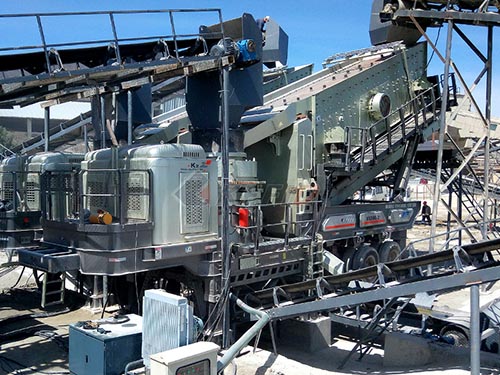
Dynamic Balancing System | Technical Basis: Counterweights integrated into the flywheel assembly to offset stamp motion | Operational Benefit Drastically reduces vibrational load transferred to the mill foundation and support structure | ROI Impact Lowers civil engineering requirements for installation and prevents longterm structural damage
4. COMPETITIVE ADVANTAGES
| Performance Metric | Industry Standard (Legacy Mills) | Modern Gravity Discharge Stamp Mill Solution | Advantage (% Improvement) |
| : | : | : | : |
| Tonnage Throughput (for equivalent footprint) | 13 TPH (varies widely) | 38 TPH (model dependent) | Up to 167% Increase |
| Energy Consumption per Ton Crushed| ~57 kWh/Ton| ~3.54.5 kWh/Ton| 2030% Reduction |
| Mean Time Between Failure (Major Components)| 612 Months| 1824 Months| 50100% Improvement|
| Target Product Size Consistency (P80)| Highly Variable (±30%)| Consistent (±10%)| 67% Improvement in Control|
| Required Annual Maintenance ManHours| 80120 Hours| 4060 Hours| ~50% Reduction|
5. TECHNICAL SPECIFICATIONS
Model Range & Capacity: Available in 750kg (2stamp), 1500kg (4stamp), and custom configurations; throughput from 3 TPH to over 8 TPH depending on ore hardness and target grind size.
Power Requirements: Driven by electric motor (standard) or diesel engine option. Typical installed power ranges from 15 kW (2stamp) to 45 kW (6stamp). Voltage tailored to regional standards.
Material Specifications:
Stamps & Shoes: Highgrade manganese steel casting (>11% Mn).
Mortar Box & Liners: Abrasionresistant alloy steel.
Main Frame & Cam Shafts: Fabricated from stressrelieved carbon steel plate.
Bearings & Bushings: Sealed roller bearings on drive shaft; bronze bushings at stamp guides.
Physical Dimensions (Typical): Footprint ranges from approximately \(2m x \(1m\) m\) for compact units up to \(4m x \(1m\) m\) for larger mills. Shipping weight from ~5 tonnes upwards.
Environmental Operating Range: Designed for ambient temperatures from 20°C to +50°C; dustprotected critical components; suitable for installation at altitudes up to \(3000\) meters above sea level.
6. APPLICATION SCENARIOS
SmallScale Hard Rock Mine Expansion
Challenge A West African operation using manual crushing struggled with sub60% gold liberation from their quartz vein ore at a throughput above \(2\) TPH causing significant losses in their gravity circuit
Solution Installation of a standardized \(1500kg\), fourstamp mill with an adjustable discharge grate replaced the manual process
Results Achieved consistent P80 of \(10\) mesh achieving >\(95\%\) initial liberation Throughput stabilized at \(4\) TPH leading to a calculated \(35\%\) increase in overall gold recovery within six months
Historic Mine Tailings Reprocessing
Challenge A contractor reprocessing historic tailings needed a rugged lowmaintenance primary crusher that could handle variable moisture content without clogging while operating on limited generator power
Solution Deployment of a mechanically simple twostamp mill with extrawide discharge grates was selected for its tolerance to feed variability
Results The unit processed between \(2\)\(5\)\(3\)\(5\) TPH of material consistently over an \(18\)month campaign with only scheduled maintenance stops achieving target payback period based on recovered values within eight months
7 COMMERCIAL CONSIDERATIONS
Equipment pricing is tiered based on capacity configuration:
Tier I Standard Duty (\(750kg\)\(1500kg\)) Ideal for pilot plants or satellite operations
Tier II Production Duty (\(2250kg\)\(3000kg\)) Designed for continuous primary crushing service
Tier III Custom Engineered Solutions For integration into fully automated circuits or unique feedstocks
Optional Features Include enclosed sounddampening housings automated water addition systems remote monitoring sensors belt guard packages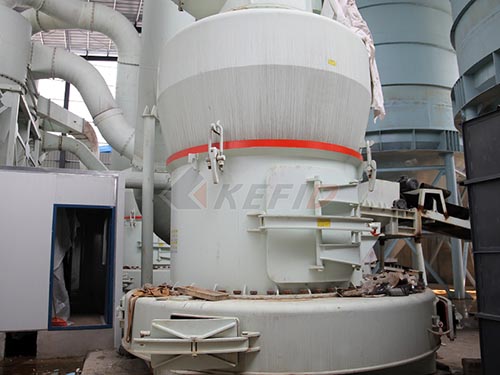
Service Packages Available:
Basic Factory recommended spare parts kit
Premium Includes annual inspection by factory technician priority parts dispatch
Platinum Comprehensive multiyear coverage including planned component rebuilds
Financing Options Flexible commercial leasing structures are available through partnered financial institutions allowing capital preservation Typical terms range from \(24\)\(60\) months
8 FAQ
Q What upstream preparation does my ore require before feeding into the stamp mill?
A For optimal performance ROM ore should be reduced via jaw crusher ideally below \(50mm\) Dry feeds are acceptable but controlled water addition forming slurry is standard practice Clay content should be minimal as it can impede discharge
Q How does this integrate with my existing gravity concentration plant?
A The stamp mill serves as your primary liberation device Its discharge slurry can be fed directly onto sluice boxes shaking tables or into a retention sump pump system Field data shows proper sizing ensures optimal particle size distribution for efficient gravity separation downstream
Q What is the expected operational lifespan before major overhaul?
A With adherence to prescribed maintenance schedules industry reports show major structural components lasting decades Critical wear items like shoes dies require replacement based on tonnage processed typically every several thousand tons depending on abrasiveness Manufacturers provide detailed wear life estimates per model
Q Are technical drawings foundation plans provided?
A Yes comprehensive installation manuals including detailed foundation plans anchor bolt specifications load data electrical schematics are supplied This enables your engineering contractors prepare site prior delivery minimizing commissioning time
Q What training support do you provide operators?
A Standard purchase includes digital operator training modules covering safe startup shutdown procedures routine adjustments troubleshooting guides Optional onsite commissioning training conducted certified technician available ensure crew proficiency