
Electromagnetic Vibrating Feeder

An Electromagnetic Vibrating Feeder is a type of feeding equipment that uses electromagnetic forces to generate vibrations, transporting bulk materials in a controlled manner. It is widely used in industries such as mining, metallurgy, cement, chemical, food processing, and pharmaceuticals for conveying granular or powdered materials.
Working Principle
1. Electromagnetic Drive System:
- An electromagnet generates an alternating magnetic field when powered by an AC or half-wave rectified current.
- This causes the armature (attached to the feeder tray) to vibrate at high frequency (typically 50-60 Hz or 3000-3600 vibrations per minute).
2. Resonance Principle:
- The feeder operates near its natural resonant frequency for high efficiency with minimal energy consumption.
- Springs (leaf or helical) amplify and direct the vibrations for smooth material flow.
3. Material Movement:
- The vibrating motion (linear or elliptical) moves material along the trough via micro-throws at high speed.
Key Components
- Electromagnet – Generates pulsating force.
- Trough/Feeder Pan – Carries the material.
- Spring System – Supports and amplifies vibrations.
- Control Unit – Adjusts vibration intensity (amplitude) via voltage regulation.
Advantages
✔ High precision & controllable feed rate
✔ Low power consumption (energy-efficient)
✔ No moving parts → Minimal maintenance
✔ Compact & quiet operation
✔ Suitable for harsh/dusty environments
Applications
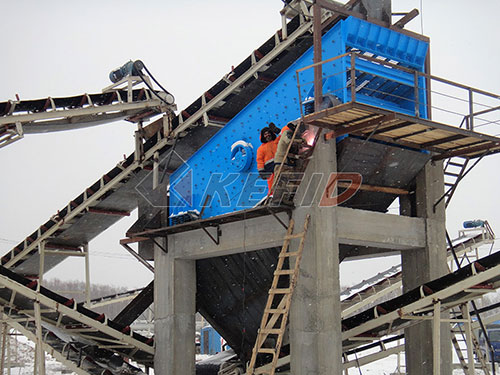
- Feeding crushers, screens, and conveyors in mining/aggrega
.
- Dosing materials in chemical & food processing.
- Packaging & weighing systems.
- Foundry sand handling.
Selection Considerations
1. Material Properties – Size, density, moisture content.
2. Capacity Requirements – Feed rate (tons/hour).
3. Trough Design – Open/closed, lined (for abrasives).
4. Power Supply – Voltage/frequency compatibility.
5. Control Options – Variable speed for adjustable flow.
Common Issues & Solutions
- Material Clogging? → Adjust amplitude or install a steeper trough.
- Excessive Noise? → Check spring condition and fasteners.
- Inconsistent Flow? → Verify voltage stability and material buildup.
Would you like details on specific brands, installation tips, or troubleshooting?