
Eco-Friendly Sand Gravel Mining Factory
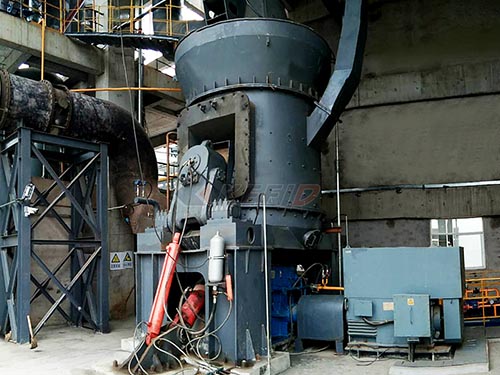

Here is the SEOoptimized landing page content for EcoFriendly Sand Gravel Mining Factory, tailored for commercial buyers, plant managers, and engineering contractors.
Is Your Sand & Gravel Operation Facing Compliance Fines, Water Waste, and Margin Erosion?
If you are managing a sand and gravel mining factory, you are likely confronting three escalating pressures: regulatory compliance for environmental discharge, rising water consumption costs (up to 15% of operational OPEX in waterstressed regions), and product quality rejection due to high fines content. Traditional wet processing plants often consume 2,000–3,000 gallons of water per ton of material, while dry processing methods generate dust that violates OSHA and EPA standards. Can your current system meet the new 2025 effluent guidelines without a capitalintensive water treatment retrofit? Are you losing 5–8% of saleable product to sludge ponds? The EcoFriendly Sand Gravel Mining Factory system is engineered to solve these exact bottlenecks.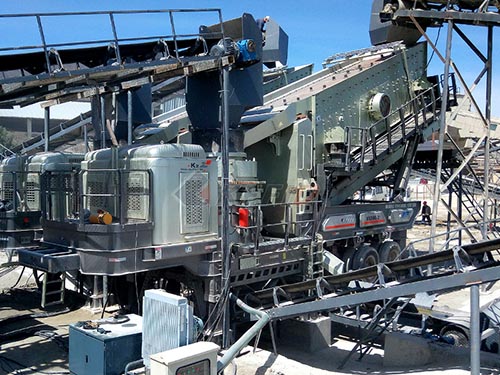
Product Overview: The ClosedLoop Dry & Wet Hybrid Processing System
This is a modular, EcoFriendly Sand Gravel Mining Factory configuration that integrates highfrequency dewatering screens, hydrocyclone reclamation, and a zeroliquid discharge (ZLD) filtration loop. Unlike conventional plants that rely on settling ponds, this system recovers 95% of process water and produces a drystackable tailings cake.
Operational Workflow:
1. Feed Preparation: Runofmine material enters a vibrating grizzly feeder (scalping >150mm oversize).
2. Primary Scrubbing: Log washer or rotary scrubber breaks down claybound aggregates.
3. Classification & Dewatering: Material passes through a multislope screen and hydrocyclone cluster. Fines (<75 micron) are directed to the thickener.
4. Water Recovery: Slurry enters a highrate thickener followed by a plateandframe filter press. Recovered water (TSS <50 ppm) is returned to the wash plant.
5. Dry Stacking: Filter cake (20% moisture) is conveyed to a stockpile, eliminating the need for tailings dams.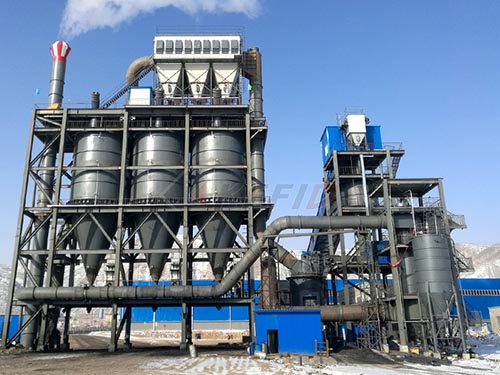
Application Scope: Ideal for alluvial deposits, crushed rock fines, and riverbed aggregates. Limitations: Not recommended for highly plastic clays (>30% clay content) without pretreatment; requires a minimum 500 sq. ft. footprint for the filter press module.
Core Features
HighFrequency Dewatering Screen | Technical Basis: Linear motion vibration (50Hz) with polyurethane panels | Operational Benefit: Reduces product moisture from 18% to 12% in a single pass, eliminating the need for thermal drying | ROI Impact: Saves $0.50–$0.80 per ton in fuel costs for downstream drying
ClosedLoop Hydrocyclone Cluster | Technical Basis: 10inch diameter cyclones with ceramic apex liners | Operational Benefit: Recovers 98% of +200 mesh sand, reducing pond dredging frequency by 70% | ROI Impact: Extends pond life by 3–5 years, avoiding $200k+ in excavation costs
ZeroLiquid Discharge (ZLD) Filter Press | Technical Basis: 1500 kPa hydraulic pressure on polypropylene plates | Operational Benefit: Produces a stackable cake (20% moisture) that passes the "paint filter test" for landfill disposal | ROI Impact: Eliminates $15/ton hauling costs for wet sludge; qualifies for green building material credits
Variable Frequency Drive (VFD) Pumps | Technical Basis: 460V, 3phase motors with PID control | Operational Benefit: Reduces energy consumption by 35% during lowdemand periods | ROI Impact: Lowers annual electricity bill by $18,000–$25,000 for a 200 TPH plant
Modular Steel Skid Design | Technical Basis: Bolted, prewelded A36 steel frames | Operational Benefit: Reduces site installation time from 8 weeks to 2 weeks | ROI Impact: Saves $40,000 in onsite labor and crane rental costs
Automated Polymer Dosing System | Technical Basis: Emulsion polymer injection at 0.5–2.0 lbs/ton of solids | Operational Benefit: Optimizes flocculation in realtime, reducing polymer consumption by 20% | ROI Impact: Annual savings of $12,000 on chemical costs for a 500 TPH operation
Competitive Advantages
| Performance Metric | Industry Standard (Wet Pond System) | EcoFriendly Sand Gravel Mining Factory | Advantage (% Improvement) |
| : | : | : | : |
| Water Consumption | 2,500 gal/ton | 125 gal/ton (recycled) | 95% reduction |
| Tailings Disposal Cost | $8/ton (wet hauling) | $2/ton (dry stacking) | 75% cost reduction |
| Product Moisture Content | 18–22% | 10–12% | 40% lower moisture |
| Permitting Timeline | 12–18 months (pond permit) | 4–6 months (dry stack permit) | 60% faster approval |
| Fines Recovery Rate | 85% (lost to pond) | 98% (recovered as product) | 15% higher yield |
Technical Specifications
| Parameter | Specification |
| : | : |
| Model Capacity | 150 TPH / 300 TPH / 500 TPH (nominal) |
| Power Requirements | 480V, 3Phase, 60Hz (or 400V, 50Hz) |
| Total Installed Power | 350 kW (300 TPH model) |
| Material Specifications | Feed: 0–150mm; Max clay content: 25% |
| Physical Dimensions | 80 ft (L) x 25 ft (W) x 30 ft (H) – modular layout |
| Operating Temperature | 0°C to 45°C (ambient); slurry temp up to 60°C |
| Water Quality Output | <50 ppm TSS (recycled water) |
| Filter Cake Moisture | 18–22% (standard); 12–15% (with thermal assist) |
Application Scenarios
Riverbed Aggregate Processing (Midwest USA)
Challenge: A 400 TPH plant faced a $1.2M fine for exceeding turbidity limits in a protected watershed. Their settling pond was at 90% capacity.
Solution: Installed a 300 TPH EcoFriendly Sand Gravel Mining Factory with a 1500mm filter press and 50meter thickener.
Results: Achieved zerodischarge status within 6 months. Water recycling rate hit 97%. Avoided $200k/year in pond dredging costs. Product moisture dropped from 20% to 11%, improving concrete mix quality.
Crushed Granite Fines (Southeast Asia)
Challenge: A quarry was stockpiling 150,000 tons/year of 5mm fines as waste, paying $3/ton for disposal.
Solution: Deployed a mobile version of the EcoFriendly Sand Gravel Mining Factory to process the fines stockpile.
Results: Recovered 90% of the material as saleable manufactured sand (FM 2.8). Generated $1.2M in new revenue annually. Eliminated the waste stockpile liability.
Desert Mining Operation (Middle East)
Challenge: Water scarcity limited production to 8 hours/day. Water trucking cost $0.10/gallon.
Solution: Implemented the ZLD system with a 200 TPH capacity.
Results: Reduced freshwater intake by 95%. Production increased to 20 hours/day. Payback period on the water recycling system was 14 months.
Commercial Considerations
Equipment Pricing Tiers (FOB Factory):
- Base System (150 TPH): $850,000 – $1,100,000 (includes screen, cyclones, thickener, basic controls)
- Standard System (300 TPH): $1,600,000 – $2,100,000 (includes filter press, VFD pumps, polymer system)
- Premium System (500 TPH): $2,800,000 – $3,500,000 (includes automated PLC, remote monitoring, thermal assist)
- Dust Suppression System: $45,000 (fogging nozzles at transfer points)
- Remote Telemetry Package: $12,000 (realtime water usage, energy monitoring)
- Spare Parts Kit: $25,000 (screens, cyclone liners, pump wear parts)
- StartUp & Commissioning: $35,000 (2 weeks onsite)
- Annual Maintenance Contract: $18,000/year (includes quarterly inspections, filter press plate replacement)
- Operator Training: $8,500 (3day classroom + handson)
- LeasetoOwn: 5year term, 6.5% APR (subject to credit approval)
- PerformanceBased Financing: Payments tied to water savings (minimum 15% reduction required)
- Green Energy Grants: Qualifies for federal/state water conservation rebates (up to 30% of equipment cost)
Optional Features:
Service Packages:
Financing Options:
FAQ
1. Can this system handle highclay content material?
Yes, up to 25% clay content. For higher clay, we recommend adding a rotary scrubber and a secondary flocculant injection point. Field data shows 95% clay removal efficiency with the standard configuration.
2. What is the typical payback period for the water recycling system?
For a 300 TPH plant operating 2,000 hours/year, the payback period is 18–24 months based on water savings ($0.50/gallon) and reduced disposal costs.
3. Does the system require a building or enclosure?
No. The modular skids are weatherresistant. However, we recommend a roof over the filter press and electrical panels for extended equipment life. A simple canopy costs $15,000–$25,000.
4. How does this compare to a traditional wet plant with a pond?
Your total cost of ownership (TCO) is 30–40% lower over 10 years. You avoid pond permitting delays (6–12 months), eliminate dredging costs, and reduce water purchase costs by 90%.
5. What is the maintenance schedule for the filter press?
Replace filter cloths every 2,000–3,000 cycles (approx. 6 months). Hydraulic oil change annually. The press itself has a 15year design life with proper maintenance.
6. Can I retrofit this system onto my existing plant?
Yes. The EcoFriendly Sand Gravel Mining Factory is designed as a "bolton" module. We provide a retrofit kit that connects to your existing screen discharge and slurry pump. Typical retrofit installation takes 3–5 days.
7. What environmental certifications does this system support?
It supports LEED v4.1 credits for water efficiency, ISO 14001 compliance, and meets the EPA's Effluent Limitations Guidelines (ELG) for the construction materials industry.