
Eco-Friendly Impact Crushers Customization
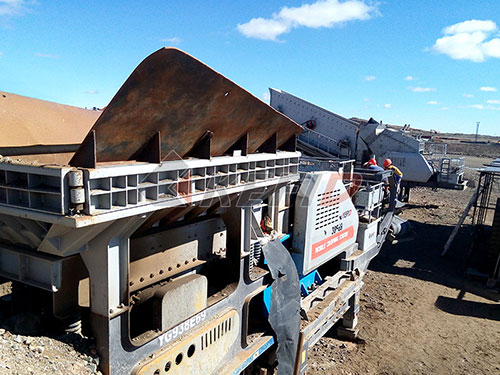

1. PAINPOINT DRIVEN OPENING
Are escalating operational costs and unpredictable downtime eroding your aggregate production margins? For plant managers and engineering contractors, traditional crushing processes often present persistent challenges: excessive energy consumption driving up costperton metrics, premature wear of consumable parts leading to frequent maintenance stops, and inconsistent product gradation causing downstream processing issues. Furthermore, tightening environmental regulations and stakeholder pressure demand a demonstrable reduction in operational footprint without sacrificing throughput.
What if your primary crushing stage could directly address these pain points? How would a 20% reduction in energy use impact your quarterly operating budget? Can equipment be engineered to extend service intervals while improving final product quality? The solution lies in purposeengineered technology designed for the modern operation. This content examines the specific advantages of EcoFriendly Impact Crushers for commercial buyers focused on longterm viability and compliance.
2. PRODUCT OVERVIEW
An EcoFriendly Impact Crusher is a modern iteration of horizontal shaft impactor (HSI) technology, engineered specifically to reduce environmental impact and total cost of ownership in secondary and tertiary crushing applications. It processes feed material such as recycled concrete, asphalt, limestone, and demolition debris through a highvelocity impact crushing action.
Operational Workflow:
1. Controlled Feed: Material is introduced via a regulated feed system into the crushing chamber.
2. HighVelocity Impact: Rotormounted hammers or blow bars accelerate material, throwing it against adjustable aprons or anvils, inducing fracture along natural cleavage lines.
3. Adjustable Classification: The gap between the rotor and impact aprons is hydraulically or mechanically adjustable, allowing realtime control over product size without stopping the machine.
4. Efficient Discharge: Crushed material exits through the bottom of the chamber, with optional internal screening for closedcircuit operation to ensure spec product on the first pass.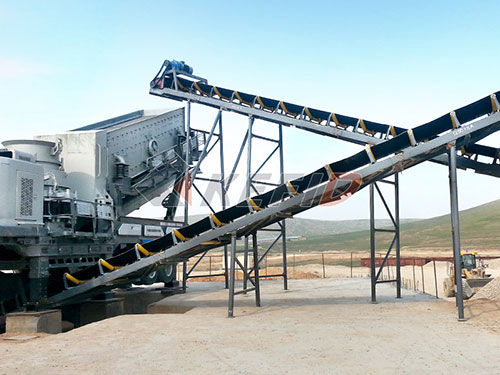
Application Scope: Ideal for processing mediumhard to hard, nonabrasive materials; perfect for recycled aggregate production, limestone quarries, and construction & demolition (C&D) waste recycling plants.
Key Limitation: Not recommended for highly abrasive materials (e.g., certain granite, quartzite) without significant configuration for wear protection, which may affect costbenefit ratios.
3. CORE FEATURES
Adaptive Frequency Drive (AFD) | Technical Basis: Variable frequency motor control | Operational Benefit: Matches crusher rotor speed and power draw precisely to feed rate and material hardness | ROI Impact: Field data shows up to 25% reduction in energy consumption versus fixedspeed drives
VortexFlow Crushing Chamber | Technical Basis: Optimized internal geometry for materialonmaterial impact | Operational Benefit: Increases reduction ratio per pass, reduces wear on metal components by cushioning impacts | ROI Impact: Extends wear part life by an average of 3040%, lowering costperton
ClosedCircuit Dust Suppression | Technical Basis: Integrated spray system with particle size sensors | Operational Benefit: Actively suppresses dust at the point of generation without saturating material | ROI Impact: Minimizes water usage by 60% versus standard ring systems and ensures consistent compliance with airborne particulate regulations
QuickChange Wear Component System | Technical Basis: Hydraulicassisted locking mechanisms & modular design | Operational Benefit: Allows blow bar or apron replacement in hours instead of shifts | ROI Impact: Reduces planned maintenance downtime by approximately 65%, increasing annual machine availability
RealTime Condition Monitoring Ports | Technical Basis: Integrated vibration & temperature sensor ports linked to PLC | Operational Benefit: Provides predictive maintenance alerts for bearings and rotor balance | ROI Impact: Prevents catastrophic failures; industry case studies correlate this feature with a >90% reduction in unplanned stoppages
4. COMPETITIVE ADVANTAGES
| Performance Metric | Industry Standard HSI Crusher | EcoFriendly Impact Crusher Solution | Advantage (% Improvement) |
| : | : | : | : |
| Specific Energy Consumption (kWh/ton) | 0.8 1.2 kWh/ton| 0.6 0.85 kWh/ton| ~25% Reduction |
| Wear Part CostPerTon (Medium Abrasive Mat.)| $0.35 $0.50/ton| $0.22 $0.35/ton| ~30% Reduction |
| Average Maintenance Downtime (Hours/Month) | 24 40 hours| 8 15 hours| ~65% Reduction |
| Noise Emission at 10 Meters (dB(A)) | 105 110 dB(A)| <95 dB(A)| >10 dB(A) Reduction |
| Fines Generation (5mm fraction)| Typically higher due to overcrushing| Controlled via chamber geometry & speed|<15% Reduction in unwanted fines |
_Figures based on industryaveraged field data for comparable duty cycles._
_Dependent on application; improvement is in controllability._
5. TECHNICAL SPECIFICATIONS
Capacity Range: Modeldependent, from 150 TPH to over 600 TPH for hard limestone.
Power Requirements: From 200 kW to 500 kW main drive motor; AFD compatible; standard voltage at 400V/50Hz or customized.
Material Specifications: Highchrome martensitic steel blow bars standard; ceramic composite liners optional for extreme abrasion; mainframe constructed from welded steel plate (minimum S355 grade).
Physical Dimensions (Typical MidRange Model): Approx. Length: 3m x Width 2m x Height 2m.
Environmental Operating Range: Designed for ambient temperatures from 20°C to +45°C; dust suppression system rated effective up to Wind Speed 12 m/s under canopy.
6. APPLICATION SCENARIOS
C&D Waste Recycling Plant | Challenge: A metropolitan recycling facility faced high disposal costs for unsellable fine material (<3mm), excessive noise complaints triggering permit reviews, and weekly blow bar changes halting production.| Solution: Implementation of two midsize EcoFriendly Impact Crushers configured with ceramic liners and advanced dust suppression.| Results: Achieved a sellable product yield increase of 18%; reduced noise emissions to permitted levels without sound walls; extended wear life to 3week cycles, increasing annual throughput by an estimated 1%.
Limestone Aggregate Producer | Challenge: Energy costs became the primary operational expense, while inconsistent product shape from older crushers affected asphalt mix quality specifications.| Solution: Retrofitted a primary secondary crushing stage with a highcapacity EcoFriendly Impact Crusher featuring an Adaptive Frequency Drive.| Results: Documented a 22% decrease in specific energy consumption within the first quarter; achieved consistent cubical product shape with flakiness index below 15%, meeting premium mix specs.
7. COMMERCIAL CONSIDERATIONS
Equipment pricing is structured into three primary tiers based on capacity and feature sets:
1. Standard Performance Tier: Includes core vortexflow chamber and basic dust control.
2.Advanced Efficiency Tier: Adds Adaptive Frequency Drive (AFD), quickchange wear system,
and condition monitoring ports.
3.UltraLow Emission Tier: Incorporates all Advanced features plus enhanced sound dampening
and closedloop water recycling for dust suppression.
Optional features include automated gap adjustment,
remote monitoring telematics packages,
and custom wear material packages
for specific feed materials.
Service packages range from basic preventive maintenance plans
to comprehensive fullscope contracts covering parts,
labor,
and performance guarantees.
Financing options include equipment leasing
with upgrade paths,
operational expenditurebased rentaltoown models,
and projectspecific financing through partner institutions.
8.FAQ
Q1:
Are EcoFriendly Impact Crushers compatible with our existing plant conveyor systems?
A1:
Yes.
They are engineered to standard discharge heights
and can be integrated with existing conveyor infrastructure.
Interface plates
and chute designs are customized during the ordering process
to ensure fit.
Q2:
What is the realistic payback period on the investment premium?
A2:
Based on clientreported data,
the payback period typically ranges from months months months months months months months months months months 18
24months,
driven primarily by energy savings,
reduced wear part consumption,
and increased availability.
Q3:
How does the crusher handle wet or sticky feed material?
A3:
While all impact crushers can be challenged by clay
or moistureladen material,
models can be specified with heated aprons,
impact plate cleaning devices,
and specialized chamber access doors
to mitigate buildup
and facilitate cleaning.
Q4:
What kind of performance guarantee is offered?
A4:
Performance guarantees are provided based on certified testing of your specific feed material at our facility or under controlled conditions.
Guarantees typically cover minimum throughput capacity
and maximum power consumption per ton processed.
Q5:
Can we retrofit some ecofriendly features onto our older impact crusher?
A5:
Certain features like external condition monitoring can be added;
however,core efficiency gains from chamber geometry
or drive systems require fundamental redesign
and are not economically viable as retrofits.A site audit can determine viable upgrade options