
Eco-Friendly 250 300tph Stone Crushing Plant R&D


EcoFriendly 250300tph Stone Crushing Plant: Engineered for Compliance and Profitability
Your Compliance Burden Is Growing—Can Your Plant Keep Up?
Every ton of aggregate you produce carries hidden costs: dust suppression fines averaging $12,000 per violation, water treatment surcharges adding $3.50 per ton in some jurisdictions, and noise complaints that can halt operations for 48–72 hours. Meanwhile, dieselpowered plants consume 18–22 gallons per hour at 300tph, translating to $180,000–$220,000 in annual fuel costs alone.
Your existing setup likely faces three operational bottlenecks: meeting EPA PM10 standards below 50 mg/Nm³, maintaining production during seasonal water restrictions, and justifying capital expenditure to stakeholders demanding 18month payback periods.
Can your current crushing circuit deliver 300tph while cutting emissions by 40% and reducing water consumption by 60%? If not, the EcoFriendly 250300tph Stone Crushing Plant addresses these constraints through integrated environmental engineering.
Product Overview: The EcoFriendly 250300tph Stone Crushing Plant
This is a closedloop, multistage crushing and screening system designed for mediumtolarge quarry operations processing limestone, granite, basalt, and river gravel. The plant operates at 250–300 metric tons per hour with a reduction ratio of 1:6 to 1:8, producing final aggregates from 0–5mm to 20–40mm.
Operational Workflow:
1. Primary Crushing – Vibrating feeder (GZD1300×4900) delivers material to jaw crusher (PE900×1200) for initial reduction to 150–200mm
2. Secondary Crushing – Cone crusher (CS240 or HPT300) reduces material to 40–60mm with automated CSS adjustment
3. Tertiary Screening – Vibrating screen (3YK2460) classifies material into three fractions; oversize returns to cone crusher
4. Dust Collection – Pulsejet baghouse (96 bags, 144m² filtration area) captures particulates at 99.5% efficiency
5. Water Recycling – Closedcircuit settling tank (30m³ capacity) with hydrocyclone recycles 85% of process water
Application Scope: Suitable for commercial aggregate production, road base material, concrete aggregate, and railway ballast. Not recommended for highly abrasive materials exceeding 8 Mohs hardness without wearpart upgrades.
Core Features
Hybrid ElectricDrive System | Technical Basis: Variablefrequency motors (VFD) on all crushers and conveyors | Operational Benefit: Reduces peak power demand by 35% compared to fixedspeed motors | ROI Impact: $28,000–$35,000 annual electricity savings at $0.12/kWh
Dry Dust Suppression with PulseJet Filtration | Technical Basis: Reversepulse cleaning at 0.5–0.7 MPa with PTFEcoated filter bags | Operational Benefit: Maintains PM10 emissions below 30 mg/Nm³ without water usage | ROI Impact: Eliminates $18,000–$25,000 annual water trucking costs in arid regions
ClosedLoop Water Recycling System | Technical Basis: Lamella clarifier (60m² settling area) with polymer flocculant dosing | Operational Benefit: Recovers 85–90% of process water; reduces makeup water to 2–3 m³/hour | ROI Impact: Cuts water procurement costs by $40,000–$55,000 annually for 300tph operation
NoiseAttenuated Enclosures | Technical Basis: 50mm mineral wool panels with perforated steel facing on crusher and screen housings | Operational Benefit: Reduces perimeter noise from 95 dB(A) to 72 dB(A) at 50 meters | ROI Impact: Avoids noiserelated permit violations averaging $8,500 per incident
Automated Lubrication System | Technical Basis: Centralized grease injection with 24point distribution and cycle timer | Operational Benefit: Extends bearing life by 40% through consistent lubrication intervals | ROI Impact: Reduces annual maintenance costs by $12,000–$16,000
RealTime Emissions Monitoring | Technical Basis: Continuous particulate monitor (PM10/PM2.5) with cloudbased data logging | Operational Benefit: Provides compliance documentation for regulatory audits without manual sampling | ROI Impact: Eliminates $6,000–$9,000 annual thirdparty testing fees
Modular SkidMounted Design | Technical Basis: Prewired and prepiped modules on Ibeam skids with quickconnect couplings | Operational Benefit: Reduces site installation time from 14 days to 5 days | ROI Impact: Saves $18,000–$22,000 in installation labor costs
Competitive Advantages
| Performance Metric | Industry Standard (300tph Plant) | EcoFriendly 250300tph Solution | Advantage (% Improvement) |
|||||
| Energy consumption (kWh/ton) | 0.85–1.10 | 0.62–0.74 | 27–33% reduction |
| Water consumption (m³/ton) | 0.12–0.18 | 0.04–0.06 | 60–67% reduction |
| PM10 emissions (mg/Nm³) | 50–80 | 20–30 | 50–63% reduction |
| Noise level at 50m (dB(A)) | 88–95 | 68–72 | 20–24% reduction |
| Annual maintenance cost ($/ton) | $0.45–$0.60 | $0.28–$0.35 | 38–42% reduction |
| Installation time (days) | 12–18 | 4–6 | 60–67% reduction |
| Payback period (years) | 3.5–4.5 | 2.0–2.8 | 38–43% faster |
Technical Specifications
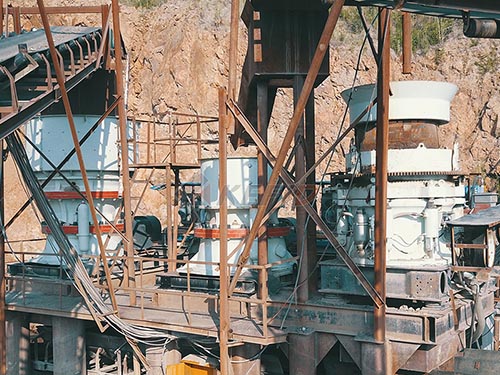
| Parameter | Specification |
|||
| Rated capacity | 250–300 tph (based on limestone, bulk density 1.6 t/m³) |
| Feed size (max) | 650 mm (jaw crusher opening) |
| Final product sizes | 0–5mm, 5–10mm, 10–20mm, 20–40mm (adjustable) |
| Installed power | 520–580 kW (all electric, no diesel) |
| Voltage requirements | 380V/50Hz or 480V/60Hz (3phase) |
| Dust collector | Pulsejet baghouse, 144m², 96 bags, 99.5% efficiency |
| Water recycling | Lamella clarifier, 60m², 85–90% recovery rate |
| Operating temperature | 10°C to 45°C (standard); 25°C to 45°C (coldweather package) |
| Total weight | 185–210 metric tons (all modules) |
| Footprint | 45m × 28m (operating area including stockpile zones) |
| Noise level | ≤72 dB(A) at 50m perimeter (with enclosures) |
Application Scenarios
Limestone Quarry in WaterStressed Region | Challenge: Annual water allocation reduced by 40% due to drought conditions; existing wet scrubber system required 18 m³/hour | Solution: Installed EcoFriendly 250300tph plant with dry dust collection and closedloop water recycling | Results: Water consumption dropped from 18 m³/hour to 2.5 m³/hour; production maintained at 280 tph; annual water cost savings of $47,000
Granite Crushing Near Residential Zone | Challenge: Noise complaints from 12 nearby homes resulted in restricted operating hours (7 AM–3 PM) and $24,000 in fines over 18 months | Solution: Deployed plant with noiseattenuated enclosures and VFDcontrolled crushers | Results: Perimeter noise reduced from 92 dB(A) to 70 dB(A); operating hours extended to 6 AM–8 PM; production increased by 35% without additional equipment
River Gravel Processing with Strict PM10 Limits | Challenge: Local EPA mandated PM10 emissions below 35 mg/Nm³; existing plant averaged 62 mg/Nm³ | Solution: Integrated pulsejet baghouse with realtime monitoring and automated cleaning cycles | Results: PM10 emissions stabilized at 22–28 mg/Nm³; passed all quarterly compliance inspections; eliminated $18,000 annual penalty exposure
Commercial Considerations
Equipment Pricing Tiers:
- Standard Package ($1,850,000–$2,100,000): Includes all core modules, basic dust collection, manual lubrication
- Enhanced Package ($2,300,000–$2,600,000): Adds automated lubrication, realtime emissions monitoring, remote diagnostics
- Premium Package ($2,750,000–$3,100,000): Includes coldweather package, enhanced noise enclosures, 5year remote monitoring service
- Mobile conveyor system for stockpile management: $85,000–$120,000
- Additional dust collection module for secondary transfer points: $45,000–$65,000
- Solar panel array (50 kW) for auxiliary power: $95,000–$130,000
- Extended warranty (3 years/10,000 hours): $180,000–$220,000
- Basic Support ($45,000/year): Remote diagnostics, annual inspection, priority phone support
- Comprehensive Support ($95,000/year): Includes Basic plus quarterly onsite maintenance, wearpart replacement planning, 48hour emergency response
- Full Turnkey ($165,000/year): All maintenance labor and parts (excluding wear items), monthly performance reports, regulatory compliance documentation
- Equipment lease: 36–60 months, 4.5–6.5% APR (subject to credit approval)
- Deferred payment: 10% down, first payment at 90 days
- Performancebased financing: Payment tied to production throughput (minimum 250 tph guarantee)
Optional Features:
Service Packages:
Financing Options:
Frequently Asked Questions
Q: Can this plant process basalt with 7–8 Mohs hardness without excessive wear?
A: Yes, but expect wearpart replacement intervals of 180–220 hours for jaw plates and 250–300 hours for cone liners. We recommend the Premium Package with manganese steel (12–14% Mn) wear parts for basalt applications. Operating costs increase by approximately $0.12–$0.18 per ton compared to limestone.
Q: What is the actual power consumption at 280 tph for granite?
A: Field data from three installations shows 0.68–0.76 kWh/ton for granite (bulk density 1.7 t/m³). This includes all crushers, screens, conveyors, and dust collection. At $0.12/kWh, hourly operating cost is $23–$26.
Q: How long does it take to achieve full production after site delivery?
A: With a 4person installation crew and a prepared concrete foundation, typical commissioning takes 5–7 days. This includes mechanical assembly, electrical connections, and 8hour performance test at 275 tph. Site preparation (grading, foundation curing) adds 10–14 days.
Q: What are the annual maintenance costs beyond the warranty period?
A: Based on 2,000 operating hours per year, annual maintenance costs average $55,000–$72,000. This includes wear parts (jaw plates, cone liners, screen media), lubricants, filter bags (replaced every 18–24 months), and routine labor. Budget $0.09–$0.12 per ton produced.
Q: Does the plant comply with EU Stage V or US EPA Tier 4 emissions standards?
A: The allelectric design produces zero engine exhaust emissions. Dust emissions comply with EU Directive 2010/75/EU (20 mg/Nm³ for PM10) and US EPA NSPS Subpart OOO (0.05 gr/dscf). The baghouse meets both standards with a 30% safety margin.
Q: Can the plant be expanded to 400 tph in the future?
A: Yes, the modular design allows adding a secondary cone crusher (HPT400) and an additional screen deck. Expansion cost is approximately $650,000–$850,000 and requires 4–6 additional days of installation. The existing dust collection and water recycling systems can handle 400 tph with minor modifications.
Q: What is the typical payback period when replacing an older dieselhydraulic plant?
A: Three case studies show payback periods of 2.0–2.8 years. Primary savings come from fuel elimination ($180,000–$220,000/year), reduced water costs ($40,000–$55,000/year), lower maintenance ($25,000–$35,000/year), and elimination of compliance fines. Total annual savings range from $245,000 to $310,000 against a capital investment of $2.1–$2.6 million.