
Custom Stone Crusher Machine R&D
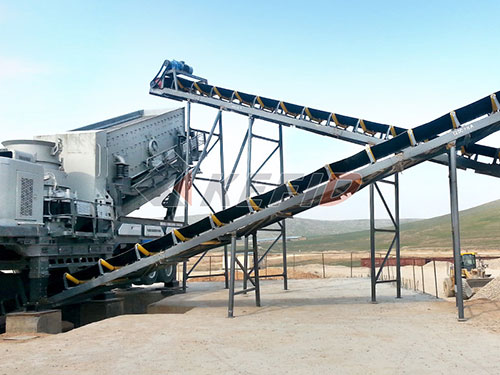

1. PAINPOINT DRIVEN OPENING
Are you managing a quarry, demolition operation, or specialized mineral processing plant where standard crushers fall short? Offtheshelf equipment often fails when faced with unique feed materials, space constraints, or highly specific product specifications. The operational challenges are clear: excessive downtime from equipment mismatch, uncontrolled product gradation leading to rejected loads, and the high capital risk of modifying a standard machine. These issues directly impact your bottom line through lost production, wasted material, and unexpected engineering costs.
How do you process nonstandard feed stock like reinforced concrete with posttension cables, generate a specific cubical product for niche construction, or fit a crushing circuit into a confined urban demolition site? A custom stone crusher machine is not a luxury—it is the engineered solution to these precise operational and financial challenges.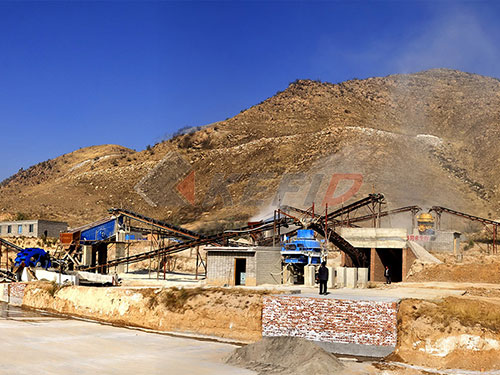
2. PRODUCT OVERVIEW: CUSTOM STONE CRUSHER MACHINE
A custom stone crusher machine is a purposeengineered crushing system designed from the ground up to meet unique operational parameters that standard equipment cannot address. It involves the strategic selection and integration of crusher type (jaw, cone, impact, roll), chassis configuration (stationary, modular, trackmounted), feed system, discharge setup, and control logic into a single optimized unit.
Operational Workflow:
1. Engineered Feed Intake: Customdesigned hoppers, grizzlies, or prescreeners manage your specific feed material size and consistency.
2. Precision Crushing Chamber: A chamber geometry tailored to your rock's abrasiveness, hardness, and desired reduction ratio performs the primary crushing.
3. Controlled Product Flow: Integrated internal components or external circuits (like customized screens or conveyors) ensure material moves efficiently without plugging or bottlenecking.
4. Specific Product Discharge: The output is calibrated to your exact gradation requirements, whether it's a single spec product or multiple classified fractions.
Application Scope & Limitations:
Scope: Ideal for unique mineralogy (e.g., sticky ores, highsilica rock), specialized construction/demolition waste (with rebar), required specific particle shapes (cubical vs. flaky), spaceconstrained sites, and operations needing precise integration with existing plant controls.
Limitations: Requires detailed upfront project engineering; lead times are longer than standard OEM machines; initial investment may be higher but is justified by total cost of ownership.
3. CORE FEATURES
Bespoke Chamber Geometry | Technical Basis: Finite Element Analysis (FEA) & material trajectory modeling | Operational Benefit: Optimized nip angle and throw for your specific material reduces wear by 2040% and improves product shape | ROI Impact: Lower cost per ton in wear parts and fewer changeouts increase uptime.
Modular Power & Drive Configuration | Technical Basis: Calculated torque requirements and variable frequency drive (VFD) integration | Operational Benefit: Motor and drive train are sized for actual duty cycle, eliminating underperformance or energy waste | ROI Impact: Reduced power consumption by 815% versus an oversized standard crusher.
Custom Wear Liner Metallurgy & Profile | Technical Basis: Hardness/impact testing of your feed material to specify alloy composition | Operational Benefit: Liners last longer under your exact abrasion/impact conditions for more consistent output over liner life | ROI Impact: Predictable wear part inventory and scheduling lowers operating cost.
Integrated Automation & Control Logic | Technical Basis: PLC programming tied to load sensors and feed rate controls | Operational Benefit: Operators maintain peak efficiency with automated adjustments for feed surges; remote monitoring capability | ROI Impact: Prevents costly overload damage and allows for proactive maintenance planning.
PurposeBuilt Structural Frame | Technical Basis: Dynamic load analysis ensuring rigidity under your maximum load conditions | Operational Benefit: Eliminates stress fractures and misalignment in highcycle or highimpact applications | ROI Impact: Extends structural life of the core machine beyond standard design lifecycles.
ApplicationSpecific Dust & Noise Mitigation| Technical Basis: Enclosure design incorporating baffling and targeted spray systems| Operational Benefit: Meets strict sitespecific environmental regulations without impeding access for maintenance| ROI Impact: Avoids work stoppages due to regulatory noncompliance.
4. COMPETITIVE ADVANTAGES
| Performance Metric | Industry Standard Crusher | Custom Stone Crusher Machine Solution | Advantage (% Improvement) |
| : | : | : | : |
| Tons per Hour per kW | Fixed based on generic design | Optimized for specific material density & hardness| +10% to +25% |
| Wear Part Life (Manganese)| Average life for "typical" rock| Life tailored to your mineralogy & abrasion index| +20% to +40% |
| Product Specification Yield| Broad tolerance on gradation curves| High yield (>90%) within tight target specification bands| Reduction in offspec material by up to 35% |
| Mean Time Between Failure (MTBF)| Standard duty cycle rating| Engineered for your actual operating hours & shock loads| +15% to +30% |
| System Integration Time| Requires external engineering & modification postpurchase| Preengineered interfaces with your existing conveyors/screens/controls| Installation & commissioning time reduced by ~25% |
5. TECHNICAL SPECIFICATIONS
Capacity/Rating: Engineered to target throughputs from 50 TPH to 600 TPH based on client specification.
Power Requirements: Configured from 75 kW to 400 kW; electrical system designed per client regional standards (e.g., IEC/NEMA).
Material Specifications: Primary structure fabricated from hightensile steel (e.g., S355J2). Wear components in alloys from standard manganese steel to proprietary chromium carbide irons based on application analysis.
Physical Dimensions: Designed to fit defined spatial envelopes; common configurations include lowprofile designs for underground applications or modular units for rapid relocation.
Environmental Operating Range: Built for specified ambient conditions (20°C to +50°C standard); optional packages available for extreme arctic or desert operations with specialized lubrication and sealing systems.
6. APPLICATION SCENARIOS
Urban Demolition Recycling Plant | Challenge: Processing mixed demolition debris containing large chunks of concrete with embedded rebar mesh into a clean 2" aggregate in a spaceconstrained city lot with strict noise limits.| Solution: A custom jaw crusher machine with an integrated electromagnetic overband separator on the feed conveyor, reinforced breaker tips on the jaw dies for cutting rebar, and a fully enclosed chassis with sounddampening panels.| Results: Achieved 95% metal separation at the primary stage; met city noise ordinances; produced clean aggregate meeting DOT specs at 120 TPH within a footprint 30% smaller than a standard setup.
Specialty Trap Rock Quarry | Challenge: Producing highvalue railroad ballast requiring very strict particle shape (cubical) and size distribution from highly abrasive trap rock.| Solution:A custom cone crusher machine with a specially designed crushing chamber profile,laminated crushing principle,and advanced hydraulic setting adjustment system for realtime control.| Results:Cubicity index improved by 22%; yield within demanding ballast specification increased from 65% to over 88%, dramatically reducing surplus fines; liner life extended by 33%.

7. COMMERCIAL CONSIDERATIONS
Custom stone crusher machine projects follow an engineeredtoorder model:
Pricing Tiers: Based on complexity:
Tier I (Modified Standard): Core OEM crusher with custom liners/feed/discharge. Lower initial cost.
Tier II (Full Custom Build): Purposebuilt machine from frame up. Higher investment focused on total lifecycle cost.
Optional Features: Advanced condition monitoring sensors,dust suppression systems fully integrated into controls,turnkey automation packages,mobile trackmounted configurations.
Service Packages: Extended warranty plans tailored to critical components,dedicated technical support line,predictive maintenance programs using machine data.
Financing Options: Projectbased leasing structures that align payments with operational rampup,collaborative financing through major industrial equipment lenders,tradein valuation programs for existing machinery being replaced.
8. FAQ
1. What information is required to begin engineering a custom stone crusher?
A comprehensive project profile is needed including detailed feed material analysis reports,CAD layouts of intended installation site,target throughputs,and exact product gradation requirements.This data informs the feasibility study phase.
2. How does lead time compare to ordering an OEM stock model?
Lead times are significantly longer due to engineering,fabrication,and testing phases.Typical projects range from 69 months versus several weeks/months for standard machines.This timeline ensures reliability upon commissioning
3.Can we integrate our existing plant PLC system with the new custom crushers controls?
Yes.Interfacing with existing control systems(AllenBradley Siemens etc.)is a core part of the design process ensuring unified operation
4.What happens if our feed material characteristics change slightly over time?
The inherent flexibility built into features like adjustable kinematics hydraulic settings allows operators finetune performance within defined parameters For major changes wear part metallurgy can be adjusted during scheduled maintenance
5.How is return on investment(ROI) calculated compared against cheaper offtheshelf alternatives?
ROI analysis focuses total cost ownership including higher throughput lower energy consumption extended wear part life reduced downtime due better reliability We provide detailed models comparing projected costs over typical year lifespan