
Custom Slag Crusher Plant Cheap


1. PAINPOINT DRIVEN OPENING
Managing slag is a persistent bottleneck with tangible costs. Are you facing these operational challenges?
High Disposal Costs & Liability: Landfill fees for untreated slag are escalating, and regulatory scrutiny on storage is increasing, creating both a financial and environmental liability.
Inefficient Material Recovery: Valuable metallic content trapped in slag represents lost revenue. Manual recovery is laborintensive and unsafe, while undersized crushers fail to liberate metal effectively.
Unplanned Downtime & Maintenance: Inappropriate crushers not built for abrasive slag suffer rapid wear on liners and components, leading to frequent stoppages for maintenance and parts replacement.
Inconsistent Feed & Throughput: Fluctuations in slag size and composition can choke or overload standard crushers, preventing your plant from achieving a steady, profitable processing rate.
Space & Mobility Constraints: Fixed, largescale crushing circuits are capitalintensive and inflexible, unsuitable for smaller sites or operations requiring relocation.
The central question is: how do you transform this problematic byproduct into a recoverable asset without introducing new operational headaches? A purposeengineered custom slag crusher plant provides the targeted solution.
2. PRODUCT OVERVIEW
A Custom Slag Crusher Plant is a semimobile or stationary crushing circuit specifically configured for the size reduction and liberation of metallurgical slag (blast furnace, steel furnace, copper, etc.). Its design prioritizes abrasion resistance, tramp metal tolerance, and reliable throughput of hard, abrasive materials.
Operational Workflow:
1. Feed & PreScreening: Runofpile slag is fed via loader or conveyor. An optional primary scalping screen removes fine fractions to bypass crushing.
2. Primary Size Reduction: A robust jaw crusher or impact breaker performs the initial crushing to reduce large lumps to a manageable size.
3. Metal Liberation & Separation: The crushed product is conveyed past a powerful overhead magnetic separator to extract liberated ferrous metal for recycling.
4. Secondary Crushing/Sizing: Material may pass through a secondary cone crusher or impactor to achieve the final product specification (e.g., aggregate for cement substitute, road base).
5. Stockpiling: Sized aggregate is conveyed to stockpiles; recovered metal is collected for sale.
Application Scope & Limitations:
Scope: Ideal for integrated steel mills, foundries, metal smelters, and independent slag processing yards. Effective on ferrous slags (blast furnace, BOF), nonferrous slags (copper, nickel), and certain industrial byproducts.
Limitations: Not designed for primary rock mining or extremely highvolume quarry applications exceeding ~150200 TPH continuously. Performance on slags with extremely high moisture content may require feed system modifications.
3. CORE FEATURES
HeavyDuty Feed System | Technical Basis: Reinforced apron feeder or vibrating grizzly feeder with replaceable liners | Operational Benefit: Handles direct dump from loaders without bridging or choking; protects downstream crusher from shock loads | ROI Impact: Reduces feedrelated stoppages by an estimated 6080%, maximizing crusher uptime.
AbrasionResistant Crushing Chamber | Technical Basis: Highchrome iron or manganese steel liners in jaw/cone/impactor cavities | Operational Benefit: Extends liner life significantly when processing highly abrasive slag material | ROI Impact: Lowers costperton for wear parts; field data shows a 4070% improvement in liner life over standard quarry configurations.
Integrated Magnetic Separation | Technical Basis: Selfcleaning crossbelt magnet installed at optimal discharge point | Operational Benefit: Automatically recovers liberated ferrous metal concurrently with the crushing process | ROI Impact: Direct revenue generation from scrap sales; improves final aggregate purity for highervalue applications.
Hydraulic Adjustment & Clearing | Technical Basis: Crushers equipped with hydraulic systems for CSS adjustment and chamber clearing | Operational Benefit: Allows operators to adjust product size quickly and clear blockages remotely in minutes vs. hours | ROI Impact: Minimizes downtime for routine adjustments and unblocking; improves overall plant availability.
Modular & Configurable Design | Technical Basis: Skidmounted or modular sections (feed unit, crusher unit, screen unit) with standardized connections | Operational Benefit: Enables faster installation (<1 week typical) and future reconfiguration or relocation as site needs change | ROI Impact: Lower initial civil works cost; preserves asset value and utility across multiple projects.
Centralized Dust Suppression | Technical Basis: Nozzle system at transfer points tied to conveyor operation | Operational Benefit: Controls airborne particulate at source, maintaining compliance with site environmental standards | ROI Impact: Avoids work stoppages due to dust complaints; reduces housekeeping labor costs.
4. COMPETITIVE ADVANTAGES
| Performance Metric | Industry Standard (Generic Crusher) | Custom Slag Crusher Plant Solution | Advantage (% Improvement) |
| : | : | : | : |
| Wear Part Lifetime (Liners) | Based on granite/limestone abrasiveness (~5k10k tons) | Engineered for slag abrasiveness (~15k25k tons) | +50% to +150% |
| Metal Recovery Rate (Ferrous)| Manual picking postcrushing or basic magnetic separation (92% recovery)| Recovery efficiency improved by >30% |
| Mean Time Between Failure (MTBF)| Frequent jams from tramp metal; component stress from abrasion (~120200 hrs)| Tramp metal tolerance & reinforced components (~350500 hrs)| Uptime improved by ~75150% |
| Setup / Commissioning Time| Fixed plant requiring extensive concrete foundations (48 weeks)| Skidmounted modular design with minimal foundations (13 weeks)| Deployment time reduced by ~5080% |
5. TECHNICAL SPECIFICATIONS
Capacity Range: Configurable from 30 to 150 Tons Per Hour (TPH), depending on feed size and product specification.
Power Requirements: Total connected load typically between 150kW 400kW, supplied by mains grid or suitable diesel generator set.
Primary Crusher Options: Jaw Crusher (400x600mm to 600x900mm) or Horizontal Shaft Impactor (HSI), selected based on slag characteristics.
Material Specifications: Primary structure fabricated from heavyduty steel plate (S355JR). Critical wear components in AR400 steel plate or equivalent highchrome iron castings.
Physical Dimensions (Example Skid): Variable by configuration. Typical primary skid module L15m x W3m x H4m.
Environmental Operating Range: Designed for ambient temperatures from 20°C to +45°C. Dust suppression system standard for operation in controlled environments.
6. APPLICATION SCENARIOS
Steel Mill Slag Yard Reclamation | Challenge: A midsized steel mill faced rising landfill costs for historical slag piles and needed to recover trapped metallics while creating saleable aggregate. Manual processing was prohibitively expensive.| Solution: Deployment of a customdesigned 80 TPH skidmounted plant featuring a primary jaw crusher, magnetic separator, and secondary impactor for cubical product shaping.| Results: The plant processed over 120,000 tons of legacy slag annually. Metallic recovery paid back equipment financing within 18 months. The produced aggregate was sold to local road construction firms, turning a cost center into a profit stream.
Copper Smelter Slag Processing Contractors| Challenge:A contracting company required mobile processing equipment that could be moved between different nonferrous smelter sites with varying space constraints but needed durability against extremely abrasive copper slag.| Solution:A highly modular custom slag crusher plant built on three trailer modules allowed rapid site deployment.The design specified ultrawearresistant liners throughout the crushing path.| Results:The contractor reduced mobilization time between sites by 65%. Wear part consumption decreased by an estimated 40% compared to their previous portable jaw plant,increasing their bid competitiveness through lower operating costs per ton.

7.COMMERCIAL CONSIDERATIONS
Pricing Tiers: Investment varies significantly based on capacity and complexity.
EntryLevel: Basic jaw crusher + magnet configuration on single skid ($250k $400k USD).
MidRange: Twostage crushing with screening module ($450k $750k USD).
HighCapacity: Full circuit with multiple products sizes,dust collection,and advanced controls ($800k+ USD).
Optional Features / Upgrades: Vibrating grizzly feeder vs.apron feeder;secondary/tertiary crusher module;finished product screening deck(s);enclosed cabins with PLC automation;water spray dust suppression vs.dry fog system.
Service Packages: Standard warranty of12 months on machinery.Options include extended warranty plans,customized spare parts kits,and annual inspection contracts.Predictive maintenance support via remote monitoring can be specified.
Financing Options: Equipment can be acquired via direct purchase,captive leasing programs through financial partners,and rentaltoown structures.Typical lease terms range from36to60months.Financing often considers the revenue potential from recovered metal in credit assessments.
8.FAQ
Q1:What information do you need to design an effective customslagcrusherplant?
A1:The key parameters are:a)sample analysis of yourslag(abrasiveness index,SG,bulk density),b)the maximum feed lump size,c)the desired final product size(s),d)the estimated percentage of metallic content,and e)the target hourly throughput(TPH).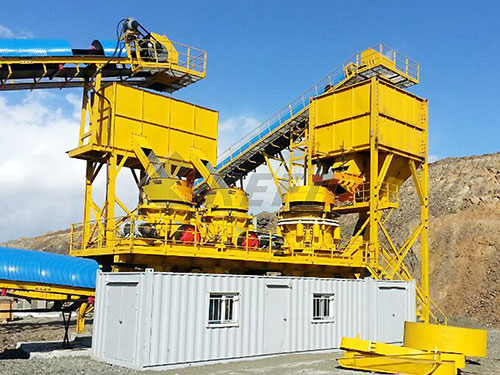
Q2:Canyourplant handle wetorsticky materials?
A2:The standard design assumes materialwith moderate surface moisture.Modifications such as steeper feed chutes,vibrating pan feeders,and specific liner coatings can be appliedfor stickyorhighmoisture feeds.This must be evaluated during the specification phase.
Q3:Whatisthe typicalleadtimefrom orderto commissioning?
A3.For askidmountedstandarddesign,the leadtimeis typically16to24weeks.This includes engineering,fabrication,factory testing,and delivery.Complex multimodule plants may require additional time.Site preparationbythe client should proceedin parallel.
Q4:Whatarethe ongoingoperationalcostswe should budgetfor?
A4.The primary operational costs are wear parts(liner sets,mantles,screen meshes),energy consumption,and routine maintenance labor.Consumable cost per tonis highly materialdependent but our designs aimto minimizeit.A detailed wear part life estimate will be providedwith your proposal basedonyour specificslag sample data
Q5:Doyouprovide trainingfor our operatorsandmaintenance staff?
A5 Yes.Comprehensive trainingis includedduring commissioning.This covers safe startup/shutdown procedures,routine operational checks,basic troubleshooting,and scheduled maintenance tasks.Manualsandparts listsare provided digitallyand in hardcopy
Q6:Cana customplantbe expandedlaterif ourthroughputneeds increase?
A6.The modular philosophy behind ourcustomslagcrusherplants specifically allowsfor this.Systems canbe designedwith future capacity upgradesin mind suchas addinga secondarymoduleorlarger screen deck oftenwithminimal modificationtothe existingbase structure
Q7:What happensif we encountera problemafter installation?
A7.Supportis providedvia phoneand email directlywith our technical team.For critical issues,a global networkof service partnerscanbe dispatchedfor onsite support.Response timesand service level agreements(SLAs)dependon theselected service package