
Custom Slag Crusher Plant Affordable
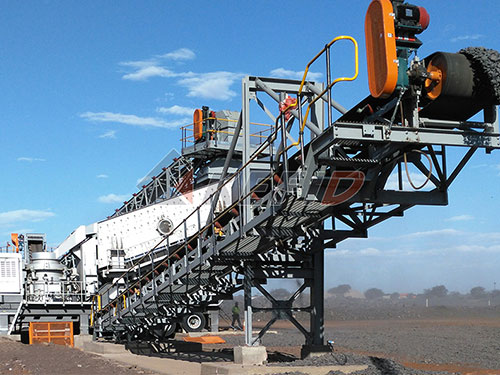

H1: Custom Slag Crusher Plant | Engineered for HighVolume, LowCost Processing
1. PAINPOINT DRIVEN OPENING
Managing slag byproduct is a persistent operational and financial challenge. Are you facing these costly scenarios?
High Disposal Costs & Liability: Landfill fees for untreated slag are escalating, and longterm environmental liability remains with your operation.
Inefficient Material Handling: Relying on multiple, disparate pieces of equipment for primary breaking, screening, and conveying leads to excessive fuel consumption, labor costs, and transfer points prone to blockage.
Unrecovered Metal Value: Inconsistent or inadequate crushing results in unliberated metal trapped within slag aggregates, representing direct revenue loss with every ton processed.
Excessive Downtime & Maintenance: Standard crushers not built for slag’s abrasive, variable nature suffer accelerated wear on liners and components, causing unpredictable shutdowns and high spare parts inventories.
Lack of Flexibility: Fixed crusher setups cannot adapt to changing feed sizes or desired product specifications, forcing compromise on final aggregate quality.
The central question for plant managers is: how can you transform this costly byproduct into a consistent, saleable aggregate while maximizing metal recovery and minimizing total cost of ownership? A purposebuilt custom slag crusher plant provides the integrated solution.
2. PRODUCT OVERVIEW
A custom slag crusher plant is a semifixed or skidmounted processing system specifically engineered to reduce slag from metal production (blast furnace, steel furnace) into precisely graded aggregates for construction or road base applications. The workflow integrates several key stages:
1. Primary Receiving & PreScreening: Slag feed is directed through a grizzly or scalping screen to bypass fines and isolate oversize material requiring reduction.
2. Primary Crushing: A heavyduty jaw crusher or impact breaker reduces large slabs (often up to 1m+) to a manageable size (e.g., <250mm).
3. Metal Recovery & Separation: Liberated metal is removed via crossbelt magnets at critical transfer points for recycling.
4. Secondary/Tertiary Crushing & Final Sizing: Cone crushers or further impactors refine the material, working in closed circuit with vibrating screens to produce exact product fractions (e.g., 05mm, 520mm).
5. Stockpiling: Sized aggregates are conveyed to designated stockpiles.
Application Scope: Ideal for steel mills, foundries, and dedicated slag processing yards handling medium to high volumes (>50 tons per hour). Limitations: Not suitable for primary mining of virgin rock; feed must be within designed maximum lump size and free of extraneous nonslag debris like scrap machinery.
3. CORE FEATURES
HeavyDuty Primary Breaker | Technical Basis: High inertia rotor & reinforced impact aprons | Operational Benefit: Handles large, irregular slag feed without bridging or stall; absorbs shock loads from uncrushables | ROI Impact: Eliminates need for primary hydraulic hammer breaking, reducing operating cost by an estimated $1525 per hour in fuel and hammer maintenance.
Integrated Magnetic Separation System | Technical Basis: Selfcleaning crossbelt magnets at strategic discharge points | Operational Benefit: Continuous automated recovery of liberated ferrous metal directly from the crushing circuit | ROI Impact: Recovers 28% of feed weight as valuable scrap metal; field data shows payback on this module in under 6 months at typical volumes.
AbrasionResistant Liner Package | Technical Basis: AR400/500 steel liners in hoppers, chutes; manganese steel crusher jaws/mantles | Operational Benefit: Extends component life in highly abrasive slag environment by 4060% over standard materials | ROI Impact: Reduces liner change frequency and associated downtime labor; lowers costperton for wear parts.
ClosedCircuit Screening Configuration | Technical Basis: Recirculating conveyor returns oversize material from screens back to crushers | Operational Benefit: Ensures precise control over final product sizing; increases overall plant throughput efficiency by eliminating undercrushed material | ROI Impact: Produces highervalue onspec aggregate with less waste; improves yield by an average of 1525%.
Centralized PLC Control System | Technical Basis: Programmable Logic Controller with humanmachine interface (HMI) panel | Operational Benefit: Allows singleoperator monitoring and control of entire crushing sequence; provides diagnostics and production data logging | ROI Impact: Reduces manpower requirements per shift; enables datadriven maintenance scheduling.
Modular SkidMounted Design | Technical Basis: Preassembled structural skids for major plant sections (primary, secondary/screening) | Operational Benefit: Significantly reduces civil works and installation time onsite; facilitates future relocation if needed | ROI Impact: Cuts installation costs by up to 30% versus traditional fixed foundation builds; improves investment flexibility.
Dust Suppression Integration Points| Technical Basis: Preplumbed manifolds for water spray nozzles at key transfer points| Operational Benefit: Allows effective dust control without retrofitting, ensuring compliance with site environmental standards| ROI Impact Mitigates risk of work stoppages due to dust violations; protects other equipment from abrasive dust ingress.
4. COMPETITIVE ADVANTAGES
| Performance Metric | Industry Standard (Mobile Plant) | Custom Slag Crusher Plant Solution | Advantage (% Improvement) |
| : | : | : | : |
| Availability / Uptime| ~7580% (frequent moves/ setup) |>92% (dedicated semipermanent setup) |>15% Improvement |
| Metal Recovery Rate| Manual picking or single magnet stage |>95% ferrous recovery via multistage magnets |>20% Improvement |
| Cost per Ton (Wear)| High (generalpurpose wear parts) | Optimized (slagspecific liner design/materials) |<30% Reduction |
| Product Consistency | Variable due to feed fluctuations | High (closedcircuit design ensures spec) |<10% Fines Variance |
| Footprint Efficiency | Low (spreadout mobile units) | High (vertical integration on compact skids) |<40% Less Area |
5. TECHNICAL SPECIFICATIONS
Capacity Range: Configurable from 50 TPH to 300+ TPH.
Feed Size Maximum: Up to 1000mm x 1200mm slab.
Power Requirements: Total installed power typically 300kW 800kW depending on configuration; supplied via main grid connection or onboard diesel genset package.
Crusher Specifications: Primary jaw crusher sizes from 900 x 600mm up to 1200 x 1000mm; Secondary/Tertiary cone crushers from standard coarseliner configurations.
Material Specifications: Primary structure S355JR steel; Wear surfaces AR450 steel plate minimum; Chute lining replaceable ceramic/AR plate composite.
Physical Dimensions (Example): Typical twoskid plant footprint approx. 35m L x 22m W x 15m H.
Environmental Operating Range: Designed for ambient temperatures from 20°C to +45°C with appropriate hydraulic oil specifications. Dust suppression system rated for control below local particulate matter thresholds.
6. APPLICATION SCENARIOS
Steel Mill Integrated Processing Yard
Challenge:A major integrated steel mill faced rising landfill costs for aircooled blast furnace slag and needed a reliable method to produce road base material for internal use.
Solution:A custom slag crusher plant was installed adjacent to the slag dump, featuring an extraheavyduty apron feeder for direct dump truck loading and a twostage crushing circuit with three magnetic separation stages.
Results:The plant processes over 180 TPH. Landfill costs were eliminated entirely. The operation now produces all required road base internally and sells surplus aggregate, generating net revenue. Metal recovery added over $200k annually in scrap sales.
Independent Slag Processing Contractor
Challenge:A contractor processing slag from multiple sources required a plant that could handle varying feed hardnesses while maintaining product consistency for different customer specifications without lengthy changeover times.
Solution:A threestage custom plant was supplied with adjustable secondary crusher settings via hydraulic adjustment and interchangeable screen meshes on quicktension systems.
Results:The contractor achieved the flexibility to produce four different certified aggregate products from varying feeds within one shift. Plant utilization increased by 35%, allowing service contracts with three additional suppliers based on output reliability guarantees.
7. COMMERCIAL CONSIDERATIONS
Custom slag crusher plants are capital investments priced according to capacity and specification complexity.
Pricing Tiers:
Basic Configuration (5080 TPH): Includes primary jaw crusher, basic magnet protection screening unit
Standard Configuration(100200 TPH): Includes primary jaw secondary cone closedcircuit design multistage magnets PLC control
Premium Configuration(250+ TPH): Includes additional tertiary crushing stage automated wear monitoring advanced dust suppression full sound encapsulation options
Optional features include onboard diesel power modules sound enclosures automated greasing systems remote monitoring telematics packages extended wear part packages
Service packages typically offered include:
Commissioning supervision operator training programs scheduled preventive maintenance inspections guaranteed spare parts availability agreements
Financing options available through partner institutions can include equipment leasing structures tailored loan agreements helping preserve capital expenditure budgets
8.FAQ
What if our incoming slab size varies significantly?
Custom designs account for maximum expected lump size The heavyduty apron feeder primary breaker combination is engineered specifically manage variable irregular feed preventing bridging ensuring consistent flow
How quickly can such a plant be operational after delivery?
For skidmounted plants minimal civil works are required Typical installation commissioning period ranges between weeks depending site readiness This compares favorably traditional build which can take months
Are spare parts readily available given the custom nature?
While the layout is custom core crushing components use industrystandard bearings seals wear parts from major OEMs This ensures supply chain reliability minimizes proprietary part risk
Can the plant be relocated if our processing site changes?
Yes The modular skid design allows disconnection into major transportable sections Relocation requires remobilization commissioning crew but avoids complete rebuild associated fixed foundation plants
What kind of ongoing operational manpower is required?
A welldesigned PLCcontrolled custom slag crusher plant typically requires one operator per shift monitor HMI perform visual checks plus one maintenance technician shared across multiple site assets
How do you guarantee performance metrics like throughput product sizing?
Performance guarantees are based agreedupon feed characteristics defined during project specification Factory acceptance testing component level coupled with performance runs during commissioning used validate outputs before final signoff
What is the typical expected service life before major refurbishment?
With proper maintenance using specified wear materials structural service life exceeds years Major component refurbishment such as crusher shaft rebuilds typically aligns with + operating hour intervals depending duty severity