
Custom Iron Ore Crushing Plant Suppliers
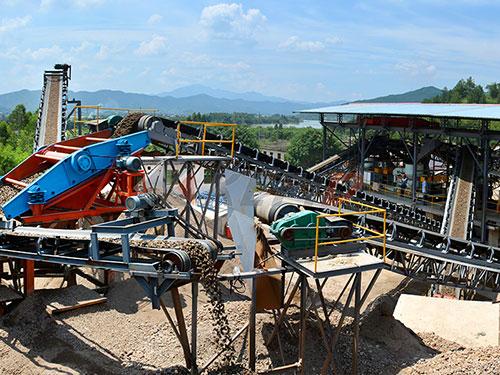

H1: HighYield, LowDowntime Custom Iron Ore Crushing Plants
Subheadline: Engineered to address the specific hardness, abrasiveness, and capacity demands of modern iron ore mining, maximizing throughput and minimizing cost per ton.
1. PAINPOINT DRIVEN OPENING
Managing an iron ore crushing circuit presents distinct, costly challenges. Plant managers and engineering contractors face persistent operational hurdles that directly impact profitability. Are you contending with:
Excessive Wear Costs & Unplanned Stops: The extreme abrasiveness of magnetite or hematite leads to rapid liner wear in crushers and chutes, causing frequent maintenance shutdowns and high component replacement costs.
Inconsistent Feed Size & Crusher Cavitation: Uncontrolled runofmine (ROM) feed with oversized slabs can lead to cavity packing, bridging, and stalled production, resulting in hours of lost throughput and potential equipment damage.
Bottlenecks in Downstream Processing: A poorly configured primary crushing stage fails to deliver optimally sized feed for secondary/tertiary circuits or grinding mills, limiting overall plant capacity and increasing specific energy consumption.
High Operational & Energy Costs: Inefficient crushing stages consume excessive power per ton of product. Manual sampling and adjustment cycles further add to labor costs and process variability.
The central question is: how can you achieve a reliable, hightonnage flow of consistently sized ore while controlling maintenance budgets and energy use? The answer lies in a purposeengineered Custom Iron Ore Crushing Plant.
2. PRODUCT OVERVIEW
A Custom Iron Ore Crushing Plant is a coordinated system of primary, secondary, and often tertiary stationary crushers, screens, and material handling components designed for the continuous reduction of ironbearing rock. It transforms ROM feed (often up to 1.5m in size) into a calibrated product stream (typically 40mm to 10mm) ready for further processing.
Operational Workflow:
1. Primary Reduction: ROM ore is fed into a robust primary crusher (e.g., gyratory or jaw crusher) for initial size reduction.
2. PreScreening & Scalping: A vibrating grizzly or scalper screen removes fine material ("throughs") prior to secondary crushing, increasing circuit efficiency.
3. Secondary/Tertiary Crushing: Cone crushers perform intermediate and final reduction in closed circuit with sizing screens to ensure precise product specification.
4. Material Conveying & Stockpiling: A network of heavyduty conveyors with impactresistant idlers transports crushed ore between stages and to designated stockpiles.
Application Scope & Limitations:
Scope: Ideal for greenfield mine development, brownfield plant expansion, or legacy circuit modernization targeting midtohigh capacity operations (500 – 10,000+ TPH).
Limitations: Requires significant capital investment and site civil works. Not a mobile or skidmounted solution; it is designed for permanent installation at the mine or processing site.
3. CORE FEATURES

Modular Plant Design | Technical Basis: Preengineered, skidmounted sections. | Operational Benefit: Reduces onsite construction time by up to 30%, minimizes foundation work, and allows for easier future expansion or reconfiguration. | ROI Impact: Faster commissioning accelerates revenue generation; modularity protects longterm capital investment.
AbrasionResistant Material Package | Technical Basis: Highchrome iron liners, ceramiclined chutes, AR steel plate construction at wear points. | Operational Benefit: Extends service life of critical wear components by 4060% compared to standard manganese steel in highsilica iron ore applications. | ROI Impact: Direct reduction in liner inventory costs and labor hours dedicated to changeouts; increases plant availability.
Intelligent Process Control System | Technical Basis: PLC/SCADA integration with crusher automation (ASRi) and variable frequency drives (VFDs). | Operational Benefit: Maintains optimal crusher load and closedside setting (CSS) automatically, ensuring consistent product gradation while protecting against overload events. | ROI Impact: Improves yield of target fraction by an average of 812% while reducing specific energy consumption by 1015%.
HeavyDuty Vibrating Grizzly Feeder | Technical Basis: Robust deck construction with stepped grizzly bars. | Operational Benefit: Effectively scalps fines from the ROM feed before the primary crusher while absorbing direct dump truck impacts. | ROI Impact: Increases primary crusher capacity by preventing chokefeeding with fines; reduces recirculating load and associated energy waste.
Dust Suppression & Containment System | Technical Basis: Strategically placed spray nozzles with solenoid control at transfer points. | Operational Benefit: Minimizes airborne particulate matter during crushing operations without overwetting the ore. | ROI Impact: Ensures compliance with site environmental regulations; reduces housekeeping labor; prevents material loss.
4. COMPETITIVE ADVANTAGES
| Performance Metric | Industry Standard Solution | Custom Iron Ore Crushing Plant Solution | Advantage (% Improvement) |
| : | : | : | : |
| Liner Life (Primary Chamber) | Standard Manganese Steel | HighChrome White Iron / Composite Liners | +50% |
| Overall Plant Availability (%)| ~85% (including planned maintenance)| >92% (with predictive scheduling) | +7 percentage points |
| Power Consumption (kWh/t) | Fixedspeed motor operation| VFDcontrolled motors with load optimization| 12% |
| Product Gradation Consistency (±%)| +/ 15% from target size| +/ 8% from target size via automation| +47% Consistency |
| Installation & Commissioning Time| Fieldwelded fabrication onsite| Preassembled modular installation| 30% |
5. TECHNICAL SPECIFICATIONS
Capacity Range: Configurable from 500 to over 2,500 tonnes per hour (TPH), scalable via modular addons.
Power Requirements: Primary crusher drive typically ranges from 250kW to 800kW depending on model; total installed plant power between 800kW – 2500kW.
Material Specifications: Primary structural components are ASTM A36/A572 steel; wear liners use ASTM A532 Class III Type B highchrome iron; chute work features replaceable AR400/500 abrasionresistant plate.
Physical Dimensions (Typical Primary Module): Approx. Length: 18m x Width: 8m x Height: 10m (excludes feed hopper).
Environmental Operating Range: Designed for ambient temperatures from 25°C to +45°C; dust protection rating IP65 for electrical enclosures; wind load design up to 150 km/h.
6. APPLICATION SCENARIOS
[LargeScale Magnetite Operation]
Challenge: A major magnetite producer faced unsustainable liner wear costs in their secondary cone crushers (<400 hours life), causing weekly shutdowns and limiting annual throughput targets.
Solution: Implementation of a custom tertiary crushing circuit featuring cone crushers equipped with specialized abrasionresistant concave liners and an automated setting regulation system.
Results: Liner life extended to over 650 hours—a direct cost saving exceeding $200k annually—and plant throughput increased by 9% due to reduced downtime.
[Hematite Processing Plant Modernization]
Challenge: An aging twostage hematite plant had inconsistent final product size (>20% oversize), creating bottlenecks for downstream pelletizing feed preparation.
Solution: Design and integration of a custom tertiary crushing stage with a highpressure grinding roll (HPGR) precrusher module in closed circuit with fine screens.
Results: Final product P80 was consistently reduced from 22mm to 12mm as required for pelletizing feed—a key quality metric met 99% of the time—enabling a 15% increase in pellet plant output without mill expansion.
7\. COMMERCIAL CONSIDERATIONS
Pricing Tiers
• Base Configuration (Primary + Secondary Crushing):
Capital investment typically ranges based on capacity scale.
• Enhanced Configuration (Incl.Tertiary Stage & Advanced Automation):
Higher initial investment focused on superior product control.
• Lifecycle Value Package (Plant + LongTerm Service Agreement):
Includes guaranteed parts availability & scheduled maintenance.
Optional Features
• OnBoard Product Sampling Systems
• Advanced Rock Breaker Systems for Grizzly
• Permanent Magnetic Separator over Head Conveyor
• Comprehensive Weather Enclosures
Service Packages
1\. Commissioning & Operator Training: Standard startup support.
2\. Planned Maintenance Program: Scheduled inspections & parts discounts.
3\. Performance Guarantee Package: Includes guaranteed availability metrics.
Financing Options
Flexible commercial structures available including capital lease,
operating lease,and project financing solutions tailored for mining capital expenditure.
8\. FAQ
Q1 How do you ensure your custom plant design is compatible with our existing infrastructure?
Our engineering process begins with a detailed site audit including survey data analysis volumetric flow calculations from your current operations,and interface point review ensuring seamless integration into your material flow whether it's feeding an existing stockpile conveyor or new grinding line.
Q2 What is the typical implementation timeline from order placement to commissioning?
For a modular custom iron ore crushing plant lead time averages between 9–14 months depending on complexity.This includes detailed engineering fabrication factory acceptance testing disassembly shipping,and site erection.Commissioning requires approximately 4–6 weeks onsite.
Q3 Can you provide performance guarantees?
Yes.We offer contractual performance guarantees covering key metrics such as minimum throughput maximum power consumption per tonne,and final product size distribution based on agreed feed material characteristics.
Q4 What are the ongoing operational manpower requirements?
A wellautomated custom plant typically requires one control room operator per shift shared across multiple process areas plus dedicated maintenance crews.The intelligent control system reduces need for manual adjustment lowering labor intensity versus older setups.
Q5 How does the pricing model work? Is it turnkey?
We provide firmprice turnkey proposals encompassing design civil works guidance mechanical supply electrical installation commissioning,and training.This singlesource responsibility model provides budget certainty simplifies project management.
Q6 What kind of training do you provide for our operations team?
We supply comprehensive training covering normal operation startup/shutdown sequences routine maintenance troubleshooting procedures,and full understanding of the control system HMI.This includes both classroom instruction handson equipment training using supplied documentation.
Q7 Are your designs adaptable if our ore body characteristics change over time?
The modular design philosophy specifically allows adaptation.Capacity can often be increased via drive upgrades additional modules.Product size focus can be adjusted through changes screen media selection within limits.A core design principle ensures future flexibility.