
Crushing And Screening Equipment Vendors Quote
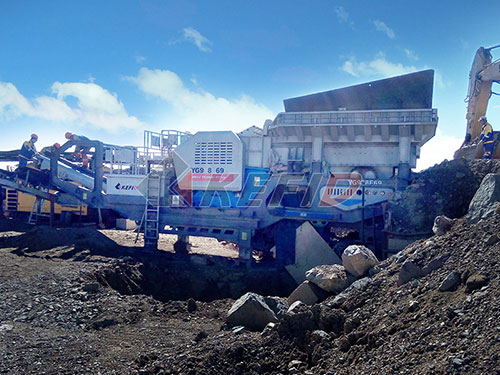

Complete Crushing and Screening Solutions for Modern Aggregate Operations
The Operational Challenges You Face Daily
Every hour of unscheduled downtime in your crushing circuit costs between $5,000 and $15,000 in lost production, depending on your tonnage and material value. Beyond the immediate revenue loss, you contend with:
- Frequent equipment failures that disrupt your entire material flow, forcing your loaders and haul trucks to idle while your plant sits silent
- Inconsistent product gradation that leads to rejected loads, rehandling costs, and contractual penalties from your downstream customers
- Escalating wear part expenses that consume 812% of your operating budget when component life falls short of manufacturer claims
- Safety compliance pressures as regulatory bodies tighten standards for noise, dust, and operator protection at fixed and mobile installations
- Skilled labor shortages that leave you relying on operators who lack the experience to optimize settings for changing feed conditions
- Feed Opening: 1,600 mm x 1,200 mm
- Capacity Range: 350600 tph
- Closed Side Setting Range: 100250 mm
- Motor Power: 160200 kW
- Machine Weight: 48,500 kg
- Dimensions (L x W x H): 4,200 x 3,100 x 3,400 mm
- Feed Size: Up to 250 mm
- Capacity Range: 150350 tph
- Closed Side Setting Range: 1648 mm
- Motor Power: 220 kW
- Machine Weight: 24,300 kg
- Dimensions (L x W x H): 2,800 x 2,200 x 2,500 mm
- Screen Area: 18 m² per deck
- Number of Decks: 3
- Capacity Range: 400600 tph
- Screen Mesh Options: 5100 mm aperture
- Motor Power: 2 x 22 kW
- Machine Weight: 18,700 kg
- Dimensions (L x W x H): 6,100 x 3,000 x 2,800 mm
- Temperature Range: 20°C to +50°C
- Altitude: Up to 3,000 meters without derating
- Humidity: Up to 95% noncondensing
- Dust Exposure: IP55rated electrical enclosures standard
- Remote monitoring package: $18,000$25,000 including sensors, telemetry, and software subscription
- Enhanced dust suppression system: $12,000$18,000 for highpressure misting at all transfer points
- Custom wear package: $8,000$15,000 for highabrasion applications with ceramic composite liners
- Mobile chassis conversion: $120,000$180,000 to convert stationary units to trackmounted operation
- Preventive Maintenance Program: $2,500$4,000 monthly, includes scheduled inspections, lubrication, and wear measurement
- Full Service Contract: $8,000$12,000 monthly, covers all routine maintenance, wear parts, and emergency repairs
- Performance Guarantee Package: $5,000$7,000 monthly, includes throughput and efficiency guarantees with financial penalties for nonperformance
- Equipment Lease: 3660 month terms with purchase option at 1020% of original value
- Equipment Loan: 57 year terms with fixed or variable rates, 1020% down payment required
- ProductionBased Financing: Payments structured as cost per ton processed, aligning your equipment costs with actual production
Your profitability depends on equipment that maintains throughput, delivers consistent spec product, and minimizes total cost per ton. The question is not whether you need to upgrade your crushing and screening equipment—it is which configuration will deliver the highest return on your capital investment while meeting your production targets.
Complete Crushing and Screening Equipment Overview
This comprehensive line of crushing and screening equipment is engineered for aggregate producers, mining operations, and construction contractors who require reliable material processing from primary reduction through final screening. The system integrates jaw crushers, cone crushers, impact crushers, and multideck screening units into a coordinated processing train that handles feed material from 0800 mm down to finished products of 05 mm, 510 mm, 1020 mm, and 2040 mm.
Operational Workflow
1. Primary Crushing: Feed material enters the jaw crusher or impact crusher where it is reduced from 800 mm to 150200 mm at throughput rates of 200600 tons per hour
2. Secondary Crushing: The reduced material passes through a cone crusher or secondary impactor, achieving 4080 mm particle size with controlled cubicity
3. Screening and Classification: Multideck vibrating screens separate material into your required product fractions, with oversize material recirculated to the crusher
4. Tertiary Crushing (Optional): For highspecification aggregates, a vertical shaft impactor further refines particle shape and produces manufactured sand
5. Stockpiling and Loadout: Conveyor systems transfer finished products to stockpiles or directly to loadout bins for truck or rail loading
Application Scope
This equipment handles limestone, granite, basalt, river gravel, recycled concrete, and industrial minerals with compressive strengths up to 350 MPa. It is suitable for fixed installations, semimobile configurations, and fully mobile trackmounted units. The system processes feed moisture up to 8% without significant throughput loss, though sticky clay materials may require additional scalping equipment.
Operational Limitations
The equipment is not designed for abrasive ores exceeding 350 MPa compressive strength without specialized wear protection packages. Feed material containing significant tramp iron requires magnetic separation and metal detectors upstream. Maximum feed size is limited to 800 mm for standard configurations, with larger feed requiring primary breaking before the crushing circuit.
Core Features and Engineering Benefits
HeavyDuty Crusher Chambers | Technical Basis: Finite element analysisoptimized frame design with high inertia flywheels | Operational Benefit: Your operators maintain consistent throughput even with hard, abrasive feed materials that stall lesser equipment | ROI Impact: 1520% reduction in downtimerelated losses through improved structural reliability
Hydraulic Adjustment Systems | Technical Basis: Closedside setting adjustment via hydraulic cylinders with accumulator protection | Operational Benefit: Your crew changes product specifications in under 10 minutes without manual shimming, reducing changeover time between production runs | ROI Impact: 34 additional production hours per week, translating to 23% annual revenue increase
MultiDeck Vibrating Screens | Technical Basis: Circular or elliptical motion with adjustable amplitude and frequency, supported by heavyduty coil springs | Operational Benefit: Your screening efficiency reaches 9295%, reducing oversize contamination in finished products and minimizing customer rejections | ROI Impact: 58% reduction in rehandling and reprocessing costs
Modular Wear Components | Technical Basis: Interchangeable manganese steel liners with 1218% manganese content for workhardening properties | Operational Benefit: Your maintenance team replaces wear parts in 40% less time using standardized tooling and simplified access points | ROI Impact: 3040% reduction in maintenance labor hours and 15% lower wear part inventory costs
Integrated Dust Suppression | Technical Basis: Water spray systems with atomizing nozzles positioned at transfer points and crusher discharge | Operational Benefit: Your site meets environmental compliance standards without separate dust collection infrastructure | ROI Impact: Avoids $25,000$100,000 in potential environmental fines and reduces cleanup labor by 50%
Remote Monitoring and Diagnostics | Technical Basis: PLCbased control systems with vibration sensors, temperature monitoring, and automated alarm protocols | Operational Benefit: Your plant manager receives realtime operational data and predictive maintenance alerts, preventing catastrophic failures before they occur | ROI Impact: 2030% reduction in unexpected breakdowns and associated production losses
EnergyEfficient Drive Systems | Technical Basis: Highefficiency electric motors with VFD options for crusher and screen drives | Operational Benefit: Your power consumption decreases by 1015% compared to conventional fixedspeed systems, directly reducing your cost per ton | ROI Impact: Annual energy savings of $15,000$40,000 depending on production volume and local electricity rates
Competitive Performance Comparison
| Performance Metric | Industry Standard | Crushing and Screening Equipment Solution | Advantage |
|||||
| Throughput Capacity (tph) | 250350 | 350450 | 1525% higher |
| Screening Efficiency (%) | 8588 | 9295 | 79% improvement |
| Wear Part Life (hours) | 8001,200 | 1,2001,600 | 2535% longer |
| Changeover Time (minutes) | 4560 | 1015 | 7080% faster |
| Energy Consumption (kWh/ton) | 0.81.2 | 0.60.9 | 1525% lower |
| Unscheduled Downtime (hours/month) | 1525 | 510 | 5065% reduction |
| Maintenance Labor (hours/week) | 2030 | 1015 | 4050% reduction |
Technical Specifications
Primary Jaw Crusher (Model C160)
Secondary Cone Crusher (Model CH440)
TripleDeck Vibrating Screen (Model TS3060)
Operating Environment
Application Scenarios and Documented Results
Hard Rock Quarry Operation | Challenge: A granite quarry in Virginia faced 28% unscheduled downtime and struggled to meet state DOT specifications for cubical aggregate | Solution: Implementation of a complete crushing and screening train with jaw crusher, cone crusher, and tripledeck screen with recirculation conveyor | Results: Throughput increased from 280 tph to 420 tph, downtime reduced to 6%, and the operation achieved 96% compliance with DOT gradation requirements, eliminating $180,000 annually in rejected material costs
Recycled Concrete Processing Facility | Challenge: A demolition contractor in Chicago processed 500,000 tons annually but encountered excessive wear costs and contamination issues with rebar in the feed | Solution: Installation of an impact crusher with magnetic separator and hydraulic release system, paired with a doubledeck screen for fines removal | Results: Wear part costs decreased by 32% through optimized rotor configuration, rebarrelated downtime dropped by 85%, and the facility increased production by 22% while maintaining 95% product purity for aggregate base applications
River Gravel Aggregate Production | Challenge: A sand and gravel operation in Washington State needed to produce manufactured sand to supplement declining natural sand availability | Solution: Vertical shaft impactor added to the existing crushing and screening circuit with air classification for fines control | Results: Manufactured sand production reached 120 tph with 12% fines content meeting ASTM C33 specifications, reducing the operation's reliance on natural sand by 40% and improving overall plant profitability by 18%
Commercial Considerations and Investment Structure
Equipment Pricing Tiers
| Configuration Level | Included Components | Price Range | Best Suited For |
|||||
| Basic | Primary crusher, single screen, conveyors | $450,000$650,000 | Small contractors, shortterm projects |
| Standard | Primary and secondary crushers, tripledeck screen, recirculation system | $850,000$1,200,000 | Mediumsized aggregate producers |
| Complete | Full processing train with tertiary crushing, multiple screens, control system | $1,500,000$2,500,000 | Large quarries, mining operations |
Optional Features and AddOns
Service and Support Packages
Financing Options
Frequently Asked Questions
What feed materials can this crushing and screening equipment process?
The equipment handles materials with compressive strength up to 350 MPa, including limestone, granite, basalt, quartzite, river gravel, and recycled concrete. For materials exceeding this threshold, we recommend a sitespecific engineering review to determine if specialized wear packages or alternative configurations are necessary.
How does the equipment perform with sticky or highmoisture materials?
Standard configurations handle feed moisture up to 8% without significant throughput reduction. For materials exceeding this level, we recommend adding a scalping screen before the primary crusher and installing heating elements on screen decks to prevent blinding. Field data shows these additions maintain 90% of rated capacity even at 12% moisture content.
What is the typical installation timeline from delivery to full production?
For a standard stationary installation, site preparation requires 23 weeks, equipment erection takes 34 weeks, and commissioning with full production testing requires 12 weeks. Total timeline from delivery to commercial production is typically 69 weeks, depending on site conditions and contractor availability.
How does the equipment warranty and parts availability work?
Standard warranty covers 12 months or 2,000 operating hours, whichever comes first, for defects in materials and workmanship. Wear parts carry a separate warranty based on expected service life. Critical spare parts are stocked at regional distribution centers with 24hour emergency shipping available for most components.
Can this equipment be integrated with my existing crushing and screening plant?
Yes, the modular design allows for integration with most existing systems. Our engineering team conducts a site assessment to evaluate conveyor configurations, electrical compatibility, and structural requirements. In most cases, integration requires only minor modifications to existing infrastructure.
What training do your operators need for this equipment?
We provide a comprehensive training program covering equipment operation, safety procedures, maintenance practices, and troubleshooting. The standard package includes 5 days of onsite training for up to 8 operators and maintenance personnel. Advanced training modules are available for control system optimization and predictive maintenance techniques.
How does the equipment perform in extreme environmental conditions?
The equipment operates effectively in temperatures from 20°C to +50°C. For cold climate operations, we offer optional heating packages for control panels, lubrication systems, and screen decks. For highaltitude installations above 3,000 meters, motor derating calculations are provided to ensure adequate power delivery.
What are the typical operating costs per ton for this equipment?
Based on field data from installations across North America, total operating costs including wear parts, energy, maintenance labor, and consumables range from $0.35 to $0.65 per ton, depending on material abrasiveness, feed size, and production volume. This represents a 1525% reduction compared to industry averages for comparable equipment.