
Commercial Stone Quarry Crushing Plant Competitive Price
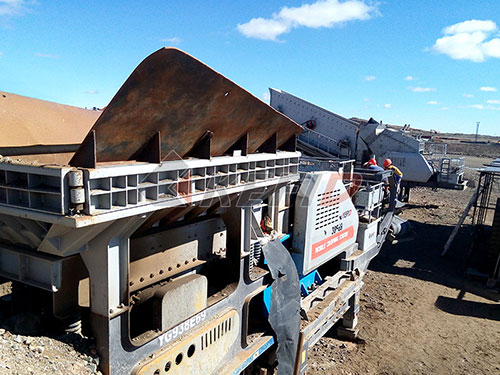

H1: Optimize Your Aggregate Production with a HighEfficiency Commercial Stone Quarry Crushing Plant
Subheader: Engineered to reduce costperton, maximize uptime, and deliver consistent, specification aggregate for largescale operations.
1. The Operational Challenges of Modern Aggregate Production
Managing a commercial stone quarry is defined by the relentless pressure to control costs and maintain output. The primary bottlenecks often center on the crushing circuit. Are you facing these quantified challenges?
Excessive Downtime for Maintenance: Unplanned stoppages for liner changes, bearing failures, or clogging can cost over $1,000 per hour in lost production and labor.
High CostPerTon of Finished Aggregate: Inefficient crushing stages, poor chamber designs, and excessive wear part consumption directly erode your profit margins on every load shipped.
Inconsistent Product Gradation: Fluctuations in output size lead to product rejection, recrushing, and an inability to meet tight specifications for premium asphalt or concrete projects.
Rising Energy Costs: Older, mechanically inefficient plants consume disproportionate power without corresponding gains in throughput.
Scalability & Flexibility Limitations: Can your current setup efficiently handle varying feed materials or quickly adjust to produce different aggregate products as market demands shift?
The central question for plant managers is this: how can you systematically lower your operating expenses while increasing reliable throughput? The answer lies in a purposeengineered commercial stone quarry crushing plant.
2. Product Overview: A Modular Crushing & Screening System

This commercial stone quarry crushing plant is a stationary or semimobile configuration of primary, secondary, and tertiary crushers—typically jaw, cone, and impact crushers—integrated with vibrating screens and conveyor systems. It is designed for the continuous highvolume processing of limestone, granite, basalt, and other abrasive aggregates.
Operational Workflow:
1. Primary Size Reduction: Dumpfed material is reduced by a robust jaw crusher or gyratory crusher to a manageable size (typically <8").
2. PreScreening & Secondary Crushing: Material is screened; oversize is routed to cone crushers for further reduction to intermediate sizes.
3. Tertiary/Quaternary Shaping: For precise cubical product (chips, sand), vertical shaft impact (VSI) crushers or fine cone crushers are employed.
4. Final Screening & Stockpiling: Crushed material is sorted into specified grades (e.g., 57 stone, 8 gravel) via multideck screens and conveyed to designated stockpiles.
Application Scope & Limitations:
Scope: Ideal for highvolume (2502,500 TPH) production of construction aggregates (road base, concrete stone, asphalt chips), riprap, and railway ballast. Suitable for both greenfield installations and legacy plant upgrades.
Limitations: Not designed for underground mining, metallic ore processing, or very smallscale (<100 TPH) operations without specific configuration.
3. Core Features: Engineering for ROI

Advanced Chamber Geometry | Technical Basis: Computermodeled kinematics & wear profile optimization | Operational Benefit: Consistent output gradation with less wear metal fatigue | ROI Impact: Up to 15% longer liner life reduces part costs and changeout downtime
Centralized Automated Control System | Technical Basis: PLCbased monitoring with loadmanagement algorithms | Operational Benefit: Optimizes crusher feed rates and prevents costly overloads automatically | ROI Impact: Protects major components; field data shows a 58% reduction in energy consumption
HeavyDuty Fabricated Steel Frame | Technical Basis: Finite Element Analysis (FEA) validated structural design | Operational Benefit: Eliminates frame flexing under load, ensuring precise alignment of crushing components | ROI Impact: Reduces vibrationinduced maintenance; extends mechanical life of bearings and shafts
Modular Conveyor & Walkway System | Technical Basis: Standardized bolttogether sections with safetyintegrated access | Operational Benefit: Enables faster plant reconfiguration and provides safe, compliant maintenance access | ROI Impact: Cuts installation/relocation time by up to 30%, improving project flexibility
Integrated Dust Suppression & Noise Abatement | Technical Basis: Strategically placed spray nozzles and acoustic dampening panels | Operational Benefit: Maintains regulatory compliance and improves onsite working conditions | ROI Impact Mitigates risk of work stoppages due to environmental or safety violations
4. Competitive Advantages
| Performance Metric | Industry Standard Baseline | This Crushing Plant Solution | Documented Advantage |
| : | : | : | : |
| Availability / Uptime | 8588% (scheduled & unscheduled downtime) | 9295% system availability target| +7% improvement in productive hours |
| Wear Cost per Ton Processed| Varies by rock type; baseline = 100%| Average reduction of 2025%| Direct reduction in consumables expense |
| Power Consumption (kWh/ton)| Baseline = 100%| Reduction of 510% depending on duty cycle| Lower operational cost per ton produced |
| Product Cubicity (% ratio) for Concrete Aggregate| ~75% cubical product from standard cones| >85% cubical product from optimized circuit| Highervalue end product with less waste fines |
5. Technical Specifications
Design Capacity Range: Configurable from 250 to 1,800 Tons Per Hour (TPH), depending on feed material hardness (e.g., limestone vs. granite) and final product size.
Primary Crusher Options: Jaw Crusher (900x1200mm to 1500x2000mm) or Primary Gyratory Crusher (42" to 60" feed opening).
Power Requirements: Total installed power typically ranges from 800 kW to 2.5 MW. Plants are designed for connection to highvoltage grid supply or integration with onsite generator sets.
Material Specifications: Fabricated from S355JR structural steel; liners available in multiple grades of manganese steel (14%, 18%, 22%) or composite alloys for specific abrasion resistance.
Key Physical Dimensions: Modular design allows tailoring; a standard 500 TPH plant footprint may approximate 80m (L) x 35m (W). Height dictated by screen decks and surge bins.
Environmental Operating Range: Designed for ambient temperatures from 20°C to +45°C. Dust suppression systems are rated for operation where water is available at minimum pressure/flow specifications.
6. Application Scenarios
LargeScale Limestone Quarry Supplying State DOT Projects
Challenge: Needed consistent 57 stone meeting strict state DOT gradation specs while increasing output by 40% to fulfill a major highway contract.
Solution: Implementation of a threestage crushing plant featuring a large jaw crusher, two secondary cone crushers with automated settings control, and a tertiary shaping circuit.
Results: Achieved steadystate production of 650 TPH of inspec material. Automated controls reduced gradation deviations by over 60%, virtually eliminating load rejections.
Granite Quarry Expanding into Manufactured Sand Market
Challenge: Existing plant produced excess quarry fines as waste; market demand shifted towards highquality concrete sand.
Solution: Integration of a Vertical Shaft Impact (VSI) crusher into the existing circuit as a tertiary stage specifically for sand manufacturing.
Results: Converted waste fines into premium concrete sand product at ~150 TPH. Added new revenue stream with minimal additional footprint payback period under two years.
7. Commercial Considerations
Pricing Tiers:
Base Plant Configuration (Primary + Secondary + Basic Screening): For standard aggregate production.
HighSpec Configuration (+Tertiary Shaping + Advanced Automation + Dust Control): For premium product markets requiring tight tolerances.
Fully Mobile/SemiMobile TrackMounted Version: For multisite operators or temporary project sites.
Optional Features & Upgrades:
Remote monitoring telematics package
Automated wear part monitoring systems
Extra heavyduty skid bases for seismic zones
Onboard diesel generator power modules
Service Packages:
Comprehensive warranty covering parts and labor
Scheduled maintenance plans with guaranteed response times
Wear part supply agreements with volumebased pricing
Financing options are available through partner institutions including equipment leasing capital expenditure loans tailored to project cash flow models.
Frequently Asked Questions
Q1 Is this plant compatible with our existing primary excavators haul trucks?
A Yes plants are engineered around your specific feed size which is determined by your loading equipment We will review your current fleet's bucket capacity truck bed dimensions during the design phase
Q2 What is the expected implementation timeline from order commissioning?
A For a standard configured plant delivery typically occurs within months depending on complexity Site foundation preparation can proceed in parallel Commissioning operator training require weeks
Q3 How does the automation system impact our current operational staff?
A The system reduces the burden of manual adjustments constant monitoring It allows your skilled operators focus on overall flow optimization predictive maintenance rather than reactive controls Staff require training on the new HMI interface which we provide
Q4 Can you provide detailed documentation supporting the claimed efficiency improvements?
A Yes We provide certified test reports from independent laboratories detailing energy consumption wear rates under controlled conditions Furthermore we can share anonymized case study data from comparable installations operating in similar geology
Q5 What are the key factors that determine final pricing?
A The three primary cost drivers are capacity required final product mix number of crushing stages required level automation specified Site specific requirements like special environmental controls also factor into the final quotation