
Commercial Stone Crusher Plant Sample

1. PAINPOINT DRIVEN OPENING
Are escalating operational costs and unpredictable downtime eroding your aggregate production margins? For plant managers and engineering contractors, managing a commercial stone crusher plant often involves navigating a series of persistent, costly challenges:
Unscheduled Downtime: Bearing failures, unexpected wear part changes, and component breakdowns can halt your entire production line, costing thousands per hour in lost output and labor.
Inconsistent Product Gradation: Fluctuations in feed material or crusher performance lead to offspec aggregate, resulting in product waste, recrushing cycles, and dissatisfied customers.
High Operational & Maintenance Costs: Rising energy consumption, frequent manual adjustments for wear compensation, and the high cost of replacement parts directly impact your bottom line.
Limited Flexibility & Scalability: A fixed plant configuration struggles to adapt to changing project demands or new material sources, limiting your ability to bid on diverse contracts.
Is your current crushing solution a source of constant operational friction? What if you could implement a system engineered for reliability, precision control, and longterm cost predictability?
2. PRODUCT OVERVIEW: COMMERCIAL STATIONARY CRUSHING & SCREENING PLANT
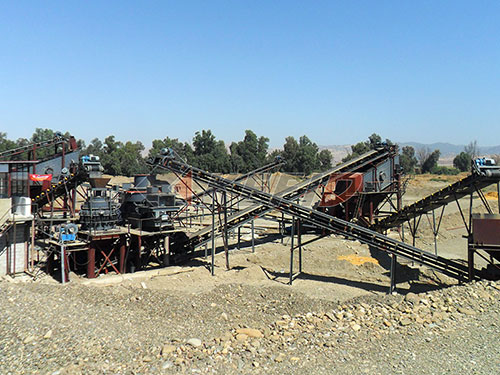
A commercial stone crusher plant is a permanent or semipermanent installation designed for highvolume production of specification aggregates (e.g., base rock, gravel, manufactured sand). It integrates primary crushing, secondary/tertiary crushing, screening, and material handling systems into a coordinated workflow.
Operational Workflow:
1. Primary Reduction: Runofquarry rock is fed into a primary jaw crusher or gyratory crusher for initial size reduction.
2. Secondary/Tertiary Crushing: Material is conveyed to cone crushers or impact crushers for further reduction to the required chip sizes.
3. Sizing & Classification: Crushed material passes through vibrating screens to separate it into precise product fractions (e.g., ¾” aggregate, ½” aggregate).
4. Stockpiling & Recirculation: Onspec material is conveyed to stockpiles. Oversize material is automatically recirculated back into the crushing circuit.
Application Scope & Limitations:
Scope: Ideal for largescale quarry operations, major infrastructure projects (road base, concrete aggregate), rail ballast production, and mining applications requiring consistent, hightonnage output.
Limitations: Requires significant capital investment and site preparation. Not suitable for smallscale or highly mobile contract crushing. Optimal performance depends on correct plant configuration matched to feed material characteristics (abrasiveness, hardness).
3. CORE FEATURES
Automated Process Control System | Technical Basis: PLCbased logic with realtime sensor feedback | Operational Benefit: Maintains optimal crusher parameters (speed, pressure) and monitors chamber levels automatically | ROI Impact: Reduces operator workload by ~40%, improves product consistency by up to 25%, minimizes energy waste
HeavyDuty Fabricated Steel Frame | Technical Basis: Finite Element Analysis (FEA)optimized design with highgrade steel | Operational Benefit: Provides exceptional structural integrity to withstand decades of vibrational loads | ROI Impact: Eliminates frame fatigue issues; extends overall plant service life; reduces longterm structural maintenance costs
Hydroset CSS Adjustment on Cone Crushers | Technical Basis: Hydraulic system for closedside setting adjustment under load | Operational Benefit: Allows operators to change product size or compensate for wear in under 60 seconds without stopping the crusher | ROI Impact: Increases operational uptime by minimizing adjustment downtime; ensures consistent output gradation
Centralized Greasing & Lube System | Technical Basis: Automated distribution network delivering precise grease volumes to all critical bearings | Operational Benefit: Ensures optimal bearing lubrication without manual intervention | ROI Impact: Extends bearing service life by an average of 30%; prevents costly premature failures
Modular Conveyor & Walkway Design | Technical Basis: Preengineered bolttogether sections with standardized components | Operational Benefit: Simplifies installation, reconfiguration for future expansion upgrades | ROI Impact: Reduces initial installation time/cost by ~15%; lowers future modification expenses
HighEfficiency Vibrating Screens with Rubber Mounts| Technical Basis: Multideck screens with polyurethane panels and antivibration mounts| Operational Benefit: Delivers high screening efficiency with reduced blinding; minimizes vibration transfer to support structure| ROI Impact Increases throughput capacity; lowers noise levels; reduces structural stress
4. COMPETITIVE ADVANTAGES
| Performance Metric | Industry Standard Benchmark | Our Commercial Stone Crusher Plant Solution | Documented Advantage |
| : | : | : | : |
| Overall Plant Availability (Scheduled Runtime) | 8590% availability due to mechanical stops & adjustments| >93% availability through robust design & automation| +38% improvement |
| Tons per Hour per kW (Energy Efficiency) Varies by rock type| Baseline = 100% (reference)| Achieves 115125% via optimized flow design & efficient drives| +1525% improvement in energy efficiency |
| Wear Part Cost per Ton Crushed (Abrasive Granite) Industry average cost/tonne tracked| Our solution utilizes longerlife alloys & optimized chamber designs Field data shows a reduction of ~18% in cost per ton over a full wear cycle|
| Mean Time Between Failure (MTBF) Major Components Typical intervals between major overhauls Extended intervals via premium components & protective systems Demonstrated increase of 2030% in MTBF |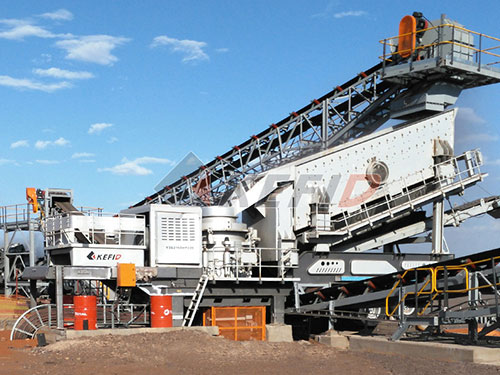
5. TECHNICAL SPECIFICATIONS
Design Capacity Range: Configurable from 200 to over 1,200 tonnes per hour, depending on feed material and final product specifications.
Primary Power Requirements: Total connected load typically ranges from 400 kW to 1,500 kW, supplied via heavyduty industrial switchgear. Options available for dualfuel or generator compatibility.
Key Material Specifications:
Crusher Liners: Highchrome white iron or manganese steel alloys.
Conveyor Belting: Multiply fabric or steel cord belting with abrasionresistant covers.
Structural Steel: S355JR grade minimum, with critical stress areas reinforced.
Physical Footprint: Varies significantly by configuration; typical layouts require between 1,000 5,000 sq.meters of prepared foundation space.
Environmental Operating Range:
Ambient Temperature: 20°C to +45°C (with optional cold/hot weather packages).
Dust Emission Control: Designed for integration with baghouse filtration systems, achieving <10 mg/Nm³ emissions.
6. APPLICATION SCENARIOS
Large Limestone Quarry Supplying Road Base Materials
Challenge: The quarry faced frequent bottlenecks at the secondary crushing stage, leading to inconsistent gradation for state DOT road base specifications, causing product rejection。
Solution: Implementation of a tailored commercial stone crusher plant featuring a primary jaw crusher, two secondary cone crushers in closed circuit with advanced screening。
Results: Plant throughput increased by 22%。 Product consistency improved, reducing offspec material by over 90%。 The automated control system allowed one operator to manage the entire crushing flow。
Urban Infrastructure Contractor Recycling Concrete & Asphalt
Challenge: A contractor needed highvolume processing of demolition concrete within tight urban sites while strictly controlling noise and dust。
Solution: A semimodular commercial stone crusher plant was configured with an electricpowered primary impact crusher specialized for recycling。 It included sounddampening enclosures and an integrated dust suppression system。
Results: The plant processed over 500,000 tons of recycled concrete annually。 Compliance with urban environmental regulations was maintained。 Use of recycled aggregate reduced raw material purchase costs by approximately35%。
7. COMMERCIAL CONSIDERATIONS
Our commercial stone crusher plants are offered in tiered configurations based on capacity and complexity:
Standard Tier (200500 TPH): Preconfigured designs using proven components。 Ideal for standard limestone/granite applications。 Includes basic automation。
HighPerformance Tier (500900 TPH): Customengineered flow optimization。 Features full PLC automation, premium wear materials,and advanced diagnostics。
Optional features include remote monitoring telematics, dust suppression cannons, automated sampler systems。
Service packages are structured as:
1.Basic Warranty (12 months parts/labor)。
2.Planned Maintenance Agreement (scheduled inspections+parts discounts)。
3.FullService Contract (covers all maintenance+wear parts at a predictable costperton)。
Financing options include capital equipment loans operating leases designed around projected cash flow from production。
8.FREQUENTLY ASKED QUESTIONS(FAQ)
Q1: How do I determine the right plant configuration(jaw/cone/impact)for my specific rock type?
A1: The optimal configuration is based on laboratory analysis of your feed material’s compressive strength abrasion index(e.g.Los Angeles value)and desired final products。 We provide application engineering support using this data。
Q2 Can this plant be integrated with our existing primary excavators conveyors?
A2 Yes provided interface specifications(feed size hopper dimensions discharge heights)are aligned。 Our engineering team conducts a full interface review prior to proposal。
Q3 What is the typical installation timeline from delivery commissioning?
A3 For a standard configuration on prepared foundations timeline ranges from814 weeks depending on local labor conditions degreeof modularization。
Q4 How does the automated control system improve operational safety?
A4 By allowing operators monitor adjust key parameters froma safe control room it minimizes time spentin highvibration highnoise areas near moving machinery reducing exposure risks。
Q5 Are spare parts readily available globally?
A5 We maintaina global networkof certified parts distribution centers Critical wear parts are stocked basedon predictive usage models ensuring availability。
Q6 What training is providedfor our operations maintenance staff?
A6 We offer comprehensive onsite training covering normal operation shutdown procedures routine maintenance troubleshooting Safety protocol trainingis mandatory component。
Q7 Do you offer performance guarantees?
A7 Yes performance guaranteesfor throughput capacity final product gradationand power consumptionare providedin the contract basedon agreed test conditions feed materials