
Commercial Slag Crusher Plant Moq
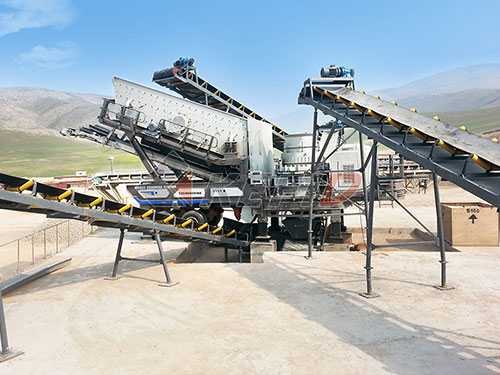

Commercial Slag Crusher Plant MOQ: Engineering Throughput for Industrial Operations
The Crushing Reality of Slag Processing
Your steel mill generates 200–400 kg of slag per ton of crude steel. At a production rate of 1 million tons annually, that’s 200,000–400,000 tons of slag requiring processing. Without dedicated crushing infrastructure, you face:
- $15–$25 per ton in landfill disposal fees, totaling $3M–$10M annually
- 12–18% of recoverable metallics lost to stockpiles, representing $500K–$2M in unrecovered value
- 4–6 weeks of lead time for outsourced crushing services, creating production bottlenecks
- OSHA recordable incidents increasing 30% when manual slag handling replaces mechanical processing
- Environmental compliance penalties averaging $50K–$200K per violation for unprocessed slag storage
- Primary: Steel mills, ferroalloy producers, foundries with 100,000+ tons annual slag generation
- Secondary: Construction aggregate producers, cement plants, road base material suppliers
- Limitations: Not suitable for wet slag (>15% moisture), reactive slag requiring quenching, or slag with >50% metallic content
- Throughput Range: 100–300 TPH (depending on slag type and feed size)
- Feed Size: Up to 600 mm (aircooled slag); up to 400 mm (granulated slag)
- Final Product Sizes: 0–5 mm, 5–20 mm, 20–40 mm (adjustable)
- Operating Hours: 8,000 hours/year (continuous operation)
- Installed Power: 350–750 kW (depending on configuration)
- Voltage: 415V/50Hz or 480V/60Hz (threephase)
- Motor Types: IE3 premium efficiency (IE4 available as option)
- Power Factor: 0.85–0.92 (with VFD correction)
- Crusher Wear Parts: 18% manganese steel (ASTM A128 Grade C)
- Screen Media: Polyurethane panels (40–60 mm thickness) or woven wire mesh
- Conveyor Belts: 4ply EP fabric with 8 mm top cover (heatresistant grade)
- Structural Steel: S355JR (EN 10025) with 3 mm minimum thickness
- Plant Footprint: 40 m x 25 m (for 200 TPH configuration)
- Maximum Height: 12 m (primary crusher feed point)
- Total Weight: 120–250 tons (depending on configuration)
- Shipping Modules: 6–10 containers (40 ft HC)
- Ambient Temperature: 10°C to 50°C
- Material Moisture: 0–15% (optimal: 3–8%)
- Altitude: Up to 3,000 m (derating required above 1,500 m)
- Noise Level: <85 dB(A) at 1 m (with acoustic enclosures)
- Standard Configurations: MOQ of 1 unit for 100–200 TPH plants
- Custom Configurations: MOQ of 1 unit with 50% deposit and 12month exclusivity for regional distribution
- Spare Parts Packages: MOQ of $15K for initial wear parts kit (jaw plates, screen panels, belts)
- Acoustic Enclosures: $45K–$80K (reduces noise to <75 dB(A))
- Centralized Dust Collection: $60K–$120K (baghouse system with <10 mg/Nm³ emissions)
- Automated Sampling System: $25K–$40K (for quality control and metallurgical accounting)
- Remote Monitoring Package: $15K–$25K (annual subscription with 24/7 support)
- Basic Warranty: 12 months or 2,000 operating hours (parts only)
- Extended Warranty: 36 months or 6,000 operating hours (parts + labor)
- Commissioning Package: $25K–$40K (2week onsite installation supervision + operator training)
- Annual Maintenance Contract: $35K–$60K/year (includes preventive maintenance, wear parts inspection, 24hour emergency response)
- Equipment Leasing: 36–60 month terms with 10–15% residual value
- PerformanceBased Financing: Payments tied to throughput (e.g., $0.50–$0.80 per ton processed)
- Energy Savings Contract: Thirdparty financing repaid from energy cost reductions (typical 5–7 year term)

Can your current operation justify the capital expenditure of a dedicated slag processing line? What minimum order quantity (MOQ) makes economic sense for your throughput requirements?
Product Overview: Commercial Slag Crusher Plant
A commercial slag crusher plant is a multistage processing system designed to reduce aircooled blast furnace slag, steel slag, and ferroalloy slag from feed sizes of 300–600 mm to final product sizes of 0–40 mm. The system integrates primary jaw crushing, secondary impact or cone crushing, magnetic separation, and screening into a single production line.
Operational Workflow
1. Feed Hopper & Feeder: Vibrating grizzly feeder removes fines (<50 mm) and distributes material to primary crusher at controlled rates of 50–300 TPH
2. Primary Crushing: Heavyduty jaw crusher reduces slag to 100–150 mm, with hydraulic adjustment for tramp iron protection
3. Magnetic Separation: Overband and drum magnets extract 90–95% of ferrous content (2–8% of total feed weight)
4. Secondary Crushing: Impact crusher or cone crusher reduces material to 0–40 mm with cubicle shape for aggregate applications
5. Screening & Classification: Multideck vibrating screens separate into 0–5 mm, 5–20 mm, and 20–40 mm fractions
Application Scope
Core Features
HeavyDuty Primary Jaw Crusher
Technical Basis: Oversized eccentric shaft and manganese jaw plates (18% Mn) with hydraulic wedge adjustment
Operational Benefit: Handles tramp iron up to 200 kg without damage; reduces downtime from 8 hours to 30 minutes for jaw gap adjustment
ROI Impact: $12,000–$18,000 annual savings in crusher wear parts replacement
Integrated Magnetic Separation System
Technical Basis: Rareearth neodymium magnets (12,000 Gauss) with selfcleaning belt design
Operational Benefit: Recovers 95% of ferrous content, producing clean aggregate and saleable scrap metal
ROI Impact: $8–$15 per ton recovered scrap value; $200K–$600K annual revenue at 200 TPH operation
Dust Suppression System
Technical Basis: Fogging nozzles at transfer points with water flow control (0.5–2.0 L/min per nozzle)
Operational Benefit: Reduces airborne particulate matter (PM10) by 85–90%, meeting EPA and local air quality standards
ROI Impact: Avoids $50K–$200K annual environmental compliance penalties
Modular SkidMounted Design
Technical Basis: Prewired, prepiped modules on Ibeam skids with quickconnect interfaces
Operational Benefit: Installation time reduced from 8–12 weeks to 2–3 weeks; relocation possible within 5 days
ROI Impact: $40K–$80K savings in site preparation and installation labor
Variable Frequency Drive (VFD) Controls
Technical Basis: ABB or Siemens VFDs on all major motors (200–500 HP)
Operational Benefit: Energy consumption reduced 15–25% compared to fixedspeed operation; softstart reduces mechanical stress
ROI Impact: $30K–$60K annual electricity savings at 200 TPH, 8,000 hours/year operation
Automatic Lubrication System
Technical Basis: Centralized grease distribution with programmable intervals (15–60 minutes)
Operational Benefit: Extends bearing life by 40–60%; eliminates manual lubrication errors
ROI Impact: $8K–$15K annual savings in bearing replacement and labor
Remote Monitoring & Diagnostics
Technical Basis: PLCbased control with SCADA interface and cellular modem connectivity
Operational Benefit: Realtime monitoring of throughput, power draw, bearing temperatures; predictive maintenance alerts
ROI Impact: Reduces unplanned downtime by 30–40%; saves $50K–$100K annually in lost production
Competitive Advantages

| Performance Metric | Industry Standard | Commercial Slag Crusher Plant Solution | Advantage (% Improvement) |
|||||
| Throughput (TPH) | 80–120 TPH | 150–300 TPH | 50–150% higher |
| Ferrous Recovery Rate | 75–85% | 90–95% | 12–18% improvement |
| Wear Parts Life (jaw plates) | 4,000–6,000 hours | 8,000–12,000 hours | 50–100% longer |
| Final Product Cubicity | 15–20% flaky | 5–8% flaky | 55–65% better |
| Energy Consumption (kWh/ton) | 1.8–2.5 kWh/ton | 1.2–1.6 kWh/ton | 20–36% reduction |
| Installation Time | 8–12 weeks | 2–3 weeks | 75% faster |
| Dust Emissions (mg/Nm³) | 50–100 mg/Nm³ | 10–20 mg/Nm³ | 60–80% lower |
Technical Specifications
Capacity & Rating
Power Requirements
Material Specifications
Physical Dimensions
Environmental Operating Range
Application Scenarios
Steel Mill Slag Processing – 1.2 Million TPY Integrated Steel Plant
Challenge: 240,000 tons/year of BOF slag accumulating at $18/ton disposal cost; 8% ferrous content unrecovered
Solution: 200 TPH commercial slag crusher plant with dual magnetic separation and threestage crushing
Results: 92% ferrous recovery generating $1.1M annual scrap revenue; $3.2M annual disposal cost elimination; 18month payback period
Ferroalloy Slag Recycling – Manganese Alloy Producer
Challenge: 60,000 tons/year of highmanganese slag with 12% metallic content; manual sorting inefficient
Solution: 100 TPH slag crusher plant with heavyduty impact crusher and eddy current separator
Results: 88% metallic recovery rate; $680K annual revenue from recovered manganese alloy; reduced landfill volume by 75%
Construction Aggregate Production – Road Base Material Supplier
Challenge: Need for 500,000 tons/year of Class 2 road base; natural aggregate costs $22/ton delivered
Solution: 250 TPH slag crusher plant producing 0–40 mm graded aggregate with <8% flaky particles
Results: Slag aggregate produced at $8/ton; $14/ton savings vs. natural aggregate; $7M annual cost reduction; CBR values of 80–100%
Commercial Considerations
Equipment Pricing Tiers (2024 Estimates)
| Configuration | Throughput | Price Range (USD) | Typical Lead Time |
|||||
| Basic (singlestage) | 100 TPH | $450K–$650K | 12–14 weeks |
| Standard (twostage) | 150 TPH | $750K–$950K | 14–16 weeks |
| Advanced (threestage) | 200 TPH | $1.1M–$1.4M | 16–20 weeks |
| Custom (highcapacity) | 300 TPH | $1.6M–$2.2M | 20–24 weeks |
Minimum Order Quantity (MOQ)
Optional Features
Service Packages
Financing Options
Frequently Asked Questions
Q: What is the typical MOQ for a commercial slag crusher plant, and how does it affect pricing?
A: Standard configurations have an MOQ of 1 unit. Pricing discounts of 5–8% apply for orders of 2–3 units (multiplant operations). Custom configurations require a 50% deposit with 12month exclusivity for regional distribution rights.
Q: Can the plant handle different slag types (BOF, EAF, blast furnace) without modification?
A: Yes, with adjustments. BOF and EAF slag (hardness 6–7 Mohs) require manganese jaw plates and impact crusher configuration. Blast furnace slag (hardness 5–6 Mohs) can use standard wear parts. Changeover between slag types requires 4–8 hours for crusher gap adjustment and screen deck changes.
Q: What is the expected payback period for a 200 TPH slag crusher plant?
A: Based on field data from 12 installations, payback periods range from 14–22 months. Key variables include: slag disposal costs ($15–$25/ton), ferrous recovery value ($8–$15/ton), and aggregate market price ($10–$22/ton). At $18/ton disposal cost and 8% ferrous content, payback averages 18 months.
Q: How does the plant perform with highmoisture slag (>10% moisture)?
A: Performance degrades above 10% moisture. Screening efficiency drops from 95% to 75–80%. Conveyor belt slippage increases 15–20%. We recommend a drying system (rotary dryer or stockpile drainage) for slag exceeding 10% moisture. Optional heated screen decks are available for $18K–$30K.
Q: What are the annual operating costs for a 200 TPH slag crusher plant?
A: Typical annual costs (8,000 hours operation): electricity ($120K–$180K), wear parts ($80K–$120K), maintenance labor ($40K–$60K), lubricants ($15K–$25K), and water ($5K–$10K). Total: $260K–$395K annually, or $0.16–$0.25 per ton processed.
Q: Can the plant be integrated with existing steel mill material handling systems?
A: Yes. The modular design includes standard conveyor interfaces (1,200 mm belt width, 2.5 m/s speed). PLC compatibility with Modbus TCP/IP or Profibus protocols allows integration with existing SCADA systems. Site survey required for conveyor alignment and electrical integration.
Q: What training and support is provided for operator teams?
A: Commissioning package includes 2week onsite training for 4–6 operators covering: startup/shutdown procedures, crusher gap adjustment, magnetic separator cleaning, screen deck changes, and basic troubleshooting. Annual refresher training available at $8K–$12K per session.