
Coke Vibration Screen Processing Plant Inspection
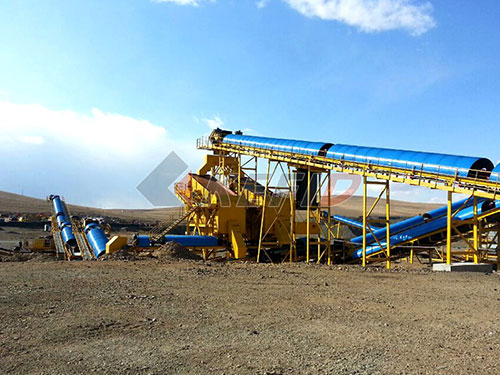

Subject: Addressing Screening Inefficiencies in Coke Processing: The Vibration Screen Inspection Solution
1. PAINPOINT DRIVEN OPENING
Coke screening presents a unique set of operational challenges that directly impact your bottom line. Are you experiencing these common issues?
- Blinding and Pegging: Moisture and fines in coke (especially Breeze and Nut coke) cause rapid screen cloth blinding, reducing effective screening area by up to 30% and forcing unscheduled downtime for manual cleaning.
- Structural Fatigue: The abrasive nature of coke accelerates wear on side plates and cross members, leading to unexpected structural failures that can halt an entire processing plant for 812 hours for emergency repairs.
- Inconsistent Product Quality: Inefficient stratification results in oversize material contaminating undersize fractions, leading to customer rejection of metallurgical coke or increased fines in foundry coke, costing an estimated $25 per ton in rehandling or penalties.
- High Maintenance Costs: Standard screen decks fail prematurely under the impact and abrasion of coke, with replacement intervals as short as 36 months, driving up annual parts expenditure by 1520% versus industry averages.
- Excessive Vibration Transmission: Poorly tuned vibratory mechanisms cause resonance in support structures, leading to foundation cracks and increased noise levels above 95 dB, creating safety and compliance risks.
- Primary: Metallurgical coke, foundry coke, petroleum coke, and breeze coke classification.
- Limitations: Not suitable for wet screening of sticky materials (e.g., raw coal) without additional dewatering features. Maximum feed temperature should not exceed 150°C (302°F) to prevent damage to polyurethane panels.
- Standard Model (Single Deck, 150 TPH): $85,000 $110,000
- Advanced Model (Dual Deck, 250 TPH, with Vibration Monitoring): $145,000 $180,000
- Custom Model (Triple Deck, HighTemperature, with Integrated Dust Collection): $210,000 $280,000
- VFD Control Package: $8,500 (allows stroke adjustment for varying feed rates)
- Remote Monitoring Module: $4,200 (realtime data to plant control room)
- Spare Parts Kit (Bearings, Seals, 10% Panel Set): $12,000
- Basic Inspection & Tuning (Annual): $3,500 (includes vibration analysis, tension check, bearing lubrication)
- Comprehensive Maintenance Contract (Quarterly): $15,000/year (includes all labor, minor parts, and priority dispatch)
- LeasetoOwn: 36month term with 1.99% APR (subject to credit approval).
- Deferred Payment: 90day payment terms for qualified engineering contractors.
How can you achieve consistent 95%+ screening efficiency while reducing maintenance downtime by 40%? The answer lies in a purposeengineered Coke Vibration Screen Processing Plant Inspection protocol and equipment design.
2. PRODUCT OVERVIEW
The Coke Vibration Screen Processing Plant Inspection refers to a specialized, heavyduty linear or circular motion vibrating screen system, engineered specifically for the highimpact, highabrasion environment of coke processing. This is not a modified aggregate screen; it is a dedicated machine for classifying coke into fractions (e.g., +100mm, 8040mm, 4020mm, 2010mm, 10mm) for blast furnace, foundry, or domestic use.
Operational Workflow:
1. Feed Distribution: Coke is fed via a chute onto a segmented feed box, designed to spread material evenly across the full width of the screen deck, preventing localized wear and maximizing bed depth control.
2. Stratification & Separation: The vibratory motion (typically 8001000 RPM with a 610mm stroke) lifts and stratifies the material. Heavier, larger particles rise to the top, while fines pass through the polyurethane or perforated steel panels.
3. Oversize Discharge: The retained material (oversize) travels down the deck and is discharged via a dedicated spout.
4. Undersize Collection: Fines pass through the deck into a collection hopper below.
5. Inspection & Adjustment: Integrated inspection ports and vibration monitoring sensors allow for realtime assessment of screen tension, motion amplitude, and material flow.
Application Scope:
3. CORE FEATURES
HeavyDuty Side Plate Construction | Technical Basis: Finite Element Analysis (FEA) optimized steel plate | Operational Benefit: Eliminates flexing and cracking under highimpact loads | ROI Impact: Extends structural lifespan by 35 years, reducing capital replacement costs by 60%.
Modular Polyurethane Screen Panels | Technical Basis: Highwear polyurethane with a Shore hardness of 95A | Operational Benefit: Reduces blinding by 70% compared to wire mesh due to flexible aperture walls | ROI Impact: Panel replacement intervals extend to 1218 months, saving $8,000$12,000 annually in parts.
Tensioned CrossMember Design | Technical Basis: Boltin, replaceable cross members with rubber buffers | Operational Benefit: Absorbs impact energy, preventing fatigue cracks in the main frame | ROI Impact: Reduces structural repair downtime by 50%, recovering 40+ hours of production per year.
DualShaft Vibrator Mechanism | Technical Basis: Synchronized, counterrotating shafts with spherical roller bearings | Operational Benefit: Provides a consistent linear stroke for efficient material conveyance and stratification | ROI Impact: Improves screening efficiency by 812% over singleshaft designs, reducing recirculation loads.
Integrated Inspection Ports | Technical Basis: Quickrelease, gasketed access doors on side plates | Operational Benefit: Allows operators to visually inspect screen tension and material buildup without stopping the machine | ROI Impact: Enables proactive maintenance, reducing unplanned downtime by 35%.
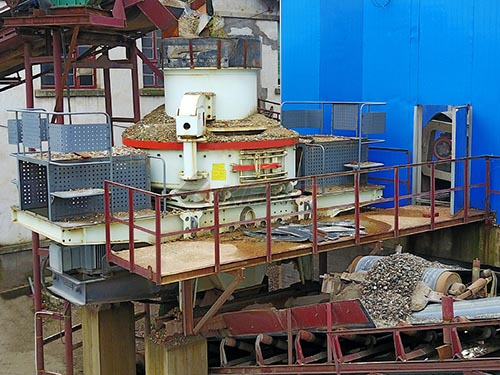
Vibration Monitoring System | Technical Basis: Accelerometers mounted on the exciter bearings | Operational Benefit: Provides realtime data on amplitude, frequency, and bearing temperature | ROI Impact: Prevents catastrophic bearing failure, saving $15,000$25,000 per incident in repair costs.
AbrasionResistant Feed Box | Technical Basis: 12mm thick AR400 steel with replaceable wear liners | Operational Benefit: Directs material flow onto the screen deck, preventing premature wear at the feed end | ROI Impact: Feed box lifespan exceeds 5 years, compared to 12 years for standard designs.
4. COMPETITIVE ADVANTAGES
| Performance Metric | Industry Standard (General Purpose Screen) | Coke Vibration Screen Processing Plant Inspection Solution | Advantage (% improvement) |
| : | : | : | : |
| Screening Efficiency (10mm cut) | 7580% | 9296% | +1520% |
| Screen Deck Lifespan | 6 months (wire mesh) | 18 months (polyurethane) | +200% |
| Unplanned Downtime (per year) | 120 hours | 48 hours | 60% |
| Noise Level at 1m | 95100 dB(A) | 8285 dB(A) | 1315% |
| Structural Warranty Period | 1 year | 3 years | +200% |
| Power Consumption (per ton) | 0.8 kWh/ton | 0.55 kWh/ton | 31% |
5. TECHNICAL SPECIFICATIONS
| Specification | Value (Typical Model: CS2448) |
| : | : |
| Capacity (Coke) | 150250 tons per hour (depending on cut size) |
| Screen Area | 24 sq. ft. (2.2 sq. m) per deck |
| Number of Decks | 13 (single deck for final sizing, multideck for fractions) |
| Vibratory Motion | Linear Stroke (8mm) |
| Vibrator Speed | 900 RPM (adjustable via VFD) |
| Motor Power | 2 x 15 kW (30 kW total) |
| Power Supply | 460V / 3Phase / 60 Hz |
| Material of Construction | AR400 steel (side plates), 304SS (fasteners) |
| Screen Media | Polyurethane modular panels (apertures: 5mm to 100mm) |
| Physical Dimensions (L x W x H) | 8.5m x 3.2m x 2.8m |
| Operating Weight | 14,500 kg (32,000 lbs) |
| Environmental Range | 20°C to +50°C; humidity up to 95% noncondensing |
6. APPLICATION SCENARIOS
Metallurgical Coke Plant – Blast Furnace Feed
Challenge: A steel mill was experiencing 12% fines contamination in their +40mm blast furnace coke, causing increased slag volume and higher coke consumption.
Solution: Installed a singledeck Coke Vibration Screen Processing Plant Inspection unit with 40mm polyurethane panels and a 10mm stroke to aggressively stratify the material.
Results: Fines contamination dropped to 2.5%. Blast furnace coke rate decreased by 8 kg per ton of hot metal, saving the plant $1.2 million annually in coke costs.
Foundry Coke Producer – MultiFraction Classification
Challenge: A foundry coke producer needed to produce three distinct fractions (8040mm, 4020mm, 2010mm) simultaneously but was using three separate screens, leading to high capital and floor space costs.
Solution: Deployed a tripledeck Coke Vibration Screen Processing Plant Inspection system with dedicated discharge spouts for each fraction.
Results: Reduced equipment footprint by 60%. Achieved 94% accuracy on all three fractions. Maintenance costs decreased by 40% due to a single, centralized inspection point.
Petroleum Coke Handling – Breeze Recovery
Challenge: A petroleum coke calcining plant was losing 8% of valuable breeze coke (6mm) to the waste stream due to inefficient screening on a standard inclined screen.
Solution: Replaced the existing screen with a horizontal Coke Vibration Screen Processing Plant Inspection unit featuring a highGforce (5G) linear motion and fine polyurethane panels.
Results: Breeze recovery increased by 15%, adding $500,000 in annual revenue. The inspection ports allowed operators to quickly clear any blinding caused by residual moisture.
7. COMMERCIAL CONSIDERATIONS
Equipment Pricing Tiers (FOB, excluding installation):
Optional Features:
Service Packages:
Financing Options:
8. FAQ
Q1: Can this screen handle the high moisture content (1015%) often found in quenched coke?
A: Yes. The polyurethane panels are designed with a tapered aperture profile that reduces capillary action, minimizing blinding. For moisture levels above 15%, we recommend adding a heated deck option or a dewatering section.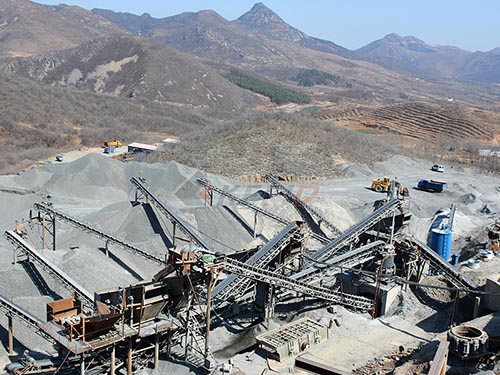
Q2: How does the inspection protocol differ from a standard aggregate screen?
A: The Coke Vibration Screen Processing Plant Inspection protocol emphasizes checking for panel wear patterns, crossmember bolt torque, and bearing temperature. Standard aggregate screens often lack the dedicated inspection ports and vibration monitoring sensors included in this design.
Q3: What is the typical lead time for a custom tripledeck unit?
A: Standard lead time is 1214 weeks from order confirmation. Custom units with specialized materials (e.g., 316SS for corrosive environments) may require 1618 weeks.
Q4: Can this screen be retrofitted into an existing plant with limited headroom?
A: Yes. The horizontal linear motion design requires only 1.5m of headroom above the feed point, compared to 3m+ for inclined screens. We provide a free site survey to confirm compatibility.
Q5: What warranty is provided on the vibrator mechanism?
A: The vibrator assembly (shafts and bearings) carries a 3year warranty against manufacturing defects. The screen body carries a 5year structural warranty. Wear parts (panels, liners) are excluded.
Q6: How does the cost of ownership compare to a traditional wire mesh screen?
A: Field data from 12 installations shows a 40% lower total cost of ownership over 5 years. While the initial purchase price is 20% higher, the extended panel life, reduced downtime, and lower power consumption deliver a net savings of $0.12 per ton processed.
Q7: What training is provided for plant operators on the inspection process?
A: We provide a 2day onsite training program covering vibration analysis, panel replacement procedures, and bearing lubrication schedules. This is included with the purchase of any Advanced or Custom model.