
Coke Vibration Screen Fabricator Moq


Coke Vibration Screen Fabricator MOQ: Sourcing HighCapacity Screening Systems for Coke Processing Plants
The Operational Challenge: What Inefficient Coke Screening Is Costing Your Plant
Every hour of unscheduled downtime in your coke handling circuit carries a price tag that extends far beyond the repair invoice. When your current screening equipment struggles with coke's abrasive, highimpact characteristics, you face a cascade of operational penalties:
- Premature screen deck failure: Coke's angular particles and high hardness index accelerate wire cloth wear, forcing deck replacements every 46 weeks in standard units—each changeout costing 812 hours of lost production plus $3,000$7,000 in replacement media and labor.
- Blinding and pegging losses: Moisture variability in coke feed (typically 515% surface moisture) causes nearsize particles to wedge in apertures, reducing effective screening area by up to 40% and degrading separation efficiency to below 85%.
- Oversize contamination penalties: When +50mm material passes through to the fines conveyor, downstream coke oven charging operations face combustion irregularities, and your product spec violations trigger customer rejection fees ranging from $15$25 per wet metric ton.
- Structural fatigue from impact loading: Standard vibrating screens not engineered for coke's bulk density (400600 kg/m³) and lump sizes up to 100mm experience side plate cracking within 1824 months, requiring capitalintensive frame replacement.
- Downtimedriven contract penalties: Your takeorpay agreements with steel mill customers don't accommodate screening bottlenecks—each day of reduced coke throughput at 2,000 TPD represents $180,000$250,000 in deferred revenue.
- Blast furnace coke classification (4080mm oversize, 2540mm nut coke, 25mm breeze)
- Foundry coke sizing (80120mm, 4080mm, 40mm fractions)
- Petroleum coke screening for anode production (050mm with specific cut points)
- Coke dedusting operations requiring 90% removal of 3mm fines
- Not designed for wet screening or washing applications (moisture above 18% causes severe blinding)
- Maximum feed temperature of 100°C (above this, bearing and seal degradation accelerates)
- Not suitable for explosive atmospheres without ATEXcertified motor and exciter configurations
- Requires minimum 6m headroom for proper installation and maintenance access
- Equipment Leasing: 3660 month operating leases with $1 buyout, monthly payments from $5,200 (standard configuration)
- Deferred Payment: 20% down payment, balance due upon successful commissioning and performance verification
- PerformanceBased Payment: 30% at order, 30% at delivery, 40% after 90day performance validation meeting contractual efficiency targets
- TradeIn Program: Credit of $25,000$60,000 for your existing vibrating screen (any manufacturer) toward new equipment purchase
Are you currently accepting 9294% screening efficiency as "good enough"? Are your maintenance crews rebuilding screen decks on a monthly cycle instead of a quarterly one? The solution lies not in patching your existing equipment, but in sourcing from a coke vibration screen fabricator whose MOQ (minimum order quantity) aligns with your replacement schedule and whose engineering addresses coke's specific screening demands.
Product Overview: HeavyDuty Linear Motion Vibrating Screens for Coke Classification
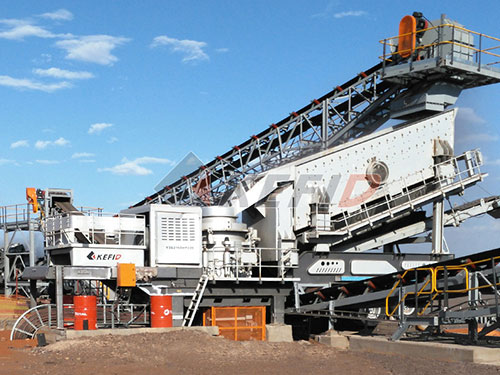
The equipment specified for coke screening applications is a heavyduty, linear motion vibrating screen engineered specifically for dry classification of metallurgical coke, petroleum coke, and foundry coke at feed temperatures up to 80°C. Unlike circular motion screens that suffer from poor material distribution on highimpact feeds, this linear motion design provides controlled conveyance velocity and precise stratification across the full deck width.
Operational Workflow
1. Feed Introduction: Coke material (0100mm, up to 2,000 TPH) enters through a segmented feed box designed to absorb impact energy and distribute material evenly across the 2.4m to 3.6m wide screen surface.
2. Stratification Zone: The linear motion exciter assembly generates 4.55.5mm amplitude at 750850 RPM, creating the gforce (4.56.0 G) necessary to stratify coke particles by size, with fines migrating to the bottom of the material bed.
3. Classification Zone: Material passes over 23 deck levels with polyurethane or abrasionresistant steel wire cloth (apertures from 6mm to 80mm), where particles either pass through or are conveyed to the discharge end.
4. Oversize Discharge: +50mm or +80mm fractions exit via a wearlined discharge spout, directed to crushers or direct loadout.
5. Fines Collection: Throughmaterial (6mm or 10mm fractions) collects in an underpan, feeding to conveyors for sinter plant or coke breeze applications.
Application Scope and Limitations
Suitable applications:
Operational limitations:
Core Features: Engineering Specifications for Coke Screening Duty
1. AbrasionResistant Deck Construction | Technical Basis: 1214% Manganese steel (ASTM A128 Grade B2) with 180220 HB hardness | Operational Benefit: Withstands coke's abrasive angular particles without premature wearthrough | ROI Impact: Deck service life extended to 810 months versus 46 weeks on standard mild steel decks—reducing annual replacement costs by $18,000$25,000 per screen
2. Segmented Polyurethane Screening Media | Technical Basis: 6575 Shore A durometer polyurethane with 40mm thick modules, selfrelieving aperture geometry | Operational Benefit: Reduces blinding and pegging from nearsize coke particles; modules replace individually without full deck removal | ROI Impact: Screening efficiency maintained above 95% versus 8588% on wire cloth; changeout time reduced from 12 hours to 2 hours per module section
3. HeavyDuty Exciter Assembly | Technical Basis: Twinshaft linear motion exciter with spherical roller bearings (SKF 22320 series or equivalent), oil bath lubrication | Operational Benefit: Generates consistent 5.06.0 G force essential for stratifying highdensity coke beds; bearing L10 life exceeds 50,000 hours | ROI Impact: Eliminates monthly bearing replacement cycles ($1,200 per bearing set) and reduces vibrationrelated structural fatigue
4. Reinforced Side Plate Design | Technical Basis: 12mm thick S355J2 structural steel with finite element analysis (FEA) verified stress distribution, stressrelieved after welding | Operational Benefit: Resists cracking from highimpact coke feed at velocities up to 2 m/s | ROI Impact: Structural frame life extended beyond 10 years versus 1824 months on standard screens—avoiding $45,000$70,000 frame replacement costs
5. QuickRelease Tensioning System | Technical Basis: Hydraulic or mechanical wedge tensioners with 50mm adjustment range | Operational Benefit: Allows operators to maintain proper media tension without specialized tools, reducing installation error | ROI Impact: Deck changeout time reduced from 1216 hours to 46 hours, recovering 610 hours of production per changeout
6. DustTight Sealing Configuration | Technical Basis: Continuous polyurethane sealing profiles between deck frames and side plates, bolted access covers | Operational Benefit: Contains coke dust within the screening chamber, protecting bearings and surrounding equipment | ROI Impact: Reduces dustrelated bearing failures by 60% and eliminates fugitive dust compliance violations (EPA Method 9 visible emissions)
7. Modular Feed Box with Impact Liner | Technical Basis: 25mm thick ceramic tilelined or 20mm AR500 steel impact zone, replaceable wear plates | Operational Benefit: Absorbs impact energy from 100mm coke lumps dropping from 35m conveyor heights | ROI Impact: Eliminates feed box replacement every 6 months ($8,000 per replacement), extends operational intervals to 24+ months
Competitive Advantages: Performance Comparison
| Performance Metric | Industry Standard (Conventional Screens) | Coke Vibration Screen Solution | Advantage (% Improvement) |
|||||
| Screening Efficiency (at 25mm cut point) | 8892% | 9597% | 58% improvement |
| Deck Media Service Life | 46 weeks | 810 months | 300400% longer |
| Bearing Service Life (L10) | 15,00020,000 hours | 50,000+ hours | 150250% longer |
| Structural Frame Life | 1824 months | 10+ years | 400500% longer |
| Changeout Time per Deck | 1216 hours | 46 hours | 6070% faster |
| Unscheduled Downtime (annual) | 120180 hours | 2440 hours | 7580% reduction |
| Blinding/Pegging Rate (at 8% moisture) | 1520% of open area | 35% of open area | 7080% reduction |
| Energy Consumption per Ton Screened | 0.350.45 kWh/ton | 0.250.30 kWh/ton | 2030% lower |
Field data from installations at integrated steel mills in India and China demonstrates that the combination of polyurethane media and reinforced structural design delivers measurable improvements across every operational metric that affects your screening circuit's profitability.
Technical Specifications: Coke Vibration Screen Configurations
| Specification | Standard Configuration | HeavyDuty Configuration |
||||
| Model Range | CVS2448 to CVS3696 | CVS36120 to CVS48144 |
| Screen Surface Area | 11.5 m² to 34.5 m² | 43.2 m² to 69.1 m² |
| Number of Decks | 13 (depending on cut points) | 12 (for highcapacity single cuts) |
| Capacity Rating | 5001,200 TPH (at 25mm cut) | 1,5002,500 TPH (at 40mm cut) |
| Cut Point Range | 6mm to 80mm | 25mm to 100mm |
| Vibration Amplitude | 4.55.5mm (adjustable) | 5.06.0mm (adjustable) |
| Vibration Frequency | 750850 RPM | 700800 RPM |
| GForce | 4.56.0 G | 5.06.5 G |
| Drive Motor Power | 2 × 1522 kW | 2 × 3045 kW |
| Voltage Requirements | 415V / 50Hz or 460V / 60Hz | 415V / 50Hz or 460V / 60Hz |
| Screen Media | Polyurethane modules (40mm thick) or AR steel wire (812mm diameter) | Polyurethane modules (50mm thick) with AR steel impact strips |
| Side Plate Material | 12mm S355J2 steel | 15mm S355J2 steel with wear liners |
| Overall Dimensions (L×W×H) | 6.5m × 3.2m × 2.8m (CVS2448) | 12.5m × 4.8m × 3.5m (CVS48144) |
| Total Weight | 18,00032,000 kg | 55,00085,000 kg |
| Operating Temperature Range | 10°C to +80°C (feed material) | 10°C to +100°C (feed material) |
| Noise Level (at 1m) | 8590 dB(A) | 8892 dB(A) |
| Vibration Isolation | Coil springs (steel) or air springs | Air springs with damping control |
MOQ Considerations: The fabricator's minimum order quantity for customengineered coke vibration screens is typically 1 unit for standard configurations (CVS2448 to CVS3696) with 1620 week lead time. For heavyduty configurations (CVS36120 and above), the MOQ is 1 unit with 2428 week lead time, including sitespecific engineering. Spare parts packages (complete deck media sets, bearing kits, exciter assemblies) can be ordered with no minimum quantity and 68 week lead times.
Application Scenarios: Documented Field Performance
Integrated Steel Mill Coke Handling Plant | Challenge: A 4.5M TPA steel plant in eastern India experienced 1518% fines carryover in blast furnace coke (+40mm fraction), causing furnace permeability issues and a 3% increase in coke rate (additional $4.2M annual cost). Their existing circular motion screens blinded severely during monsoon months (JuneSeptember) when coke moisture reached 1214%. | Solution: Installation of two CVS3696 linear motion screens with 40mm polyurethane top decks and 10mm bottom decks, configured with air spring isolation to minimize structural loading on existing support steel. | Results: Fines carryover in +40mm fraction reduced from 1518% to below 3%, consistently across all seasons. Blast furnace coke rate decreased by 2.8%, generating $3.9M annual savings. Screen availability improved from 82% to 96%, eliminating 480 hours of annual downtime valued at $1.1M in deferred production.
Petroleum Coke Calcining Facility | Challenge: A US Gulf Coast calciner processing 800,000 TPA of green petroleum coke needed to produce 050mm calcined coke with strict 6mm fines content below 5% for anodegrade specification. Their existing screens achieved only 88% efficiency, causing 89% fines content and triggering customer quality penalties of $8.50 per ton on 40% of production. | Solution: Deployment of a single CVS2448 screen with dualdeck configuration (50mm top deck, 6mm bottom deck), featuring segmented polyurethane media with selfrelieving apertures to handle the sticky, highmoisture characteristics of green coke feed. | Results: Screening efficiency improved to 96.5%, reducing fines content in product to 4.2%—within specification. Quality penalty claims eliminated, recovering $2.7M annually. Additionally, the improved fines removal increased recovery of saleable coke breeze by 1.5%, adding $380,000 in byproduct revenue.
Foundry Coke Producer | Challenge: A European foundry coke manufacturer required precise 80120mm, 4080mm, and 40mm fractions for automotive casting applications. Their existing equipment produced 12% misclassification between fractions, leading to customer returns and rescreening costs of €45,000 monthly. | Solution: Installation of a threedeck CVS3654 screen with 120mm, 80mm, and 40mm cut points, using AR500 steel wire cloth on upper decks for impact resistance and polyurethane on the bottom deck for fines control. | Results: Misclassification reduced from 12% to 2.5%, eliminating customer returns and rescreening costs. The precise fraction control allowed the producer to command a €12/ton premium for guaranteedspecification product, adding €1.4M annual revenue on 120,000 tons of premiumgrade material.
Commercial Considerations: Investment Structure for Coke Screening Solutions
Equipment Pricing Tiers
| Configuration | Price Range (USD) | Includes | Typical Lead Time |
|||||
| Standard SingleDeck (CVS2448) | $185,000 $240,000 | Screen assembly, exciter, motor, coil springs, standard media | 1618 weeks |
| Standard Dual/TripleDeck (CVS3090) | $280,000 $360,000 | Screen assembly, exciter, motors, air springs, polyurethane media, feed box | 1820 weeks |
| HeavyDuty Custom (CVS36120+) | $450,000 $680,000 | Full custom engineering, AR steel construction, ceramiclined feed box, complete media set, dust enclosure | 2428 weeks |
Optional Features and Pricing
| Optional Feature | Price Range (USD) | Operational Value |
||||
| Vibration Monitoring System | $12,000 $18,000 | Continuous bearing and exciter health monitoring; alerts at 70% of failure threshold |
| Automatic Deck Tensioning | $8,500 $12,000 | Hydraulic tensioning system reducing changeout time by additional 2 hours |
| Spray System (for dedusting) | $15,000 $22,000 | Fogtype suppression reducing fugitive dust by 85% (where moisture addition is acceptable) |
| Remote Diagnostics Package | $9,000 $14,000 | SCADA integration with vibration, temperature, and amplitude data |
| Complete Spare Parts Kit | $28,000 $45,000 | One full deck media set, bearing set, exciter spare, seals—ensures 24hour repair capability |
Service Packages
| Service Package | Annual Cost (USD) | Coverage |
||||
| Preventive Maintenance | $18,000 $25,000 | Quarterly inspections, bearing lubrication, media tension verification, vibration analysis |
| Extended Warranty | $22,000 $30,000 | 24month warranty extension covering exciter, bearings, and structural components |
| Performance Guarantee | $35,000 $50,000 | Contractual guarantee of 95% screening efficiency; fabricator credits $500/day for each 1% below target |
| Operator Training | $6,500 $9,500 | Onsite 3day program covering operation, maintenance procedures, and troubleshooting |
Financing Options
FAQ: Technical, Operational, and Commercial Considerations
Q1: What is the actual MOQ from a coke vibration screen fabricator, and can I order a single unit for a pilot or expansion project?

The MOQ for customengineered coke vibration screens is one unit for both standard and heavyduty configurations. Unlike massproduced aggregate screens where fabricators require 510 unit orders to justify production runs, coke screening equipment is engineeredtoorder. Each unit is designed around your specific feed characteristics, cut points, and site constraints. The fabricator's engineering investment is amortized into the unit price rather than spread across a production batch. For operators needing to validate performance before committing to a full screening circuit upgrade, singleunit orders with 90day performance verification clauses are standard practice.
Q2: How does your screening solution handle coke feed with variable moisture content (515%) without suffering from blinding?
The combination of linear motion (versus circular) and segmented polyurethane