
Coke Vibration Screen Dealer Procurement

1. PAINPOINT DRIVEN OPENING
Is your coke handling operation plagued by persistent bottlenecks, excessive fines generation, and unplanned maintenance? Inefficient screening directly impacts your bottom line through lost product, increased energy consumption for downstream processes, and costly downtime for screen deck replacements. Are you currently facing:
High Fines Carryover: Ineffective separation leading to valuable coke breeze contaminating finished product or overloading crushers, reducing overall yield and saleable tonnage.
Premature Deck Failure: Abrasive coke particles rapidly degrading standard screen panels, resulting in frequent, disruptive shutdowns for maintenance and high consumable costs.
Blinding & Plugging: Moisture or sticky fines clogging screen apertures, drastically reducing effective screening area and throughput capacity.
Excessive Vibration Transmission: Poorly isolated equipment sending damaging vibrations to support structures, creating safety concerns and necessitating costly structural reinforcement.
The right Coke Vibration Screen is not just a piece of equipment; it’s a critical process gatekeeper. How do you select a unit that maximizes uptime, protects product integrity, and delivers a measurable return on investment?
2. PRODUCT OVERVIEW
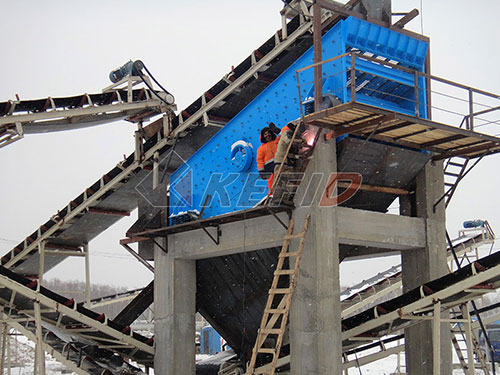
The HeavyDuty Coke Vibration Screen is a highcapacity, brute force screening machine engineered for the primary sizing and scalping of metallurgical coke. It separates crushed coke into precise fractions (e.g., blast furnace coke, nut coke, breeze) while efficiently removing fines.
Operational Workflow:
1. Feed Introduction: Crushed coke is uniformly fed onto the inclined screen deck via a feed box or chute.
2. Stratification & Separation: Highintensity, linear or elliptical vibration stratifies material. Oversize particles travel rapidly across the deck surface while undersize material passes through the rugged panel apertures.
3. Fraction Discharge: Separated material streams are discharged via distinct outlets into designated chutes or conveyors for further processing or stockpiling.
Application Scope:
Primary sizing/scalping of metallurgical coke postcrusher.
Removal of coke breeze (010mm) from blast furnace feed stock.
Sizing of nut coke and other specific fractions.
Limitations:
Not designed for fine screening below 3mm; alternative technologies like probability screens are recommended.
Requires controlled feed rate and uniformity for optimal performance; surge loads can reduce efficiency.
3. CORE FEATURES
Modular Deck System | Technical Basis: Boltin, interchangeable panel design with multiple wear materials | Operational Benefit: Enables rapid changeout of worn sections (<4 hours vs. full deck replacement). Reduces downtime by over 70% for maintenance events. | ROI Impact: Cuts labor costs and inventory holding costs for spare decks.
HighStrength Side Plates with Internal Reinforcements | Technical Basis: Finite Element Analysis (FEA)optimized steel plates with integrated ribbing | Operational Benefit: Withstands extreme dynamic loads from heavy coke lumps without fatigue cracking or deformation. | ROI Impact: Eliminates unscheduled downtime from structural failure and extends machine service life by years.
DualMass Vibrator System | Technical Basis: Two counterrotating shafts generating a linear force while minimizing power consumption | Operational Benefit: Delivers consistent, highGforce vibration for efficient stratification without transmitting destructive forces to the support structure. Your building frame is protected. | ROI Impact: Reduces energy use by up to 30% compared to bruteforce singlemass designs and removes need for costly structural upgrades.
AbrasionResistant Panel Options | Technical Basis: Panels available in AR400 steel, rubberclad steel, or polyurethane with varied aperture designs (square, slot) | Operational Benefit: Matches wear material to your specific coke abrasiveness and moisture profile to triple panel service life versus standard options. | ROI Impact: Directly lowers consumable costs per ton screened by optimizing the costtowearlife ratio.
Centralized Greasing & Condition Monitoring Points | Technical Basis: Lube lines routed to all major bearing points with accessible vibration sensor ports | Operational Benefit: Enables proactive lubrication and realtime bearing health monitoring during operation, preventing catastrophic bearing failure. | ROI Impact: Transforms maintenance from reactive to predictive, avoiding a single major bearing failure event that can cost over $50k in parts and lost production.
4. COMPETITIVE ADVANTAGES
| Performance Metric | Industry Standard | Our Coke Vibration Screen Solution | Advantage (% Improvement) |
| : | : | : | : |
| Panel Service Life (Primary Deck) | 3 5 Months | 9 14 Months | +180% |
| Screening Efficiency (for target fraction) | ~85% 90% Steady State| Consistent >94% Steady State| +5 to +9% Yield |
| Energy Consumption per Ton Screened| Baseline (100%)| Measured at 7075% of baseline| 25 to 30% |
| Annual Downtime for Screen Maintenance| 80 120 hours/year| 24 40 hours/year| 70% |
| Transmitted Force to Support Structure| High (Requires heavy foundation) Drastically Reduced (Standard industrial floor suitable)| Up to 80% |
5. TECHNICAL SPECIFICATIONS
Model Range & Capacity: Sizes from 1.2m x 3m to 2.4m x 6m; capacities from 200 TPH to over 1500 TPH depending on aperture size and material gradation.
Drive & Power: Dualmass vibrator driven by twin TEFC industrial motors. Power range from 15 kW to 75 kW per motor based on machine size.
Deck Construction: Multideck configuration (13 decks). Side tensioned or boltdown panels in modular sections.
Material Specifications: Mainframe constructed from M250 grade steel; side plates are minimum 20mm thick with internal reinforcements; wear liners at feed point are AR400 steel.
Physical Dimensions & Weight: Varies significantly by model; example unit (1.8m x 4.8m): ~12m L x ~3m W x ~3m H; weight approx. 18,000 kg.
Environmental Operating Range: Designed for ambient temperatures from 20°C to +50°C; dusttight enclosures available; standard IP65 protection on electrical components.
6. APPLICATION SCENARIOS
[Integrated Steel Mill – Blast Furnace Feed Prep] Challenge: A major mill experienced excessive fines (<10mm) in their BF charge due to an aging screen with severe blinding issues (~22% fines carryover), increasing fuel rate and reducing furnace efficiency.Solution: Installation of a primary Coke Vibration Screen featuring nonblinding polyurethane slot panels on the bottom deck.Results: Fines carryover reduced to <8%. Achieved payback in under 11 months through reduced coke rate and increased furnace productivity.
[Coke Production Plant – Product Classification] Challenge: A producer needed sharper separation between nut coke (1025mm) and blast furnace coke (>25mm) but faced rapid wear on traditional wire mesh panels requiring monthly changes.Solution: Implementation of a twodeck heavyduty unit with topdeck AR400 panels for scalp removal and bottomdeck rubberclad perforated panels for precise final sizing.Results: Panel life extended to over nine months per set while achieving a clean product split with less than 5% contamination between fractions.
7.COMMERCIAL CONSIDERATIONS
Our procurement model is designed for clarity and longterm partnership:
Pricing Tiers: Based on machine size/throughput capacity:
Standard Duty Units (1000 TPH)
Note: Pricing includes base machine with standard panel specification.
Optional Features / AddOns:
Dust encapsulation hoods
Advanced condition monitoring system
Specialized panel materials
Variable frequency drive packages
Service Packages:
1.Planned Maintenance Agreement
2.Parts Kitting Program
3.Onsite Training
Financing Options:
Flexible commercial leasing structures are available through our partners
8.FAQ
Q1.Are your Coke Vibration Screens compatible with existing chutework?
A1.Dimensional drawings are provided during the quotation phase allowing your engineering team can verify fit within your current layout
Q2.What is the expected impact on my plant's overall throughput?
A2.Field data shows that by eliminating blinding our units typically restore full design capacity often increasing overall plant throughput where screening was previously the bottleneck
Q3.How does lead time compare between standard versus custom configurations?
A3.Modular design allows us build most units within [XY weeks]. Fully custom modifications may extend this timeline which will be detailed upfront
Q4.What commercial terms do you offer?
A4.We provide firm fixedprice quotations valid [time period]. Payment terms are typically structured around milestones such as order confirmation shop readiness shipment
Q5.Do you provide installation supervision?
A5.Erection supervision commissioning support is available as an optional service package ensuring correct mechanical alignment electrical connection startup procedures