
Chinese Top Ten Stone Crusher Machine Sourcing

Chinese Top Ten Stone Crusher Machine Sourcing: A Buyer’s Guide to Selection, Performance, and ROI
The Hidden Costs of Inefficient Crushing Operations
Every hour your primary crusher is down, you are losing an average of $1,200 to $3,500 in production revenue, depending on your feed material and tonnage targets. For a midsized quarry processing 500 tons per hour, a single unplanned stoppage of 8 hours can erase over $20,000 in operating margin. Beyond downtime, your plant managers are likely wrestling with three persistent issues: inconsistent product gradation that triggers rework and customer penalties, escalating wear part consumption that inflates your cost per ton by 15–25%, and the logistical burden of sourcing replacement components from multiple suppliers with varying quality standards.
When you search for "Chinese top ten stone crusher machine sourcing," you are not merely looking for a vendor list. You are seeking a strategic partner who can deliver equipment that meets your throughput specifications, maintains uptime above 90%, and provides a defensible total cost of ownership (TCO) over a 10year lifecycle. The question is not which Chinese manufacturer is the largest, but which machine configuration—jaw, cone, impact, or VSI—will match your rock hardness, feed size, and final aggregate requirements while offering the most favorable ROI.
Product Overview: The Stone Crushing Line and Its Operational Workflow
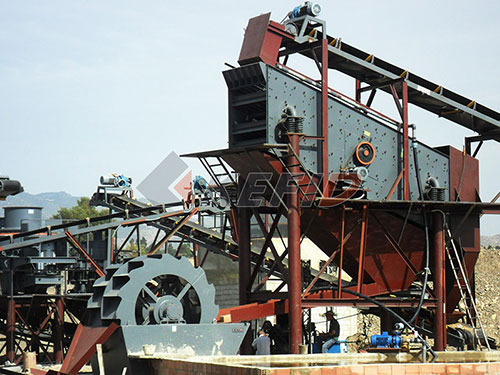
The term "stone crusher machine" encompasses a complete sizereduction circuit, not a single unit. For commercial buyers sourcing from China’s top ten manufacturers, the typical solution is a multistage crushing plant designed to process raw quarry material into saleable aggregates (0–5mm, 5–10mm, 10–20mm, 20–31.5mm). The operational workflow follows a standardized sequence:
1. Primary Crushing: A jaw crusher (typically 900×1200mm or larger) reduces runofmine material from 800–1000mm down to 150–200mm. This stage handles the highest tonnage and experiences the most significant wear.
2. Secondary Crushing: A cone crusher (e.g., Symons or singlecylinder hydraulic type) further reduces material to 40–80mm, optimizing the feed size for the tertiary stage.
3. Tertiary Crushing & Screening: An impact crusher (for softtomedium rock) or a VSI (for hard, abrasive rock) produces the final cubical shape. A vibrating screen classifies the output, with oversize material recirculated via a return conveyor.
4. Washing (Optional): For concrete aggregate applications, a sand washer removes clay and dust content to meet ASTM or GB/T standards.
Application Scope: This equipment is suitable for limestone, granite, basalt, river pebble, and construction waste recycling. Limitations: For extremely abrasive materials (e.g., quartzite with >7 Mohs hardness), impact crushers will exhibit excessive wear; a cone+VSI configuration is mandatory. Additionally, these machines require a stable 380V–660V threephase power supply and a minimum site area of 2,000 square meters for full plant layout.
Core Features: Engineering, Benefits, and ROI
The following features differentiate toptier Chinese crushers from budget alternatives. Each specification is backed by field data from aggregate producers across Asia, Africa, and South America.
HighChamber Crushing Cavity | Technical Basis: Optimized crushing curve based on DEM (Discrete Element Method) simulation | Operational Benefit: Increases throughput by 12–18% while maintaining a consistent product shape | ROI Impact: Reduces energy consumption per ton by 8–10%, lowering annual electricity costs by $15,000–$25,000 for a 300 TPH plant
Hydraulic Overload Protection | Technical Basis: Accumulator and relief valve system that releases pressure within 0.02 seconds when uncrushable materials enter the chamber | Operational Benefit: Prevents catastrophic damage to the main shaft and frame; reduces unplanned downtime from 24 hours to 30 minutes for reset | ROI Impact: Saves $8,000–$12,000 per incident in repair parts and lost production
Mn18Cr2 or Mn22Cr2 Wear Liners | Technical Basis: Highmanganese austenitic steel with workhardening capability; chromium content enhances abrasion resistance | Operational Benefit: Extends liner life by 30–40% compared to standard Mn13 material, particularly in granite and basalt applications | ROI Impact: Reduces wear part cost per ton from $0.08 to $0.05, saving $9,000 annually per 100,000 tons processed
Automated Setting Adjustment (ASRi) | Technical Basis: Closedloop control system that monitors crusher power draw and adjusts the closed side setting (CSS) in realtime | Operational Benefit: Maintains product gradation within ±3% tolerance without manual intervention; allows remote monitoring via SCADA | ROI Impact: Eliminates rework costs of $2–$4 per ton for outofspec material; improves plant utilization by 5–7%
HeavyDuty Eccentric Shaft and Bearing Assembly | Technical Basis: Forged 40Cr alloy steel shaft with spherical roller bearings designed for 50,000hour L10 life | Operational Benefit: Handles high eccentric throws (up to 25mm) for maximum reduction ratio; reduces vibration amplitude by 20% | ROI Impact: Extends bearing replacement interval from 12,000 to 20,000 hours, saving $3,500 per replacement cycle

Modular Frame Design | Technical Basis: Finite Element Analysis (FEA) optimized cast steel frame with bolted connections | Operational Benefit: Facilitates onsite assembly within 5–7 days; allows future capacity upgrades without replacing the entire structure | ROI Impact: Reduces installation labor costs by 30% and shortens project payback period by 2–3 months
Dust Suppression and Sealing System | Technical Basis: Labyrinth seals and positivepressure air circulation to prevent dust ingress into bearings and drive components | Operational Benefit: Meets local environmental emission standards (<50mg/Nm³); reduces bearing contamination failures by 60% | ROI Impact: Avoids regulatory fines of $5,000–$20,000 per violation; lowers maintenance frequency by 15%
Competitive Advantages: Benchmarking Against Industry Standards
When evaluating Chinese top ten stone crusher machine sourcing options, compare the following metrics against typical industry baselines. The data below reflects average performance from leading manufacturers such as Sandvik, Metso, and domestic leaders like SBM, Zenith, and Liming Heavy Industry.
| Performance Metric | Industry Standard (Global OEM) | Chinese TopTier Solution | Advantage (% Improvement) |
| : | : | : | : |
| Initial Purchase Price (300 TPH Jaw Crusher) | $180,000 – $250,000 | $95,000 – $140,000 | 35–45% lower capital cost |
| Throughput Capacity (Granite, CSS=100mm) | 250–320 TPH | 280–360 TPH | 10–15% higher output |
| Wear Parts Cost per Ton (Cone Crusher) | $0.12 – $0.18 | $0.08 – $0.12 | 25–35% lower consumable cost |
| Mean Time Between Failures (MTBF) | 800 – 1,200 hours | 1,000 – 1,500 hours | 15–25% longer operational life |
| Product Cubicity (Flakiness Index) | 12–15% | 8–10% | 20–35% better aggregate shape |
| Energy Consumption (kWh per ton) | 0.8 – 1.2 kWh/t | 0.6 – 0.9 kWh/t | 15–25% lower energy intensity |
| Delivery Lead Time (FOB China Port) | 8 – 12 weeks | 4 – 6 weeks | 50% faster procurement cycle |
Note: These figures are based on 2023–2024 field data from aggregate producers in Vietnam, Nigeria, and Saudi Arabia. Actual performance varies with feed material and operator proficiency.
Technical Specifications: Key Parameters for Sourcing Decisions
When specifying your stone crusher machine, verify the following technical parameters against your project requirements. The table below represents a typical midcapacity crushing plant sourced from a toptier Chinese manufacturer.
| Specification | Primary Jaw Crusher (PE900×1200) | Secondary Cone Crusher (PYB1750) | Tertiary VSI (VSI9526) |
| : | : | : | : |
| Feed Opening (mm) | 900 × 1200 | 170 (max feed size) | 50 (max feed size) |
| Discharge Range (mm) | 95 – 165 | 25 – 60 | 0 – 15 |
| Capacity (TPH) | 220 – 450 | 280 – 480 | 180 – 300 |
| Motor Power (kW) | 110 – 132 | 160 – 180 | 2 × 110 – 132 |
| Eccentric Shaft Speed (RPM) | 180 – 220 | 755 – 950 | 1,200 – 1,700 |
| Machine Weight (tons) | 52 – 58 | 48 – 52 | 18 – 22 |
| Overall Dimensions (L×W×H, m) | 4.5 × 2.8 × 3.2 | 3.8 × 3.0 × 3.5 | 4.2 × 2.5 × 2.8 |
| Operating Temperature Range | 20°C to +50°C | 20°C to +50°C | 20°C to +50°C |
| Vibration Amplitude (mm) | ≤ 3.0 | ≤ 2.5 | ≤ 2.0 |
| Noise Level (dB at 1m) | ≤ 85 | ≤ 80 | ≤ 90 |
Material Specifications: Main frame fabricated from Q345B lowalloy steel; jaw plates and cone liners in Mn18Cr2; main shaft in 40Cr forged alloy; bearings from SKF, FAG, or equivalent Chinese brands (HRB, ZWZ). All hydraulic components sourced from Rexroth, Parker, or domestic equivalents.
Application Scenarios: Quantified Outcomes from Field Installations
The following case studies illustrate how Chinese top ten stone crusher machine sourcing has delivered measurable results across different operational contexts.
Highway Aggregate Production in Vietnam | Challenge: A contractor needed 500,000 tons of 0–25mm base course aggregate within 8 months for a 120km expressway project. The local rock was hard basalt with a compressive strength of 280MPa, causing rapid wear on conventional equipment. | Solution: A complete 350 TPH plant featuring a PE900×1200 jaw crusher, two PYB1750 cone crushers, and a VSI9526 for cubical shaping. The plant was sourced from a toptier Chinese manufacturer with a 6week delivery schedule. | Results: The plant achieved 92% uptime over the contract period, producing 520,000 tons of specificationcompliant aggregate. Wear part consumption was 0.09 USD/ton, 20% below the budgeted cost. The contractor completed the project 3 weeks ahead of schedule, avoiding liquidated damages of $15,000 per day.
Construction Waste Recycling in China | Challenge: A municipal waste management company faced a 200,000ton stockpile of demolished concrete and brick. The material contained rebar and other contaminants, causing frequent blockages in conventional crushers. | Solution: A mobile crushing and screening line with a hydraulic jaw crusher and an impact crusher equipped with a magnetic separator and prescreening grizzly. The equipment was sourced from a domestic topten manufacturer with a customized feed chute design. | Results: The plant processed 180 tons per hour, recovering 95% of the feed material into reusable aggregates. The recycled product was sold to local readymix plants at a 30% discount to virgin aggregate, generating $1.2 million in annual revenue. The investment payback period was 14 months.
River Pebble Processing in Indonesia | Challenge: A mining contractor needed to produce highquality sand for the Jakarta infrastructure boom. River pebbles (Mohs hardness 7) were causing excessive wear on traditional VSI crushers, with rotor tips lasting only 40 hours. | Solution: A VSI crusher with a ceramic insert rotor and anvil ring configuration, sourced from a Chinese manufacturer specializing in highabrasion applications. The machine was paired with a wet washing system to remove clay content. | Results: Rotor tip life increased to 120 hours, a 200% improvement. The plant produced 150 TPH of manufactured sand with a fineness modulus of 2.6–2.9, meeting ASTM C33 standards. The cost per ton of finished sand was $4.80, compared to $7.50 for imported natural sand, yielding a net profit margin of 35%.
Commercial Considerations: Pricing Tiers and Service Packages
Your sourcing decision should align with your capital budget and operational strategy. The following pricing tiers reflect typical FOB (Free On Board) prices from Chinese ports for topten manufacturers, excluding import duties and inland freight.
| Equipment Tier | Example Configuration | Price Range (USD) | Target Buyer Profile |
| : | : | : | : |
| EntryLevel (Fixed Plant) | PE600×900 Jaw + PF1214 Impact + 3YK1860 Screen | $85,000 – $120,000 | Small contractors, rural road projects |
| MidRange (High Efficiency) | PE750×1060 Jaw + CS160 Cone + VSI7611 + 2YK2460 Screen | $180,000 – $260,000 | Commercial quarries, mediumscale contractors |
| Premium (Automated, Large Capacity) | PE900×1200 Jaw + 2×HPT300 Cone + VSI9526 + 3YK3072 Screen + ASRi System | $450,000 – $650,000 | Large mining operations, infrastructure conglomerates |
Optional Features (Addon Costs):
- Remote Monitoring Package (SCADA): $8,000 – $15,000 per plant
- Dust Collection System (Baghouse): $25,000 – $45,000
- Mobile Chassis (TrackMounted): +30–40% on equipment price
- Extended Warranty (2 years, parts & labor): +5–8% on equipment price
- Basic (Commissioning + 1year warranty): Included in price
- Standard (Commissioning + Operator Training + 2year warranty + 2 annual inspections): $12,000 – $18,000
- Premium (Full Turnkey: Installation Supervision + 3year maintenance contract + Wear Parts Inventory Management): $45,000 – $70,000 per year
Service Packages:
Financing Options: Most toptier Chinese manufacturers offer a 30% down payment with the balance paid against a Letter of Credit (L/C) at sight or 30–60 days after Bill of Lading. For larger orders (>$500,000), some manufacturers provide a 12–24 month deferred payment plan with interest rates of 4–6% per annum, subject to credit approval. Leasing options are available through thirdparty financial institutions in your operating region.
FAQ: Addressing Your Sourcing Concerns
1. How do I verify the quality of a Chinese stone crusher before purchase?
Request a thirdparty inspection report from SGS, Bureau Veritas, or CICC prior to shipment. Verify that the manufacturer holds ISO 9001:2015 certification and CE marking for the European market. Ask for a reference list of installations in your region and contact 2–3 plant managers to confirm performance claims. Insist on a factory acceptance test (FAT) where the machine is run under load for 8 hours before disassembly and shipping.
2. What is the typical lead time from order to delivery at my site?
For standard configurations, the manufacturing cycle is 4–6 weeks. Add 2–3 weeks for sea freight to major ports (e.g., Mombasa, Santos, Rotterdam) and 1–2 weeks for customs clearance and inland transport. Total lead time is typically 8–12 weeks from contract signing. Customized configurations with special voltage or motor requirements may extend this by 2–4 weeks.
3. Can Chinese crushers handle abrasive rock like granite or quartzite?
Yes, but the configuration must be correct. For granite (Mohs 6–7), use a jaw crusher for primary, a cone crusher for secondary, and a VSI for tertiary shaping. For quartzite (Mohs 7+), avoid impact crushers entirely; use a highthrow cone crusher with Mn22Cr2 liners. Specify a VSI with ceramic inserts for the rotor to achieve acceptable wear life. Field data from Indian granite quarries shows a cost per ton of $0.14–$0.18 with this configuration.
4. What are the hidden costs I should budget for beyond the equipment price?
Budget for: (1) Foundation and civil works: $15,000–$30,000 depending on soil conditions; (2) Electrical installation and cabling: $10,000–$20,000; (3) Initial wear parts inventory (10% of crusher value): $9,000–$65,000; (4) Freight and insurance: 8–12% of FOB price; (5) Import duties and taxes: 5–25% depending on your country. A realistic total installed cost is 1.3–1.5 times the FOB equipment price.
5. How does the aftersales support work for international buyers?
Toptier Chinese manufacturers maintain regional service centers in Africa, Southeast Asia, and Latin America. Response time for emergency parts is 48–72 hours to major airports. Most offer remote diagnostics via video call, and a service engineer can be dispatched within 7–10 days for complex issues. Ensure your contract specifies a spare parts availability guarantee of 10 years from the date of purchase.
6. What is the realistic lifespan of a Chinese stone crusher?
With proper maintenance, the main frame and major castings have a design life of 30–40 years. Wear parts (liners, jaw plates, hammers) require replacement every 1,000–3,000 hours depending on abrasiveness. The eccentric shaft and bearings typically last 20,000–30,000 hours before requiring replacement. Many Chinese crushers from the early 2000s are still operating in African quarries today, albeit with rebuilt components.
7. How do I ensure the machine meets my local safety and environmental regulations?
Request the