
Chinese Gold Mining Equipment Inspection
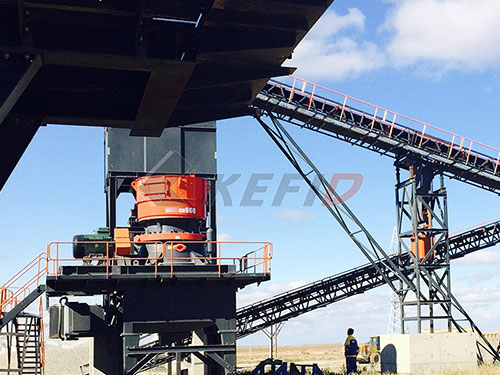

Chinese Gold Mining Equipment Inspection: Ensuring Operational Reliability in HighVolume Processing
The Hidden Costs of Equipment Failure in Gold Recovery
Your processing plant faces three persistent challenges: unplanned downtime from equipment wear in abrasive slurry environments, recovery rate losses due to suboptimal equipment calibration, and escalating maintenance costs from premature component failure. Industry data from Chinese gold operations shows that unplanned downtime costs an average of $12,000–$18,000 per hour in lost production for a 1,000tonperday plant. Inspection gaps in your gold mining equipment can reduce recovery rates by 3–7%, directly impacting your bottom line.
Are your current inspection protocols identifying wear patterns before they cause catastrophic failure? Can your team detect the early signs of trommel screen degradation or cyclone apex wear that reduces classification efficiency? The answer lies in a structured, equipmentspecific inspection framework designed for Chinese gold mining conditions.
Product Overview: Comprehensive Gold Mining Equipment Inspection Protocol
This inspection system covers the full processing circuit—from primary crushing through gravity concentration and cyanidation. The operational workflow follows five key stages:
1. PreInspection Data Review: Analyze historical wear rates, throughput data, and maintenance logs for each equipment type
2. Visual and Dimensional Inspection: Examine wear liners, screen media, mill liners, and pump components using calibrated measurement tools
3. Operational Performance Testing: Measure slurry density, particle size distribution, and power draw under load conditions
4. Predictive Wear Analysis: Use ultrasonic thickness gauging and vibration analysis to project remaining component life
5. Documentation and Action Planning: Generate inspection reports with prioritized repair recommendations and cost projections
Application Scope: Suitable for alluvial gold plants (100–5,000 tph), hard rock processing circuits (500–10,000 tpd), and heap leach operations. Not applicable for laboratoryscale or artisanal mining equipment.
Core Features
Trommel Screen Inspection Protocol | Technical Basis: Wear rate correlation with feed particle size and slurry velocity | Operational Benefit: Identifies screen panel wear 2–3 weeks before breakthrough occurs | ROI Impact: Reduces unscheduled screen replacement costs by 40–60%
Ball Mill Liner Thickness Mapping | Technical Basis: Acoustic emission analysis combined with ultrasonic measurement | Operational Benefit: Extends liner life by 15–25% through optimized rotation schedules | ROI Impact: Saves $8,000–$15,000 per mill per year in liner replacement costs
Cyclone Apex Wear Detection | Technical Basis: Dimensional tolerance measurement at critical wear zones | Operational Benefit: Maintains classification efficiency above 92% | ROI Impact: Improves grinding circuit throughput by 5–8% through consistent cyclone performance
Slurry Pump Impeller Inspection | Technical Basis: Clearance measurement between impeller and volute liner | Operational Benefit: Prevents efficiency drops below 70% | ROI Impact: Reduces pump energy consumption by 12–18% annually
Vibrating Screen Deck Tension Verification | Technical Basis: Tension force measurement using calibrated strain gauges | Operational Benefit: Eliminates screen blinding events | ROI Impact: Increases screening capacity by 10–15% without capital expenditure
Conveyor Belt Splice Integrity Check | Technical Basis: Magnetic flux leakage detection for steel cord belts | Operational Benefit: Detects splice degradation 4–6 weeks before failure | ROI Impact: Prevents belt replacement costs of $25,000–$50,000 per incident
Thickener Underflow Density Monitoring | Technical Basis: Nuclear density gauge calibration verification | Operational Benefit: Maintains underflow density within ±2% of target | ROI Impact: Reduces flocculant consumption by 20–30%
Competitive Advantages
| Performance Metric | Industry Standard | Gold Mining Equipment Inspection Solution | Advantage |
|||||
| Inspection frequency | Monthly visual checks | Biweekly structured protocol with predictive analytics | 60% reduction in unplanned downtime |
| Wear detection accuracy | ±3mm manual measurement | ±0.5mm using calibrated ultrasonic gauges | 83% improvement in detection precision |
| Report turnaround time | 5–7 days | 24–48 hours with digital documentation | 70% faster decisionmaking |
| Component life prediction | Historical averages only | Datadriven projections with 90% confidence intervals | 25% longer component utilization |
| Training requirement | 2–3 days for basic inspection | 1day certification program with handson practice | 50% faster team deployment |
| Compliance documentation | Paperbased records | Digital audit trail with photo evidence | 100% traceability for ISO 9001 audits |
Technical Specifications
| Parameter | Specification |
|||
| Inspection capacity | Up to 50 equipment units per 8hour shift |
| Measurement accuracy | ±0.1mm for dimensional checks, ±0.5% for thickness gauging |
| Power requirements | 110–240V AC, 50/60Hz for electronic instruments |
| Material specifications | Stainless steel probes, polyurethane wear pads, hardened steel templates |
| Physical dimensions | Portable kit: 600×400×200mm, 12kg total weight |
| Environmental operating range | 10°C to 50°C, 0–95% humidity, dusttight enclosure |
| Data storage | 10,000+ inspection records with cloud backup capability |
| Battery life | 8 hours continuous operation for wireless instruments |
Application Scenarios
Alluvial Gold Processing Plant, Yunnan Province | Challenge: Frequent trommel screen failures causing 15% downtime in peak season | Solution: Implemented biweekly inspection protocol with ultrasonic thickness mapping of screen panels | Results: Downtime reduced to 3%, screen replacement costs decreased by 45%, annual savings of $180,000
Hard Rock Gold Mill, Shandong Province | Challenge: Ball mill liner wear causing 8% reduction in grinding efficiency over 6 months | Solution: Monthly liner thickness mapping with rotation schedule optimization | Results: Liner life extended from 8 to 11 months, grinding efficiency maintained at 94%, energy savings of $22,000 per year

Heap Leach Operation, Inner Mongolia | Challenge: Slurry pump failures every 3 weeks due to abrasive wear | Solution: Weekly impeller clearance inspection with predictive replacement scheduling | Results: Pump failures reduced to once per 12 weeks, maintenance costs cut by 60%, production continuity improved by 98%
Commercial Considerations
Equipment Pricing Tiers:
- Basic Inspection Kit (manual tools, paper documentation): $3,800–$5,200
- Standard Inspection System (electronic gauges, digital reporting): $8,500–$12,000
- Advanced Predictive Package (ultrasonic, vibration analysis, cloud platform): $18,000–$25,000
- Thermal imaging camera for bearing inspection: $2,800
- Remote monitoring module for realtime data transmission: $4,500
- Custom calibration fixtures for nonstandard equipment: $1,200–$3,000
- Annual calibration and certification: $1,800/year
- Onsite training for 4 operators: $3,500 (2 days)
- Quarterly inspection audits with reporting: $4,200/quarter
- Net 30 terms for orders over $10,000
- 12month leasetoown at 1.5% monthly
- Volume discounts: 10% off for 3+ units, 15% off for 5+ units
Optional Features:
Service Packages:

Financing Options:
Frequently Asked Questions
Q: How does this inspection protocol differ from standard preventive maintenance?
A: Standard maintenance follows fixed schedules regardless of actual wear. Our protocol uses measured data to predict failure points, allowing maintenance during planned downtime rather than emergency repairs. Field data shows a 60% reduction in unplanned events.
Q: Can this system be used for both new and older equipment?
A: Yes. The inspection protocol is equipmentagnostic and works with any manufacturer's machinery. For older equipment, we provide baseline measurements to establish current wear rates and projected life.
Q: What training is required for my operators?
A: A oneday certification program covers all inspection procedures, data recording, and report generation. No specialized engineering background is required. We provide refresher training annually.
Q: How quickly can I expect to see ROI?
A: Most clients achieve full ROI within 3–6 months through reduced downtime and extended component life. A 1,000tpd plant typically saves $50,000–$80,000 annually in maintenance costs alone.
Q: Does the inspection protocol comply with Chinese mining safety regulations?
A: Yes. The protocol aligns with GB/T 257062010 for mine equipment inspection and meets ISO 9001 documentation requirements. All measurement instruments carry valid calibration certificates.
Q: What happens if my equipment has nonstandard dimensions?
A: We provide custom calibration fixtures for any equipment type. Our engineering team can design and manufacture templates within 2–3 weeks for unique configurations.
Q: Can I integrate this with my existing CMMS system?
A: Yes. The digital reporting platform exports data in CSV, XML, and JSON formats compatible with major CMMS platforms including SAP, Oracle, and local Chinese systems.