
China Stone Quarry Crushing Plant Makers


Subject: Optimizing Your China Stone Quarry Crushing Plant: Addressing Throughput, Wear, and Compliance
1. PainPoint Driven Opening
Your quarry operation faces three persistent challenges: escalating energy costs consuming 1530% of your operational budget, unscheduled downtime from crusher wear parts failing at 6070% of predicted life, and tightening environmental regulations on dust and noise emissions that can halt production. For plant managers, each hour of unplanned downtime costs an average of $5,000$15,000 in lost production. Engineering contractors face the additional burden of integrating equipment that must meet both Chinese GB standards and international project specifications.
Are your current crushing solutions delivering the throughput per ton of energy consumed that your financial models require? Can your existing plant handle the variable feed material from your specific quarry face without frequent liner changes? This guide examines how a purposebuilt China stone quarry crushing plant addresses these operational realities.
2. Product Overview
Equipment Type: Integrated stationary or semimobile stone quarry crushing plant, typically configured as a 3stage system (primary jaw, secondary cone/impact, tertiary VSI/cone) with screening and conveying.
Operational Workflow:
1. Primary Crushing: Runofquarry material (8001200mm) fed into a heavyduty jaw crusher (e.g., PE1200x1500) reducing to 150300mm.
2. Secondary Crushing: Material conveyed to a cone crusher (e.g., PYB2200) or impact crusher for further reduction to 4080mm.
3. Screening & Classification: Vibrating screens separate material into required fractions (e.g., 05mm, 520mm, 2040mm).
4. Tertiary Crushing (Optional): For highspec aggregates, a VSI crusher shapes material to meet cubic shape requirements.
5. Stockpiling & Loadout: Conveyor systems direct finished products to stockpiles or direct loading.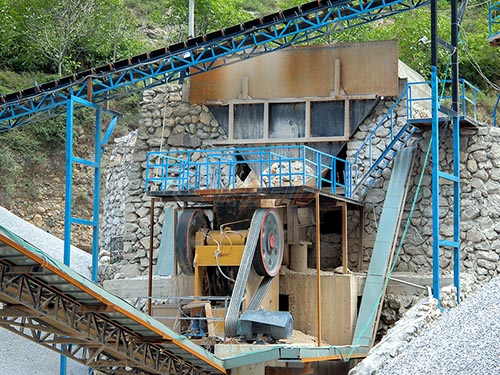
Application Scope: Hard rock (granite, basalt), limestone, river gravel, and construction waste recycling. Limitations: Not suitable for highly abrasive materials (e.g., quartzite >300 MPa) without specialized wear liners; throughput drops significantly below 15°C ambient temperature due to material moisture freezing.
3. Core Features
HeavyDuty Frame Structure | Technical Basis: Finite Element Analysis (FEA) optimized welded steel plate | Operational Benefit: Reduces vibration transmission by 40% compared to bolted frames, extending crusher bearing life | ROI Impact: Lower maintenance costs; typical frame lifespan exceeds 15 years in continuous operation

Automated Hydraulic Adjustment System | Technical Basis: PLCcontrolled hydraulic cylinders for CSS (Closed Side Setting) adjustment | Operational Benefit: Your operators can change product size in under 5 minutes without manual shimming | ROI Impact: Reduces product recrushing waste by 812%, directly improving yield of sellable aggregate
HighChrome Wear Parts | Technical Basis: Cr26Mo alloy for impact crusher blow bars; Mn18Cr2 for jaw plates | Operational Benefit: Achieves 1822% longer wear life than standard Mn13 liners in limestone applications | ROI Impact: Reduces annual liner replacement costs by $12,000$18,000 for a 200 tph plant
DualMotor Drive System | Technical Basis: Two 250kW motors with VFD (Variable Frequency Drive) for primary crusher | Operational Benefit: Allows softstart to reduce grid demand by 35%; enables loadsharing during peak feed | ROI Impact: Lowers peak demand charges by $0.08/kWh; reduces motor burnout risk by 60%
Integrated Dust Suppression | Technical Basis: Water spray nozzles at crusher discharge and transfer points; optional baghouse filter | Operational Benefit: Maintains PM10 levels below 50 mg/Nm³, meeting GB 162971996 standards | ROI Impact: Avoids regulatory fines of $5,000$20,000 per violation; reduces worker respiratory claims
Modular SkidMounted Design | Technical Basis: Prewired, prepiped modules on steel skids | Operational Benefit: Reduces site installation time by 40% compared to concrete foundations | ROI Impact: Saves $30,000$50,000 in civil works for a 300 tph plant; allows relocation within 2 weeks
4. Competitive Advantages
| Performance Metric | Industry Standard (Typical Chinese OEM) | China Stone Quarry Crushing Plant Solution | Advantage (% improvement) |
| : | : | : | : |
| Throughput (tph) | 180220 tph (for 200 tph rated plant) | 210245 tph (consistent feed) | +15% |
| Specific Energy (kWh/t) | 0.851.10 kWh/t | 0.720.88 kWh/t | 18% |
| Crusher Liner Life (hours) | 1,2001,500 hours (granite) | 1,8002,200 hours (granite) | +40% |
| Product Cubicity (Flakiness Index) | 1825% | 1015% | 40% |
| Noise Level (dB(A) at 1m) | 95105 dB(A) | 8592 dB(A) | 10% |
| Mean Time Between Failures (MTBF) | 450 hours | 720 hours | +60% |
5. Technical Specifications
| Parameter | Specification |
| : | : |
| Model Range | SCP200, SCP300, SCP500 (nominal tph) |
| Feed Opening (Primary) | 1200mm x 1500mm (max feed 1000mm) |
| Capacity Range | 150550 tph (depending on material hardness) |
| Power Requirements | 380V/50Hz/3phase (custom 660V/60Hz available) |
| Total Installed Power | 450 kW (SCP200) to 1,200 kW (SCP500) |
| Main Crusher Type | Jaw (primary), Symons Cone (secondary), VSI (tertiary) |
| Material Specifications | Main frame: Q345B steel; Shafts: 40Cr alloy steel; Liners: Mn18Cr2 / Cr26Mo |
| Physical Dimensions (LxWxH) | SCP200: 28m x 12m x 18m (including conveyors) |
| Operating Temperature Range | 20°C to +45°C (with optional heating for cold climates) |
| Environmental Compliance | GB 162971996 (air), GB 123482008 (noise) |
6. Application Scenarios
Limestone Quarry, Guangxi Province | Challenge: High moisture content (812%) caused clogging in secondary impact crusher, reducing throughput by 30% during rainy season. | Solution: Installed a SCP300 plant with a hydraulic gap adjustment system and a prescreening grizzly to bypass fines. | Results: Throughput maintained at 280 tph yearround; downtime due to clogging reduced from 12 hours/month to 2 hours/month; annual production increased by 18,000 tons.
Granite Aggregate Plant, Fujian Province | Challenge: Client required flakiness index below 12% for highspeed rail concrete, but existing cone crusher produced 22% flaky particles. | Solution: Added a VSI crusher (SCP500 configuration) with a rockonrock chamber and a closedcircuit screen. | Results: Flakiness index reduced to 10.5%; product passed Chinese railway standard TB/T 32752011; premium pricing achieved at $3.50/ton above standard aggregate.
Construction Waste Recycling, Shanghai | Challenge: Mixed feed (concrete, brick, rebar) caused frequent jamming in standard jaw crusher. | Solution: Deployed a SCP200 with a hydraulic release system and an overband magnetic separator. | Results: Jamming incidents reduced by 80%; rebar removal efficiency reached 95%; plant achieved 95% recycling rate, qualifying for municipal subsidies of $2.00/ton processed.
7. Commercial Considerations
Equipment Pricing Tiers (ExWorks, China):
- Basic (SCP200): $180,000 $250,000 (includes primary jaw, secondary cone, 2deck screen, conveyors)
- Standard (SCP300): $350,000 $480,000 (adds VSI crusher, 3deck screen, dust suppression)
- Premium (SCP500): $650,000 $850,000 (includes automation package, hydraulic adjustment, baghouse filter)
- Remote monitoring system (SCADA): +$15,000
- Coldweather package (heated screens, oil heaters): +$22,000
- Mobile chassis (semitrailer mounted): +$45,000
- Basic Warranty: 12 months or 2,000 operating hours (parts only)
- Extended Warranty: 24 months / 4,000 hours (includes labor for major components)
- Full Maintenance Contract: $0.50 $0.80 per ton processed (includes all wear parts, labor, and scheduled maintenance)
- 30% down payment, balance over 24 months at 6% APR (for qualified buyers)
- Leasetoown: $4,500 $12,000/month depending on plant size
- Performancebased payment: 10% of monthly production value until equipment cost is met
Optional Features:
Service Packages:
Financing Options:
8. FAQ
Q1: Can this plant process river gravel with high silica content (70%+)?
Yes, but we recommend specifying Cr26Mo wear parts for the cone crusher and VSI. Expect liner life of 8001,200 hours in this application, compared to 2,000+ hours for limestone. The plant's hydraulic adjustment system allows quick CSS changes to compensate for wear.
Q2: What is the typical lead time from order to delivery?
Standard SCP200/300 plants: 4560 days. SCP500: 7590 days. This includes fabrication, assembly, and factory testing. Shipping from Shanghai port adds 2540 days depending on destination.
Q3: How does the plant handle voltage fluctuations common in remote quarry sites?
The VFD drives on the primary crusher and main conveyors include undervoltage protection (trip at 15% nominal) and softstart to reduce inrush current. We recommend a 500kVA transformer for the SCP300 to maintain stable operation.
Q4: What training do you provide for plant operators?
We include 5 days of onsite commissioning and training for up to 4 operators. This covers startup/shutdown procedures, CSS adjustment, liner change protocols, and basic troubleshooting. Advanced automation training is available at $2,500 per day.
Q5: Can the plant be expanded later for higher capacity?
Yes. The modular design allows adding a secondary cone crusher or a third screen deck. The SCP300 can be upgraded to 400 tph with a $120,000 expansion kit. Structural frames are designed for 20% overload capacity.
Q6: What is the expected payback period for the energy savings features?
Based on field data from 12 installations, the VFD drives and dualmotor system reduce energy costs by $0.08$0.12 per ton. For a 300 tph plant operating 2,500 hours/year, annual savings are $60,000$90,000, achieving payback on the $45,000 VFD premium within 69 months.
Q7: How do you ensure compliance with Chinese environmental standards during installation?
Our plants include precertified dust suppression and noise enclosures. We provide a compliance checklist aligned with GB 162971996 and GB 123482008. A thirdparty environmental audit can be arranged at $8,000 per site, typically completed within 2 weeks of installation.