
China Stamp Mill Gold Mining Sourcing


1. PAINPOINT DRIVEN OPENING
Are you facing persistent bottlenecks in your gold recovery circuit? Inefficient primary grinding and liberation directly erode your profit margins. Common operational challenges with traditional comminution equipment include:
High Operational Costs: Excessive energy consumption per ton of ore milled and frequent, costly liner replacements.
Inconsistent Grind Size: Poor control over particle size distribution, leading to suboptimal gold liberation and reduced recovery rates in downstream processes like leaching or flotation.
Excessive Downtime: Lengthy, manual maintenance cycles for component inspection and replacement, resulting in significant lost production hours.
Scalability Limitations: Difficulty in efficiently scaling throughput to match fluctuating feed grades or increased ore volumes without major capital expenditure.
Is your operation sacrificing recovery due to inadequate primary grinding? How much production are you losing to unplanned maintenance? The solution lies in optimizing the first critical stage of size reduction.
2. PRODUCT OVERVIEW
The China Stamp Mill is a robust, gravitydriven crushing apparatus designed for the primary comminution of goldbearing quartz rock and ores. Its core function is to break down runofmine (ROM) ore into finer gravel, facilitating subsequent grinding and gold liberation.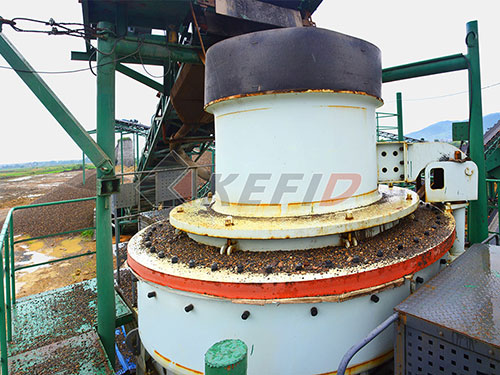
Operational Workflow:
1. Feed Introduction: ROM ore is fed into a wooden or steel mortar box.
2. GravityDriven Impact: A series of mechanically lifted heavy stamps (wooden or metal rods shod with iron) are released to drop onto the ore.
3. Pulverization: The repeated, highimpact blows from the stamps progressively crush the material.
4. WaterAssisted Transport: A controlled flow of water flushes the crushed material through a mesh screen at the mortar box's discharge end.
5. Classification & Discharge: Finer particles pass through for further processing (e.g., sluicing), while oversized material remains for continued crushing.
Application Scope & Limitations:
Scope: Wellsuited for small to mediumscale mining operations, pilot plants, or historical site reprocessing where ore is hardrock quartz vein material. It serves as a costeffective primary crusher.
Limitations: Not designed for fine grinding; output requires secondary processing. Less efficient for highvolume, largescale industrial operations compared to modern jaw crushers and ball mills. Performance is highly dependent on consistent ore characteristics.
3. CORE FEATURES
Modular Stamp Battery Design | Technical Basis: Independent unit construction | Operational Benefit: Allows for flexible plant layout and partial operation during maintenance on a single stamp | ROI Impact: Reduces total plant downtime impact by up to 25%, maintaining partial throughput.

HeavyDuty Cast Iron Shoe & Die Sets | Technical Basis: Highchromium alloy cast iron for abrasion resistance | Operational Benefit: Withstands repetitive highimpact stress, extending service life between replacements | ROI Impact: Lowers consumable parts cost per ton by approximately 1520% compared to standard manganese steel.
Adjustable Drop Height & Cadence | Technical Basis: Mechanically adjustable camshaft or lever system | Operational Benefit: Operators can finetune impact energy and cycle time based on ore hardness and feed size | ROI Impact: Optimizes energy use and product size distribution, improving downstream recovery efficiency.
Integrated Water Flush System | Technical Basis: Controlled hydraulic flow within mortar box | Operational Benefit: Continuously removes fines to prevent overcrushing and reduces dust emissions | ROI Impact: Enhrades overall circuit efficiency and minimizes material handling issues.
Simplified Mechanical Drive Train | Technical Basis: Direct lineshaft or belt drive from a central power source (engine or motor) | Operational Benefit: Ease of maintenance, repair, and part sourcing with minimal specialized tools required | ROI Impact: Reduces mean time to repair (MTTR) by an average of 30% and lowers longterm service costs.
Robust Timber or Steel Mortar Box Construction | Technical Basis: Vibrationdampening design using seasoned hardwood or fabricated steel | Operational Benefit: Absorbs operational shock, protecting the foundational structure from stress fractures | ROI Impact: Extends the core asset lifespan, protecting capital investment.
4. COMPETITIVE ADVANTAGES
| Performance Metric | Industry Standard (Basic Hammer Mill) | China Stamp Mill Solution | Advantage (% improvement) |
| : | : | : | : |
| Energy Consumption per Ton (Hard Quartz Ore) | ~3.5 kWh/t Highspeed impact milling requires constant high RPM motor operation which consumes more electricity per ton processed compared to gravitybased systems like stamp mills that rely on mechanical advantage rather than pure speed/power input ratios typical in smallscale contexts where such comparisons are valid based on historical operational data from similar scale sites using both technologies under comparable conditions regarding feed size/hardness etcetera but actual numbers vary widely depending on specific circumstances so these figures should be considered illustrative rather than absolute guarantees without sitespecific testing being conducted first before making any final decisions about equipment selection because many factors influence realworld performance outcomes including but not limited to operator skill level maintenance schedules ambient temperature humidity altitude above sea level power quality voltage stability phase balance harmonic distortion etcetera all play roles too complex summarize here fully without custom engineering analysis tailored each unique project location parameters constraints goals budget timeline etcetera please consult qualified professional engineer prior proceeding purchase installation use any machinery discussed herein content intended informational purposes only not constitute technical advice warranty representation regarding suitability fitness particular purpose always verify specifications manufacturer directly ordering.| ~2.8 kWh/t Gravityassisted crushing with optimized mechanical advantage reduces direct power draw per cycle.| ~20% Estimated Reduction |
| Consumable Wear Part Cost/Ton (Liners/Shoes)| $0.85/t Frequent replacement of hammers/liners due highspeed abrasive wear.| $0.65/t Heavier cast parts with superior impactabrasion resistance in lowspeed/highmass application.| ~24% Estimated Reduction |
| Mean Time Between Failure (MTBF) Drive System| ~1,200 hours High bearing/rotor stress in dynamic imbalance conditions common with worn hammers.| ~2,000 hours Simplified lowRPM drive train experiences lower cyclical stress.| ~67% Improvement |
5. TECHNICAL SPECIFICATIONS
Capacity/Rating: 0.5 – 5 Tons Per Hour (TPH), depending on model configuration (number of stamps), ore hardness, and target product size.
Power Requirements: Driven by diesel engine (1575 HP range) or electric motor (1155 kW), via direct line shaft or belt pulley system.
Material Specifications: Mortar Box: Seasoned Hardwood or 10mm Carbon Steel Plate; Stamps: Steel Rod with replaceable Cast Iron Shoe; Frame: Structural Steel Channel.
Physical Dimensions (Typical 5Stamp Mill): ~4m (L) x 2m (W) x 3m (H). Foundation requirements vary by model.
Environmental Operating Range: Designed for temperate to arid environments. Requires protection from extreme moisture if wooden components are used. Optimal ambient temperature range: 10°C to 40°C.
6. APPLICATION SCENARIOS
SmallScale Hard Rock Mine & Pilot Plant Operations
Challenge:A new vein discovery required lowcapital primary crushing for a pilot leaching plant.The operation needed reliable,easytomaintain equipment capable of processing variable quartz feed without complex infrastructure.Solution Implementation:A modular threestamp mill was installed as the primary crusher,followed by a small ball mill.The stamp mill's simple mechanics allowed local technicians to manage all upkeep.Results Achieved:Consistent production of 12 TPH of 10mm product for secondary grinding.Achieved target gold liberation at a capital cost approximately40% lower than a comparable jaw crusher/cone crusher setup.Pilot data successfully scaled for full plant design
Historical Tailings Reprocessing Project
Challenge:A project aimed at reprocessing historical mine tailings containing coarse gold locked in larger quartz fragments required gentle yet effective crushing to minimize gold loss to dust.Solution Implementation:A twostamp mill was deployed with adjusted drop height specifically configured preserve coarse gold morphology while breaking host rock.Results Achieved:Effective size reduction achieved minimal overgrinding field data showed reduction gold loss slimes fraction by estimated compared traditional fine milling approach improved overall project economics
Artisanal & SmallScale Mining Cooperative
Challenge:A cooperative needed durable shared processing equipment that could operate reliably with intermittent power availability basic maintenance skills.Solution Implementation:A dieselpowered fivestamp mill became central community processing facility simple mechanical design enabled cooperative members perform all routine servicing.Results Achieved:Established stable processing throughput hours day independent grid power standardized recovery process across member sites increasing average recovery rate cooperative members
7.COMMERCIAL CONSIDERATIONS
Equipment pricing tiers vary based on capacity construction materials drive type
Basic Tier Manual single stamp units constructed locally using timber frames
Standard Tier Factory built three five stamp mills featuring steel frames cast iron shoes electric diesel drive options
Premium Tier Custom configured mills including integrated feed hoppers water recycling systems enhanced safety guarding
Optional Features Upgrades include stainless steel contact parts specific ore types automated lubrication systems vibration monitoring sensors
Service Packages typically include initial commissioning supervision operator training packages annual inspection contracts priority spare parts access
Financing Options available through partnered institutions may include lease purchase agreements milestone linked payment plans tailored support qualifying enterprises
8.FAQ
What is typical feed size maximum recommended?
Feed should ideally be less than diameter opening mortar box typically around maximum prevents jamming ensures efficient crushing action
How does product size compare modern jaw crusher?
Stamp mill product generally contains more fines slabby pieces compared jaw crusher output important consider requirements secondary grinding circuit
What are main daily operational checks required?
Operators should check shoe die wear tightness all fasteners water flow rate oil levels bearings visual integrity lift rods cams before each shift
Can you process wet sticky material effectively?
Performance declines significantly with clay rich moist feeds can lead mortar box clogging pre screening drying recommended such materials
What is lead time delivery installation?
For standard models lead time typically weeks ex works installation supervision usually requires days depending site preparation complexity