
China Sand Gravel Mining Companies
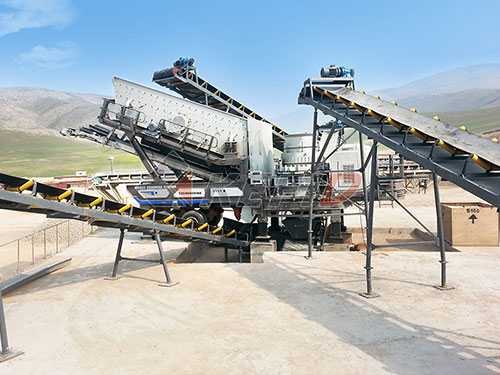

Targeting: Commercial Buyers, Plant Managers, and Engineering Contractors in Sand & Gravel Mining
1. Addressing Core Operational Challenges in Aggregate Production
Managing a sand and gravel operation requires balancing relentless production demands with stringent control over profitability. Industry data indicates that unplanned downtime and inconsistent product quality are primary drivers of eroded margins. Are you facing these specific challenges?
High Wear Part Costs & Unscheduled Stops: Abrasive silica and aggregate materials degrade equipment rapidly. Frequent component failure on primary crushers or screens leads to production halts, costing an average of $1,800 per hour in lost output and emergency maintenance.
Inefficient Material Classification: Inaccurate sizing from underperforming screening equipment results in product contamination. This leads to load rejections, premium product being downgraded, and an inability to meet tight specifications for concrete or asphalt mixes.
Excessive Fines Generation & Yield Loss: Improper crushing chamber geometry or excessive crusher speed creates more fine material than marketable product, directly reducing the yield of highvalue coarse aggregates.
High Energy Consumption per Ton: Older, nonoptimized crushing circuits can consume 3040% more power per ton of processed material, making energy a topthree operational expense.
Rigid Plant Layout & Scalability Limits: Fixed conveyor systems and stationary primary units complicate site progression and make it difficult to economically process satellite deposits, limiting reserve life.
The central question is: how can your operation increase throughput tonnage while simultaneously gaining control over costperton metrics?
2. Product Overview: HighCapacity Mobile Cone Crusher Plant
This solution is a trackmounted, closedcircuit cone crusher and screening plant designed for secondary and tertiary crushing in sand and gravel applications. It processes feed material from a primary crusher into precisely sized aggregates.
Operational Workflow:
1. Feed Acceptance: Sized feed (typically 5" / 125mm) from a primary jaw crusher is delivered via excavator or wheel loader into the integrated feed hopper.
2. ClosedCircuit Crushing & Sizing: Material is crushed in the highperformance cone crusher chamber. The entire output is conveyed to an onboard sizing screen.
3. Product Separation: The tripledeck screen separates output into multiple specification products (e.g., ¾" chip, concrete sand, drain rock).
4. Recirculation & Stockpiling: Oversize material is automatically recirculated back to the crusher inlet (closedcircuit operation). Onspec material is conveyed to designated stockpiles via radial conveyors.
Application Scope & Limitations:
Scope: Ideal for producing spec aggregates for road base, concrete, asphalt, and drainage applications. Excels in processing hard, abrasive materials like granite, quartzite, and river gravel.
Limitations: Not designed as a primary crusher for runofquarry shot rock exceeding recommended feed size. Optimal performance requires consistent feed gradation and controlled moisture content to prevent screen blinding.
3. Core Features: Engineered for Aggregate Profitability
Advanced Crushing Chamber Design | Technical Basis: Laminated crushing principle with optimized kinematics | Operational Benefit: Produces a wellshaped, cubicle product with reduced flakiness index and controlled fines generation. | ROI Impact: Increases saleable product yield by up to 15% by minimizing wasteful fines and improving particle shape for premium applications.
Onboard TripleDeck Screening System | Technical Basis: Highfrequency vibration with adjustable screen angle and throw | Operational Benefit: Enables simultaneous production of up to four calibrated products in a single pass with high separation accuracy. | ROI Impact: Eliminates the need for standalone screening plants, reducing capital outlay and improving overall site footprint efficiency.
Direct Hydraulic Drive System | Technical Basis: Variablespeed hydraulic drive for the crusher and conveyors powered directly from the track engine | Operational Benefit: Eliminates Vbelts, reducers, and clutch components prone to wear and failure. Provides softstart capability and overload protection. | ROI Impact: Lowers maintenance costs by an estimated 40% on drive components and reduces risk of catastrophic failure from tramp metal.

PLCBased Intelligent Control System | Technical Basis: Automated process control with realtime feedback on crusher load, power draw, and pressure | Operational Benefit: Operators can optimize CSS (Closed Side Setting) onthefly for different products; system autoregulates feed rate to prevent chamber overload. | ROI Impact: Maximizes throughput while protecting the machine; reduces operator skill dependency and training overhead.
Track Mobility & Rapid Setup | Technical Basis: Heavyduty crawler tracks with hydraulic setup legs | Operational Benefit: Full plant relocation between processing zones or sites can be completed in under 30 minutes by a single operator. | ROI Impact: Enables efficient mining of multiple pit faces or contract processing at disparate sites with one machine fleet, maximizing asset utilization.
4. Competitive Advantages
| Performance Metric | Industry Standard (Fixed Plant / Older Mobile Design) | Mobile Cone Crusher Plant Solution | Advantage |
| : | : | : | : |
| Setup / Relocation Time | 816 hours (crew dependent) / 24 hours | 80% improvement |
| Power Consumption per Tonne Crushed| ~2.1 kWh/t (secondary/tertiary stage)| ~1.7 kWh/t (fieldverified average)| ~19% improvement |
| Wear Part Life (Manganese Liners) | ~400k tonnes (variable based on abrasiveness) |>550k tonnes (in comparable abrasive feed) |>37% improvement |
| Product Yield (+4 Mesh Spec Material)| Baseline (~75%) |>85% with optimized chamber/screen combo |>13% increase in premium product |
5. Technical Specifications
Crusher Model: HighPerformance Cone Crusher
Recommended Maximum Feed Size: 125mm (5")
Crusher Drive Power: 300 kW (400 HP)
Total Installed Power (Plant): Tier IV Final / Stage V Compliant Diesel Engine
Hopper Capacity: 8m³ (10.5 yd³)
Main Discharge Conveyor: Belt width 1200mm (48"), Hydraulic folding & radial slew
Screen Size: Triple deck vibratory screen; area of each deck
Transport Dimensions (L x W x H): Approximately Length x Width x Height
Operating Weight: ~50 tonnes
Operating Temperature Range: 20°C to +45°C (4°F to +113°F)
6.Application Scenarios
LargeScale Alluvial Gravel Operation
Challenge: A Midwest producer needed higher onspec yield from very abrasive river gravel while reducing plant footprint to comply with wetland setbacks.
Solution: Two mobile cone crusher plants were deployed in a parallel configuration downstream of primary jaws, replacing an aging fixed secondary circuit.
Results: Yield of +¼" chip increased by 12%. The mobile setup allowed progressive pit advancement without conveyor reengineering. Fuel consumption dropped by an estimated $11k monthly across both units.
Granite Quarry Diversifying Product Lines
Challenge: A quarry producing primarily road base sought to enter the concrete aggregate market but lacked precise sizing capability for washed chips.
Solution: Integration of one mobile cone crusher plant equipped with a highfrequency wash screen as a dedicated tertiary circuit.
Results: Enabled production of three new certified concrete stone products within six weeks of deployment without major site modification.Rejected loads due to gradation fell to near zero.
7.Commercial Considerations
Equipment pricing is structured around configuration options that match your specific material profile:
- Base Configuration Tier includes core cone crusher plant with standard screening media suitable for most general aggregate duties.
- Premium Abrasion Package Tier adds upgraded wear liners,crusher automation,and heavyduty conveyor belts—recommended for operations processing highsilica materials (>70% SiO2).
- Integrated Washing Module Tier incorporates spray bars,sump,and dewatering cyclone(s),essential for producing specification mason or concrete sand.Optional features include remote monitoring telematics,dust suppression cannons,and magnet systems.Service packages range from basic scheduled maintenance plans(parts+labor)to comprehensive fullservice contracts covering wear parts.Financing options including operating leases,tailored rentaltoown agreements,and projectspecific capital loans are available through established partners.
8.Frequently Asked Questions
Q1:What upstream equipment is required?
A1.This unit functions as secondary/tertiary stage machinery.It requires consistent,sized feed typically provided by a tracked jaw crusher or large stationary primary.A wheel loader or excavator is used for charging the integrated hopper.
Q2:What are realistic production outputs?
A2.Tonnage varies significantly based on feed material hardness,crusher CSS setting,and desired product curve.In mediumhard abrasive gravel,a realistic spec range is between180250 tonnes per hour when producing two spec products plus recirculating load.Field data sheets are available upon request detailing specific test results.
Q3:What level of operator training is required?
A3.The PLC control system simplifies operation.Basic training focuses on daily walkaround checks,screen media inspection/changing,and using the touchscreen interface.Most operators become proficient within three shifts.Comprehensive onsite training modules are included upon commissioning.
Q4:What does routine maintenance involve?
A4.Daily greasing intervals have been engineered out.The focus shifts to weekly visual inspections of wear liners,belt tracking,and hydraulic system checks.Oil sample analysis intervals are recommended at500hour increments.Predictive maintenance via remote monitoring further schedules interventions based on actual condition rather than fixed hours.
Q5:What lead time can we expect from order placement?
A5.For standard configurations,inventory allows delivery within810 weeks.Customconfigured units require1216 weeks lead time.A detailed project timeline will be provided upon application review