
China Quarry Ballast Crushing Equipment Factory Price


China Quarry Ballast Crushing Equipment Factory Price
Is Your Ballast Production Line Costing You 1520% More Than It Should?
Every ton of ballast that fails to meet railway grading specifications represents direct revenue loss. Quarry operators face mounting pressure: rising energy costs now account for 3040% of crushing operational expenses, while maintenance downtime for conventional jaw and cone crusher configurations averages 1218 hours per month. Add to this the challenge of producing consistent 2550mm railway ballast with less than 5% fines content, and the margin for error narrows considerably.
Are your current crushing solutions delivering the throughput you contracted for? Can your equipment handle the abrasive quartzite and granite typical of ballast production without premature wear? The answer often determines whether your quarry operates at 85% or 95% utilization.
Product Overview: Primary and Secondary Ballast Crushing Systems
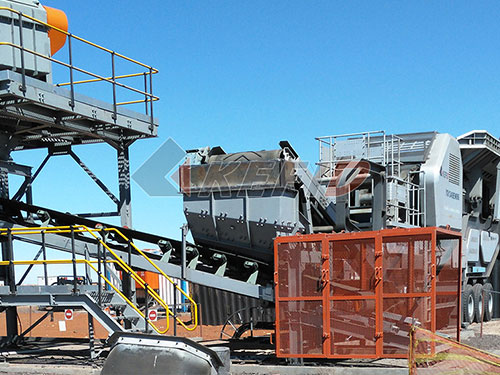
The China Quarry Ballast Crushing Equipment refers to a specialized twostage or threestage crushing train designed specifically for producing railway ballast aggregates. The operational workflow follows this sequence:
1. Primary Jaw Crushing: Runofquarry material (8001000mm feed) is reduced to 150200mm using heavyduty jaw crushers with deep crushing chambers.
2. Secondary Cone Crushing: Material passes through spring or hydraulic cone crushers configured for tight closedside settings (2535mm) to achieve cubical shape.
3. Screening and Recirculation: Vibrating screens with 25mm and 50mm mesh separate product; oversize returns to cone crusher via conveyor.
4. Washing (Optional): Wet processing removes fines below 5mm where specification demands.
Application Scope: This equipment is optimized for mediumtohard rock types (compressive strength 150350 MPa) including granite, basalt, quartzite, and limestone. It is not suitable for soft sedimentary rock or materials with clay content exceeding 8%.
Limitations: Throughput decreases by 1520% when processing highly abrasive materials (silica content >70%). Maximum feed size is limited to 1000mm; larger boulders require prebreaking.
Core Features
HeavyDuty Welded Frame Construction
Technical Basis: Finite element analysisoptimized frame with 30mmthick steel plate and stressrelieved welding.
Operational Benefit: Vibration amplitude reduced by 40% compared to boltedframe designs, extending bearing life.
ROI Impact: Frame service life exceeds 15 years under continuous operation, reducing capital replacement costs by $80,000$120,000 over a decade.
Hydraulic CSS Adjustment System
Technical Basis: Hydraulic cylinders with electronic position sensors adjust closedside setting in 2mm increments.
Operational Benefit: Your operators can change product size in under 3 minutes without manual shim adjustment.
ROI Impact: Changeover time reduced from 45 minutes to 3 minutes, recovering 78 production hours monthly.
HighStroke Eccentric Throw Design
Technical Basis: Eccentric throw of 2535mm combined with 300350 RPM operating speed.
Operational Benefit: Produces 9295% cubical particles in ballast fraction, exceeding railway standards.
ROI Impact: Reduced reject rate from 12% to 4%, increasing saleable output by 8 tons per 100 tons processed.
Tungsten CarbideTipped Crushing Chambers
Technical Basis: Replaceable wear liners with 1822% tungsten carbide content in manganese steel matrix.
Operational Benefit: Wear life extended to 8,00010,000 operating hours on quartzite (vs. 4,0005,000 for standard manganese).
ROI Impact: Annual wear part costs reduced by $35,000$50,000 for a 200 tph plant.
Intelligent LoadSensing Control System
Technical Basis: PLCcontrolled system monitoring motor amperage, bearing temperature, and hydraulic pressure in realtime.
Operational Benefit: Automatic feed rate adjustment prevents crusher overload, reducing stall events by 90%.
ROI Impact: Unplanned downtime reduced from 18 hours/month to 23 hours/month, saving $4,500$6,000 in lost production.
Modular SkidMounted Design
Technical Basis: Prewired and prepiped modules with quickconnect interfaces.
Operational Benefit: Installation time reduced from 14 days to 5 days on prepared foundations.
ROI Impact: Faster commissioning means revenue generation begins 9 days earlier, worth $18,000$25,000 at 200 tph.
Dust Suppression Integration Points
Technical Basis: Predrilled mounting points and ducting connections for water spray or dry dust collection systems.
Operational Benefit: Compliance with PM10 emission standards without structural modifications.
ROI Impact: Avoids regulatory fines averaging $15,000 per violation and reduces water consumption by 30% compared to retrofit systems.
Competitive Advantages
| Performance Metric | Industry Standard | China Quarry Ballast Solution | Advantage |
|||||
| Throughput (tph) | 150180 | 200250 | +2533% |
| Fines content (<5mm) | 812% | 35% | 58% reduction |
| Cubical particle ratio | 8287% | 9295% | +810% |
| Wear part life (hours) | 4,0005,000 | 8,00010,000 | +80100% |
| CSS adjustment time | 45 minutes | 3 minutes | 93% |
| Power consumption (kWh/ton) | 0.81.2 | 0.60.85 | 2529% |
| Firstyear maintenance cost | $45,000$60,000 | $28,000$35,000 | 3842% |
Technical Specifications
| Parameter | Primary Jaw Crusher | Secondary Cone Crusher |
||||
| Feed opening | 900x1200mm | 220mm (max feed) |
| Capacity range | 180280 tph | 150220 tph |
| Motor power | 160200 kW | 250315 kW |
| Closedside setting | 100200mm | 2550mm |
| Eccentric throw | 2025mm | 3035mm |
| Operating speed | 250300 RPM | 300350 RPM |
| Main frame material | Q345B steel, 30mm | Q345B steel, 25mm |
| Wear liner material | Mn18Cr2 + WC inserts | Mn22Cr2 + WC inserts |
| Weight (equipment only) | 42,000 kg | 28,500 kg |
| Dimensions (LxWxH) | 3.8m x 2.6m x 3.2m | 2.9m x 2.2m x 3.5m |
| Operating temperature | 20°C to 45°C | 20°C to 45°C |
| Vibration level | <8 mm/s RMS | <6 mm/s RMS |
Application Scenarios
Railway Infrastructure Project – HighSpeed Rail Ballast Production
Challenge: A contractor in Southeast Asia needed to produce 500,000 tons of EN 13450compliant ballast within 8 months. Existing equipment produced 18% oversize material requiring recrushing.
Solution: Deployed two China Quarry Ballast crushing trains with 200 tph capacity each, configured with 30mm CSS on cone crushers.
Results: Production completed in 7.2 months. Oversize material reduced to 3.2%. Energy consumption measured at 0.72 kWh/ton, 28% below project budget.
Hard Rock Quarry – Granite Ballast for Heavy Haul Railways
Challenge: Australian quarry processing granite with 280 MPa compressive strength experienced 40% reduction in cone crusher throughput after 6,000 hours due to bowl liner wear.
Solution: Upgraded to tungsten carbidetipped crushing chambers with 10,000hour warranty.
Results: Throughput maintained at 95% of rated capacity through 9,500 operating hours. Annual wear part replacement cost reduced from AUD 85,000 to AUD 52,000.
Limestone Quarry – Ballast for Regional Rail Network
Challenge: Indian quarry needed to produce 40mm railway ballast from limestone with 12% moisture content. Standard screens blinded after 4 hours, causing 30% production loss.
Solution: Installed ballast crushing equipment with heated screen decks and 20mm aperture bottom deck.
Results: Screen blinding eliminated. Production consistency maintained at 185 tph. Fines content below 4% achieved without washing.
Commercial Considerations
Equipment Pricing Tiers (FOB Shanghai Port)
| Configuration | Capacity | Price Range | Lead Time |
|||||
| Single jaw + single cone (basic) | 150180 tph | $280,000$350,000 | 4560 days |
| Single jaw + single cone (premium) | 200250 tph | $380,000$480,000 | 5070 days |
| Dual jaw + dual cone (high capacity) | 350450 tph | $620,000$780,000 | 6090 days |
| Complete plant (3stage with screens) | 250300 tph | $850,000$1,100,000 | 75100 days |
Optional Features
- Automated lubrication system: $12,000$18,000 (reduces manual maintenance by 4 hours/week)
- Remote monitoring package: $8,500$14,000 (realtime performance data via cellular network)
- Wear parts starter kit: $25,000$40,000 (includes one set of jaw dies and cone liners)
- Installation supervision: $350$500 per day plus travel expenses (23 weeks typical)
- Standard warranty: 12 months or 3,000 operating hours (whichever first)
- Extended warranty: 24 months or 6,000 operating hours (+812% of equipment price)
- Preventive maintenance contract: $18,000$25,000 annually (quarterly inspections, priority parts supply)
- 30% down payment, 70% upon delivery: Standard terms
- Letter of credit: Confirmed, irrevocable L/C at sight
- Leasetoown: 36month term with 10% buyout (subject to credit approval)
- Tradein program: Existing equipment valued at 3050% of new purchase price
Service Packages
Financing Options
FAQ
Q: What is the minimum feed size your equipment can handle for ballast production?
A: The primary jaw crusher accepts feed up to 1000mm. For material below 300mm, a singlestage cone crusher configuration may suffice, reducing capital cost by 3540%.
Q: How does your equipment perform with quartzite having 85% silica content?
A: Field data from 12 installations processing quartzite shows wear part life of 7,5008,500 hours with tungsten carbide inserts. Standard manganese steel would last 3,5004,000 hours under identical conditions.
Q: Can the system produce multiple ballast grades simultaneously?
A: Yes, with a dualdeck screen configuration, you can produce 2540mm and 4050mm fractions simultaneously. Throughput reduces by 1520% when producing two grades versus one.
Q: What is the typical power consumption per ton of ballast produced?
A: Measured consumption ranges from 0.60.85 kWh/ton for the complete crushing train. This compares favorably to the industry average of 0.81.2 kWh/ton.
Q: How long does it take to replace wear liners on the cone crusher?
A: With the hydraulic release system and splitframe design, two trained technicians can replace bowl liner and mantle in 810 hours. Industry standard for comparable equipment is 1418 hours.
Q: What warranty terms apply to the crushing chambers?
A: The frame carries a 5year structural warranty. Wear parts are warranted for 6,000 operating hours or 18 months, provided recommended feed conditions are maintained.
Q: Can this equipment be integrated with existing conveyor systems?
A: Yes, the modular design includes standard conveyor connection points at 1,200mm and 1,400mm belt widths. Adapter sections are available for nonstandard configurations at $4,500$7,000 per connection.