
China Coke Vibration Screen Dealer
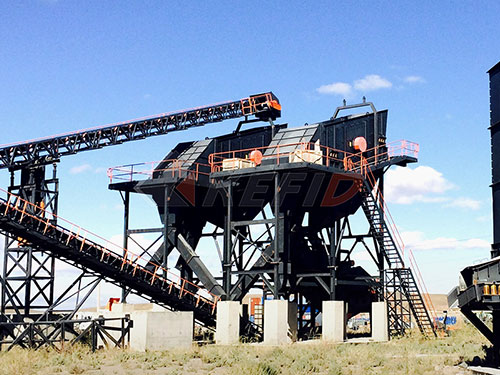

China Coke Vibration Screen: HighCapacity Sizing Solutions for Metallurgical Processing
The Challenge: When Inefficient Screening Becomes a Production Bottleneck
Your coking operation faces relentless pressure to maintain throughput while meeting strict metallurgical specifications. Yet, many operators struggle with:
- Screen blinding and pegging that reduces effective screening area by up to 30%, forcing frequent manual cleaning and unplanned downtime that costs an estimated $2,000–$5,000 per hour in lost production
- Inconsistent product sizing that leads to customer rejections or penalties—offspec coke can trigger contract deductions of 3–7% of shipment value
- Premature screen deck wear from abrasive coke particles, requiring deck replacement every 6–8 months instead of the expected 12–18 months
- Elevated fines content in your lump coke product, reducing its market value by $15–$25 per ton
- Vibrationinduced structural fatigue that shortens equipment lifespan and increases maintenance frequency
- Variable Frequency Drive (VFD): $8,000–$15,000 additional, enables speed adjustment for changing feed conditions
- Remote Monitoring System: $5,000–$10,000, provides realtime vibration and temperature data
- Automatic Lubrication System: $3,500–$6,000, reduces manual maintenance requirements
- Spare Parts Package: $8,000–$20,000, includes mesh decks, springs, and bearings for 12 months operation
- Standard Warranty: 12 months parts and labor
- Extended Warranty: Up to 36 months with annual service contract
- Preventive Maintenance Program: Quarterly inspections and scheduled component replacement
- Operator Training: Onsite training for 2–4 operators included with equipment purchase
- Letter of Credit (L/C): Standard for international transactions
- 30/70 Payment Terms: 30% deposit, 70% against Bill of Lading
- Equipment Leasing: Available through partner financial institutions for qualified buyers
- TradeIn Programs: Credit for existing screening equipment toward new purchases
Are these issues eroding your margins? A properly engineered coke vibration screen from a qualified China dealer can address these operational pain points while improving your overall plant efficiency.
Product Overview: The China Coke Vibration Screen
The China coke vibration screen is a heavyduty circular or linear motion screening system specifically engineered for classifying metallurgical coke, nut coke, and coke breeze. It operates on the principle of controlled vibration frequency and amplitude to stratify and separate coke particles by size.
Operational Workflow
1. Feed Introduction: Raw coke (typically 0–80mm) enters the screen feed box via chute or conveyor, distributed evenly across the full deck width
2. Stratification: Vibration energy causes smaller particles to migrate downward through the material bed toward the screen surface
3. Classification: Material separates through multiple deck levels—typically 2–4 decks—producing graded fractions (e.g., +80mm, 40–80mm, 20–40mm, 10–20mm, 10mm)
4. Discharge: Each fraction exits through dedicated discharge spouts to downstream conveyors or storage bins
5. Oversize Recirculation: Oversized material routes back to crushers for further size reduction
Application Scope
Suitable for: Metallurgical coke classification, foundry coke sizing, petroleum coke processing, sinter screening, and other abrasive mineral applications.
Limitations: Not recommended for extremely sticky materials above 15% moisture content, or for applications requiring precise separation below 3mm without additional fine screening equipment.
Core Features
HighTensile Woven Mesh Decks | Technical Basis: Spring steel wire (65Mn or 304 stainless) with optimized aperture geometry | Operational Benefit: Resists abrasion from sharpedged coke particles, maintaining open area for consistent screening efficiency | ROI Impact: Deck service life extended 40–60% compared to standard mild steel mesh, reducing replacement costs by approximately $8,000–$12,000 annually
DualMass Vibration System | Technical Basis: Counterrotating eccentric weights generating linear or circular motion at 750–900 RPM | Operational Benefit: Provides consistent gforce (4.5–6.0 G) across the entire deck surface, eliminating dead zones that reduce effective screening area | ROI Impact: Screening efficiency improved to 92–95%, reducing recirculation load and increasing overall plant throughput by 8–12%
QuickRelease Tensioning Mechanism | Technical Basis: Hydraulic or wedgetype tensioning system with quickdisconnect clamps | Operational Benefit: Deck changeover completed in 45–60 minutes versus 4–6 hours on conventional screens | ROI Impact: Reduces changeover downtime by 75%, recovering approximately 30–40 production hours annually
DustTight Sealing System | Technical Basis: Multilip polyurethane seals at all joints and inspection doors | Operational Benefit: Contains fugitive coke dust within the screening enclosure, improving workplace air quality and reducing cleanup costs | ROI Impact: Lower environmental compliance costs and reduced respiratory protection requirements for operators
Adjustable Stroke and Angle | Technical Basis: Variable eccentric weight configuration and screen inclination adjustment (15–25°) | Operational Benefit: Operators can finetune screening parameters based on coke moisture content and particle shape without changing equipment | ROI Impact: Adaptability to varying feed conditions reduces the need for standby screening capacity
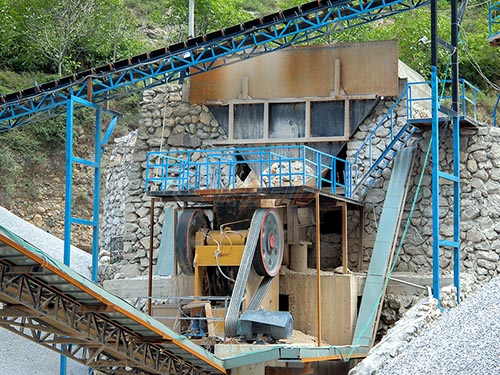
WearResistant Liner Protection | Technical Basis: 12–16mm thick ceramic or AR500 steel liners at feed impact zones | Operational Benefit: Protects the screen body from impact damage and abrasive wear at material entry points | ROI Impact: Extends screen body service life to 10+ years, avoiding capital replacement costs of $80,000–$150,000
Modular Deck Frame Design | Technical Basis: Bolttogether deck frames with interchangeable panels | Operational Benefit: Damaged sections can be replaced individually rather than replacing entire decks | ROI Impact: Reduces spare parts inventory costs by 30% and shortens repair time by 50%
Competitive Advantages
| Performance Metric | Industry Standard | China Coke Vibration Screen | Advantage |
|||||
| Screening Efficiency | 80–85% | 92–95% | +10–15% |
| Deck Service Life | 6–8 months | 12–18 months | +50–100% |
| Changeover Time | 4–6 hours | 45–60 minutes | 75% |
| Availability (Uptime) | 85–90% | 93–96% | +5–8% |
| Noise Level | 90–95 dB(A) | 82–85 dB(A) | 8–10 dB(A) |
| Energy Consumption | 15–22 kW | 11–15 kW | 20–30% |
| Maintenance Frequency | Monthly | Quarterly | 66% |
Technical Specifications
| Parameter | Specification |
|||
| Screening Area | 6–30 m² (configurable) |
| Number of Decks | 2–4 |
| Capacity Range | 50–500 t/h (depending on cut size and feed composition) |
| Cut Point Range | 3–80 mm |
| Vibration Frequency | 750–900 RPM |
| Amplitude (Stroke) | 8–12 mm |
| Motor Power | 11–30 kW per drive unit |
| Screen Inclination | 15–25° (adjustable) |
| Material of Construction | Q235B body with 65Mn/304 mesh decks |
| Overall Dimensions | 4.5–9.0m (L) × 2.0–3.5m (W) × 2.5–4.0m (H) |
| Operating Temperature | 20°C to +60°C |
| Dust Sealing | Full enclosure with polyurethane seals |
| Noise Level | ≤85 dB(A) at 1m distance |
Application Scenarios
Integrated Steel Mill Coke Classification | Challenge: A 2.5 Mt/yr steel plant required consistent 40–80mm coke fraction for blast furnace use, but existing screens delivered only 78% efficiency, causing furnace instability and higher coke rates | Solution: Installation of two 15m² China coke vibration screens with 3deck configuration processing 220 t/h each | Results: Screening efficiency improved to 94%, blast furnace coke rate reduced by 12 kg/tHM, annual savings of $1.8 million in coke consumption
Independent Coke Producer – Export Market | Challenge: A merchant coke producer faced contract penalties for excessive fines (10mm) in export lump coke shipments, with fines content averaging 8.5% against the 5% specification | Solution: Upgraded to China coke vibration screens with 4deck configuration and optimized stroke settings | Results: Fines content reduced to 4.2%, eliminating penalty deductions worth $420,000 annually and improving product premium by $6/ton
Foundry Coke Processing Facility | Challenge: A foundry coke processor needed precise 60–100mm sizing for cupola operations but struggled with screen deck wear and frequent downtime | Solution: Deployed China coke vibration screens with ceramiclined impact zones and hightensile mesh decks | Results: Deck life extended from 7 to 16 months, availability improved to 95%, maintenance costs reduced by $65,000 per year
Commercial Considerations

Equipment Pricing Tiers
| Configuration | Price Range (USD) | Suitable For |
||||
| Standard 2deck, 10m² | $45,000–$65,000 | Small processors, 50–100 t/h |
| Industrial 3deck, 15m² | $75,000–$110,000 | Midsize operations, 150–250 t/h |
| Heavyduty 4deck, 25m²+ | $130,000–$190,000 | Large steel mills, 300–500 t/h |
Optional Features
Service Packages
Financing Options
FAQ
Q1: How does the China coke vibration screen handle varying moisture content in coke feed?
The screen's adjustable amplitude and frequency allow operators to compensate for moisture variations between 2–8%. For higher moisture conditions, increasing vibration intensity and adjusting deck angle maintains screening efficiency. Field data shows efficiency remains above 88% even at 8% moisture when properly configured.
Q2: What is the typical lead time for delivery from a China dealer?
Standard configurations ship within 45–60 days from order confirmation. Customengineered solutions typically require 75–90 days. Expedited production is available for urgent requirements at a 5–8% premium.
Q3: Can existing screening systems be retrofitted with China coke vibration screen components?
Yes. Many components—including mesh decks, vibration motors, and sealing systems—are designed for retrofit compatibility with major OEM equipment. A site assessment determines specific interchangeability.
Q4: What are the installation requirements for this equipment?
Installation requires a reinforced concrete foundation capable of supporting 2–3 times the static equipment weight, minimum 4m ceiling clearance, and access for crane lifting. Typical installation time is 5–7 days with a 3person crew.
Q5: How does the total cost of ownership compare to European or Japanese alternatives?
Initial purchase price is typically 30–40% lower than equivalent European or Japanese equipment. Including maintenance, spare parts, and energy costs over a 10year lifecycle, total cost of ownership is approximately 25–35% lower, based on comparative operational data.
Q6: What aftersales support is available from China dealers?
Comprehensive support includes: 24hour remote technical assistance, regional service engineers for onsite support within 48 hours, and a parts warehouse network stocking critical spares for immediate dispatch.
Q7: How does this equipment perform with different coke types—metallurgical, foundry, or petroleum coke?
The screen handles all coke types effectively. Metallurgical coke (hardness 60–70 HGI) and foundry coke (hardness 55–65 HGI) perform similarly. Petroleum coke, being more abrasive, requires the optional ceramiclined impact zones and hightensile mesh for optimal service life.
Performance data referenced from field installations across 40+ coking facilities in China, India, Brazil, and Southeast Asia between 2019–2024. Individual results may vary based on feed characteristics and operating conditions.