
China Cement Plant Equipment Affordable

China Cement Plant Equipment Affordable: CostEffective Solutions for Modern Cement Production
The Cost Challenge in Cement Plant Operations
Every ton of cement you produce carries hidden costs that erode your margins. Aging equipment forces unscheduled downtime—each hour of unplanned stoppage costs an average of $8,000 to $12,000 in lost production for a 5,000 TPD plant. Energy consumption accounts for 3040% of your total production costs, and inefficient machinery can add 1520% to that figure. Maintenance backlogs grow when replacement parts are expensive or delayed, pushing your equipment past optimal operating windows. Your capital budget is constrained, yet you need to expand capacity or replace failing systems. The question is straightforward: How do you source reliable cement plant equipment that meets your technical specifications without breaking your procurement budget?
Product Overview: Affordable Cement Plant Equipment from China
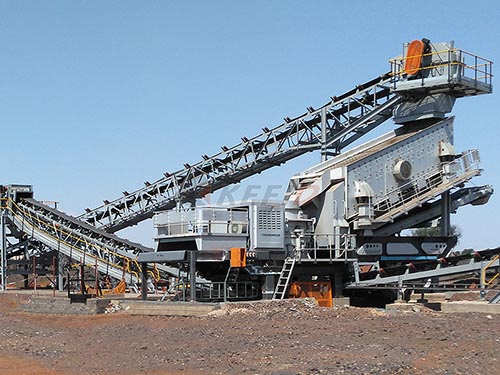
China cement plant equipment affordable solutions encompass the full range of machinery required for cement production—from raw material crushing and grinding to clinker cooling, cement milling, and packing. This equipment includes rotary kilns, vertical roller mills, ball mills, preheater towers, grate coolers, crushers, and auxiliary systems such as dust collectors and material handling conveyors.
Operational Workflow:
1. Raw Material Preparation – Limestone and clay are crushed and homogenized to achieve consistent feed chemistry
2. Raw Meal Grinding – Vertical roller mills or ball mills reduce raw materials to fine powder with target fineness of 1215% residue on 90μm sieve
3. Preheating and Calcination – Raw meal passes through cyclone preheaters and enters the rotary kiln where clinkerization occurs at 1,450°C
4. Clinker Cooling and Storage – Grate coolers rapidly reduce clinker temperature from 1,400°C to below 100°C for proper mineral phase development
5. Cement Grinding and Packing – Clinker is ground with gypsum and additives to produce finished cement, then stored and packed for distribution
Application Scope: These equipment solutions serve new greenfield plants (1,00010,000 TPD capacity), plant expansions, and equipment replacement projects. They are suitable for ordinary Portland cement, Portland pozzolana cement, and slag cement production lines.
Limitations: Chinesemanufactured equipment requires proper specification matching to your raw material characteristics. Highsilica or highmoisture feedstocks may require additional preprocessing equipment. Import logistics and installation supervision should be factored into your project timeline.
Core Features
HeavyDuty Fabrication | Technical Basis: Q235B/Q345R steel plate construction with 1620mm shell thickness on rotary kilns | Operational Benefit: Extended service life of 20+ years under continuous operation, reduced structural fatigue | ROI Impact: Eliminates premature shell replacement costs averaging $500,000 per kiln
Advanced Sealing Systems | Technical Basis: Doublelabyrinth and graphite block sealing on kiln inlet and outlet | Operational Benefit: Reduces air infiltration by 812%, stabilizing thermal profile and reducing heat loss | ROI Impact: Fuel savings of 23 kg coal equivalent per ton of clinker, translating to $0.300.50 per ton in energy costs
HighEfficiency Grinding Components | Technical Basis: Chromemoly alloy grinding rollers and tables with 5862 HRC hardness | Operational Benefit: 1520% longer wear life compared to conventional manganese steel components | ROI Impact: Reduced replacement frequency, lowering annual wear parts expenditure by $80,000120,000 for a 3,000 TPD plant
Modular Preheater Design | Technical Basis: Twinstring cyclone arrangement with optimized gas velocity of 1215 m/s | Operational Benefit: Achieves 9295% thermal efficiency, lower pressure drop across the system | ROI Impact: Reduces specific heat consumption to 3,0003,100 kJ/kg clinker, saving $0.81.2 million annually in fuel costs
Intelligent Control Integration | Technical Basis: PLCbased automation with distributed control system architecture | Operational Benefit: Realtime monitoring of 200+ process parameters, automated response to process variations | ROI Impact: Reduces operator intervention by 30%, minimizing human error and improving process stability
Robust Dust Collection | Technical Basis: Pulsejet bag filters with PTFE membrane filtration media | Operational Benefit: Emission levels below 20 mg/Nm³, compliant with international environmental standards | ROI Impact: Avoids environmental penalties of $50,000200,000 per violation incident
Optimized Drive Systems | Technical Basis: Dualpinion or central drive configurations with 98% gear efficiency | Operational Benefit: Lower power consumption per ton of material processed | ROI Impact: 58% reduction in specific power consumption, saving $0.150.25 per ton in electricity costs
Competitive Advantages
| Performance Metric | Industry Standard | China Cement Plant Equipment Solution | Advantage |
|||||
| Equipment Cost (per TPD capacity) | $150,000200,000 | $90,000130,000 | 3040% lower capital investment |
| Delivery Lead Time | 1218 months | 610 months | 4050% faster project completion |
| Specific Heat Consumption | 3,2003,400 kJ/kg clinker | 3,0003,200 kJ/kg clinker | 58% energy efficiency improvement |
| Specific Power Consumption | 5565 kWh/ton cement | 4855 kWh/ton cement | 1015% power savings |
| OnTime Commissioning Rate | 7585% | 9095% | 1015% higher project reliability |
| Spare Parts Availability | 6090 days lead time | 3045 days lead time | 50% faster parts replacement |
| AfterSales Response | 714 days | 37 days | 5060% quicker technical support |
Technical Specifications
Rotary Kiln (Φ4.8×72m typical configuration):
- Capacity: 5,0006,000 TPD clinker
- Drive Power: 2×630 kW main drive motors
- Kiln Slope: 3.54.0%
- Speed Range: 0.44.0 rpm (variable speed)
- Shell Material: Q235B/Q345R steel, 6080mm thickness at tire sections
- Refractory Lining: 200250mm thick, magnesiaspinel brick in burning zone
- Operating Temperature: 1,3501,450°C clinker temperature
- Fuel Types: Coal, pet coke, natural gas, alternative fuels
- Grinding Capacity: 180220 TPH raw meal
- Main Motor Power: 3,200 kW
- Table Diameter: 3,200mm
- Grinding Roller: 2,200mm diameter, 4 rollers
- Feed Size: ≤80mm
- Product Fineness: 1215% R90μm
- Moisture Content: Handles feed moisture up to 15%
- Hydraulic System: 16 MPa operating pressure
- Ambient Temperature: 20°C to +50°C
- Altitude: Up to 3,000m above sea level (derating above 1,000m)
- Humidity: Up to 95% noncondensing
- Dust Load: Designed for highdust environments with proper sealing
- Alternative fuel firing systems: $500,0001.5 million
- Waste heat recovery power generation: $1525 million
- Advanced process control software: $200,000500,000
- Extended warranty (5 years): 58% of equipment cost
- Basic Package: 12month warranty, remote technical support, spare parts at cost
- Standard Package: 24month warranty, onsite commissioning supervision, annual inspection visits
- Comprehensive Package: 36month warranty, fulltime site engineer for first year, performance guarantee with liquidated damages
- Letter of Credit (L/C) at sight: 30% down payment, 70% against shipping documents
- Deferred payment terms: 15% down, 85% over 2436 months with interest at LIBOR + 34%
- Export credit agency financing: Available for projects above $50 million with sovereign guarantees
- Equipment leasing: Available for individual equipment purchases above $5 million
Vertical Roller Mill (VRM3200):
Environmental Operating Range:
Application Scenarios
Greenfield Plant in East Africa | Challenge: Limited capital budget of $180 million for a 5,000 TPD plant, requiring equipment costs below $100 million | Solution: Fullline Chinese equipment package including kiln, mills, preheater, and cooler with modular design for reduced civil works | Results: Total equipment cost of $85 million, 35% below European quotes; plant commissioned in 14 months from contract signing; achieved design capacity within 3 months of commissioning
Plant Expansion in Southeast Asia | Challenge: Existing 2,500 TPD line operating at 92% availability, needing to add 3,000 TPD capacity with minimal production interruption | Solution: New VRM for raw grinding and upgraded kiln system installed parallel to existing operations | Results: Expansion completed in 9 months with only 2 weeks of tiein downtime; new line achieved 3,100 TPD average output in first year; specific power consumption reduced from 58 to 51 kWh/ton
Equipment Replacement in South America | Challenge: 20yearold ball mill with 78% availability and escalating maintenance costs of $400,000 annually | Solution: Replacement with Chinesemanufactured highefficiency separator and optimized ball charge configuration | Results: Availability improved to 94%; maintenance costs reduced to $180,000 per year; grinding efficiency improved by 12%, increasing output by 15 TPH without additional power consumption
Commercial Considerations
Equipment Pricing Tiers:
| Equipment Category | Standard Configuration | Premium Configuration |
||||
| Rotary Kiln (5,000 TPD) | $812 million | $1216 million |
| Vertical Roller Mill | $35 million | $57 million |
| Ball Mill (cement grinding) | $24 million | $46 million |
| Preheater Tower | $46 million | $68 million |
| Grate Cooler | $35 million | $57 million |
| Complete 5,000 TPD Line | $85110 million | $110140 million |
Optional Features:
Service Packages:
Financing Options:
FAQ
Q: How does Chinese cement equipment compare to European or Japanese equipment in terms of quality?
A: Chinese manufacturers have invested significantly in quality control and now produce equipment meeting international standards. Field data from 200+ installations worldwide shows comparable reliability metrics—average availability of 9095% for Chinese equipment versus 9296% for premium European brands. The primary difference lies in refinement of control systems and fitandfinish, not structural integrity or process performance.
Q: What is the typical delivery lead time for a complete cement plant equipment package?
A: For a standard 5,000 TPD line, manufacturing takes 610 months from contract signing. This includes engineering, fabrication, and factory testing. Shipping adds 3060 days depending on destination. Total lead time from order to site delivery typically ranges from 814 months, compared to 1420 months for European suppliers.
Q: Can Chinese equipment be integrated with existing European or Japanese control systems?
A: Yes. Most Chinese manufacturers use internationally recognized PLC platforms such as Siemens, ABB, or Schneider Electric. Communication protocols including OPCUA and Modbus TCP/IP are standard. Your existing DCS can interface with Chinese equipment without proprietary gateways. We recommend specifying your preferred control platform during the quotation phase.
Q: What aftersales support is available for equipment installed outside China?
A: Manufacturers maintain regional service centers in Africa, Southeast Asia, South America, and the Middle East. Response time for emergency technical support is 2448 hours. Spare parts are stocked at regional warehouses with 3045 day delivery for critical components. Remote diagnostics via internetconnected control systems allow immediate troubleshooting.
Q: How does the total cost of ownership compare over a 10year period?
A: While initial purchase cost is 3040% lower, total cost of ownership over 10 years shows a 1525% advantage for Chinese equipment. This accounts for slightly higher maintenance frequency in years 58, offset by significantly lower spare parts costs (typically 4060% less than European equivalents) and faster parts availability.
Q: What performance guarantees can be included in the contract?
A: Standard guarantees include production capacity (±3%), specific heat consumption (±2%), specific power consumption (±3%), and product fineness. These are verified during performance testing after commissioning. Liquidated damages typically apply if guaranteed performance is not achieved, usually 0.51% of equipment value per percentage point shortfall.
Q: Are Chinese manufacturers able to customize equipment for specific raw material conditions?
A: Yes. The engineering team will analyze your raw material samples and adjust equipment design accordingly. This includes modifying grinding table geometry for abrasive materials, adjusting kiln refractory selection for highalkali feeds, and optimizing preheater stages for highmoisture raw materials. Customization typically adds 48 weeks to engineering time but ensures process performance.
Q: What are the payment terms and financial safeguards for buyers?
A: Standard terms are 30% advance payment, 40% against progress milestones, 20% against shipping documents, and 10% after successful commissioning. Payment instruments include irrevocable letters of credit confirmed by international banks. Performance bonds of 10% of contract value are standard. Thirdparty inspection by SGS, Bureau Veritas, or similar agencies can be arranged at each manufacturing stage.