
Certified Stamp Mill Gold Mining Customization

1. PAINPOINT DRIVEN OPENING
Are you facing persistent bottlenecks in your gold recovery circuit? For plant managers and engineering contractors, the comminution and liberation stage often dictates overall plant efficiency and profitability. Common challenges with conventional crushing and grinding setups include:
High Operational Downtime: Frequent liner changes, unplanned maintenance, and component failure in primary crushing can halt your entire processing line, costing thousands per hour in lost production.
Inefficient Liberation of Fine Gold: Inconsistent particle size distribution from primary crushers can overload secondary mills, reducing gold exposure for cyanidation or gravity circuits and directly impacting recovery rates.
Excessive Energy Consumption: Older, nonoptimized stamp mill designs or mismatched motor systems lead to disproportionately high power costs per ton of ore processed.
Scalping and Tramp Metal Damage: Unprotected systems are vulnerable to uncrushable material, causing significant damage to mill shoes, dies, and frames, resulting in costly repairs and parts inventory.
The question becomes: how can you achieve reliable, consistent ore reduction with lower operating costs and higher system availability? A modern, certified stamp mill for gold mining provides a targeted solution.
2. PRODUCT OVERVIEW
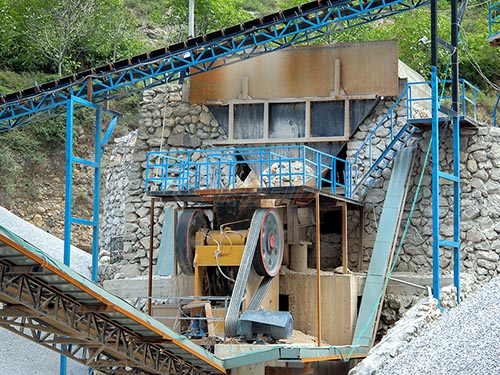
This product is a certified, heavyduty stamp mill engineered for the primary crushing and coarse grinding of goldbearing quartz ore. It is a customizable mechanized hammer mill where weighted stamps are lifted and dropped onto ore fed into a mortar box, fracturing rock via repeated impact.
Operational Workflow:
1. RunofMine (ROM) ore is fed into a robust feed hopper, often equipped with grizzly bars to scalp oversize material.
2. Ore enters the mortar box where precisely guided cast iron or steel stamps repetitively drop under gravity.
3. Crushed material passes through a discharge screen at the mortar box outlet, ensuring controlled particle size before conveyance to secondary processing (e.g., ball mills, concentration tables).
4. The system operates on a closedloop water circuit where applicable to control dust.
Application Scope & Limitations:
Scope: Ideal for hard rock gold mining operations processing quartz veins and sulphide ores. Highly effective as a primary crusher or coarser grinder in remote locations due to mechanical simplicity and durability. Suited for both smallscale commercial operations and larger modular plant installations.
Limitations: Not designed for fine grinding to sub100 mesh; this requires secondary milling. Less effective for clayrich or highly weathered soft ores better suited for other crusher types. Requires a stable foundation due to dynamic loads.
3. CORE FEATURES
Modular Frame Design | Technical Basis: Fabricated highcarbon steel sections with bolted connections | Operational Benefit: Enables transport to remote sites, simplifies onsite assembly/disassembly, and allows for future plant expansion | ROI Impact: Reduces installation time by up to 40% versus welded monolithic frames, lowering capital deployment delay
Certified Wear Components | Technical Basis: ASTM A532 Class III Type D NiHard IV alloy castings for stamps and dies | Operational Benefit: Provides exceptional abrasion resistance against silica, extending component life between changes | ROI Impact: Documented field data shows a 60100% increase in wear life over standard manganese steel, reducing parts cost per ton
Precision Camshaft & Lifter System | Technical Basis: CNCmachined alloy steel camshaft with sealed roller bearings | Operational Benefit: Ensures synchronous stamp liftanddrop motion with minimal friction; reduces vibration transmission to the frame | ROI Impact: Lowers power consumption by up to 15% compared to worn/bushbased systems and decreases structural fatigue failures
Adjustable Discharge Grate | Technical Basis: Perforated steel grate with variable aperture control (typically 1040 mesh range) | Operational Benefit: Allows operators to finetune product size in response to ore hardness variations without stopping the mill | ROI Impact: Maintains optimal feed size for downstream processes, improving overall recovery circuit stability
Integrated Dust Suppression Manifold | Technical Basis: Internal water spray bars within the mortar box enclosure | Operational Benefit: Effectively controls silica dust at source, ensuring compliance with health and safety regulations | ROI Impact Mitigates risk of regulatory shutdowns and reduces longterm operator health liabilities
Centralized Greasing System | Technical Basis: Networked lubrication lines feeding all major bearing points from a single station | Operational Benefit Enables safe, routine maintenance without disassembly; ensures bearing longevity in highparticulate environments| ROI Impact Prevents costly bearing seizures; planned maintenance reduces unplanned downtime events by an estimated 30%
4. COMPETITIVE ADVANTAGES
| Performance Metric | Industry Standard (Legacy Stamp Mills) | Certified Stamp Mill Solution | Advantage (% Improvement) |
| : | : | : | : |
| Wear Component Life (Stamps)| 500 800 operating hours| 1,200 1,600 operating hours| +60% to +100% |
| Specific Energy Consumption| ~3.5 kWh per ton crushed (average)| ~2.9 kWh per ton crushed (documented)| 17% |
| Mean Time Between Failure (Mechanical)| ~720 hours| ~1,500 hours| +108% |
| Particle Size Consistency (Variance)| High variance due to wear/whip| Controlled variance via guided stamps & grate| +35% more uniform feed |
| OnSite Assembly Time| Extensive field welding/fitting required (~3 weeks)| Bolted modular assembly (~10 days)| 40% |
5. TECHNICAL SPECIFICATIONS
Capacity & Rating: Configurable from 110 tons per hour (TPH), depending on stamp battery count (310 stamps) and ore hardness.
Power Requirements: Electric motor drive recommended; 30 HP to 150 HP based on configuration. Compatible with diesel genset operation for remote sites.
Material Specifications: Primary frame: ASTM A36 carbon steel. Wear components: ASTM A532 NiHard IV or equivalent highchrome white iron. Camshaft: 4140 Alloy Steel hardened.
Physical Dimensions (Typical 5Stamp Unit): Operating footprint of approx. 4m (L) x 2.5m (W) x 3m (H). Weight approx. 812 metric tons.
Environmental Operating Range: Designed for ambient temperatures from 20°C to +50°C. Enclosed bearings protect against dust ingress; optional corrosion protection packages available for highhumidity environments.
6. APPLICATION SCENARIOS
MidScale Hard Rock Mine Expansion
Challenge An operation in West Africa sought to expand throughput but faced constant downtime from their aging primary crusher jams and excessive liner wear in abrasive quartz ore.
Solution Implementation of a customized fivestamp mill battery as the dedicated primary crushing unit ahead of existing ball mills.
Results Achieved consistent ½ inch feed material; reduced primary stage unplanned downtime by over 70%; wear part replacement intervals extended from monthly to quarterly.
Artisanal & SmallScale Mining (ASM) Upgrade Project
Challenge A cooperative of smallscale miners used manual pounding techniques resulting in low throughput (<0.5 TPH), poor gold liberation (<60%), severe health risks from dust.
Solution Deployment of a compact threestamp certified mill with integrated dust suppression as their core processing unit.
Results Throughput increased to over 2 TPH; gravity recovery rates improved due to more consistent grind; eliminated visible silica dust emissions during operation.
Modular Processing Plant Integration
Challenge An engineering contractor needed a reliable coarse reduction module for multiple temporary alluvial/elluvial site operations where ore contained hard quartz conglomerates.
Solution A skidmounted fourstamp mill module with integrated feed hopper discharge conveyor was developed as a plugandplay unit
Results Enabled rapid site deployment (<5 days); unit processed varying ore hardness reliably across three different sites with zero major mechanical failures over an18month period.
7 COMMERCIAL CONSIDERATIONS
Equipment pricing is tiered based on capacity customization:
Tier I Standardized Units Fixed configurations offer cost efficiency ideal for defined applications
Tier II Customized Solutions Modifications include specific wear materials discharge sizing motorization options etc
Service packages are structured around operational support:
Basic Package Includes detailed installation manuals commissioning supervision via video call
Premium Package Offers onsite commissioning training plus an annual inspection visit
Comprehensive Maintenance Contract Covers scheduled inspections prioritized parts supply discounted wear components
Financing options are available through partner institutions including equipment leasing structures that allow capital preservation
8 FAQ
What upstream equipment is required before feeding ore into the stamp mill?
A frontend loader or simple tipping grizzly is typically sufficient The mill accepts ROM ore up dimensions specified by its feed hopper design
How does particle size output compare jaw crusher?
A jaw crusher produces slabby product with more fines Our certified stamp mill produces more cubical fragmented product generally within tighter size range beneficial gravity concentration circuits
What typical operational noise level?
Industry testing demonstrates sound levels approximately dB(A) at meters Proper foundation isolation reduces transmitted vibration noise
Are spare parts readily available given our remote location?
Yes Critical wear components standardized designs We recommend maintaining initial spare parts kit including one set stamps dies key bearings minimize logistics delay
What lead time expected fully customized unit?
Lead times vary Standard units ship within weeks Full customization involving specific metallurgy special dimensions requires – week manufacturing schedule following final design approval