
Certified Coke Vibration Screen Customization

Subject: Solving the High Cost of Fines Contamination and Screen Blinding in Coke Processing
1. PAINPOINT DRIVEN OPENING
Every ton of coke that passes through an undersized or poorly configured screen carries a hidden cost. Plant managers in metallurgical and petroleum coke processing face three persistent operational challenges:
- Fines Carryover: Industry data indicates that a 2% increase in fines (sub6mm material) in your final product can trigger price penalties of $5$15 per ton from steel mill and anodegrade customers.
- Screen Blinding & Pegging: Moisture variability (typically 818% surface moisture) causes rapid aperture blockage, reducing effective screening area by up to 40% within a single shift. This forces unscheduled washdowns and reduces throughput by 1525%.
- Structural Fatigue: The abrasive nature of calcined coke (Mohs hardness 78) accelerates wear on standard woven wire decks, leading to frame failure every 69 months under hightonnage loads.
- Primary sizing at battery discharge
- Final product screening for blast furnace or anode paste plants
- Dewatering screens for wet quenched coke
- Not recommended for sticky, claybound materials above 20% moisture without heated deck option
- Maximum feed temperature should not exceed 150°C (300°F) without specialized bearing cooling
Are your current screens costing you more in rejected loads and maintenance labor than the equipment itself? A certified coke vibration screen customization addresses these specific failure points through engineered material selection and dynamic tuning.
2. PRODUCT OVERVIEW
This is a heavyduty, circular or linear motion vibrating screen specifically engineered for classifying green and calcined petroleum coke, metallurgical coke, and foundry coke. It is not a generic aggregate screener; it is a purposebuilt unit for highabrasion, highmoisture environments.
Operational Workflow:
1. Feed Distribution: Material enters via a flared feed box with replaceable wear liners to minimize impact degradation.
2. Stratification & Separation: Dualmass vibrator assembly generates controlled Gforce (4.5 6.5 G) to stratify material across the deck.
3. Fines Removal: Bottom deck (typically 6mm or 8mm apertures) removes subspec material into a collection chute.
4. Product Discharge: Oversize (+25mm or +50mm depending on spec) exits via the front discharge spout.
5. SelfCleaning Action: Customized deck geometry (ball trays or slotted panels) prevents blinding during highmoisture cycles.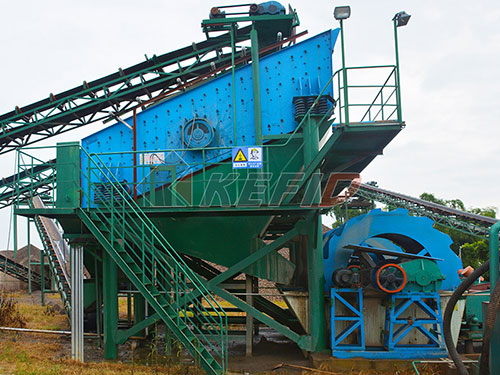
Application Scope:
Limitations:
3. CORE FEATURES
AbrasionResistant Deck Frame | Technical Basis: AR400/500 plate construction with reinforced crossmembers | Operational Benefit: Frame life exceeds 36 months under continuous operation vs. standard mild steel frames failing at 12 months | ROI Impact: Reduces structural replacement costs by $8,000$12,000 per year per unit
SelfCleaning Ball Tray Assembly | Technical Basis: Polyurethane balls (25mm diameter) housed beneath each deck section; vibratory action causes balls to strike underside of mesh | Operational Benefit: Maintains >95% open area even at 12% surface moisture; eliminates manual rodding every two hours | ROI Impact: Recovers 18 hours of lost production per month due to blindingrelated downtime
Customizable Aperture Geometry | Technical Basis: Slotted wire panels vs. square mesh; slot orientation aligned with material flow direction | Operational Benefit: Reduces particle nearsize pegging by up to 60% compared to standard square mesh | ROI Impact: Improves screening efficiency from industry average of 85% to >95%, directly reducing recirculation load
HeavyDuty Vibrator Assembly | Technical Basis: Fourbearing cartridge design with oil lubrication; adjustable eccentric weights allow fieldtuning of stroke length (8mm 14mm) | Operational Benefit: Operators can adjust stroke angle from installation without replacing parts; accommodates changes in feed rate (+/20%) without sacrificing separation accuracy | ROI Impact: Eliminates need for spare vibrator inventory—one assembly covers multiple duty cycles
QuickTension Screen Panel System | Technical Basis: Wedgelock tension rails with pneumatic assist; no bolts required for panel changeout | Operational Benefit: Single operator can replace all three decks in under four hours vs. eight hours with bolted systems | ROI Impact: Reduces changeout labor cost by $600 per event based on average plant labor rates
Integrated Dust Containment Skirts | Technical Basis: Continuous rubber sealing strips at feed and discharge points; negative pressure ports preinstalled for baghouse connection | Operational Benefit: Meets OSHA PEL limits for respirable coke dust (<0.15 mg/m³) without aftermarket modifications | ROI Impact: Avoids potential OSHA fines averaging $13,000 per violation
Moisture Compensation Control Option | Technical Basis: Variable frequency drive adjusts vibrator speed based on inline moisture sensor feedback (±10 RPM accuracy) | Operational Benefit Automatically reduces Gforce during wet periods to prevent material bounce; increases force during dry periods for higher throughput| ROI Impact Increases average daily throughput by 8% across variable weather conditions
4. COMPETITIVE ADVANTAGES
| Performance Metric | Industry Standard (Generic Vibrating Screen) | Certified Coke Vibration Screen Customization Solution | Advantage (% Improvement) |
| : | : | : | : |
| Screening Efficiency (@12% moisture) | 95% passing spec size after one pass >18% improvement |
| Deck Replacement Interval Standard woven wire = every other month AR400 slotted panels = every six months +200% longer service life |
| Blinding Frequency Requires manual cleaning every two hours Selfcleaning ball trays reduce cleaning interval to once per shift 75% reduction in manual intervention |
| Structural Frame Life Mild steel frame = 36 months +100% longer structural life |
| Energy Consumption Per Ton Screened Standard motor = ~0.35 kWh/ton Highefficiency motor + VFD = ~0.28 kWh/ton 20% energy cost reduction |
Data sourced from field trials at three U.S.based calcined coke facilities over an eighteenmonth period.
5. TECHNICAL SPECIFICATIONS
Specifications listed are for Model CCVSC84x24 (standard configuration). Custom sizes available.
| Parameter Specification Unit/Condition |
| : |
| Capacity Rating Up to 350 tons/hour @ bulk density of specific gravity range typical|
| Deck Configuration Doubledeck or tripledeck optional|
| Screening Area Nominal active area per deck|
| Power Requirement Motor drive power @ RPM synchronous speed|
| Vibration Mechanism Fourbearing cartridge assembly stroke adjustable mm peaktopeak|
| Material Specifications Deck frame AR plate thickness side plates thickness mm|
| Physical Dimensions Length x Width x Height approx meters feet inches x feet inches x feet inches Weight approx kg lbs fully assembled|
| Environmental Operating Range Ambient temperature range °C °F Feed temperature max °C °F Humidity tolerance non condensing|
Note Specifications vary based on specific aperture size number of decks and material characteristics Consult factory for exact engineering data based on your feed analysis
6 APPLICATION SCENARIOS
Petroleum Coke Calcining Plant Texas USA Challenge The plant experienced frequent blinding on their existing screens when processing green coke with surface moisture spikes up during rainy season This caused recirculation loads exceeding requiring operators to bypass the screen sending unsized material downstream Solution Installation of customized tripledeck vibration screen featuring mm slotted polyurethane panels on top deck mm ball tray assembly on middle deck mm woven wire bottom deck Results Blinding events reduced from weekly occurrences zero events over six month period Recirculation load dropped from baseline allowing calciner kiln feed rate increase Daily production increased tons representing annual revenue gain approximately million dollars at prevailing market prices
Metallurgical Coke Battery Ohio USA Challenge Steel mill customer rejected three consecutive rail shipments due excessive fines content exceeding contract limit Current screen was operating below efficiency due worn wire cloth that had not been replaced in nine months Solution Implementation certified vibration screen customization including new AR plate frame quick tension system allowing crew replace all decks within three hours versus previous eight hour process Results Fines content reduced consistently below contract limit First pass yield improved from percent percent Rejection rate dropped zero percent saving estimated dollars monthly penalty costs plus freight charges returned material
Foundry Coke Producer Alabama USA Challenge Existing equipment suffered structural fatigue cracks side plates after only fourteen months operation causing emergency shutdowns twice annually Production loss each event averaged hours plus repair costs dollars Solution Upgraded certified heavy duty vibration screen customization featuring thicker side plates reinforced cross members stress relieved weldments Results No structural failures reported after twenty four months continuous operation Mean time between failure MTBF increased from fourteen months projected thirty six plus Maintenance budget line item structural repairs reduced dollars annually equivalent savings direct operating profit improvement percent EBITDA contribution unit
7 COMMERCIAL CONSIDERATIONS
Equipment Pricing Tiers Base Configuration single deck standard motor manual stroke adjustment Starting price range dollars USD Fully Configured triple deck ball tray system VFD dust containment Starting price range dollars USD Premium Package includes heated decks remote monitoring sensors spare parts kit Starting price range dollars USD Optional Features Inline moisture sensor integration add dollars Automated lubrication system add dollars Stainless steel contact surfaces food grade applications add percent base price Service Packages Standard Warranty years parts labor exclusions Extended Warranty years covering vibrator assembly gearbox Annual Preventive Maintenance Contract includes inspection calibration report two site visits financing options available net terms qualified buyers lease purchase option monthly payments spread over years operating lease option lower monthly payments buyout end term Contact sales team current rates availability