
Certified Ball Mill Distributor


1. PAINPOINT DRIVEN OPENING
Are you facing persistent challenges in your grinding circuit that directly impact throughput, maintenance budgets, and product consistency? Common operational hurdles include excessive liner wear leading to frequent, costly shutdowns for replacement. Uncontrolled particle size distribution can compromise downstream recovery rates and final product quality. Rising energy consumption per ton of processed material squeezes operating margins. Vibration and gear issues often signal underlying mechanical failures, resulting in unplanned downtime and lost production.
How can you achieve a more reliable grind with predictable maintenance intervals? Is it possible to improve energy efficiency while maintaining or increasing throughput? The solution lies in selecting a ball mill engineered not just for operation, but for total cost of ownership and process stability.
2. PRODUCT OVERVIEW
This product description details our range of certified industrial ball mills for wet and dry grinding applications in mineral processing, cement production, and industrial minerals. The operational workflow is centered on a robust rotating cylinder containing grinding media (balls). Key steps include: 1) Feed material is introduced through a trunnion or peripheral inlet. 2) The cylinder rotates, lifting and cascading the grinding media to impart impact and attrition forces on the material. 3) Ground product is discharged via peripheral slots, a grate, or through the opposite trunnion.
These ball mills are applied for fine grinding ores, coal, pigments, and other hard materials. They are less suited for ultrafine grinding below 20 microns where specialized equipment like stirred media mills may be more efficient, or for processing highly abrasive materials without specific liner design considerations.
3. CORE FEATURES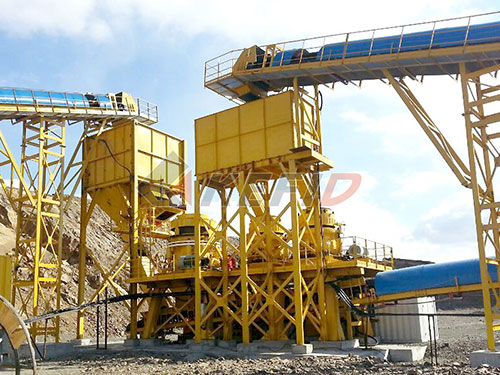
Modular Liner System | Technical Basis: Highchrome alloy steel segments with mechanical locking | Operational Benefit: Reduces liner changeout time by up to 40% compared to welded plates. Allows for targeted wear part inventory. | ROI Impact: Lower labor costs during maintenance shutdowns and reduced production loss.
Precision Gear Drive Alignment | Technical Basis: Laseraligned girth gear and pinion set during assembly with proprietary mounting protocol | Operational Benefit: Minimizes vibration and abnormal gear wear, extending drive train service life by an estimated 30%. | ROI Impact: Avoids costly gear replacements and associated downtime; reduces ongoing lubrication consumption.
Optimized Chamber Geometry | Technical Basis: Computational Fluid Dynamics (CFD) modeling of material flow and grinding media kinetics | Operational Benefit: Promotes efficient cascading action, reducing overgrinding and improving particle size distribution consistency. | ROI Impact: Higher quality feed for downstream processes (e.g., flotation) can improve recovery rates; reduces specific energy consumption (kWh/ton).
Integrated Condition Monitoring Pads | Technical Basis: Embedded sensor mounts at bearing and gear locations compatible with standard vibration/temperature systems | Operational Benefit: Enables predictive maintenance by facilitating realtime health data collection without adhoc installations. | ROI Impact: Transforms maintenance from reactive to planned, preventing catastrophic failures and extending mean time between repairs (MTBR).
DualWave Shell Liners | Technical Basis: Liner profile designed to optimize ball charge trajectory at varying mill speeds | Operational Benefit: Enhances grinding efficiency across a wider range of operational speeds and feed sizes. | ROI Impact: Provides operational flexibility to adjust to varying ore hardness without sacrificing grinding performance.
4. COMPETITIVE ADVANTAGES
| Performance Metric | Industry Standard | Certified Ball Mill Solution | Advantage (% improvement) |
| : | : | : | : |
| Liner Service Life (Abrasive Ore) | ~46 months | 810 months | +6070% |
| Specific Energy Consumption| ~1518 kWh/ton| 1315 kWh/ton| 13% to 17% |
| Mean Time Between Failures (Drive Train)| ~12,000 hours| 16,000+ hours| +33% |
| Planned Maintenance Downtime (Annual)| 810 days| 57 days| 30% to 40% |
Varies based on material grindability index.
5. TECHNICAL SPECIFICATIONS
Capacity Range: From pilotscale 0.5m x 1m models to productionscale mills exceeding 5m diameter x 10m length.
Power Requirements: Motor options from 100 kW to over 10 MW; designed for synchronous or asynchronous motors with compatible gearbox ratios.
Material Specifications: Shell constructed from hightensile carbon steel plate; trunnions are forged steel; standard liners are highchrome cast iron (NiHard), with ceramic composite options available.
Physical Dimensions: Customengineered per project; all designs account for foundation loads, service clearances, and overhead crane access.
Environmental Operating Range: Designed for ambient temperatures from 20°C to +50°C; bearing lubrication systems include heating/cooling circuits as required.
6. APPLICATION SCENARIOS
Copper Concentrator Expansion | Challenge: An existing plant needed to increase throughput by 25% but had space constraints limiting new mill footprint. The existing ball mill was a bottleneck with high vibration issues. Solution: Replacement with a certified ball mill of identical footprint but featuring optimized chamber geometry and a precisionaligned gear drive. Results: A 28% increase in throughput was achieved within the same footprint. Vibration levels dropped by 70%, allowing continuous operation at higher load. Specific energy consumption improved by 11%.
Industrial Minerals Producer | Challenge: Excessive liner wear (5month life) from highly abrasive material caused frequent production stoppages and high consumable costs. Product fineness was inconsistent. Solution: Implementation of a certified ball mill with dualwave shell liners made from a proprietary abrasionresistant alloy composite. Results: Liner service life extended to over 9 months. Particle size distribution standard deviation tightened by 22%, improving product grade consistency for customers.
7. COMMERCIAL CONSIDERATIONS
Equipment pricing is tiered based on mill size, drive power, and material specifications (Standard Duty / Heavy Duty / Severe Abrasion Package). Optional features include advanced instrumentation packages (mill sound sensors, bearing temperature monitors), automated lubrication systems, and custom discharge configurations.
Service packages range from basic commissioning support to comprehensive multiyear maintenance agreements including scheduled inspections, OEM parts supply at fixed rates, and remote monitoring assistance.
Financing options are available through partner institutions, including equipment leasing structures that preserve capital or plant upgrade loans tailored to mining sector cash flow cycles.
8.FAQ
Q1: Is your ball mill compatible with our existing classification circuit (cyclones/hydrocyclones)?
A1: Yes. Our engineering team will review your existing circuit parameters—including pump specs, cyclone cluster size, and desired circulating load—to ensure the new mill is correctly sized and configured for seamless integration into your current process flowsheet.
Q2: What is the expected impact on our overall plant power draw?
A2: While the mill motor itself is a significant load field data shows the efficiency gains in grinding often lead to a net reduction in specific energy consumption (kWh per ton). A detailed prepurchase power analysis will be provided based on your feed material characteristics.
Q3: How long does installation typically take?
A3: For a direct replacement of an equivalentsized unit with prepared foundations installation typically requires between two to four weeks including mechanical erection alignment commissioning This timeframe can vary based on sitespecific conditions
Q4 What spare parts inventory do you recommend we hold onsite?
A4 We provide a critical spares list tailored to your planned maintenance schedule Initially this typically includes a set of shell liners select bearing seals girth gear bolts This minimizes risk while optimizing your working capital tied up in inventory
Q5 Do you offer performance guarantees?
A5 Yes We provide guaranteed performance metrics based on agreedupon test conditions These typically cover throughput capacity final product particle size P80and specific energy consumption Guarantees are formalized in the commercial contract
Q6 Can the mill be automated for variable speed control?
A6 All our mills are compatible with variable frequency drives VFDs This allows operators to adjust mill speed as ore characteristics change optimizing grinding media trajectoryand efficiency which is particularly beneficial for SAG mill discharge processing
Q7 What is the lead time from order placementto delivery?
A7 Lead times vary by complexityand current manufacturing capacity For standard designs lead times generally range from six tonine monthsfor complete assemblies including fabrication assemblyand testing Expedited options may be availablefor critical projects