
Bulk Stone Crusher Plant Dealers
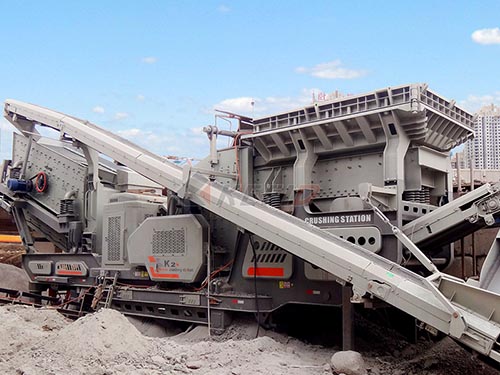

Bulk Stone Crusher Plant Dealers: Engineering Your Aggregate Production for Maximum ROI
The Operational Challenge: When Your Crusher Plant Becomes a Bottleneck
Every hour of unscheduled downtime in a stone crushing operation costs between $5,000 and $15,000 in lost production, depending on your throughput capacity. Beyond the immediate revenue loss, you face escalating maintenance expenses, missed delivery deadlines on construction contracts, and the hidden cost of safety incidents that spike when crews rush repairs.
Your screening efficiency is likely running at 1520% below manufacturer specifications due to material buildup and improper deck tension. Your cone crusher's wear life is probably 30% shorter than achievable because of inconsistent feed distribution. And your energy consumption per ton of finished aggregate is climbing as components age and settings drift.
The question is not whether you need a new bulk stone crusher plant. The question is whether you are selecting equipment that addresses these specific operational pain points—or simply purchasing another machine that will replicate the same inefficiencies. What is your current cost per ton of finished product, and how does it compare to the $2.50$4.00 benchmark for efficient operations?
Product Overview: The Complete Bulk Stone Crusher Plant Solution
A bulk stone crusher plant is an integrated processing system designed to convert raw quarry material into graded construction aggregates through a series of controlled reduction stages. The complete plant configuration typically includes primary jaw crushing, secondary cone or impact crushing, vibrating screening decks, and material handling conveyors—all coordinated through a central control system.
Operational Workflow
1. Primary Reduction: Raw feed material (typically 500800mm quarry run) enters the jaw crusher, which reduces it to 100200mm fragments at throughput rates of 150500 tons per hour
2. Secondary Crushing: The reduced material passes to a cone crusher or horizontal shaft impactor, achieving 2060mm aggregate at consistent cubic shapes
3. Screening and Classification: Multideck vibrating screens separate material into commercial grades (05mm, 510mm, 1020mm, 2040mm) with 95%+ separation accuracy
4. Washing (Optional): For premium aggregate applications, a washing system removes clay, silt, and dust to meet strict specification requirements
5. Stockpiling and Loadout: Conveyor systems direct finished products to designated stockpiles, with automated loadout for truck or rail dispatch
Application Scope
This equipment configuration serves commercial aggregate producers, road construction contractors, concrete and asphalt batch plants, and largescale infrastructure projects. The system handles limestone, granite, basalt, river gravel, and recycled concrete with hardness ratings up to 300 MPa.
Operational Limitations
The plant requires a minimum 2,500 square meters of operational area, a 400800 kVA electrical connection, and a consistent feed supply of at least 70% of rated capacity to maintain economic viability. Material with clay content above 8% will require additional washing stages, and extremely abrasive feed (quartz content above 30%) will accelerate wear component replacement intervals.
Core Features: Engineering Specifications That Drive Performance
HeavyDuty Primary Jaw Crusher
Technical Basis: Deepchamber crushing with a 1:6 reduction ratio and hydraulic wedge adjustment system
Operational Benefit: Your operators can change closedside settings in under 15 minutes without manual shimming, reducing changeover downtime by 70%
ROI Impact: Eliminates 34 hours of weekly downtime, translating to $18,000$45,000 in recovered production per month
HighStroke Inclined Vibrating Screens
Technical Basis: Dualshaft eccentric drive mechanism generating 8001,000 RPM with adjustable amplitude
Operational Benefit: Achieves 95% screening efficiency even with 68% moisture content, preventing the blinding and pegging that slows standard screens
ROI Impact: Reduces recirculation loads by 25%, lowering energy consumption by 812 kWh per ton of finished product
Automated LoadSensing Conveyor System
Technical Basis: Variable frequency drives with belt scale feedback maintaining optimal material depth
Operational Benefit: Your plant maintains consistent crusher feed, eliminating the 2030% throughput loss caused by uneven material distribution
ROI Impact: Increases overall plant capacity by 1520% without additional crushing equipment investment
Integrated Dust Suppression System
Technical Basis: Atomized water spray with surfactant injection at transfer points and crusher discharge
Operational Benefit: Reduces airborne particulate by 8590%, helping you meet environmental compliance standards without expensive baghouse filtration
ROI Impact: Avoids potential $10,000$50,000 in annual environmental fines and reduces operator healthrelated absenteeism
Modular SkidMounted Design
Technical Basis: Prewired and prepiped modules with quickconnect interfaces
Operational Benefit: Your installation team can have the plant operational within 1421 days of site delivery, versus 812 weeks for traditional installations
ROI Impact: Accelerates revenue generation by 69 weeks, representing $150,000$400,000 in earlier production
Remote Monitoring and Diagnostics
Technical Basis: PLCbased control with cellular telemetry transmitting operational data to your mobile device
Operational Benefit: Your maintenance team receives predictive alerts on bearing temperatures, vibration levels, and wear rates before failures occur
ROI Impact: Reduces unplanned downtime by 3540%, saving $30,000$80,000 annually in emergency repairs and lost production
HighChrome Wear Components
Technical Basis: 1822% chromium alloy liners with hardness ratings of 550650 HB
Operational Benefit: Extends wear life by 4060% compared to standard manganese steel in abrasive applications
ROI Impact: Reduces annual wear parts expenditure by $25,000$60,000 and cuts replacement labor hours by half
Competitive Advantages: Performance Comparison
| Performance Metric | Industry Standard | Bulk Stone Crusher Plant Solution | Advantage |
|||||
| Production Capacity (TPH) | 150200 | 250350 | 4075% higher throughput |
| Screening Efficiency | 7580% | 9295% | 1520% improvement |
| Energy Consumption (kWh/ton) | 1.82.2 | 1.21.5 | 2535% reduction |
| Changeover Time (hours) | 46 | 12 | 6075% faster |
| Wear Life (hours) | 4,0006,000 | 7,0009,000 | 4050% longer |
| Unplanned Downtime | 812% | 35% | 5060% reduction |
| Installation Time (weeks) | 812 | 34 | 6070% faster |
Technical Specifications
Capacity and Performance Ratings
- Throughput Capacity: 150350 tons per hour (depending on feed material hardness and final product specification)
- Maximum Feed Size: 800mm (primary), 200mm (secondary)
- Final Product Range: 05mm, 510mm, 1020mm, 2040mm with adjustable gradation
- Reduction Ratio: 6:1 (primary), 4:1 (secondary)
- Total Installed Power: 400800 kVA (depending on configuration)
- Primary Crusher Motor: 110160 kW
- Secondary Crusher Motor: 90132 kW
- Screen Motors: 1522 kW each (23 units)
- Conveyor System: 4575 kW combined
- Feed Material Hardness: Up to 300 MPa compressive strength
- Abrasion Index: Suitable for materials with up to 30% quartz content
- Moisture Tolerance: Up to 8% without performance degradation
- Wear Components: Highchrome alloy (550650 HB) for crusher liners; polyurethane screen media with 65 Shore A hardness
- Plant Footprint: 2,5003,500 square meters (including stockpile areas)
- Maximum Height: 1822 meters (depending on conveyor configuration)
- Total Weight: 180320 tons (depending on configuration)
- Containerization: 812 standard 40foot containers for shipping
- Operating Temperature: 10°C to 45°C (with coldweather package available for 30°C)
- Altitude: Up to 3,000 meters without derating
- Dust Protection: IP54 rated electrical enclosures with positive pressure filtration
- Noise Levels: 8590 dB(A) at 1meter distance (with optional acoustic enclosures)
- Washing System: $250,000$450,000 (for premium aggregate applications)
- ColdWeather Package: $85,000$120,000 (heating elements, insulated components)
- Extended Wear Package: $45,000$70,000 (highchrome liners, ceramiclined chutes)
- Advanced Automation: $60,000$95,000 (remote monitoring, predictive maintenance software)
- Mobile Configuration: +1520% premium (hydraulic walking system or trackmounted)
- Standard Warranty: 12 months or 2,000 operating hours (whichever comes first)
- Extended Warranty: 36 months coverage at 46% of equipment value annually
- Preventive Maintenance Program: $3,500$6,000 per month (includes scheduled inspections, wear measurement, and reporting)
- Operator Training: Included with purchase (5 days onsite); additional training at $2,500 per day
- Equipment Loan: 57 year terms at 69% interest rates (depending on credit profile)
- LeasetoOwn: 35 year lease with $1 buyout at end of term
- Operating Lease: Monthly payments with option to upgrade at term end
- ProductionBased Financing: Payment structure tied to actual tonnage produced (available for established operators)
Power Requirements
Material Specifications
Physical Dimensions
Environmental Operating Range
Application Scenarios: Documented Field Performance
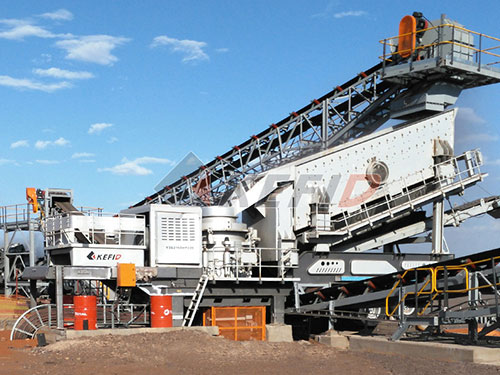
Highway Construction Aggregate Production
Challenge: A regional road contractor needed 500,000 tons of graded aggregate (20mm, 10mm, and 5mm fractions) within 8 months to meet a highway project deadline, while maintaining strict gradation specifications for asphalt production.
Solution: A 250 TPH bulk stone crusher plant with dual screening decks and automated gradation control was deployed at the project site, processing locally sourced limestone.
Results: The plant delivered 510,000 tons in 7.5 months, achieving 98.5% specification compliance. The contractor avoided $2.3 million in potential penalties for late delivery and reduced trucking costs by 40% by producing onsite.
Commercial Quarry Expansion
Challenge: An established quarry operator faced declining margins due to aging equipment operating at 65% efficiency, with escalating maintenance costs consuming 22% of revenue.
Solution: Replacement of the existing crushing circuit with a modern bulk stone crusher plant featuring loadsensing conveyors and highstroke screens.
Results: Production increased from 180 TPH to 310 TPH (72% improvement), while energy costs per ton dropped from $0.42 to $0.28 (33% reduction). The operator achieved full payback on the $2.8 million investment in 14 months.
Recycled Concrete Processing Facility
Challenge: A demolition contractor needed to process 200,000 tons of concrete rubble annually into reusable aggregate, but faced contamination issues with rebar and fines that damaged conventional crushers.
Solution: A specialized bulk stone crusher plant configuration with magnetic separation, hydraulic release systems, and heavyduty impact crusher for reinforced concrete feed.
Results: The facility processed 215,000 tons in the first year, achieving 92% material recovery rate. Rebar contamination was reduced to below 0.1%, enabling the sale of premium recycled aggregate at $18/ton versus the $8/ton landfill disposal cost previously incurred.
Commercial Considerations
Equipment Pricing Tiers
| Configuration Level | Capacity Range | Price Range (USD) | Best Suited For |
|||||
| Standard Plant | 150200 TPH | $1.2M $1.8M | Small quarries, contractors |
| Enhanced Plant | 200300 TPH | $1.8M $2.8M | Commercial aggregate producers |
| Premium Plant | 300350 TPH | $2.8M $4.2M | Largescale operations, multisite producers |
Optional Features and AddOns
Service Packages
Financing Options
Frequently Asked Questions
What is the typical lead time for a bulk stone crusher plant?
Standard configurations require 1216 weeks from order confirmation to shipment. Custom configurations with specialized features may require 2024 weeks. We recommend placing orders 46 months before your planned installation date to account for permitting and site preparation.
How does this plant handle varying feed material hardness?
The primary jaw crusher's hydraulic adjustment system allows your operators to change the closedside setting based on feed hardness. For materials above 250 MPa, we recommend the highchrome wear package and reduced feed rates of 1015% to optimize wear life. The control system automatically adjusts feeder speed based on crusher amp draw to prevent overloading.
What are the foundation and civil works requirements?
The plant requires reinforced concrete foundations with specific loadbearing capacity (typically 510 tons per square meter depending on equipment weight). Our engineering team provides detailed foundation drawings and installation specifications. Total civil works typically require 34 weeks and cost $150,000$300,000 depending on site conditions.
Can this equipment be relocated to different sites?
Yes, the modular skidmounted design allows for complete disassembly and relocation. A typical plant can be dismantled in 710 days, transported in 1215 trucks, and reassembled at a new site within 1421 days. Relocation costs typically range from $150,000$250,000 depending on distance and site conditions.
What is the expected annual maintenance cost?
Budget for 35% of equipment value annually for routine maintenance, plus $0.15$0.25 per ton for wear parts replacement. A 250 TPH plant operating 2,000 hours annually will process approximately 500,000 tons, resulting in wear parts costs of $75,000$125,000 per year.
How does the plant perform with highmoisture feed materials?
The highstroke screens with polyurethane media handle up to 8% moisture content without significant efficiency loss. Above this level, we recommend the optional washing system or prescreening to remove excess fines. The conveyor systems include selfcleaning return rollers and skirt board sealing to prevent material buildup.
What training and support do you provide for plant operators?
Every purchase includes 5 days of onsite operator and maintenance training. This covers equipment operation, daily inspection procedures, wear monitoring, and basic troubleshooting. We also provide comprehensive documentation including operating manuals, parts catalogs, and maintenance schedules. Remote technical support is available 24/7 during the warranty period.