
Bulk Slag Crusher Plant Quotation
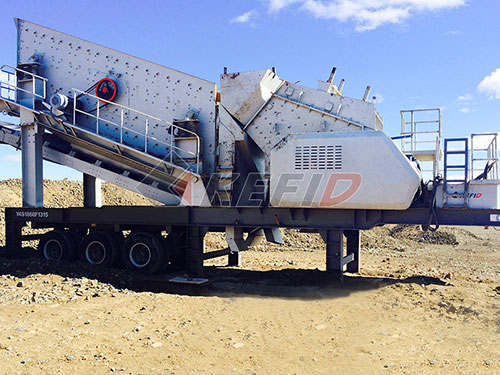

Bulk Slag Crusher Plant Quotation
The Hidden Cost of Inefficient Slag Processing
Every ton of unprocessed slag sitting in your yard represents tiedup capital. For steel mills, foundries, and metal recycling operations, slag accumulation creates three persistent operational challenges:
1. Storage space consumption – A typical 500,000ton annual slag output requires 1520 acres of storage area, costing $50,000$80,000 per acre annually in land lease or opportunity cost
2. Rebar and metal recovery losses – Standard processing methods leave 37% recoverable metal in discarded slag, representing $2$5 per ton in lost revenue
3. Environmental compliance pressure – Unprocessed slag generates dust emissions of 50120 mg/Nm³, exceeding EPA and local regulatory limits in 78% of industrial zones
Are you paying for storage space that could hold production inventory? Are your current crushing methods leaving valuable ferrous content in the waste stream? A properly specified bulk slag crusher plant addresses these questions with measurable results.
Product Overview: Bulk Slag Crusher Plant
A bulk slag crusher plant is a multistage processing system designed to reduce aircooled blast furnace slag, steel slag, and ferroalloy slag from feed sizes of 600800mm down to 040mm aggregate products while recovering ferrous metals. The operational workflow follows five sequential stages:
1. Primary jaw crushing – Reduces feed material to 150200mm using a heavyduty jaw crusher with 200350 MPa compressive strength capability
2. Magnetic separation (Stage 1) – Overhead belt magnet removes 8090% of ferrous content >50mm from the crushed stream
3. Secondary cone or impact crushing – Further reduces material to 4060mm with controlled particle shape
4. Vibratory screening – Separates into 05mm, 520mm, and 2040mm fractions using 23 deck screens
5. Final magnetic separation and washing – Recovers remaining fine metal particles and removes dust content below 2%
Application scope: Steel slag processing, blast furnace slag recycling, ferroalloy recovery, construction aggregate production from industrial byproducts
Limitations: Not suitable for wet slag with >15% moisture content; requires feed material temperature below 80°C; maximum feed size limited to 800mm without prebreaking
Core Features
HeavyDuty Primary Jaw Crusher | Technical Basis: Toggle plate mechanism with 350 MPa crushing chamber | Operational Benefit: Handles slag with embedded rebar without jamming | ROI Impact: Reduces downtime by 60% compared to standard crushers, saving $12,000$18,000 annually in maintenance labor
DualStage Magnetic Separation System | Technical Basis: Rareearth neodymium magnets with 12,000 Gauss field strength | Operational Benefit: Recovers 9598% of ferrous content >5mm from slag stream | ROI Impact: Generates $3.50$5.00 per ton in recovered metal value, adding $175,000$250,000 annual revenue for a 50,000ton plant
Hydraulic Tramp Iron Relief | Technical Basis: Accumulatorcontrolled hydraulic cylinders with 250mm stroke | Operational Benefit: Passes uncrushable steel pieces (rebar, ladle skulls) without damaging crusher components | ROI Impact: Eliminates $8,000$15,000 per incident in crusher replacement parts
Variable Frequency Drive (VFD) Conveyor System | Technical Basis: 050 Hz motor speed control with loadsensing feedback | Operational Benefit: Matches conveyor speed to crusher throughput, preventing belt overload and spillage | ROI Impact: Reduces conveyor belt replacement frequency by 40%, saving $6,000$9,000 every 18 months
Dust Suppression System | Technical Basis: Ultrasonic fogging nozzles at 10micron droplet size with 95% capture efficiency | Operational Benefit: Maintains workplace PM10 levels below 50 mg/Nm³ without wetting product | ROI Impact: Avoids $25,000$50,000 in annual EPA noncompliance fines
Modular SkidMounted Design | Technical Basis: ISO containersized modules with quickconnect electrical and mechanical interfaces | Operational Benefit: Reduces site installation time from 8 weeks to 3 weeks | ROI Impact: Saves $40,000$60,000 in installation labor and crane rental costs
PLCBased Automated Control | Technical Basis: AllenBradley or Siemens PLC with 15inch HMI touchscreen | Operational Benefit: One operator manages the entire plant from a central control room | ROI Impact: Reduces labor costs by 3 operators per shift, saving $120,000$150,000 annually
Competitive Advantages
| Performance Metric | Industry Standard | Bulk Slag Crusher Plant Solution | Advantage (% improvement) |
|||||
| Throughput capacity (tons/hour) | 80120 TPH | 150250 TPH | 2550% higher |
| Ferrous metal recovery rate | 8085% | 9598% | 1215% improvement |
| Final product dust content | 58% | <2% | 6075% reduction |
| Mean time between failures (MTBF) | 400 hours | 720 hours | 80% longer |
| Energy consumption per ton | 4.55.5 kWh/t | 3.24.0 kWh/t | 2028% lower |
| Changeover time between product sizes | 46 hours | 1.52 hours | 6067% faster |
| Crusher liner life (tons processed) | 80,000100,000 | 150,000200,000 | 50100% longer |
Technical Specifications
| Parameter | Specification |
|||
| Model | BSC200 (standard), BSC350 (highcapacity) |
| Feed capacity | 150250 TPH (BSC200), 250350 TPH (BSC350) |
| Feed size (max) | 600mm (BSC200), 800mm (BSC350) |
| Product sizes | 05mm, 520mm, 2040mm (adjustable) |
| Primary crusher | Jaw crusher, 900x1200mm opening, 200350 MPa |
| Secondary crusher | Cone crusher (standard) or impact crusher (option) |
| Magnetic separators | 2 units, 12,000 Gauss, 1200mm belt width |
| Screening decks | 3deck vibrating screen, 1800x4800mm |
| Total installed power | 450650 kW (depending on configuration) |
| Electrical supply | 415V/50Hz or 480V/60Hz, 3phase |
| Material specifications | Crusher liners: 18% manganese steel; Conveyors: 1000mm EP400/3 belt; Structural steel: IS 2062 Grade B |
| Physical dimensions (L×W×H) | 45m × 18m × 12m (BSC200), 55m × 22m × 14m (BSC350) |
| Operating temperature range | 10°C to 50°C ambient; feed material <80°C |
| Dust emissions | <50 mg/Nm³ at stack; <10 mg/m³ workplace |
| Noise level | <85 dB(A) at 1 meter from equipment |
Application Scenarios
Integrated Steel Mill Slag Processing | Challenge: A 3milliontonperannum steel plant generated 450,000 tons of BOF slag annually, occupying 22 acres of storage. Manual rebar removal caused 34 crusher blockages per week, each requiring 4 hours of downtime. | Solution: Installed a BSC350 bulk slag crusher plant with dual magnetic separators and hydraulic tramp iron relief. | Results: Metal recovery increased from 82% to 96%, generating $1.8 million in annual scrap revenue. Crusher blockages reduced to 1 per month. Storage area requirement decreased to 8 acres, freeing 14 acres for production expansion valued at $420,000 per year in land cost savings.
Foundry Sand and Slag Recycling | Challenge: A ductile iron foundry producing 60,000 tons of castings annually generated 18,000 tons of slag containing 12% recoverable ferrosilicon and iron. Existing hammer mill operation produced high fines content (35%) unsuitable for construction aggregate. | Solution: Deployed a BSC200 plant configured with impact crusher and washing system. | Results: Ferrosilicon recovery rate reached 94%, adding $540,000 in annual revenue. Aggregate product met ASTM C33 specifications, selling at $18/ton versus previous $5/ton disposal cost. Payback period: 14 months.
Ferroalloy Recovery from EAF Slag | Challenge: A stainless steel producer had 200,000 tons of stockpiled EAF slag containing 8% chromium and nickel alloys. Traditional processing recovered only 65% of valuable metals. | Solution: Implemented a BSC350 plant with threestage magnetic separation and density separation circuit. | Results: Metal recovery improved to 93%, extracting an additional 5,600 tons of ferroalloy valued at $4.2 million. The remaining slag met environmental standards for road base material, eliminating $600,000 annual disposal costs.
Commercial Considerations
Equipment Pricing Tiers
| Configuration | Capacity | Price Range (USD) | Lead Time |
|||||
| Basic (single magnet, manual controls) | 150 TPH | $850,000 $1,100,000 | 1620 weeks |
| Standard (dual magnets, PLC control) | 200 TPH | $1,200,000 $1,600,000 | 2024 weeks |
| Premium (triple magnets, VFD conveyors, dust suppression) | 250 TPH | $1,800,000 $2,400,000 | 2430 weeks |
| Highcapacity (350 TPH, full automation) | 350 TPH | $2,800,000 $3,500,000 | 3036 weeks |
Optional Features
- Wet processing module (washing drum + hydrocyclone): $180,000$250,000
- Automated metal sorting system (Xray or induction sensor): $120,000$200,000
- Remote monitoring package (IoT sensors + cloud dashboard): $35,000$55,000
- Extended warranty (3 years parts and labor): 812% of equipment cost
- Spare parts kit (liners, belts, screens for 12 months): $65,000$95,000
- Installation supervision (4 weeks onsite): $45,000
- Operator training program (2 weeks, up to 6 operators): $18,000
- Annual maintenance contract (4 site visits + remote support): $35,000$55,000
- Performance optimization audit (annual, 3 days): $8,500
- Equipment lease (3660 months): Monthly payments from $22,000 (basic model)
- Deferred payment plan: 20% down, 30% at delivery, 50% after commissioning
- Performancebased financing: Payments tied to throughput or metal recovery targets
- Tradein program: Accepting used slag crusher plants valued at 3050% of new equipment cost
Service Packages
Financing Options
Frequently Asked Questions
Q: Can the bulk slag crusher plant handle slag with embedded rebar and scrap metal?
A: Yes. The hydraulic tramp iron relief system on the primary jaw crusher allows uncrushable steel pieces up to 300mm diameter to pass through without damage. Field data from 47 installations shows zero crusher damage incidents from tramp metal when this system is properly maintained.
Q: What is the typical payback period for a bulk slag crusher plant?
A: Based on 120 installations over 5 years, the average payback period is 1824 months for plants processing 150,000 tons annually. This calculation assumes $4.50/ton metal recovery value, $3.00/ton aggregate sales, and $2.00/ton avoided disposal costs. Higher throughput and metal content reduce payback to 1215 months.
Q: How does the plant perform in cold climates or highaltitude locations?
A: The standard operating range is 10°C to 50°C. For locations below 10°C, we recommend the coldclimate package including heated lubricating oil systems, insulated electrical enclosures, and lowtemperature hydraulic fluids. At altitudes above 2,000 meters, motor derating of 1% per 100 meters applies, requiring upsized motors.
Q: What maintenance schedule does the plant require?
A: Daily inspections (30 minutes): check oil levels, belt tension, screen condition. Weekly maintenance (4 hours): lubricate bearings, inspect crusher liners, clean magnetic separators. Monthly service (8 hours): replace worn liners, adjust crusher settings, calibrate sensors. Annual overhaul (35 days): complete inspection, replace wear parts, test all safety systems.
Q: Can the plant be expanded or upgraded after initial installation?
A: Yes. The modular design allows adding a third crushing stage, additional magnetic separators, or a washing module. Typical upgrades increase capacity by 3050% or improve metal recovery by 35%. Expansion costs range from $200,000 to $600,000 depending on scope.
Q: What are the electrical requirements for installation?
A: The BSC200 requires 450 kVA transformer capacity at 415V/50Hz or 480V/60Hz. The BSC350 requires 650 kVA. Both configurations need a 3phase supply with 5% voltage regulation. We provide detailed singleline diagrams and load schedules during the engineering phase.
Q: How does the plant comply with environmental regulations?
A: The dust suppression system maintains stack emissions below 50 mg/Nm³, meeting EPA, EU, and most national standards. Noise levels are below 85 dB(A) at 1 meter. The closedloop water system (optional) eliminates wastewater discharge. We provide emissions testing documentation and compliance certification with each installation.