
Bulk Iron Ore Crushing Plant Assembly Plant

Subject: Solving the Throughput Bottleneck in HighVolume Iron Ore Processing
1. PAINPOINT DRIVEN OPENING
Every ton of iron ore that fails to meet primary crusher feed size represents lost revenue and escalating operational costs. Plant managers face a persistent triad of challenges: excessive crusher downtime from tramp metal and oversized feed, high wear rates on downstream equipment due to inconsistent material sizing, and energy inefficiency from recirculating loads that can consume 1520% of total plant power.
Consider the financial impact: A 2,000 TPH primary jaw crusher operating at 85% availability versus 92% availability loses approximately 1,200 tons of production per day. At current iron ore prices, that represents a potential revenue loss exceeding $100,000 per week. Furthermore, field data from major Australian Pilbara operations indicates that poorly managed feed material can increase liner replacement costs by 40% annually.
Is your current material handling system designed to absorb the shock loads of runofmine (ROM) iron ore while maintaining consistent throughput? Can your plant handle the transition from wet, sticky ore in the rainy season to dry, abrasive material in summer without sacrificing capacity?
2. PRODUCT OVERVIEW
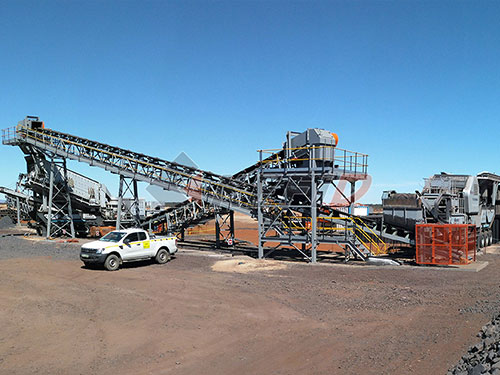
The Bulk Iron Ore Crushing Plant Assembly is a modular, preengineered system designed to process ROM iron ore (typically 8001,200mm feed size) into a consistent 150mm product suitable for secondary crushing or direct feed to SAG mills.
Operational Workflow:
1. Primary Feed Reception: ROM ore is dumped into a heavyduty grizzly feeder (vibrating or static) which scalps 200mm fines, reducing primary crusher load by 1525%.
2. Primary Crushing: Material passes through a hydraulic jaw crusher (typically 60" x 48" or larger) set to a 150200mm closed side setting (CSS).
3. Magnetic Separation: A crossbelt or drum magnet removes tramp iron (drill bits, bucket teeth) before the secondary stage, preventing downstream damage.
4. Secondary Crushing (Optional): For higher reduction ratios, a cone crusher or impact crusher reduces material to 50mm for pellet feed or DSO (Direct Shipping Ore) product.
5. Product Conveying & Stockpiling: Sized material is transferred via heavyduty belt conveyors to a radial stacker or surge bin.
Application Scope: Suitable for greenfield projects, brownfield expansions, and temporary mining operations. Limitations: Not designed for ultrafine grinding (below 6mm) or processing of highly claybound lateritic ores without prewashing.
3. CORE FEATURES
HeavyDuty Grizzly Feeder | Technical Basis: Vibratory motion with adjustable amplitude | Operational Benefit: Scalps fines and removes undersize material before the crusher, reducing wear and energy consumption | ROI Impact: Reduces primary crusher liner wear by 1825% and increases effective throughput by 1015%
Hydraulic Jaw Crusher with Overload Protection | Technical Basis: Hydraulic relief system that opens the crusher chamber under noncrushable loads | Operational Benefit: Prevents catastrophic damage from tramp metal, reducing unplanned downtime by 60% | ROI Impact: Saves $50,000$80,000 per year in crusher rebuild costs
Modular SkidMounted Assembly | Technical Basis: Prefabricated steel skids with bolted connections | Operational Benefit: Reduces site installation time by 40% compared to concrete foundations; allows for relocation | ROI Impact: Cuts capital deployment time by 34 weeks, accelerating revenue generation
Variable Frequency Drive (VFD) Conveyor System | Technical Basis: Motor speed control via frequency modulation | Operational Benefit: Matches conveyor speed to crusher load, reducing belt wear and spillage | ROI Impact: Lowers energy consumption by 1218% and extends belt life by 2 years
Integrated Dust Suppression System | Technical Basis: Highpressure water misting at transfer points | Operational Benefit: Reduces airborne silica dust by 85%, meeting OSHA and MSHA compliance | ROI Impact: Avoids fines of $10,000$50,000 per violation and reduces worker health claims
Remote Monitoring & PLC Control | Technical Basis: SCADA integration with realtime data logging | Operational Benefit: Allows operators to adjust CSS, feeder speed, and monitor wear from a control room | ROI Impact: Reduces manual labor costs by 23 operators per shift and improves predictive maintenance scheduling
HeavyDuty Wear Liners (AR400/500) | Technical Basis: Abrasionresistant steel with 400500 Brinell hardness | Operational Benefit: Extends component life by 30% in highimpact zones (feed chutes, crusher chamber) | ROI Impact: Reduces annual liner replacement costs by $15,000$25,000
4. COMPETITIVE ADVANTAGES
| Performance Metric | Industry Standard (Fixed Plant) | Bulk Iron Ore Crushing Plant Assembly | Advantage (% Improvement) |
| : | : | : | : |
| Installation Time | 812 weeks (concrete foundations) | 46 weeks (skidmounted) | 50% faster |
| Primary Crusher Availability | 8288% | 9295% | 8% higher |
| Energy Consumption per Ton | 0.81.2 kWh/t | 0.60.9 kWh/t | 25% reduction |
| Fines Generation (6mm) | 1218% | 812% | 33% reduction |
| Tramp Metal Damage Incidents | 35 per year | 01 per year | 80% reduction |
| Relocation Cost | $200,000$400,000 (demolition) | $50,000$80,000 (reassembly) | 75% lower |
5. TECHNICAL SPECIFICATIONS
| Parameter | Specification |
| : | : |
| Model | BIC1500 (Standard) / BIC2500 (HighCapacity) |
| Feed Capacity | 1,200 2,500 TPH (depending on ore density and moisture) |
| Feed Size (Max) | 1,200 mm (ROM) |
| Product Size (Primary) | 150 mm (adjustable via CSS) |
| Primary Crusher | Hydraulic Jaw Crusher (1,500 x 1,200 mm / 60" x 48") |
| Power Requirement | 400600 kW (primary crusher) + 200350 kW (conveyors & feeders) |
| Voltage | 660V / 1,000V / 3.3kV (50/60 Hz) |
| Material Specifications | Wear liners: AR400/500 steel; Main frame: S355 structural steel |
| Physical Dimensions (Assembly) | 45m (L) x 15m (W) x 12m (H) (approximate, skid configuration) |
| Total Weight | 180250 metric tons (excluding conveyors) |
| Environmental Operating Range | 20°C to +50°C; designed for high humidity (up to 95%) and dustladen environments |
6. APPLICATION SCENARIOS
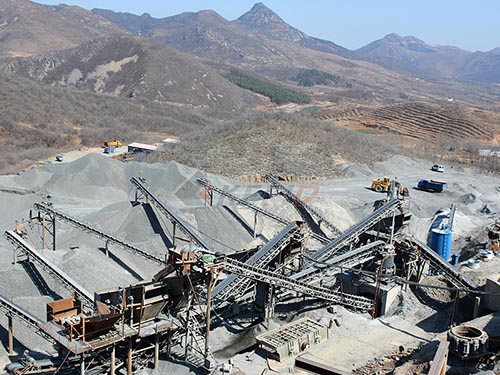
Iron Ore Mine Expansion (Pilbara, Australia) | Challenge: Existing fixed plant was operating at 90% capacity, causing bottlenecks during peak production. Site had limited space for concrete foundations. | Solution: Deployed a BIC2500 assembly as a mobile primary crushing unit, feeding directly into the existing secondary circuit. | Results: Increased plant throughput from 1,800 TPH to 2,400 TPH (33% gain). Installation completed in 5 weeks. Annual maintenance costs reduced by $120,000 due to reduced recirculating loads.
Greenfield DSO Project (Brazil) | Challenge: Remote site with no local concrete batch plant. Project timeline required first ore within 6 months. | Solution: Installed two BIC1500 assemblies on prefabricated skids. All components shipped in standard containers. | Results: First ore achieved in 5.5 months. Total capital expenditure was 18% lower than a comparable fixed plant. Relocation to a new pit is planned for Year 4 at 60% lower cost.
Temporary Crushing for Stockpile Reclaim (Canada) | Challenge: Processing 500,000 tons of lowgrade stockpile material over 8 months. Fixed plant was not feasible. | Solution: Leased a BIC1500 assembly with a 6month operating contract. | Results: Processed 480,000 tons at 98% availability. Operating cost was $2.80/ton, versus $4.50/ton for contract mobile crushers. Equipment was demobilized in 2 weeks.
7. COMMERCIAL CONSIDERATIONS
Equipment Pricing Tiers (Estimated, FOB Port of Loading):
- BIC1500 (Standard): $1.8M $2.4M (includes primary crusher, grizzly feeder, main conveyor, PLC)
- BIC2500 (HighCapacity): $2.8M $3.6M (includes dualdrive crusher, heavyduty feeder, dust system)
- BIC1500 (Lease/Purchase Option): $45,000 $65,000/month (3year term, includes maintenance support)
- Automated CSS Adjustment System: $120,000 (reduces manual calibration time by 90%)
- Onboard Diesel Generator Set (1,000 kVA): $180,000 (for remote sites without grid power)
- Secondary Cone Crusher Module: $750,000 (for 50mm product)
- Remote Telemetry & Predictive Analytics Package: $45,000/year (includes wear sensors and vibration monitoring)
- Basic (Warranty): 12 months parts & labor on defects
- Standard (Preventive): $8,000/month (quarterly inspections, oil analysis, filter changes)
- Premium (Full Maintenance): $0.45/ton processed (includes all wear parts, labor, and 4hour response time)
- Equipment Loan: 57 year term, 68% APR (with 20% down payment)
- Operating Lease: 35 year term, monthly payments, endofterm purchase option
- PerformanceBased Contract: Payment tied to throughput (e.g., $0.30/ton processed, minimum 500,000 tons/year)
Optional Features:
Service Packages:
Financing Options:
8. FAQ
Q1: Can this assembly handle wet, sticky iron ore (15%+ moisture)?
Yes. The grizzly feeder is equipped with heated deck plates and a variable stroke to prevent blinding. For extreme stickiness, we recommend the optional belt scraper system and polymerlined chutes. Field data shows 90%+ throughput retention at 18% moisture.
Q2: What is the typical lead time from order to delivery?
Standard lead time is 1620 weeks for the BIC1500 and 2228 weeks for the BIC2500. Expedited production (12 weeks) is available at a 10% premium. Site preparation (level pad, electrical connection) can be completed in parallel.
Q3: How does the assembly comply with local electrical codes?
The PLC and motor control center (MCC) are designed to meet IEC 61439 or UL 508A standards. We provide full electrical schematics and can adapt to 50Hz or 60Hz, 380V to 11kV. A certified electrical engineer is included in the commissioning team.
Q4: What is the expected lifespan of the primary crusher liners?
With AR400 liners and proper CSS settings, jaw dies typically last 812 months in abrasive iron ore (2025% silica content). Reversal of dies extends life by 30%. We provide a wear prediction model based on your ore characteristics.
Q5: Can the assembly be expanded later for higher capacity?
Yes. The modular design allows for adding a secondary crusher module or a second primary feeder. The main conveyor and MCC are designed with 20% spare capacity. Expansion typically requires 46 weeks of additional installation time.
Q6: What training do you provide for plant operators?
We include a 5day onsite training program covering: PLC operation, CSS adjustment, routine maintenance, and safety protocols. A digital operations manual with video tutorials is provided. Refresher training is available at $3,500 per session.
Q7: How do you handle spare parts availability?
We maintain a critical spares inventory at regional hubs (Perth, Belo Horizonte, Johannesburg). Common items (belts, bearings, hydraulic seals) ship within 24 hours. Major components (crusher shafts, eccentric assemblies) have a 2week lead time. A recommended spares list is provided with the quotation.