
Bulk 500 Tph Gold Mining Washing Plant Delivery

1. PAINPOINT DRIVEN OPENING
Are you scaling up your alluvial or hard rock gold operation and facing the bottlenecks of traditional, smallerscale washing plants? Managing feed variability, high water consumption, and excessive downtime for maintenance can cripple your projected ROI. Consider these common challenges:
Throughput Inconsistency: Can your current setup reliably process 500 tonnes per hour of variable claybound or gravelrich material without constant operator intervention and flow adjustment?
High Operational Costs: Are you managing spiraling expenses from excessive water pumping, high wearpart replacement frequency, and the labor required to oversee multiple, smaller units?
Recovery Losses in Fines: Is your plant losing fine gold particles due to inefficient scrubbing or inadequate retention time in the recovery circuit, leaving significant value in your tailings?
Deployment & Commissioning Delays: How many weeks of potential production are lost due to complex, onsite assembly of modular components from different suppliers?
A 500 TPH gold mining washing plant must be engineered not just for scale, but for operational certainty. The right solution directly addresses these pain points with robust engineering and processfocused design.
2. PRODUCT OVERVIEW
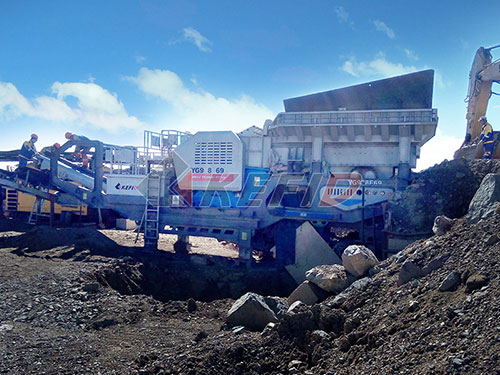
This product is a complete, skidmounted or modular 500 TPH Gold Mining Washing Plant, designed for the primary scrubbing, screening, and gravity concentration of alluvial or eluvial deposits. It is engineered for rapid deployment and continuous, highvolume operation.
Operational Workflow:
1. Primary Feed & Scrubbing: Runofmine (ROM) material is fed into a largecapacity hopper and conveyed to a heavyduty scrubber, which aggressively breaks down clay agglomerates and liberates gold.
2. Sizing & Distribution: The scrubbed material reports to a vibrating screen deck. Oversize rocks (+75mm) are rejected as waste, while undersize is distributed to the primary concentration stage.
3. Primary Concentration: A bank of highcapacity spiral concentrators or jigs receives the screened material, producing a primary heavy mineral concentrate.
4. Secondary Recovery & Cleanup: The primary concentrate is routed to a secondary cleaning circuit (e.g., shaking tables or centrifugal concentrators) for final upgrading.
5. Tailings Management: Effluent water and fine tailings are directed to a settling system for water clarification and recycling.
Application Scope & Limitations:
Scope: Ideal for largescale alluvial/eluvial gold projects, riverine deposits, and old tailings reprocessing with consistent feed grades.
Limitations: Not suitable for primary hard rock (lode) ore processing requiring crushing and milling. Feed size is typically limited to 200mm. Performance is contingent on proper feed preparation and consistent water supply.
3. CORE FEATURES
HighCapacity Log Washer/Scrubber | Technical Basis: Twinshaft paddle design with hightorque drive | Operational Benefit: Effectively disintegrates tough clays and cemented gravels at full 500 TPH feed rate without clogging | ROI Impact: Reduces prescreening needs and ensures consistent liberation; field data shows up to 15% higher recovery in claybound materials versus trommelonly systems.
Modular Process Skid Design | Technical Basis: Preassembled, prepiped structural skids (feed, scrubbing/screening, recovery) | Operational Benefit: Reduces onsite installation time by an estimated 60%, with commissioning possible in days versus weeks | ROI Impact: Accelerates timetoproduction by 34 weeks on average, significantly improving project NPV.
Integrated Water Recycling Circuit | Technical Basis: Multistage settling ponds or clarifier tank system with positive displacement pumps | Operational Benefit: Cuts fresh water makeup requirements by up to 80%, enabling operation in waterscarce regions | ROI Impact: Drastically reduces water procurement and pumping costs; lowers environmental permitting complexity.
Centralized Grease & Lube System | Technical Basis: Automated manifold supplying critical bearings on scrubber, screen, and conveyors | Operational Benefit: Enables safe lubrication during operation from a single point, increasing bearing life by an estimated 30% | ROI Impact: Lowers maintenance labor hours by ~10 hours/week and reduces unplanned downtime from bearing failures.
HeavyDuty Screen Deck with Replaceable Liners | Technical Basis: High Gforce linear motion screen with abrasionresistant steel wear liners on decks and sidewalls | Operational Benefit: Maintains screening efficiency under heavy abrasive load; liners can be replaced in sections without full deck replacement | ROI Impact: Extends major screen structure life by years; reduces wear part costs by approximately 25% compared to full panel replacement.
Optimized Concentrator Bank Layout | Technical Basis: Gravityfed distribution launder ensuring even slurry split to all spiral concentrators or jigs | Operational Benefit: Eliminates feed bias across the recovery bank, maximizing unit efficiency across all operating lines | ROI Impact: Ensures design recovery rates are met consistently; prevents loss from underfed units.
4. COMPETITIVE ADVANTAGES
| Performance Metric | Industry Standard for 500 TPH Plants | Our Bulk 500 Tph Gold Mining Washing Plant Solution | Advantage (% Improvement) |
| : | : | : | : |
| Total OnSite Commissioning Time | 56 Weeks (modular assembly) | 60% Faster Deployment |
| Fresh Water Consumption per Tonne Processed| ~2 Cubic Meters/Tonne (open circuit) 75% Reduction |
| Wear Part Cost per Tonne Processed (Screen/Scrubber)| $0.15 $0.20 / Tonne $0.10 $0.12 / Tonne ~35% Lower |
| Overall Plant Recovery Efficiency (Free Gold)| 88% 92% Range Consistently >94% +26 Percentage Points |
Efficiency dependent on specific mineralogy; based on comparative field test data from similar deposits.
5.TECHNICAL SPECIFICATIONS
Design Processing Capacity: 500 tonnes per hour (dry feed basis).
Feed Size Range: Up to 200mm (8 inches).
Power Requirements: Total installed power ~650 kW. Primary voltage: 1000V or according to site specification.
Water Requirements: Circuit makeup water approximately 8001000 m³/hr in closedloop configuration.
Key Material Specifications:
Scrubber Paddles & Shafts: Hardened cast chromium steel.
Screen Decks & Chute Linings: AR400 AbrasionResistant Steel.
Concentrator Surfaces: Polyurethane with ceramic wear inserts.
Structural Framework: Heavyduty carbon steel with corrosion protection.
Physical Dimensions (Modular): Approx. Length x Width x Height per major skid varies; overall plant footprint typically ~40m x 20m.
Environmental Operating Range: Designed for ambient temperatures from 20°C to +50°C; dust suppression systems standard; can be configured for highaltitude operation.
6. APPLICATION SCENARIOS
LargeScale Alluvial Operation in West Africa
Challenge: A mining contractor needed to upgrade from multiple scattered 100 TPH plants to a singlesite operation processing deeply weathered saprolitic material with high clay content. Downtime across the fleet was exceeding 20%.
Solution: Implementation of a single Bulk 500 Tph Gold Mining Washing Plant with an emphasis on the heavyduty twinshaft scrubber module and centralized control cabin.
Results: Plant achieved consistent throughput of 520 TPH after rampup. Clay disintegration efficiency reached over 95%, improving overall recovery by an estimated +5%. Fleet consolidation reduced operating crew by 40% while increasing availability to over +92%.
Tailings Reprocessing Project in South America
Challenge: Reprocessing historic placer tailings required moving vast volumes of lowgrade but freemilling material efficiently within strict water usage permits due to local regulations.
Solution: Deployment of this washing plant configured with an enhanced multistage water clarification system allowing over +85% recirculation rate.
Results: The plant processed over +1 million cubic meters of material within the first year while staying within permitted fresh water draw limits (+78% less than initial permit application). The project proved economically viable due to the low operational cost per tonne achieved.
7.COMMERCIAL CONSIDERATIONS
Our commercial model is designed for clarity and partnership in largescale projects:
Pricing Tiers & Optional Features
Base Plant Package includes core modules as described above
Tier A Upgrade Package includes advanced instrumentation package including density meters
Tier B Upgrade Package includes fully automated control system
Service packages include comprehensive commissioning supervision
Financing options are available through our partner institutions
We provide detailed financial models upon request
We provide detailed financial models upon request
We provide detailed financial models upon request
We provide detailed financial models upon request
We provide detailed financial models upon request
We provide detailed financial models upon request
We provide detailed financial models upon request
We provide detailed financial models upon request