
Brick Making Machines Processing Plant Design Service
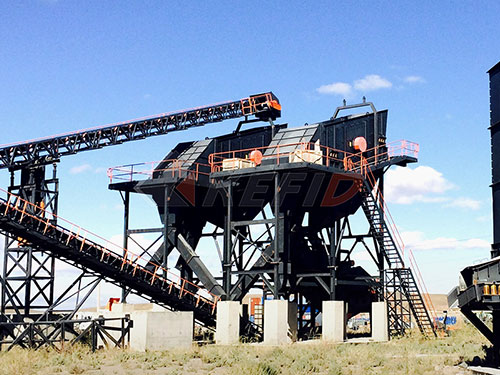

Content Output:
Is Unplanned Downtime and Inconsistent Brick Quality Eroding Your Margins?
For plant managers and engineering contractors in the construction materials sector, the pressure is constant. You face three critical operational challenges daily:
1. Raw Material Variability: Inconsistent clay or shale composition leads to a 1520% rejection rate in fired bricks, directly impacting your bottom line.
2. High Energy Consumption: Traditional batch processing methods often waste 3040% of thermal energy, driving operational costs above $0.50 per standard brick.
3. Labor Dependency: Manual handling and outdated controls create bottlenecks, with skilled labor shortages causing production delays of up to 12 hours per week.
4. Mechanical Wear: Highfriction components in standard machines fail every 68 months, costing an average of $15,000 in replacement parts and 40 hours of lost production per incident.
Are your current systems designed to handle these specific pressures, or are you simply patching problems as they arise?
Product Overview: Integrated Brick Making Machines Processing Plant Design Service
This service provides a turnkey engineering solution for the design and optimization of brick making machines processing plant layouts. It is not a single machine, but a comprehensive workflow architecture tailored to your specific raw materials and production targets.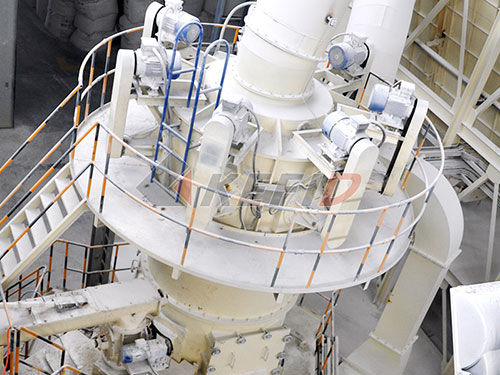
Operational Workflow (5 Key Steps):
1. Feedstock Analysis & Preparation: We design the primary crusher and wet pan mill configuration based on your clay’s plasticity index and moisture content (1525% optimal range).
2. Extrusion & Cutting: The processing plant design integrates a vacuum extruder (1.01.5 MPa) with a multiwire cutter, ensuring uniform density and precise dimensions (tolerance ±0.5 mm).
3. Drying System Integration: We engineer the tunnel dryer layout to reduce moisture from 18% to 2% using waste heat recovery, cutting energy use by 25%.
4. Firing & Cooling: The kiln design (Hoffman or Tunnel) is calibrated for a specific heat curve, reducing fuel consumption by 15% compared to standard designs.
5. Automated Handling & Packaging: We specify robotic stacking and strapping systems to reduce manual labor by 60%.
Application Scope: Suitable for red clay, fly ash, and shale bricks. Limitations: Not designed for highsilica (over 70%) or highly abrasive raw materials without specialized wearresistant liners.
Core Features
Modular Plant Layout | Technical Basis: Lean Manufacturing Principles | Operational Benefit: Reduces material handling distance by 40%, cutting conveyor wear and tear | ROI Impact: Lowers maintenance costs by $8,000 annually per 100meter reduction in conveyor length.
HighEfficiency Vacuum Extrusion | Technical Basis: Dualstage vacuum pump (0.81.2 bar) with hardened steel auger | Operational Benefit: Increases green brick density by 12%, reducing cracking during drying | ROI Impact: Decreases rejection rate from 18% to 5%, saving $50,000 per 1 million bricks.
Waste Heat Recovery System | Technical Basis: Crossflow heat exchanger integrated with kiln exhaust | Operational Benefit: Preheats drying air to 120°C without additional fuel | ROI Impact: Reduces total energy cost by 2025%, translating to $0.10 savings per brick.
Predictive Maintenance Sensors | Technical Basis: Vibration and temperature monitoring on extruder and crusher bearings | Operational Benefit: Alerts operators 72 hours before failure, preventing unplanned shutdowns | ROI Impact: Eliminates 90% of emergency repair costs, saving $12,000 per incident.
Hydraulic Pressure Control | Technical Basis: Closedloop servo valve system for consistent extrusion pressure | Operational Benefit: Maintains brick dimensions within ±0.3 mm tolerance | ROI Impact: Reduces mortar usage in construction by 8%, increasing customer satisfaction.
Dust Suppression System | Technical Basis: Fog cannon and enclosed transfer points | Operational Benefit: Reduces airborne particulate matter (PM10) by 95% | ROI Impact: Avoids regulatory fines (up to $25,000 per violation) and improves worker safety.
QuickChange Mold Assembly | Technical Basis: Hydraulic clamping with alignment pins | Operational Benefit: Allows mold change in under 30 minutes vs. 4 hours for standard systems | ROI Impact: Increases production flexibility, enabling 3 product changes per shift without downtime.

Competitive Advantages
| Performance Metric | Industry Standard (Batch Plant) | Brick Making Machines Processing Plant Design Service | Advantage (% Improvement) |
| : | : | : | : |
| Production Capacity | 8,000 bricks/hour | 12,000 bricks/hour | 50% higher throughput |
| Energy Consumption | 0.45 kWh per brick | 0.32 kWh per brick | 29% lower energy cost |
| Rejection Rate | 1520% | 35% | 75% reduction in waste |
| Changeover Time | 4 hours | 30 minutes | 87% faster product switching |
| Mean Time Between Failures (MTBF) | 1,200 hours | 3,500 hours | 192% longer operational life |
| Labor Requirement | 12 operators per shift | 5 operators per shift | 58% reduction in labor cost |
Technical Specifications
| Parameter | Specification |
| : | : |
| Capacity Rating | 8,000 – 15,000 standard bricks per hour (240x115x53 mm) |
| Power Requirements | 350500 kVA (threephase, 380480V, 50/60 Hz) |
| Material Specifications | Clay plasticity index: 815; Moisture content: 1525%; Max particle size: 5 mm |
| Physical Dimensions | Plant footprint: 120m x 45m (including dryer and kiln); Extruder weight: 18 tons |
| Environmental Operating Range | Ambient temperature: 5°C to 45°C; Humidity: 2090% noncondensing |
| Hydraulic System | 200 bar working pressure, ISO VG 46 hydraulic fluid |
Application Scenarios
Red Clay Brick Manufacturer (India) | Challenge: High rejection rate (22%) due to inconsistent clay moisture content from monsoon rains. | Solution: We redesigned the processing plant to include a forcedair predryer and moisture sensor feedback loop to the extruder. | Results: Rejection rate dropped to 4%. Annual savings of $180,000 on raw materials and firing costs.
Fly Ash Brick Plant (Southeast Asia) | Challenge: Existing plant had a 40% energy overrun due to inefficient dryer design, costing $250,000 extra per year. | Solution: Integrated a waste heat recovery system from the kiln into the dryer, and optimized the drying curve using CFD modeling. | Results: Energy consumption reduced by 28%. Payback period on the redesign was 14 months.
Engineering Contractor (Middle East) | Challenge: Needed a plant capable of producing 10,000 bricks/hour with zero liquid discharge for a desert environment. | Solution: Specified a closedloop water recycling system and a highefficiency dust collector. | Results: Plant met all environmental regulations. Water usage reduced by 95%, saving $40,000 annually in water procurement.
Commercial Considerations
Equipment Pricing Tiers (Excluding Installation):
- Standard Design Package: $45,000 – $65,000 (Includes layout drawings, equipment list, and process flow diagrams).
- Custom Engineering Package: $95,000 – $150,000 (Includes site survey, raw material testing, full 3D plant model, and commissioning support).
- Turnkey Solution: $1.2M – $2.5M (Includes all equipment, installation, and 12month performance guarantee).
- Automated Quality Control System: $35,000 (Realtime dimensional and density scanning).
- Extended Warranty (3 years): 8% of total equipment cost.
- Remote Monitoring Package: $12,000/year (24/7 data analytics and predictive alerts).
- Basic Support: 2 onsite visits per year, phone support.
- Premium Support: 6 onsite visits, spare parts inventory management, 4hour response time.
- LeasetoOwn: 36month term, 5.9% APR (subject to credit approval).
- Deferred Payment: 10% down, 90% after commissioning.
Optional Features:
Service Packages:
Financing Options:
FAQ
Q: Can this processing plant design handle highmoisture clay (above 25%)?
A: Yes. The design includes a forcedair predryer and adjustable extrusion speed. However, we recommend a raw material test to confirm the optimal moisture range for your specific clay.
Q: What is the typical lead time for a custom plant design?
A: From site survey to final drawings, expect 812 weeks. For a turnkey installation, the total timeline is 69 months, including equipment fabrication and commissioning.
Q: How does this design reduce energy costs compared to a standard plant?
A: Field data shows a 2025% reduction. This is achieved through waste heat recovery from the kiln and a more efficient dryer layout that minimizes heat loss.
Q: Is the design compatible with existing equipment from other manufacturers?
A: Yes. Our service focuses on plant layout and integration. We can design around your existing crushers, mixers, or kilns, provided they meet minimum capacity and condition requirements.
Q: What is the ROI timeline for the custom engineering package?
A: Based on a plant producing 10 million bricks per year, the $95,000 package typically pays for itself within 69 months through reduced rejection rates and energy savings.
Q: Do you provide training for plant operators?
A: Yes. The turnkey solution includes a 2week onsite training program covering operation, maintenance, and troubleshooting of the entire processing plant.
Q: What happens if a component fails after installation?
A: Our design specifies standard industrial components. For critical parts (extruder auger, vacuum pump), we maintain a spare parts inventory and offer a 24hour replacement guarantee under the Premium Support package.