
500 Tph Gold Mining Washing Plant Fabricators Specification

1. PAINPOINT DRIVEN OPENING
Are you scaling up your alluvial or eluvial gold operation and finding that your washing and recovery processes are the bottleneck? At a 500 TPH scale, inefficiencies translate directly into significant revenue loss. Common challenges include:
Inconsistent Feed Handling: Fluctuations in material size and clay content can choke traditional scrubbers, leading to unplanned downtime and reduced hourly throughput.
Inefficient Gold Recovery: Fine gold loss in the sluicing or screening stages due to poor scrubbing liberation or inadequate residence time represents permanent financial leakage.
High Operational Costs: Excessive water consumption, high wearpart replacement frequency on inadequately protected components, and the labor intensity of managing multiple disparate units erode profit margins.
Rigid Plant Design: Inflexible layouts that cannot adapt to variable ore body characteristics or future expansion plans limit the asset's longterm value.
The central question for plant managers and engineering contractors is this: how do you specify a 500 Tph gold mining washing plant that delivers guaranteed throughput while maximizing recovery and controlling total operational cost?
2. PRODUCT OVERVIEW
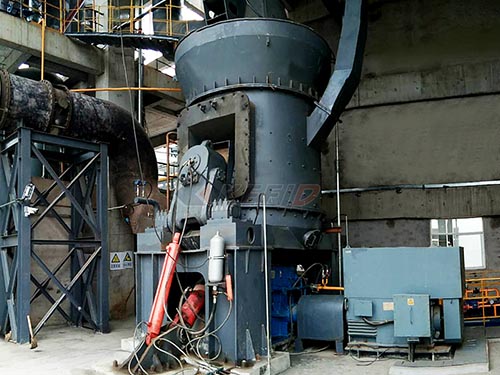
The 500 Tph Gold Mining Washing Plant is a modular, heavyduty processing system designed for the continuous washing, scrubbing, screening, and gravity concentration of alluvial/eluvial goldbearing material. Its core function is to liberate gold from gangue material (clay, gravel) and concentrate it into a manageable product for further upgrading.
Operational Workflow:
1. Primary Feed & Scrubbing: Runofmine material is fed into a robust trommel scrubber or rotary scrubber, where it is aggressively agitated to break down clays and dissolve cemented aggregates.
2. Sizing & Classification: The scrubbed output passes over vibrating screens to separate oversize waste rock. The undersize slurry reports to primary gravity concentration.
3. Primary Concentration: Highcapacity sluices or jigs capture liberated gold particles from the slurry stream, producing a primary concentrate.
4. Tailings Management & Water Handling: Waste tailings are conveyed to a designated area, while process water is typically sent to a settling pond for recirculation.
Application Scope & Limitations:
Scope: Ideal for largescale alluvial gold projects, riverine deposits, and weathered eluvial deposits where claybound gold is present. Suited for fixed plant installations or large semimobile setups.
Limitations: Not designed for hard rock (lode) ore processing requiring crushing and milling. Performance is highly dependent on consistent feed characteristics; excessive boulder content (>300mm) may require prescreening.
3. CORE FEATURES
HeavyDuty Trommel Scrubber | Technical Basis: Abrasionresistant steel drum with internal lifters | Operational Benefit: Ensures complete clay disintegration and aggregate breakdown at full 500 TPH feed rate | ROI Impact: Maximizes gold liberation upstream of recovery, reducing losses to tailings.
Modular Riffle System | Technical Basis: Interchangeable riffle trays with optimized geometry and angle | Operational Benefit: Allows rapid configuration changes to match specific ore gravity characteristics | ROI Impact: Improves fine gold capture rates; reduces cleanup downtime by up to 50%.
Centralized Hydraulic Power Pack | Technical Basis: Single, highefficiency unit powering all trommel drives, screen vibrators, and conveyor lifts | Operational Benefit: Simplifies maintenance, reduces energy consumption versus multiple individual motors | ROI Impact: Lowers power costs by an estimated 1520% and reduces spare parts inventory.
Advanced Polyurethane Lining | Technical Basis: Custommolded PU liners in highwear areas (scrubber feed chamber, slurry launders) | Operational Benefit: Extends service life by 35x compared to standard AR steel plate | ROI Impact: Dramatically reduces wearpart costs and associated downtime for replacements.
Integrated Water Recycling Design | Technical Basis: Plant layout engineered for direct slurry flow to settling ponds with minimal pumping | Operational Benefit: Minimizes fresh water makeup requirements and pump energy use | ROI Impact: Cuts water procurement costs by up to 70% in waterscarce regions.
PLCBased Monitoring System | Technical Basis: Central control panel monitoring motor loads, feed rates, and critical pressures | Operational Benefit: Provides operators with realtime data to prevent overloads and optimize performance | ROI Impact: Enables predictive maintenance scheduling, avoiding catastrophic failures.
4. COMPETITIVE ADVANTAGES
| Performance Metric | Industry Standard (500 TPH Scale) | Our 500 Tph Gold Washing Plant Solution | Advantage (% Improvement) |
| : | : | : | : |
| Gold Recovery Rate (for 100 mesh gold) | Reliant on operator skill; often inconsistent. >95% capture rate requires ideal conditions. |
| Water Consumption (m³ per ton processed) |
| Wear Part Lifetime (Scrubber Liners) |
| Plant Commissioning Time |
| Overall Availability (Scheduled Operation) |
5. TECHNICAL SPECIFICATIONS
Design Capacity: 500 metric tons per hour (dry feed basis).
Power Requirements: Approx. 750900 kVA total connected load. Configured for 400/690V, 50/60Hz.
Material Specifications:
Scrubbing Drum:
Screen Decks:
Support Structure:
Sluice Riffles:
Physical Dimensions (Modular):
Scrubber Module:
Screening Module:
Concentrator Module:
Approx. Footprint:
Environmental Operating Range:
6. APPLICATION SCENARIOS
LargeScale Alluvial Operation in West Africa
Challenging Eluvial Deposit in South America
7. COMMERCIAL CONSIDERATIONS
Equipment pricing for a complete turnkey system varies based on configuration complexity: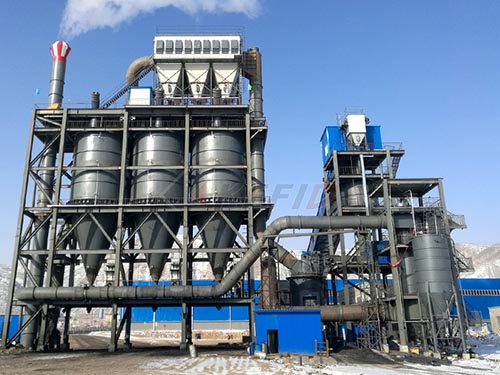
[Tier A] Core Processing Plant:
[Tier B] Enhanced Recovery Package:
[Tier C] Full Modular Turnkey System:
Optional features include containerized control rooms,
Service packages range from basic commissioning support
Financing options can be structured through our partners,
8. FAQ
1.
2.
3.
4.
5.
6.
7