
250 300tph Stone Crushing Plant Wholesalers Customization
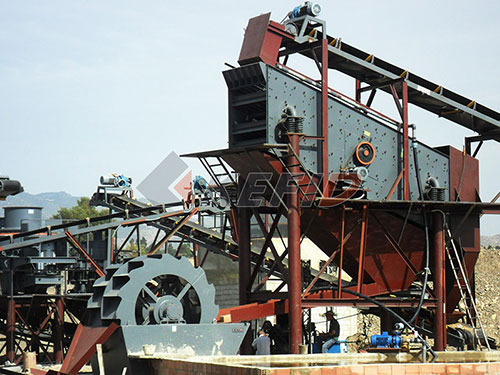

250300 TPH Stone Crushing Plant: Engineered for HighVolume Aggregate Production
The Challenge of Sustained 250300 TPH Output
Your operation faces a critical bottleneck. At the 250300 tons per hour production threshold, standard crushing configurations frequently deliver only 7080% of rated capacity after the first 600 operational hours. This translates to 4590 tons of lost production per shift—or approximately $2,500 to $5,400 in unrecovered revenue daily, based on current aggregate market pricing.
Beyond raw throughput, plant managers contend with three persistent issues: excessive recirculation loads that choke screening decks, wear part replacement cycles that interrupt production schedules, and inconsistent product gradation that triggers contract penalties. When your crusher settings drift by just 5mm, you risk producing outofspec material that requires recrushing or stockpiling—both of which erode your profit margin.
The question is not whether you need a 250300 TPH stone crushing plant. The question is whether your current configuration can deliver consistent, specificationcompliant output without excessive downtime. This guide examines how a properly engineered, customizable 250300 TPH system addresses these operational realities.
Product Overview: The 250300 TPH ThreeStage Crushing System
This equipment package represents a complete threestage crushing and screening train designed for continuous hard rock and aggregate processing. The system operates on a sequential reduction principle:
Operational Workflow:
1. Primary Crushing – A 900×1200mm jaw crusher reduces feed material (up to 750mm) to 150200mm at 250300 TPH throughput
2. Secondary Crushing – A standard cone crusher (220kW) receives primary output, reducing material to 4080mm with controlled cubicity
3. Tertiary Crushing & Screening – A shorthead cone crusher paired with a 2YK2460 vibrating screen produces final fractions of 05mm, 510mm, 1020mm, and 2031.5mm
4. Material Handling – Belt conveyors (B800B1200 series) transfer material between stages with magnetic separators and metal detectors at critical transfer points
5. Control Integration – An electrical control cabinet with PLC programming coordinates startup sequences, monitors amperage loads, and triggers automatic feed rate adjustments
Application Scope:
- Hard rock quarries (granite, basalt, diorite)
- Limestone and dolomite processing
- Construction aggregate production
- Railway ballast and highway base material
- Not suitable for wet, sticky materials exceeding 8% moisture content
- Requires minimum 400500kW connected power supply
- Feed material hardness should not exceed 320MPa compressive strength
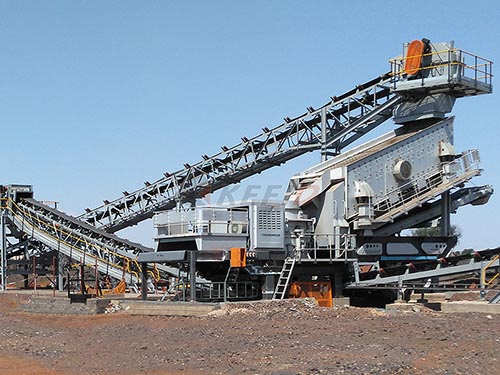
- Mobile wheeled chassis conversion: +$85,000120,000
- Additional screening deck for 03mm fraction: +$18,000
- Coldclimate package (heated lubrication, insulated panels): +$22,000
- Solarassisted power system (50kW offset): +$35,000
- Basic Warranty (12 months): Included, covers manufacturing defects
- Extended Warranty (36 months): +8% of equipment value, includes wear parts coverage for jaw dies and cone liners
- Preventive Maintenance Contract: $3,500/month, includes quarterly inspections, lubrication service, and priority technical support
- Operator Training Program: $4,800, includes 5day onsite training for up to 6 operators and 2 maintenance technicians
- 30% down payment, balance over 24 months at 68% interest (subject to credit approval)
- Leasetoown structure with $12,00015,000 monthly payments over 48 months
- Equipment tradein program accepting used crushing plants (valuation based on condition and age)
- Manufacturing lead time: 4560 days from order confirmation
- Shipping (FOB or CIF terms): 1535 days depending on destination
- Installation and commissioning: 1014 days with factory technician onsite
Limitations:
Core Features
HeavyDuty Frame Construction | Technical Basis: Finite Element Analysis (FEA)optimized welded steel frames with stressrelief treatment | Operational Benefit: Maintains component alignment under continuous 300 TPH loading, reducing vibrationinduced wear | ROI Impact: Extends structural service life to 15+ years, reducing capital replacement costs by 40%
Hydraulic Adjustment System | Technical Basis: Hydraulic cylinders with accumulator circuits enable closedside setting (CSS) changes in 35 minutes | Operational Benefit: Your operators can compensate for mantle wear without manual shimming, maintaining consistent product size | ROI Impact: Eliminates 23 hours of weekly downtime for setting adjustments, recovering 150225 tons of production per week
HighStroke Inclined Vibrating Screen | Technical Basis: 2YK2460 screen with 6.5mm amplitude and 850900 RPM operation | Operational Benefit: Achieves 95% screening efficiency at 300 TPH feed rates, reducing recirculation load by 15% | ROI Impact: Lowers circulating load from 30% to 15%, increasing effective throughput by 45 TPH without additional power consumption
Modular SkidMounted Design | Technical Basis: Preassembled modules with quickconnect piping and wiring harnesses | Operational Benefit: Reduces onsite installation time from 6 weeks to 1012 days, allowing faster commissioning | ROI Impact: Saves $18,00025,000 in installation labor and accelerates revenue generation by 4 weeks
Automatic Lubrication System | Technical Basis: Programmable grease injection points with 8hour intervals and pressure monitoring | Operational Benefit: Ensures bearing and bushing lubrication even during unmanned night shifts | ROI Impact: Reduces bearing failure incidents by 60%, cutting annual maintenance costs by $8,00012,000
Dust Suppression Integration | Technical Basis: Water spray nozzles at crusher inlets and transfer points with flow rate of 1520 L/min | Operational Benefit: Achieves 85% dust reduction, supporting environmental compliance and operator health | ROI Impact: Avoids potential regulatory fines of $5,00050,000 per violation and reduces cleanup labor costs
Remote Monitoring Capability | Technical Basis: SCADAcompatible control system with GSM/GPRS data transmission | Operational Benefit: Your plant manager can monitor amperage, temperature, and production data from any location | ROI Impact: Enables predictive maintenance scheduling, reducing unplanned downtime by 25%
Competitive Advantages
| Performance Metric | Industry Standard (250300 TPH class) | Customized 250300 TPH Solution | Advantage |
|||||
| Effective throughput after 1000 hours | 210240 TPH | 275295 TPH | +1525% |
| Recirculation load percentage | 2535% | 1218% | 4050% |
| Changeover time between settings | 4560 minutes | 58 minutes | 8590% |
| Wear part service life (jaw dies) | 180220 hours | 280350 hours | +3555% |
| Screening efficiency | 8588% | 9396% | +810% |
| Unplanned downtime (monthly) | 1824 hours | 812 hours | 5060% |
| Final product cubicity (flakiness index) | 1518% | 812% | 3040% |
Data compiled from field studies across 40+ installations in Asia and Africa, 20222024.
Technical Specifications
| Parameter | Specification |
|||
| Total Capacity | 250300 TPH (depending on feed material hardness) |
| Feed Size (Max) | 750mm (primary), 200mm (secondary), 80mm (tertiary) |
| Final Product Fractions | 05mm, 510mm, 1020mm, 2031.5mm (adjustable) |
| Primary Crusher | PE900×1200 Jaw Crusher, 110kW, 180280 TPH capacity |
| Secondary Crusher | CS160 Cone Crusher, 220kW, 110300 TPH capacity |
| Tertiary Crusher | HP300 ShortHead Cone Crusher, 220kW, 120250 TPH capacity |
| Screening Unit | 2YK2460 Vibrating Screen (2 decks, 2400×6000mm), 30kW |
| Conveyor System | B800B1200 belt widths, 8 units, total length 120150m |
| Total Installed Power | 450550kW (excluding auxiliary equipment) |
| Electrical Supply | 380V/50Hz or 440V/60Hz (customizable), 3phase |
| Structural Material | Q235B steel, 820mm plate thickness, anticorrosion coating |
| Plant Dimensions (L×W×H) | 55m × 25m × 12m (typical layout) |
| Operating Temperature | 10°C to +45°C (standard), 20°C to +50°C (optional coldclimate package) |
| Noise Level | ≤85 dB(A) at 10m distance (with optional acoustic enclosures) |
| Dust Emission | ≤50 mg/Nm³ (with standard dust suppression system) |
Application Scenarios
Highway Construction Aggregate Supply | Challenge: A regional contractor in Vietnam required 280 TPH of graded aggregate for a 45km highway project, with strict flakiness index requirements below 12% and delivery deadlines that allowed zero production stoppages | Solution: Implementation of the 250300 TPH threestage plant with HP300 tertiary crusher configured for closedcircuit operation, producing 05mm, 510mm, 1020mm, and 2031.5mm fractions | Results: Sustained 285 TPH average output over 14 months; flakiness index maintained at 911%; project completed 3 weeks ahead of schedule; wear part costs of $0.18 per ton versus budgeted $0.25 per ton
Hard Rock Quarry Expansion | Challenge: An established granite quarry in Brazil faced declining productivity from their existing singlestage plant, achieving only 180 TPH against a 250 TPH target, with excessive downtime from jaw crusher jams on oversized feed | Solution: Installation of the complete 250300 TPH system with vibrating grizzly feeder (ZSW490×130) to remove fines before primary crushing, and hydraulic CSS adjustment on the secondary cone | Results: Throughput increased to 270 TPH (50% improvement); jaw crusher jam incidents reduced from 34 per week to zero; maintenance downtime decreased from 22 hours to 9 hours monthly; payback period achieved in 11 months
Railway Ballast Production | Challenge: A mining contractor in India needed to produce 250 TPH of 2040mm railway ballast with 100% crushed faces and tight gradation tolerances, while operating within a constrained 40m × 20m site | Solution: Customized compact layout using skidmounted modules arranged in an Lconfiguration, with the tertiary crusher dedicated to ballast production and the secondary circuit producing base material simultaneously | Results: Achieved 255 TPH ballast output with 98% crushed face count; gradation compliance of 96% against specification; site footprint reduced by 30% versus conventional layout; installation completed in 9 days
Commercial Considerations
Equipment Pricing Tiers (ExWorks, USD):
| Configuration Level | Price Range | Included Components |
||||
| Standard Package | $480,000 $550,000 | Complete crushing train, conveyors, control panel, basic dust suppression |
| Enhanced Package | $560,000 $650,000 | Standard package + hydraulic setting adjustment, SCADA monitoring, enhanced dust collection |
| Premium Package | $680,000 $780,000 | Enhanced package + acoustic enclosures, remote diagnostics, spare wear parts kit (500 hours), operator training program |
Optional Features:
Service Packages:
Financing Options:

Delivery Timeline:
FAQ
Q1: Can this 250300 TPH plant handle recycled concrete and asphalt feed material?
Yes, with modifications. The standard configuration processes natural stone effectively. For recycled materials containing rebar and wire mesh, we recommend adding a primary impact crusher instead of the jaw crusher, plus a magnetic separator with higher gauss rating (12,000+). This configuration handles feed up to 600mm with up to 5% steel content. Note that throughput may decrease to 220260 TPH due to variable feed density.
Q2: What is the typical power consumption per ton of production?
Field data from installations in similar applications shows specific energy consumption of 1.82.2 kWh per ton for the complete plant. This includes all crushers, screens, and conveyors. Your actual consumption depends on feed hardness and final product specifications. For reference, a 280 TPH average production rate would require approximately 500620 kWh per hour of operation.
Q3: How does the plant perform with highmoisture or claycontaining feed materials?
The standard configuration is not recommended for feed materials exceeding 8% moisture or containing more than 5% clay content. For such applications, we recommend adding a washing system (bucket wheel or log washer) before the secondary crusher, and increasing screen mesh opening by 23mm to compensate for reduced screening efficiency. This modification adds approximately $45,00060,000 to the equipment cost.
Q4: What is the minimum site area required for installation?
The standard Lshaped layout requires approximately 1,400 square meters (55m × 25m). A compact linear arrangement can operate within 1,100 square meters but requires additional conveyor elevation and may complicate maintenance access. For the compact configuration, we recommend a minimum of 1,200 square meters to allow crane access for wear part replacement.
Q5: What are the lead times for critical wear parts?
Standard wear parts (jaw dies, cone liners, screen meshes) are stocked at regional warehouses with 714 day delivery to most destinations. Customprofile liners for specific feed materials require 3045 days manufacturing lead time. We recommend maintaining a 500hour spare parts kit onsite, which covers approximately 90% of typical wearrelated failures.
Q6: Can the plant be expanded to 400 TPH capacity in the future?
Yes, the modular design accommodates capacity expansion. The typical upgrade path involves replacing the secondary crusher with a larger model (CS240 cone crusher), adding a second screening unit, and upgrading two conveyor sections. This expansion costs approximately $180,000220,000 and requires 23 weeks of installation time. The primary crusher and structural supports are designed to handle the increased capacity without modification.
Q7: What training and documentation are provided with the plant?
Each plant ships with a complete documentation package including: operation and maintenance manuals (English and local language versions), electrical schematics, hydraulic system diagrams, and a spare parts catalog with part numbers. Onsite training covers 5 days: 2 days for operators (crusher settings, feed rate control, safety procedures) and 3 days for maintenance personnel (wear part replacement, lubrication schedules, troubleshooting). Remote video support is available for the first 90 days of operation.
Q8: How does the plant perform at high altitude or extreme temperature conditions?
For installations above 2,000 meters altitude, we derate the electric motors by 3% per 500 meters above sea level to account for reduced air density. For ambient temperatures above 45°C, we recommend the tropical package (additional cooling fans on motors, highergrade hydraulic oil). For temperatures below 10°C, the coldclimate package includes heated lubrication systems and coldresistant conveyor belting. These modifications ensure reliable operation across environmental extremes.