
250 300tph Stone Crushing Plant Vendors Customization

1. PAINPOINT DRIVEN OPENING
Are you managing a midtolarge scale aggregate production operation and facing persistent bottlenecks that erode profitability? For plant managers and engineering contractors, a 250300tph stone crushing plant is a critical capital asset, yet standard configurations often fail to address specific operational realities. Common challenges include:
Inconsistent Feed & Downtime: Fluctuations in feed size and hardness lead to crusher stalls, unplanned stops for clearing blockages, and suboptimal throughput, costing hours of productive capacity weekly.
High Operational & Maintenance Costs: Premature wear on liners and crusher parts due to improper chamber design or material flow, combined with laborintensive maintenance routines, directly impacts your costperton.
Final Product Quality Variance: Inability to precisely control particle shape and gradation leads to product rejection or downgrading, reducing revenue from highvalue aggregate fractions.
Inflexible Configuration: Fixed plant layouts cannot adapt to changing project specifications or feed material characteristics, limiting your ability to bid on diverse contracts.
The central question is: how can you achieve reliable 250300tph output with lower operational risk and higher product yield? The answer lies in precise engineering customization, not offtheshelf solutions.
2. PRODUCT OVERVIEW
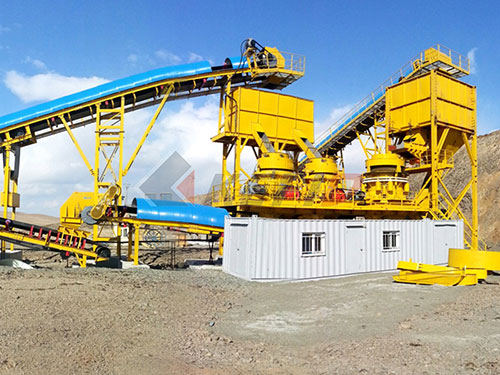
This solution is a fully customizable stationary or semistationary 250300 tonperhour stone crushing and screening plant. It is engineered for primary contractors and aggregate producers requiring consistent, highvolume output for road base, concrete aggregate, or railway ballast.
Operational Workflow:
1. Primary Reduction: Large feed material (up to 750mm) is reduced by a robust primary jaw crusher or gyratory crusher.
2. Secondary & Tertiary Crushing: Material is conveyed to secondary cone crushers for further size reduction, with optional tertiary impact crushers for precise shaping.
3. Material Screening: Multipledeck vibrating screens accurately separate crushed material into specified product fractions.
4. Recirculation & Stockpiling: Oversize material is recirculated via closedcircuit conveyors, while finished products are conveyed to designated stockpiles.
Application Scope: Ideal for granite, basalt, limestone, and river gravel processing in large quarrying, mining support operations, and major infrastructure projects.
Key Limitations: Requires stable foundation preparation and substantial electrical power hookup (see specifications). Not designed for highly abrasive industrial minerals without specific material upgrades.
3. CORE FEATURES
Adaptive Crushing Chamber Design | Technical Basis: Computeraided kinematics & wear modeling | Operational Benefit: Maintains consistent discharge setting and product gradation as wear parts degrade | ROI Impact: Up to 15% longer liner life reduces part change frequency and associated labor downtime.
Intelligent Load Management System | Technical Basis: Hydropneumatic tramp release & realtime power monitoring | Operational Benefit: Prevents catastrophic damage from uncrushables; optimizes crusher load for peak efficiency | ROI Impact: Protects major mechanical components from failure, avoiding sixfigure replacement costs.
Centralized Process Control (PLC) | Technical Basis: Programmable Logic Controller with humanmachine interface (HMI) | Operational Benefit: Enables singlepoint start/stop sequencing, realtime monitoring of all plant functions, and fault diagnostics | ROI Impact: Reduces operator headcount requirements per shift and cuts mean time to repair (MTTR) by an estimated 30%.
Modular Conveyor & Chute System | Technical Basis: Bolttogether sections with lined impact zones | Operational Benefit: Simplifies site layout adjustments; reduces material plugging and belt wear at transfer points | ROI Impact: Lowers expansion/relocation costs by up to 25% compared to welded structures.
MultiStage Dust Suppression Integration | Technical Basis: Strategically placed spray nozzles with solenoid control tied to crusher/screen activation | Operational Benefit: Effectively controls respirable dust at each generation point, ensuring compliance | ROI Impact: Mitigates regulatory fines and reduces cleanup costs while protecting worker health.
4. COMPETITIVE ADVANTAGES
| Performance Metric | Industry Standard (250300tph Plant) | Customized 250300tph Solution | Advantage (% Improvement) |
| : | : | : | : |
| Availability / Uptime | 8588% (planned & unplanned stops) | 9294% (system optimized) | +6% (+500+ productive hours/year) |
| Tons per Maintenance Hour| ~25 tons/hour of labor spent on upkeep| ~40 tons/hour of labor spent on upkeep| +60% (Higher output per labor dollar) |
| Product Yield (Spec Material)| Typically 8590% of total output| Consistently achieves 9295% of total output| +5% (Direct increase in saleable product) |
| Specific Energy Consumption| Fixedspeed drives across all units| Variable Frequency Drives (VFDs) on feeders & conveyors| Up to 12% reduction in kWh/ton |
5. TECHNICAL SPECIFICATIONS
Designed Throughput Capacity: 250 300 metric tons per hour (275 330 US tons per hour), dependent on feed material hardness (<180 MPa recommended standard).
Primary Crusher Options: Jaw Crusher (900x1200mm 1200x1500mm feed opening) or Primary Cone Crusher with coarse cavity.
Secondary/Tertiary Stage: Two x HeavyDuty Cone Crushers with medium/fine liners.
Screening Stage: Two x TripleDeck HeavyDuty Vibrating Screens (6'x20' or equivalent).
Power Requirement: Total installed power approximately 650 800 kW. Requires main supply voltage of 6kV/10kV or stepdown transformer configuration.
Key Material Specifications: High manganese steel crusher liners; AR400 abrasionresistant steel at all wear points; Class III industrial gearboxes; IP66rated electric motors.
Typical Plant Footprint: Approximately 85m L x 45m W x 18m H (for linear layout). Can be configured into compact modular groups.
Environmental Operating Range: Designed for ambient temperatures from 20°C to +45°C. Dust emission levels can be configured below local regulatory thresholds of <20 mg/Nm³.
6. APPLICATION SCENARIOS
LargeScale Limestone Quarry for Road Construction
Challenge: A regional quarry needed consistent production of five separate aggregate products for asphalt plants but struggled with screen blinding and frequent recirculation load overloads causing downtime.
Solution: Implementation of a customized threestage crushing circuit featuring cone crushers with antiblinding screen decks and an automated recirculating load management system within the new plant design.
Results: Achieved steadystate production of 280tph. Product yield increased from an average of ~87% to over ~93%, while daily unscheduled downtime decreased by approximately two hours.
Granite Processing Plant Expansion
Challenge: An existing operation required capacity expansion from ~180tph to over ~260tph without significantly increasing the physical footprint or primary electrical service capacity.
Solution: A tailored plant design utilizing highercapacity cone crushers with advanced chamber profiles was integrated alongside the existing primary jaw crusher. All new conveyors featured VFDs for optimized power draw during startup cycles.
Results: Throughput target exceeded at ~275tph within the same allotted space. The VFD system contributed to an overall power consumption increase of only ~18%, despite a >50% increase in production rate.
Major Infrastructure Project – Onsite Aggregate Production
Challenge: A contractor building a remote highway segment faced volatile logistics costs for importing aggregates over long distances.
Solution: Deployment of a semistationary customized crushing plant fed by local rock formations.
Results: Onsite production at ~290tph eliminated over $2M in transport costs over the project's lifespan.
COMMERCIAL CONSIDERATIONS
A customized stone crushing plant represents a significant investment tailored precisely to your operational parameters.
Pricing Tiers:
Tier A – Core Configuration: Includes primary jaw crusher secondary cone tertiary impactor basic screening PLC controls.
Tier B – Enhanced Configuration: Adds advanced automation dust suppression systems premium wear materials.
Tier C – Turnkey Project: Includes civil works erection commissioning training full automation package.
Optional Features:
Advanced predictive maintenance sensors remote monitoring data analytics package hybrid diesel/electric drive options sound attenuation enclosures automated greasing systems.
Service Packages:
Standard warranty extended component protection plans annual inspection contracts guaranteed spare parts delivery times onsite technical support contracts. 
Financing Options:
Equipment leasing capital loans through financial partners projectbased financing models.
FAQ
Q1 How do I determine if my site needs a fully custom design versus a modular one?
A1 The decision hinges primarily on your longterm site tenure (>5 years favors custom stationary designs), feed material variability requiring specific processing stages.
Q2 What are the lead times typically involved?
A2 For a fully customized solution engineering procurement manufacturing testing shipping require approximately months following final design approval.
Q3 Can this system integrate with my existing primary feeding equipment?
A3 Yes integration is standard practice our control systems can be designed incorporate existing feeders stackers providing they meet required capacity specifications.
Q4 What kind operator training provided?
A4 We provide comprehensive classroom field training covering daily operation routine maintenance troubleshooting safety procedures ensure your team achieves proficiency quickly.
Q5 How does customization affect ongoing spare parts procurement?
A5 While using many industrystandard components we provide detailed bill materials OEM part numbers ensuring you can source critical spares through us directly authorized distributors maintain optimal inventory levels. 
Q6 Are performance guarantees offered?
A6 Yes we offer guaranteed minimum throughput capacity based agreedupon feed material specifications detailed within contract documentation prior manufacturing commencement.
Q7 What are typical ongoing maintenance costs as percentage capital expenditure?
A7 Industry data wellmaintained plants indicate annual maintenance costs typically range between including wear parts labor electrical costs proper planning budgeting essential.